
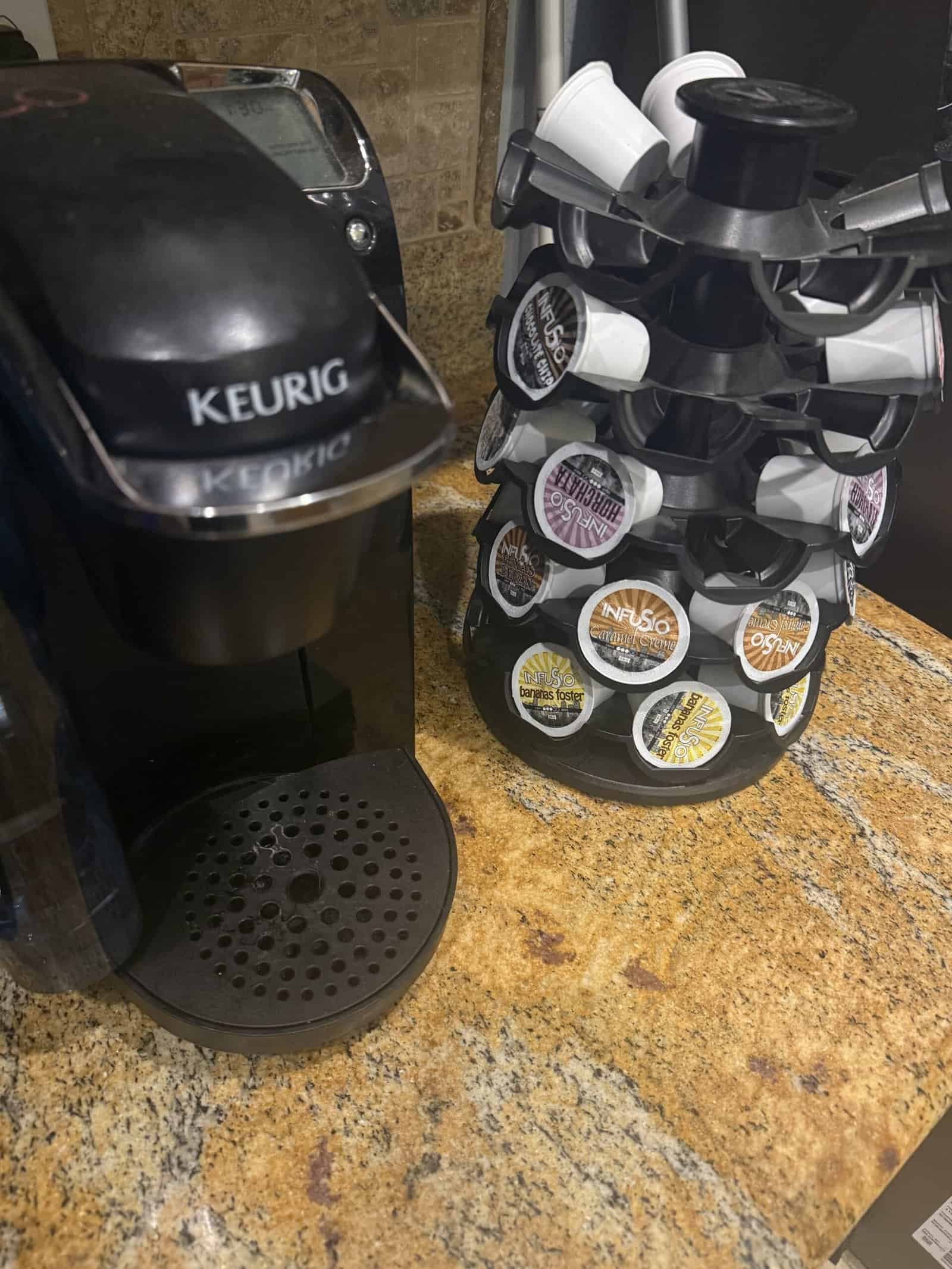
The short answer is that most pods you find on a shelf work, and the exceptions are specific enough to be worth knowing. Compatibility used to be a genuine problem and is now mainly a labeling question, provided you read the box.
Where people run into trouble is assuming that a pod is a pod. Nespresso capsules, Dolce Gusto pods, and Keurig cups are different shapes for different machines, and none of them substitute for another. Our comparison of Keurig and Nespresso machines covers that split.
Quick Answer
Any pod labeled for Keurig brewers works, including store brands and third-party ones. Nespresso and Dolce Gusto capsules do not fit. Some older machines restrict unlicensed pods, and current ones generally do not.
Key Points
- Third-party and store-brand pods work in current machines.
- Nespresso and Dolce Gusto are different systems entirely.
- One generation of machines had a lockout that was later dropped.
- Reusable filters need to match your machine family.
- Reading the box solves this before it becomes a problem.
What Works
Licensed and third-party K-cups
Anything labeled as compatible with Keurig brewers, which covers name brands, store brands, and the large number of third-party roasters selling in the format.
Store-brand pods
Supermarket own-label pods are made to the same dimensions and work normally. They are also the biggest saving available without changing anything else.
Reusable filters
Refillable pods sized for your machine family let you use any ground coffee, at the cost of filling and cleaning each time.
Different sizes within the system
Some machines take both standard cups and larger carafe pods, and that depends on the model rather than on the pod being unusual.
What Does Not
Nespresso capsules are a different shape, a different size, and designed for a pressure-based espresso system rather than a drip-through one. They physically do not fit.
Dolce Gusto pods are likewise their own format, larger and differently constructed, and belong to a separate machine family.
Ground coffee loose in the holder is not a substitute either. Without a filter it goes into the cup and into the machine, which is where a reusable pod earns its place. Our comparison of measuring coffee covers that route.
The Lockout Era
One generation of Keurig machines included a system that read a marking on licensed pods and refused to brew unlicensed ones. It was unpopular, worked around widely, and was dropped in later models.
If you own a machine from that period, unlicensed pods may produce an error rather than a cup. Newer machines do not have this restriction.
For anyone buying today the question is largely historical, and it is worth knowing if you inherit an older brewer or buy secondhand.
Why Compatibility Confuses People
Every pod system uses the word pod, and the shapes are different enough that none of them interchange. A shelf carrying three formats side by side looks like three brands of the same thing.
Packaging does not help either, since the compatibility statement is usually smaller than the roast name and the brand. People buy by flavor and discover the format afterward.
The other source of confusion is history. The lockout generation left an impression that off-brand pods are a gamble, which stopped being true years ago and persists in what people tell each other. Our roundup of single-serve coffee makers covers what is available now.
How I Handle It
I have a Keurig, so I check that anything I buy is fine with it before it goes in the basket. I have never had a pod that did not fit, and that is because of the checking rather than because the problem does not exist.
That is a boring answer and it is the actual solution. The compatibility question is settled at the shelf rather than at the machine, and thirty seconds reading a box removes the whole issue.
Three machines in, across several years and a lot of boxes, and I have not once brought home something that would not brew. I have also tried a reusable filter, which sits in the same category of checking it suits the machine before buying.
What I cannot tell you is what a lockout error looks like or how off-brand pods behave in older machines, since I have not encountered either.
What Compatibility Actually Depends On
Three things have to line up: the physical dimensions of the pod, the way the machine punctures it, and whether the machine imposes any licensing check.
Dimensions are the obvious one. A K-cup is a specific diameter and height designed to seat in a holder of matching size, and anything larger or differently shaped will not go in.
Puncture matters more than people realize. Drip-through machines pierce the top and bottom and push hot water through at low pressure, while espresso systems seal the capsule and force water through under high pressure. Those are different mechanisms and the pods are built for one or the other.
The licensing check applies only to one generation and is otherwise irrelevant, which is why the answer for most people today is simply that dimensions decide it. Our note on coffee makers and espresso machines covers the pressure difference.
What to Check on the Box
The compatibility statement
Boxes say which brewers they suit, usually on the front or a side panel. That sentence is the whole answer, and our guide to choosing a coffee maker covers which system to buy into.
Which machine family
Some manufacturers make more than one pod system, so the brand alone is not enough. The named brewer family is what matters.
Cup or carafe
Larger carafe pods only work in machines that take them, and they look similar enough on a shelf to be picked up by mistake.
Reusable filter fit
Refillable pods are made for specific brewer generations, and one built for a different model can seat badly or leak around the rim.
If a Pod Does Not Work
Check first that it is the right system, since a Nespresso capsule in a Keurig is the most common version of this and is immediately obvious once you look.
If the pod is correct and the machine still refuses, that points at the machine rather than the pod. Slow or failed brewing is more often mineral buildup in the water path than a compatibility issue.
A pod that brews but tastes wrong is usually a brew size or roast question rather than a fit one, and our roundup of coffee storage canisters covers keeping what you buy fresh. Our note on weak coffee covers that.
Keurig Pod Compatibility FAQ
Do off-brand pods work in a Keurig?
In current machines, yes. Third-party and store-brand pods are made to the same dimensions and brew normally. The only machines that resisted them were one generation with a licensing lockout, which was later dropped.
Can I use Nespresso pods in a Keurig?
No. Nespresso capsules are a different shape and size for a pressure-based espresso system rather than a drip-through brewer. They do not fit physically, and no adapter changes that.
Are store-brand pods worse?
Quality varies by brand rather than by being own-label, and plenty are perfectly good. They are the single largest saving available without changing your routine, so trying a small box before committing is sensible.
What about Dolce Gusto pods?
Different system again, with a larger and differently constructed pod. They belong to their own machine family and will not work in a Keurig.
Can I put loose coffee in the holder?
Not without a filter, since grounds go straight into your cup and into the machine’s water path. A reusable filter pod exists precisely to make loose coffee possible.
Why does my machine say the pod is not recognized?
On older machines with the licensing system this indicates an unlicensed pod. On newer machines, an error is more likely to be a seating problem, a blocked needle, or a machine fault rather than compatibility.
Do reusable filters fit all Keurigs?
They are made for specific brewer generations, so check the model list before buying. One built for a different machine may sit badly, leak around the rim, or not close properly.
How do I know before I buy?
Read the compatibility line on the box, which states which brewers the pods suit. That takes seconds and removes the question entirely, which is considerably easier than working it out at the machine.
Recommended Reading
See our note on which brew size to use, and choosing the right coffee grinder.
