
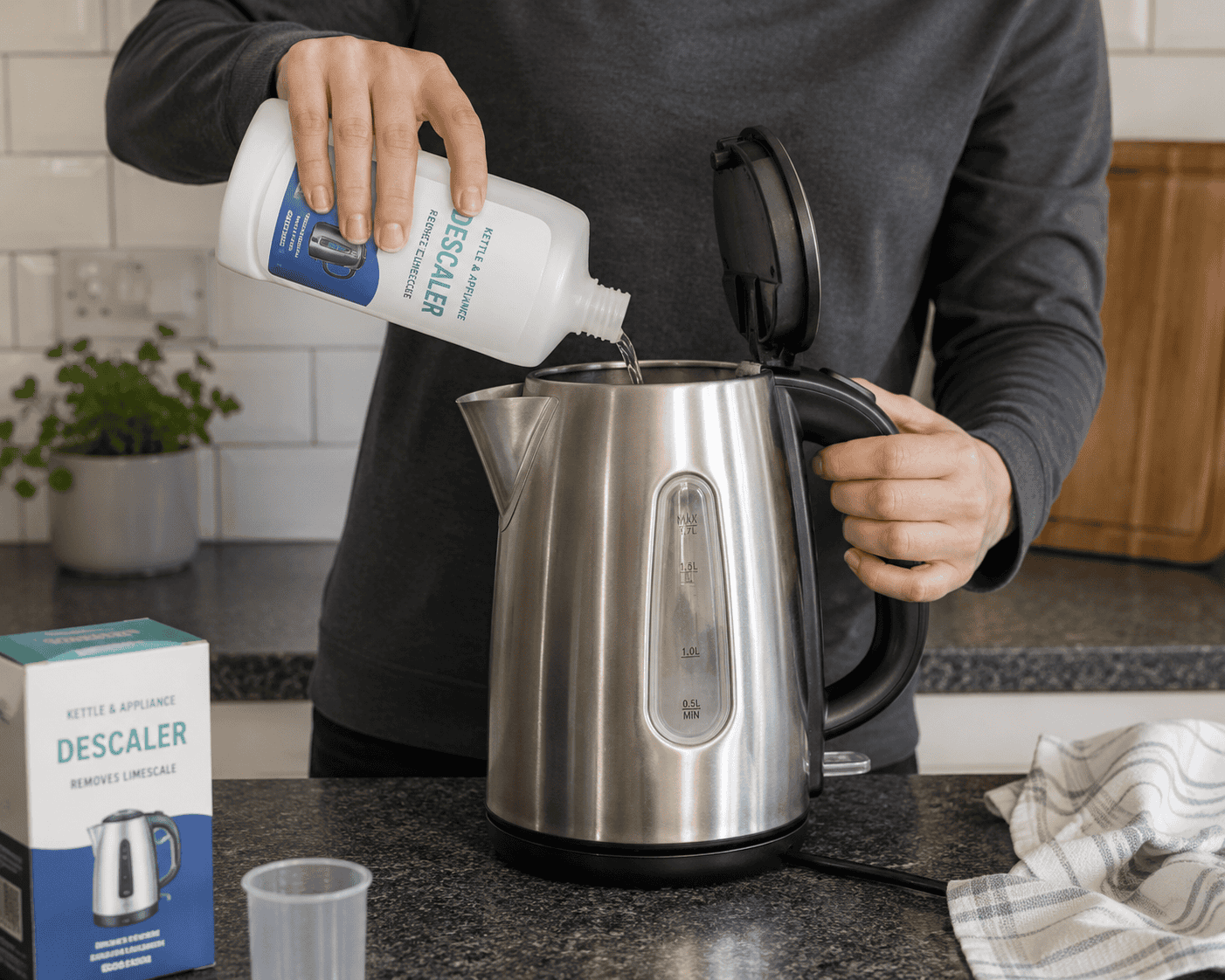
You lift the lid and find a chalky white film on the bottom, or flakes drifting in your tea. To descale an electric kettle, you fill it with an acid-and-water solution, boil it, let it sit, then rinse, and the buildup lifts away in minutes. Left alone, that buildup slows the boil and dulls the taste of everything you brew. If you’re shopping, start with our guide to the best electric wine openers.
Key takeaways
- Limescale comes from minerals in hard water and builds up over time.
- White vinegar and citric acid both dissolve it cheaply and well.
- Always rinse and boil plain water afterward to clear any taste.
- Descaling on a schedule is far easier than removing heavy buildup later.
- Filtered water and emptying the kettle slow how fast scale returns.
What Limescale Is and Why It Matters
Before you clean, it helps to know what you are dealing with. The white crust is limescale, and it forms from the minerals in your water. How much you get depends on where you live.
Where It Comes From
Hard water carries dissolved calcium and magnesium, and heating that water leaves the minerals behind as deposits. Kettles in hard-water areas scale faster and need cleaning more often. Soft-water homes see far less of it.
What It Does to Your Kettle
A scaled kettle takes longer to boil, draws more energy, and can flavor your drinks. The buildup also gets into your cup as gritty flakes. Water quality shapes how coffee and tea taste, so clearing scale keeps every brew cleaner.
What You Need
You almost certainly have everything already. White vinegar or citric acid powder does the work, plus plain water and a soft cloth. A small brush helps if your kettle has a mesh filter at the spout.
Step 1: Make a Descaling Solution
Fill the kettle with a solution of equal parts white vinegar and water, enough to cover the scaled areas. The acid in the vinegar dissolves the mineral deposits. If the buildup is heavy, let the solution reach a little higher than the worst of it.
Step 2: Boil and Let It Sit
Bring the solution to a boil, then switch the kettle off. Leave it to sit for around twenty minutes so the acid loosens the deposits. Stubborn scale may need a second round, so check before you tip it out.
Step 3: Rinse and Boil Clean Water
Pour the solution out and wipe away any loosened residue with a soft cloth. Rinse the inside thoroughly, then fill with fresh water and boil it once or twice, discarding each boil. This clears the vinegar smell so your next cup tastes clean.
Descaling With Citric Acid Instead
Citric acid is a near odorless alternative that works just as well as vinegar. Reach for it if you dislike the smell of a vinegar boil. The method barely changes.
Mix and Heat
Add citric acid powder to water in the kettle, then bring it to a boil and switch off. The acid targets the same calcium and magnesium deposits vinegar dissolves. Lemon juice works on the same principle if you have no powder on hand.
Soak and Clean
Let it sit until the scale lifts, then pour out, rinse well, and boil plain water to flush the inside. You end up with a clean kettle and no lingering odor. The result looks the same as a vinegar descale without the sharp smell.
How Often to Descale an Electric Kettle
Frequency depends on your water and how hard you run the kettle. A simple rule keeps it from becoming a chore. Match the schedule to what you see inside.
Match It to Your Water
Hard-water households should descale more often, while soft-water areas can stretch the gap. If a film starts forming on the element or base, that is your cue. Many people in hard-water regions land on a monthly clean.
Stay Ahead of Buildup
A light, regular descale beats scrubbing thick, crusty scale later. Folding it into a monthly kitchen-cleaning routine keeps the job to a few minutes. Waiting until the kettle struggles makes the work harder than it needs to be.
How to Slow Limescale Between Cleans
A few habits stretch the time between descalings. None of them takes extra effort once they become routine. Together they keep the kettle running clean.
Empty It After Use
Water left standing in the kettle encourages fresh deposits, so pour out what you do not use. Drying the interior now and then helps too. This single habit slows scale more than any product.
Use Filtered Water
Filtered or softened water carries fewer minerals, which slows the rate scale forms. If your tap water is very hard, a water filter pitcher cuts how often you reach for the vinegar. The softer the water, the longer your kettle stays clear.
Recommended read: Shopping for a kettle that resists scale or replaces an old one? See our best electric kettles and the how to choose an electric kettle guide.
Signs Your Kettle Needs Descaling
You do not need a schedule to know when it is time. The kettle tells you in a few clear ways. Watch, listen, and taste.
What to Look For
A white or chalky film on the base and element is the clearest sign, along with flakes floating in poured water. Cloudy water or a dull, crusty interior points the same way. Once you can see buildup, the kettle is overdue.
What to Listen and Taste For
A kettle that has grown louder or slower to boil is usually scaled inside. An off or metallic taste in tea and coffee is another cue. When any of these show up, a quick descale brings the kettle back.
Vinegar vs Citric Acid: Which to Use
Both dissolve limescale well, so the choice comes down to smell and what you have on hand. Each has a clear edge in different situations. Pick the one that fits your kitchen.
When Vinegar Wins
White vinegar is cheap and almost everyone has it in the cupboard. It works fast on light to moderate scale and needs no special shopping. The downside is the sharp smell during the boil, which a good rinse clears.
When Citric Acid Wins
Citric acid powder is nearly odorless, so it suits anyone who dislikes the vinegar smell. It rinses clean with little aftertaste and stores easily for next time. Lemon juice works on the same acid principle if you have neither on hand.
When Scale Will Not Come Off
Heavy, long-neglected buildup sometimes resists a single pass. A few adjustments handle the stubborn cases. Patience beats scrubbing here.
Repeat and Strengthen
If one round leaves scale behind, run a second with a slightly stronger solution and a longer soak. Let the acid do the work rather than scraping, which can scratch the interior. Most crusty buildup gives way after a second treatment.
Reach the Spout and Filter
Scale hides in the spout and the mesh filter, not just on the base. Remove and rinse the filter, and let the solution sit in the spout area too. A soft brush clears what soaking loosens. If a kettle is too scaled to recover, our best electric kettles under $50 and best tea kettles cover replacements.
Keeping a Kettle Cleaner for Longer
A few habits stretch the time between descalings and keep flakes out of your cup. They cost nothing once they are routine. Build them in and the kettle stays clear. The same acid method works on other appliances, as our guide to descaling a coffee maker shows.
Start With Better Water
Filtered or softened water carries fewer minerals, so it scales the kettle far more slowly. In very hard-water areas, a filter pitcher makes a noticeable difference. The softer the water, the less often you reach for the vinegar.
Do Not Let Water Sit
Standing water deposits minerals as it cools, so empty the kettle after use. A quick rinse and an open lid to dry help too. This single habit slows buildup more than any cleaning product.
Common Descaling Mistakes
A few small errors turn an easy job into a frustrating one. Avoid these and the kettle stays clean with minimal effort.
Skipping the rinse leaves a vinegar taste in your next several cups. Always rinse and boil plain water after descaling, discarding those boils, before you make a drink. The flush is the step people forget most.
Waiting until the scale is thick makes the job much harder. Heavy crust can need several rounds, while a light monthly clean lifts in one. Stay ahead of it instead of fighting it.
Using an abrasive scrubber can scratch the interior, especially on glass and coated elements. Let the acid do the work and wipe with a soft cloth instead. Scratches give future scale more to cling to.
Ignoring the spout filter lets flakes through into your cup. Many kettles have a small mesh screen that you can rinse or gently brush while you descale. A clogged filter also slows pouring.
Reaching for harsh chemicals is unnecessary and risky around something you drink from. Vinegar, citric acid, or lemon juice handle limescale safely. Check your manufacturer’s guidance, since a few models specify a preferred descaling product.
Frequently Asked Questions
What is the best way to descale an electric kettle?
Fill it with equal parts white vinegar and water, boil, then let it sit for around twenty minutes so the acid loosens the scale. Pour it out, rinse well, and boil plain water once or twice before using it again.
Can I use lemon juice to descale a kettle?
Yes. Lemon juice contains citric acid and works like vinegar or citric acid powder. Use it with water, boil, let it sit, then rinse and boil plain water afterward to clear any taste.
Is limescale in my kettle dangerous?
Limescale is mostly mineral deposits and is generally considered harmless to drink. It mainly affects taste and efficiency, so most people descale for performance and flavor rather than safety.
How do I descale a kettle without vinegar?
Citric acid powder or lemon juice both dissolve limescale and leave little odor. Follow the same steps: mix with water, boil, let it sit, then rinse and boil plain water before use.
How often should I descale my electric kettle?
It depends on water hardness and usage. Hard-water homes may need it monthly, while soft-water areas can go longer. Descale whenever you see film or flakes forming inside.
Will descaling improve the taste of my tea and coffee?
Yes. Heavy limescale can flavor your water and leave flakes in the cup, so clearing it gives cleaner-tasting drinks. That improvement is one of the main reasons people descale beyond keeping the kettle efficient.
Where can I learn more about hard water and scale?
The USGS water hardness guide explains the minerals behind limescale and how hardness varies by region. It helps you judge how fast your water will scale a kettle.
Related Reading
Explore more: electric wine openers, electric can openers, manual vs electric coffee grinder, electric skillets, and electric griddles under 75. Also explore: vegetable peelers, and meat thermometers. Also explore: colanders and strainers, salad spinners, and mandoline slicers.
Recommended Reading
See also our guides to electric can openers, and electric wine openers.
