
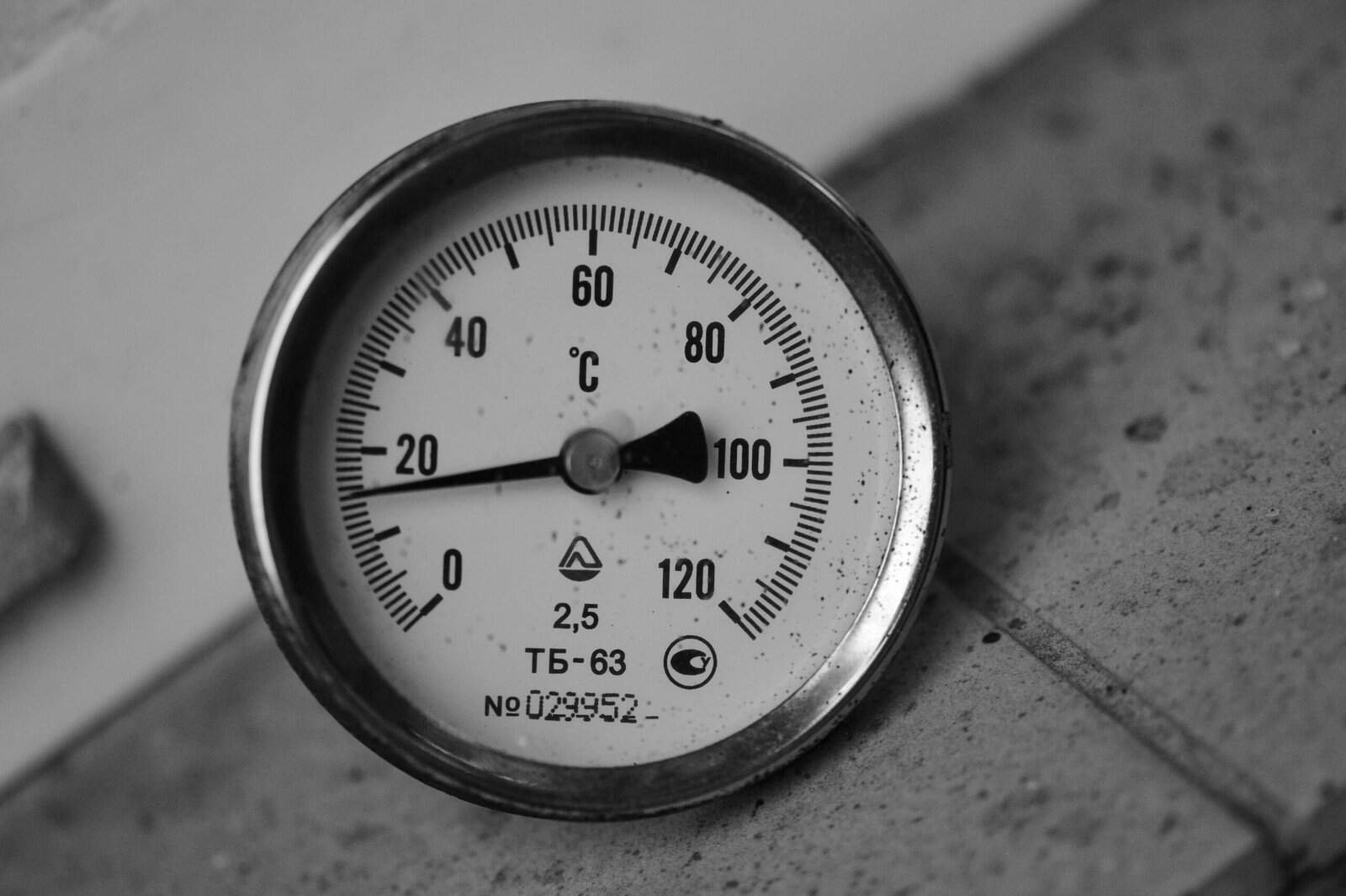
An oven thermometer exists because the dial on your oven is describing an intention rather than a measurement. Most home ovens run off their set temperature by a meaningful margin, and many swing 25 degrees or more either side of it as the element cycles. If your cakes brown on one side or your bread never quite sets, the oven is usually the variable nobody checked.
There are two distinct tools here that get confused constantly. An oven thermometer measures the air inside the cavity. A food thermometer measures the inside of what you are cooking. You want both, and they answer different questions, which is why this guide separates them clearly.
Quick Verdict
A simple dial thermometer that hangs from a rack is the right first purchase for almost everyone, because it stays in the oven permanently and costs very little. Add a probe thermometer separately for meat and bread. Wireless probes are worth it only if you cook large cuts regularly.
Key Takeaways
- Oven thermometers measure air temperature; food thermometers measure the food
- Most home ovens cycle 25 degrees or more around the set temperature
- Dial thermometers stay in the oven permanently and need no batteries
- Position matters, since ovens have hot and cold zones
- An oven that reads consistently wrong can usually be recalibrated
- Glass-faced dial models are far easier to read through a closed door
How We Picked
Accuracy across the useful range mattered most. A thermometer precise at 350 degrees and vague at 200 or 475 is only doing part of the job, since low and slow roasting and high-heat bread baking are exactly where oven error hurts most.
Readability through a closed door was the second criterion, and it eliminated more products than accuracy did. A thermometer you have to open the oven to read defeats itself, since opening the door drops the temperature substantially. Temperature and time are the two things worth measuring separately, and our timer picks cover the second.
Mounting flexibility finished the list. Racks differ, and a thermometer that only hangs, or only stands, will not suit every oven. Models offering both were preferred, alongside build quality that survives repeated heating without the glass fogging permanently.
1. The Dial Oven Thermometer
Why It Stands Out
The one almost everyone should own. A bimetallic coil drives a needle, there are no batteries, and it lives in the oven permanently so it is always reading. Cost is low enough that there is no reason to be without one, and it tells you the single most useful thing: what the oven is actually doing versus what the dial claims.
Worth Knowing
Dial thermometers respond slowly, taking several minutes to settle after a temperature change. That is fine for confirming a preheat and poor for tracking a swing. Cheaper units can also drift over a few years, so check yours against boiling water occasionally.
Right for every kitchen, and particularly for anyone who bakes. Skip it only if you already own one that reads accurately.
2. The Digital Oven Thermometer With External Display
Why It Stands Out
A probe sits inside the oven, a thin heat-resistant cable runs out through the door seal, and the display sits on the counter. You watch the temperature continuously without opening anything, which is how you discover that your oven swings 40 degrees between element cycles. Sudden temperature change is also what makes pans warp under heat.
Worth Knowing
The cable is the weak point. It passes through the door gasket, and repeated closing eventually damages either the cable or the seal. Route it through the same spot every time and check the gasket periodically.
Right for diagnosing an oven you suspect is misbehaving. Skip it as a permanent fixture, since the cable will not last as a daily arrangement.
3. The Leave-In Meat Probe
Why It Stands Out
This answers the other question: not how hot the oven is, but whether the roast is done. The probe stays in the meat throughout cooking, and an alarm sounds at your target temperature, which removes the guesswork from large cuts entirely.
Worth Knowing
Placement determines accuracy. The tip needs to sit in the thickest part of the meat, away from bone and away from fat, and a probe that has drifted into a cavity will read low and mislead you badly.
Right for roasts, whole birds, and bread where internal temperature signals doneness. Skip it for thin cuts, where an instant-read is faster and easier.
4. The Instant-Read Thermometer
Why It Stands Out
The most frequently used thermometer in most serious kitchens. A thin probe reads in a few seconds, so you can check several spots in a roast, test a loaf, or confirm chicken without committing to a leave-in setup.
Worth Knowing
Speed varies enormously across price points, from two seconds to fifteen, and the difference matters when you are holding an oven door open. Many models are only splash resistant rather than washable, so check before rinsing one under a tap.
Right for everyday cooking and as the thermometer you reach for most. Skip it as your only thermometer, since it tells you nothing about oven air temperature.
5. The Wireless Probe Thermometer
Why It Stands Out
No cable through the door at all. The probe transmits to a receiver or a phone, which means no gasket damage and no cable to route. For long cooks where you would rather not stand in the kitchen, the convenience is real.
Worth Knowing
These carry batteries or electronics inside the oven, which imposes a maximum temperature lower than a plain probe. Check that ceiling against how you cook, since high-heat bread baking can exceed it. Signal through an oven cavity is also less reliable than the marketing suggests.
Right for large cuts, long roasts, and smoking. Skip it for high-temperature baking above the unit’s rated limit.
You can convert a temperature and adjust it for a fan oven before deciding.
6. The Infrared Surface Thermometer
Why It Stands Out
Point and read a surface temperature instantly without touching anything. For a pizza stone, a cast iron skillet, or a griddle, this is the only practical way to know whether the surface is actually at temperature rather than merely hot.
Worth Knowing
Infrared reads surfaces only, not interiors, so it cannot tell you whether food is cooked through. Shiny surfaces such as bare stainless also confuse the reading. It complements the others rather than replacing any of them, and it pairs naturally with baking on a stone.
Right for cast iron, pizza stones, and griddles. Skip it as a general-purpose cooking thermometer.
Oven and Food Thermometers at a Glance
| Type | Measures | Stays in oven | Best for |
|---|---|---|---|
| Dial oven | Air temperature | Permanently | Everyone |
| Digital with display | Air temperature | During cooking | Diagnosing swings |
| Leave-in probe | Food interior | During cooking | Roasts and bread |
| Instant-read | Food interior | No | Everyday checks |
| Wireless probe | Food interior | During cooking | Long cooks |
| Infrared | Surfaces | No | Stones and skillets |
What to Look For in an Oven Thermometer
Can you read it through the door?
Large clear numbers and a glass rather than plastic face make the difference. Opening the door to check drops oven temperature by a substantial margin and defeats the purpose of measuring in the first place.
Does it hang and stand?
Oven racks vary, and so does where you want the thermometer sitting. A unit that both hangs from a rack and stands on one adapts to whatever your oven allows.
What temperature range does it cover?
A range comfortably spanning low roasting through high-heat baking is what you want. Bread and pizza push higher than most other cooking, so a thermometer topping out at 500 degrees is a real constraint for some kitchens.
How is it built?
Stainless housing with a glass face survives repeated heat cycling. Plastic components discolor and fog, and once the face is fogged the thermometer is effectively unreadable regardless of how accurate it still is.
Oven Thermometer vs Food Thermometer
Why you need both
They answer separate questions. The oven thermometer tells you whether 350 means 350, which affects every recipe timing you follow. The food thermometer tells you whether the thing you are cooking has reached the temperature it needs. Neither substitutes for the other.
Which to buy first
The oven thermometer, if you bake. It is cheaper and it corrects a systematic error affecting everything you make. If you mostly roast meat, start with an instant-read instead and add the oven thermometer next.
What Trips People Up
Trusting the oven dial
The dial reports what the oven was told to do. Ovens routinely run above or below that, and the gap is why identical recipes behave differently in different kitchens.
Reading it too soon
Preheat indicators typically sound before the oven cavity and racks have fully stabilized. Give it another ten minutes past the beep and check the thermometer rather than the light.
Placing it in one spot and assuming that is the oven
Ovens have hot and cold zones, often front to back. Move the thermometer around across a few sessions to map yours, then position food accordingly rather than fighting it forever.
Never verifying the thermometer itself
Thermometers drift. Checking a food thermometer in boiling water and in ice water takes two minutes and tells you whether to trust it, which matters more than the number it originally cost.
How to Map Your Oven
Run a baseline check
Set the oven to 350, wait until the preheat signal sounds, then wait another ten minutes before reading. Note the difference between the dial and the thermometer. That single number explains more baking frustration than any technique adjustment will.
Check more than one temperature
Ovens are not uniformly wrong. A unit running 15 degrees low at 350 may be 40 degrees low at 450. Repeat the test at the temperatures you actually bake at and write the offsets somewhere near the oven.
Move the thermometer around
Over several sessions, place it front, back, left, and right on the same rack. The variation between positions is usually larger than people expect, and knowing your oven’s cold corner tells you where not to put the tray that matters.
Repeat it once a year
Oven sensors drift and elements weaken. An annual check takes fifteen minutes of otherwise idle preheat time and catches a gradual change before it starts ruining bakes.
Recommended Reading
- setting up a workspace for baking
- scales for accurate measuring alongside accurate heat
- sheets that affect browning as much as temperature does
- bakeware for a working home kitchen
- how pan material changes baking results
- cooling racks for what comes out of the oven
- loaf pans where internal temperature signals doneness
Frequently Asked Questions
Why is my oven temperature wrong?
Home ovens commonly run off their set point, and they cycle around it as the heating element switches on and off. Sensor drift over years of use adds to it. This is normal rather than a fault, which is why a thermometer is useful.
Where should I place an oven thermometer?
Start in the center of the middle rack, which represents the average. Then try front, back, and corners across a few sessions to map your oven’s hot and cold zones, since knowing where they are is more useful than a single reading.
Can I calibrate my oven myself?
Many ovens allow a calibration offset through the control panel, and the manual will say. If yours reads consistently 25 degrees low, adjusting the offset fixes it permanently rather than requiring mental arithmetic on every recipe.
Do I need both an oven thermometer and a meat thermometer?
Yes, since they measure different things. Air temperature governs how a recipe behaves. Internal food temperature governs whether it is done. Neither one answers the other’s question.
How do I check whether my thermometer is accurate?
For a food thermometer, test in boiling water and in an ice water slurry and compare against the expected values for your altitude. Oven dial thermometers can be checked against a second thermometer or a known-good digital probe.
Why do my baked goods brown unevenly?
Usually hot and cold zones rather than a temperature error. Mapping the oven with a thermometer and rotating pans partway through generally solves it, and heavy dark pans brown faster than light ones regardless of the air temperature.
