
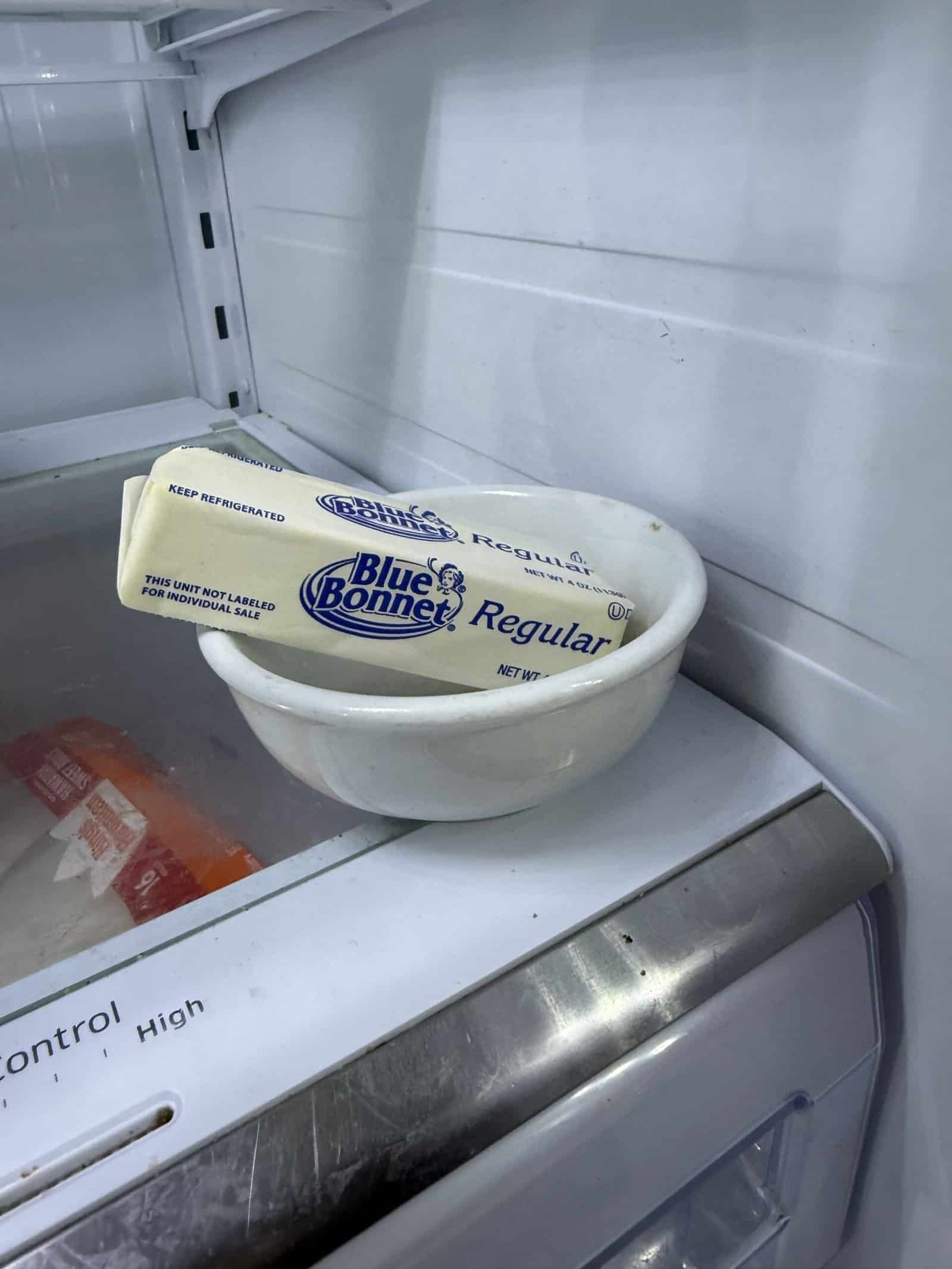
Salted butter can sit at cool room temperature for a short period without becoming unsafe, and the fridge is still where it belongs for anything beyond a day or two of active use. Whether butter needs to be refrigerated is really two questions, because safety and quality have different answers and the quality one is what most people actually notice.
The short version is that going rancid arrives long before anything dangerous does. Our guide to how long butter can sit out covers the duration side in detail.
Quick Answer
Refrigerate butter as the default and keep out only what you will use within a day or two. Salted butter resists spoilage better than unsalted, a covered dish beats an open one, and warm rooms shorten everything. Never leave it out in summer heat.
Key Takeaways
- Safety and quality are separate questions with different answers.
- Salt and low moisture are why butter tolerates the counter at all.
- Light, air, and heat cause rancidity faster than bacteria cause illness.
- Unsalted and whipped butters are stricter cases.
- A covered dish is doing real work, not decoration.
- Summer removes the margin entirely.
| Butter Type | Counter? | Why |
|---|---|---|
| Salted, covered, cool room | Short periods | Salt slows spoilage |
| Unsalted | Refrigerate | No salt to inhibit growth |
| Whipped | Refrigerate | Air incorporated, softer structure |
| Cultured or European style | Short periods, covered | Varies by salt content |
| Anything in a warm room | No | Heat accelerates everything |
| Bulk or long-term | Fridge or freezer | Months rather than days |
Why Butter Tolerates Room Temperature at All
Butter is mostly fat with a small amount of water dispersed through it. Bacteria need water, and there is comparatively little of it available, which is why butter behaves unlike milk despite coming from it.
Salt does the rest. Salted butter carries enough to inhibit microbial growth in the water that is present, which is the whole reason the counter is even a conversation.
The United States Department of Agriculture’s Food Safety and Inspection Service treats refrigeration as the default for butter and allows only short room-temperature periods, which matches how the product behaves rather than being cautious for its own sake.
The Problem That Arrives First
Rancidity, not illness. Fat oxidizes when exposed to air, light, and warmth, and the result is a stale crayon-like taste that develops well before anything unsafe does.
That is why a covered dish matters more than people assume. Cutting off the air and the light slows the reaction that actually spoils the experience of eating it.
It is also why the fridge wins for anything you are not about to use. Cold slows oxidation as well as microbial growth, and the Food and Drug Administration’s consumer guidance on refrigerated storage puts dairy in the cold chain for that combination of reasons.
Our roundup of butter crocks covers the designs built around limiting air exposure.
What I Actually Do With Butter
The part that surprises people is that I barely ever leave butter out at all. It lives in the fridge and that is where it mostly stays.
When I do leave it out, one to two days is my limit, and I never do it in summer. That is not a rule I read anywhere, it is just where I landed, and it happens to match what the USDA advises.
My butter dish is a small bowl rather than the flat rectangular tray most people picture when they hear the words. It works, and it is not the aesthetic version of this.
So I own a butter dish and still keep the butter in the fridge nearly all the time, which is a perfectly normal way to do it.
That also means I cannot tell you what a week on the counter does, because I have not done it. The long-storage half of this page is research rather than something I have lived.
How to Keep Butter Out Without Ruining It
- Use salted butter for the counter. Keep unsalted in the fridge for baking.
- Put out one stick at a time. The rest stays cold, so only a small amount is ever at risk.
- Cover it properly. A lid or a crock, not a plate with a cloth over it.
- Keep it away from the stove and the window. Heat and light are the two accelerants.
- Refrigerate in warm weather. Above comfortable room temperature there is no margin left.
- Smell it before using it. Rancid butter announces itself, and it is the test that matters.
Our roundup of butter dishes covers the covered options, and our guide to softening butter quickly covers the alternative to leaving it out at all.
The Case for the Counter
Spreadability is the whole argument and it is a good one. Cold butter tears bread, and softened butter is the difference between a pleasant piece of toast and a destroyed one.
Baking is the second case. Recipes that call for room-temperature butter mean it, because cold butter will not cream properly with sugar, and our guide to why room temperature butter matters covers what goes wrong.
Neither argument requires leaving a pound out for a week. A single stick in a covered dish gets you both, and the rest of the block keeps properly.
Storing Butter for the Long Run
The fridge handles weeks. Keep it in its wrapper or a closed container, since the wrapper blocks light and stops it picking up smells from everything else in there.
The freezer handles months and it works well, because the fat structure survives freezing better than most foods do. Wrap it well and thaw it in the fridge.
Wrapping matters more than placement. Butter picks up odors readily because fat absorbs aromatic compounds, which is how a stick ends up tasting faintly of onion.
Where in the fridge matters less than people think, though the door is the warmest and most temperature-variable spot. That is the same reasoning behind our guide to whether eggs belong in the door or on a shelf, and our roundup of refrigerator organizer bins covers keeping track of what is in there.
Frequently Asked Questions
Does butter need to be refrigerated?
Refrigeration is the default and the safe answer for anything beyond immediate use. Salted butter tolerates a short spell at cool room temperature because of its low water content and salt. Unsalted, whipped, and warm-weather butter should stay cold.
How long can butter sit out safely?
Guidance points to short periods rather than open-ended counter storage, and a day or two of covered, cool-room storage is a common practical limit. Warm rooms shorten it considerably. Rancid flavor usually arrives before any safety concern.
Does salted butter last longer out of the fridge?
Yes, meaningfully. Salt inhibits microbial growth in the small amount of water butter contains, which is why salted is the type people leave out. Unsalted has no such protection.
Can you leave butter out in summer?
No. Above comfortable room temperature butter softens toward oily, separates, and oxidizes faster, and the margin that makes counter storage reasonable disappears. Keep it cold and soften what you need.
How can you tell if butter has gone bad?
Smell is the reliable test. Rancid butter has a sour, stale, crayon-like smell, and the surface may darken or look waxy compared with the interior. If it smells wrong, throw it out rather than tasting it.
Is a butter crock better than a dish?
A crock limits air exposure more effectively, which is the mechanism that slows rancidity. Any covered vessel beats an open one. The important feature is the cover rather than the shape.
Can you freeze butter?
Yes, and it freezes better than most dairy because of its fat structure. Wrap it well to prevent it absorbing odors, and thaw it in the fridge rather than on the counter. Months of storage is realistic.
When should you throw butter out rather than risk it?
If it has been in a warm room for an extended period, if it smells sour or stale, if the surface looks discolored, or if there is any mold. Butter is inexpensive enough that the judgment call is not worth making. Anyone cooking for someone with a weakened immune system should be stricter still.
Sources
- United States Department of Agriculture, Food Safety and Inspection Service, guidance on dairy storage and room-temperature limits.
- Food and Drug Administration, consumer guidance on refrigerated food storage.
