
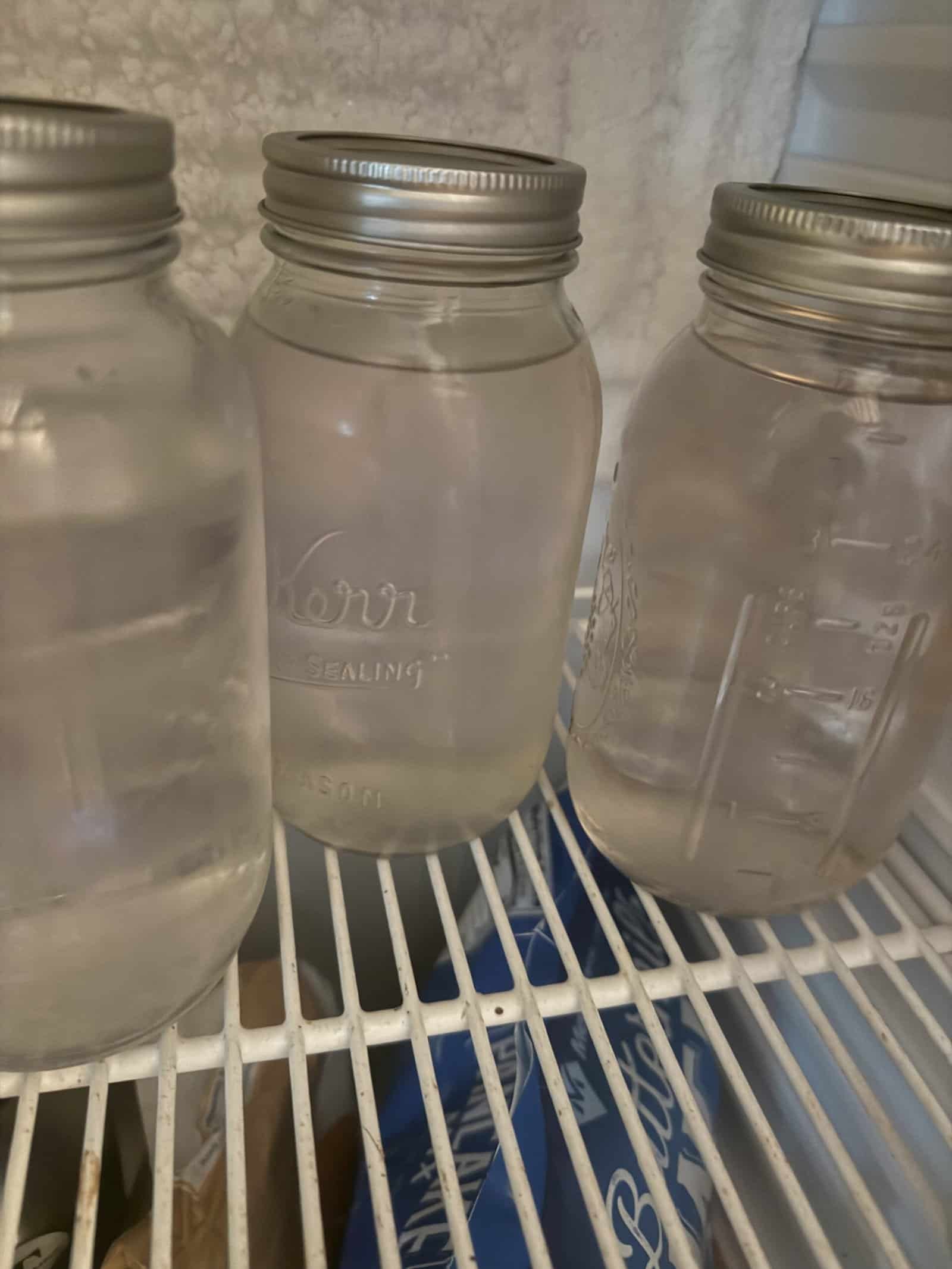
Mason jars were designed for preserving, and most of the ones in circulation now have never been near a canner. They persist because glass with a sealing lid turns out to be a good general-purpose container, and because they are cheap enough to own a lot of.
What they are genuinely good at is narrower than the internet suggests, and it comes down to three properties: glass does not stain or hold odors, the lids seal properly, and glass gets cold and stays cold. Our roundup of mason jars covers choosing them.
Quick Answer
Dry goods storage, cold drinks in the fridge, leftovers, and anything you want to see without opening. Skip them for hot liquids in the freezer, for anything needing a wide opening, and for shelves where weight matters.
Cold Drinks in the Fridge
Glass takes on the temperature of the fridge and holds it, which means a jar of water is genuinely cold rather than merely chilled. Plastic does not do this to the same degree, and the difference is noticeable.
The sealing lid also means nothing takes on fridge smells, which is the usual complaint about an open pitcher sitting next to last night’s leftovers.
The trade is weight and the fact that glass in a fridge door is a breakage risk every time the door swings. Jars are better on a shelf than in a door rack, where they get knocked. Our roundup of water filter pitchers covers the dedicated alternative.
Dry Goods Storage
Rice, beans, pasta, flour, sugar, coffee, and spices all keep well in sealed glass, and being able to see the contents means you notice what is running low without opening anything. That visibility is most of why people decant in the first place.
Glass is also inert, so nothing takes on a plastic taste over months and previous contents leave no trace once washed. A jar that held garlic goes back to holding sugar without any residue of the last job.
The limitation is the opening. A standard-mouth jar is awkward to get a measuring cup into, which is why wide-mouth jars are the better choice for anything you scoop rather than pour. Our roundup of pantry storage containers covers purpose-built options.
Leftovers and Meal Prep
Soups, sauces, dressings, and overnight oats all suit a jar, and glass goes in the microwave and the dishwasher without complaint. Nothing stains it and nothing lingers in it afterward.
Layered salads work because the sealed jar keeps the dressing at the bottom away from the leaves until you shake it, which is a genuine advantage rather than a presentation trick.
What jars do badly is anything you need to get a hand into, and anything wide and flat. A rectangular container stacks better and wastes less fridge space, which matters more in a small fridge than the material does. Our roundup of food storage containers covers those.
How I Use Mine
I use mine for storage, and most of the time that means water in the fridge. Mason jars get really cold, and that is the whole reason I reach for them over anything else for a cold drink.
That property is the thing I would point at for anyone deciding whether these are worth owning. Glass holding the fridge temperature is not a marketing claim, it is something you notice immediately compared with a plastic bottle out of the same fridge.
Beyond that they are just good containers. Sealed, visible, easy to wash, and cheap enough that having several is not a decision. I am not canning with them and never have.
What I cannot speak to is preserving, freezing, or the various crafting uses that fill most articles on this subject. Those come from research rather than from things I do.
What They Are Not Good For
Freezing liquids carelessly
Liquid expands as it freezes, and a jar filled to the top has nowhere to put that expansion, so it cracks. Straight-sided jars freeze more reliably than shouldered ones, since a shoulder traps the contents below the widest point, and headspace is essential either way.
Hot liquid into a cold jar
Thermal shock cracks glass, and the greater the temperature difference the higher the risk. Let soup cool for a while, or warm the jar under the tap first, rather than pouring boiling liquid straight into something taken from the fridge.
Efficient shelf use
Round containers waste space between them, and that lost volume adds up across a shelf. A pantry of jars looks better and holds noticeably less than the same shelf filled with rectangular containers.
Anything heavy on a high shelf
Glass full of rice is heavy, and dropping one is worse than dropping plastic. Weight matters more the higher the shelf.
Choosing Between Types
Wide mouth
Easier to fill, scoop from, and clean. The right default for dry goods and anything you eat straight from the jar.
Regular mouth
Slightly cheaper and better for liquids, since the narrower opening pours more controllably.
Straight-sided
Necessary for freezing, since shouldered jars trap expanding contents and crack at the shoulder.
Lid options
Two-piece canning lids are for preserving. Plastic storage caps are better for everyday use, since they do not rust and go on and off easily. Our roundup of dishwasher-safe cookware covers replacements.
Sizes and What They Suit
Half pint
Spices, dressings, single portions of dip, and anything you want a lot of small containers for. Too small for most storage jobs.
Pint
The everyday size. Suits leftovers, overnight oats, a single drink, and dry goods you use quickly.
Quart
Water in the fridge, soup, and bulk dry goods. Heavy when full, which matters on a high shelf.
Half gallon
Flour, rice, and cold brew. Genuinely heavy full, and awkward to pour from without both hands.
Practical Notes
Metal two-piece lids rust over time with repeated washing, which is why dedicated plastic storage caps exist and are worth buying if the jars are in daily rotation. The rings are designed for one sealing job rather than for coming on and off constantly.
Labels come off with warm soapy water and patience, and adhesive residue lifts with oil or rubbing alcohol. Soaking beats scrubbing, since scratched glass never looks right again.
Jars are dishwasher safe, and the metal rings are better washed by hand to slow the rusting. Our note on whether knives belong in the dishwasher covers the wider question.
Mason Jar Use FAQ
Are mason jars good for storing food?
For dry goods and liquids, yes. Glass is inert so nothing takes on a plastic taste, the lids seal properly, and seeing the contents means you notice what is low. They stack and pack less efficiently than rectangular containers.
Why do drinks stay colder in a mason jar?
Glass takes on the fridge temperature and holds it more readily than plastic, so the contents feel genuinely cold rather than just chilled. It works against you outside the fridge, where a glass jar warms up faster than an insulated container.
Can you freeze in mason jars?
With care. Use straight-sided jars rather than shouldered ones, leave headspace for expansion, and cool the contents before freezing. Filling a shouldered jar to the top is the reliable way to crack one. Whatever you put in them has to come out again, and our note on washing mason jars covers the cleanup.
Can mason jars go in the microwave?
The glass generally can, and the metal lids cannot. Remove the lid entirely, and avoid extreme temperature swings, since glass straight from the fridge into a hot microwave is a thermal shock risk.
Wide mouth or regular mouth?
Wide mouth for anything you scoop, fill, or eat from directly, and it is easier to clean. Regular mouth pours more controllably and costs slightly less, which suits liquids.
Do the lids rust?
Metal two-piece lids do over time with repeated washing, since they are designed for canning rather than daily use. Plastic storage caps avoid the problem entirely and are inexpensive.
Are they dishwasher safe?
The jars are. Metal rings and lids last longer washed by hand, since dishwasher cycles accelerate the rusting. Very rapid temperature changes are worth avoiding with any glass.
Do I need canning jars if I am not canning?
Not specifically, and they are cheap, widely available, standardized in size, and replaceable individually, which is why people use them for storage anyway. Purpose-made storage containers stack better if space is the constraint.
For the wider picture, see our guide to how to organize your kitchen.
