
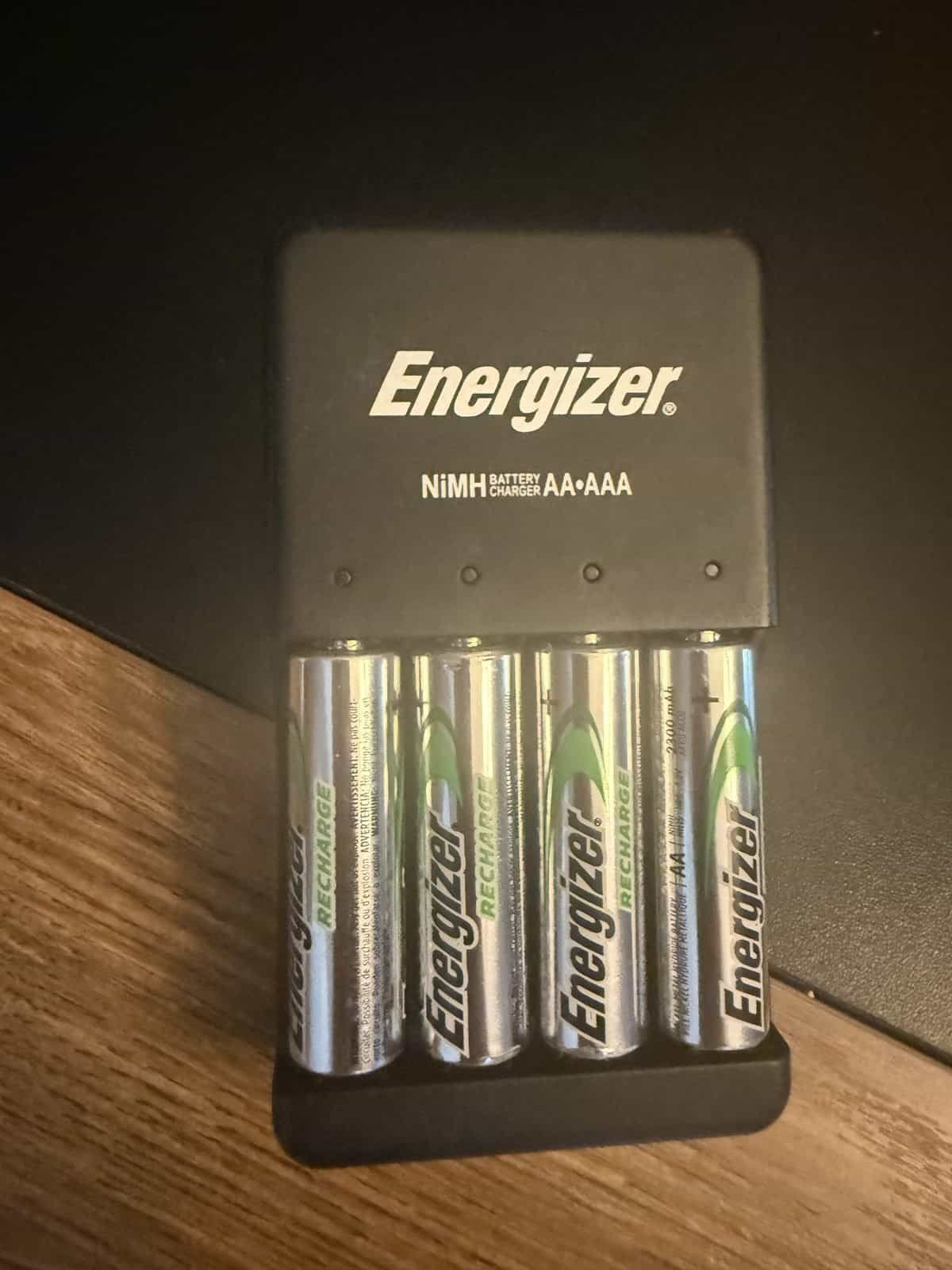
If you are tired of buying pack after pack of AAs for remotes, controllers, and toys, rechargeable batteries pay for themselves fast and cut the waste. The best rechargeable batteries hold their charge for months, survive hundreds of recharge cycles, and come with a charger that tops them up without fuss. I use rechargeable AA and AAA batteries for my remotes and gaming controllers, and they last a long time and are easy to live with, which is definitely nicer than constantly buying disposables. This guide pairs that hands-on experience with product research. The six picks below cover batteries, chargers, and all-in-one kits.
Quick Verdict
Low self-discharge NiMH batteries like Panasonic Eneloop are the best all-around choice, holding their charge for months and lasting hundreds of cycles. Amazon Basics offers the best value, an all-in-one AA and AAA kit is easiest to start with, and high-capacity cells suit power-hungry gaming controllers. Look for a good charger and cells that hold their charge when idle.
Why Trust This Guide
Independent picks, reader-supported through affiliate links at no cost to you. I use rechargeable AA and AAA batteries every day in my remotes and gaming controllers, so I can speak to what living with them is like: they last well, they are easy, and they beat buying disposables. First-person notes describe the batteries I actually use, in my own words with no brand claimed, while the rest reflects product research.
Key Takeaways
- Low self-discharge (LSD) NiMH batteries hold their charge for months, so they are ready when you need them.
- Rechargeables shine in high-drain devices like gaming controllers, and save money in anything you use often.
- Look for capacity in mAh, recharge cycle life, and a quality charger, ideally a smart one.
- A good set pays for itself quickly versus buying disposable AAs and AAAs over and over.
How We Picked the Best Rechargeable Batteries
We judged each option on charge retention, capacity, cycle life, and the quality of the included charger. Charge retention led, because a low self-discharge battery that still works after sitting in a drawer for months is far more useful than a high-capacity one that goes flat. We valued strong cycle life for long-term value, enough capacity for demanding devices, and a smart charger that protects the cells. The picks span standalone batteries, charger bundles, and complete kits.
1. Panasonic Eneloop AA
Why It Stands Out
Panasonic Eneloop AA batteries are the best all-around pick. They are the benchmark for low self-discharge cells, holding a usable charge for months or years in a drawer, and they survive many hundreds of recharge cycles. For reliable, ready-when-you-need-them power, they are the trusted standard.
Worth Knowing
Their capacity is moderate rather than the highest available, favoring longevity over maximum runtime. They cost a bit more than budget cells, though the long life justifies it.
Buy them if you want the most reliable, long-lasting rechargeables. Skip them if you only want the absolute cheapest option.
2. The Rechargeable Batteries I Use
Why It Stands Out
These are the rechargeable batteries I actually use, so I will describe them plainly. I keep AA and AAA rechargeables going in my remotes and gaming controllers, and what stands out to me is how long they last between charges and how easy the whole thing is to manage. They are simply nice to have on hand, and being able to recharge instead of running to the store is definitely easier than buying disposables again and again. For everyday household devices, that convenience is exactly the point.
Worth Knowing
Because mine are unbranded here, look for the same things I value: cells that hold their charge well between uses, both AA and AAA to cover your devices, and a simple, reliable charger. Keeping a charged spare set means you are never caught with a dead remote.
Buy a set like this for everyday remotes, controllers, and household devices. Get both AA and AAA plus a dependable charger.
3. Amazon Basics Rechargeable AA
Why It Stands Out
Amazon Basics rechargeable AA batteries are the best value pick. They deliver low self-discharge performance close to premium cells at a noticeably lower price, and they come in larger multipacks that suit a house full of remotes and controllers. For stocking up affordably, they are hard to beat.
Worth Knowing
They do not quite match the very longest cycle life of the top premium cells. Quality is consistent but check you are buying the low self-discharge version for the best charge retention.
Buy them if you want solid performance at the lowest cost. Skip them if you want the absolute longest cycle life.
4. EBL AA and AAA Charger Kit
Why It Stands Out
An EBL AA and AAA charger kit is the best all-in-one starter. It bundles a batch of both AA and AAA cells with a charger in one box, so you have everything to go rechargeable from day one, covering the full range of household devices without buying pieces separately. For a simple first setup, it is the easy button.
Worth Knowing
Bundled cells are good rather than top-tier premium, though they perform well for the price. Check the charger’s charging time, as basic models are slower than smart chargers.
Buy it if you want one box that does it all. Skip it if you already own a charger or want premium cells.
5. Energizer Recharge Charger Bundle
Why It Stands Out
An Energizer Recharge charger bundle is the best pick for a quality charger. Energizer’s universal chargers handle both AA and AAA, often with smart features that charge each cell correctly and stop when full, protecting battery health. Paired with its rechargeable cells, it is a dependable, widely available setup.
Worth Knowing
Energizer cells are reliable but not the highest capacity on the market. The smart charger costs a little more than a basic one, which is worth it for battery longevity.
Buy it if you want a smart charger that protects your cells. Skip it if a simple basic charger is all you need.
6. Eneloop Pro High-Capacity AA
Why It Stands Out
Eneloop Pro high-capacity AA batteries are the pick for power-hungry devices. Their higher mAh capacity delivers longer runtime in demanding gear like gaming controllers, camera flashes, and high-drain toys, so you recharge less often during heavy use. For devices that eat batteries, the extra capacity pays off.
Worth Knowing
Higher capacity comes with a somewhat shorter cycle life and slightly faster self-discharge than standard Eneloops. They cost more, so save them for the devices that truly need the runtime.
Buy them for high-drain devices like controllers and flashes. Skip them for low-drain remotes where standard cells last plenty long.
Rechargeable Batteries at a Glance
| If you want this | Reach for | Why |
|---|---|---|
| The most reliable all-rounder | Panasonic Eneloop AA | Holds charge, long cycle life |
| Everyday remotes and controllers | A set like the one I use | Lasts long, easy, beats disposables |
| The best value | Amazon Basics AA | Near-premium at a lower price |
| A complete starter kit | EBL AA and AAA Kit | Batteries and charger in one box |
| A smart, protective charger | Energizer Recharge Bundle | Charges and stops correctly |
| Power-hungry devices | Eneloop Pro AA | Higher capacity, longer runtime |
How to Choose Rechargeable Batteries
Prioritize Low Self-Discharge
The single most useful feature is low self-discharge, which lets a battery hold most of its charge for months in a drawer. This means your spare set is actually ready when a remote dies, rather than flat from sitting unused, so look for cells labeled LSD or pre-charged and ready to use.
Match Capacity to the Device
Capacity, measured in mAh, sets how long a battery runs before needing a charge. High-drain devices like gaming controllers and camera flashes benefit from higher-capacity cells, while low-drain remotes run for ages on standard capacity, so you do not need to pay for the highest mAh everywhere. Battery-powered smart security cameras and video doorbells are demanding too, so higher-capacity cells suit them.
Get a Good Charger
The charger matters as much as the cells. A smart charger monitors each battery, charges it correctly, and stops when full, which protects battery health and extends cycle life, whereas cheap timer-based chargers can overcharge. If you are outfitting a connected home, keep it running smoothly alongside smart plugs.
Buy Both AA and AAA
Most homes need both sizes, since remotes often take AAA while controllers and larger devices take AA. Buying a set with both, or a kit, means you can cut the disposables out completely. Battery-powered devices like smart locks and smart smoke detectors run on AAs as well, so one mixed set keeps the whole house powered. Keep them tidy in your drawer organizers so a charged set is always easy to find.
Common Rechargeable Battery Mistakes to Avoid
Using High-Capacity Cells Everywhere
High-capacity batteries self-discharge a little faster and have shorter cycle life, so putting them in a low-drain remote wastes their strengths. Save high-capacity cells for controllers and flashes, and use standard low self-discharge cells in remotes and clocks.
Skimping on the Charger
A cheap timer charger can overcharge and shorten the life of good batteries. Invest in a smart charger that stops when each cell is full, since it protects the batteries you paid for and keeps them lasting through many more cycles.
Mixing Old and New Cells
Combining batteries of different ages or charge levels in one device makes the weakest cell drag down the set. Charge and use batteries in matched sets, and label or group them so you keep cells of similar age together.
Expecting Rechargeables Everywhere
Rechargeable NiMH cells output slightly less voltage than alkalines, which a few sensitive devices dislike. They work great in remotes, controllers, and toys, but check the manual for anything that specifically calls for alkaline batteries.
Recommended Reading
Frequently Asked Questions
Are rechargeable batteries worth it?
Yes, especially for devices you use often like remotes, gaming controllers, and toys. A set of rechargeables and a charger pays for itself within a handful of recharge cycles compared with buying disposables, and it cuts down on waste, making them worth it for most households.
How long do rechargeable batteries last?
Good low self-discharge NiMH batteries survive hundreds to over a thousand recharge cycles, often lasting years of regular use. Between charges, they hold most of their charge for months, so a spare set stays ready in a drawer rather than going flat.
What does low self-discharge mean?
Low self-discharge, or LSD, means the battery keeps most of its charge while sitting unused, losing only a small percentage per month. This is why LSD cells like Eneloop are so useful: your backup set actually works when you grab it, instead of being dead from sitting idle.
Are rechargeable batteries good for gaming controllers?
They are excellent for controllers, which are high-drain devices that burn through disposables quickly. Higher-capacity rechargeables give long play sessions, and being able to recharge instead of rebuy makes them one of the best-value uses for rechargeable AAs.
What is mAh on a battery?
mAh, or milliamp-hours, measures a battery’s capacity, meaning how much charge it holds and roughly how long it runs before needing a recharge. Higher mAh means longer runtime, which matters most for power-hungry devices and less for low-drain ones like remotes.
Do I need a special charger for rechargeable batteries?
Yes, NiMH rechargeables need a NiMH charger, and a smart one is best. Smart chargers monitor and charge each cell correctly and stop when full, protecting the batteries, while cheap timer chargers risk overcharging and shortening battery life.
Can I use rechargeable batteries in any device?
They work in most everyday devices like remotes, controllers, toys, flashlights, and battery-powered smart-home gear such as smart water leak detectors. A few sensitive devices specify alkaline batteries because rechargeables output slightly lower voltage, so check the manual, but for the vast majority of household gear rechargeables are fine.
How do I make rechargeable batteries last longer?
Use a smart charger, avoid mixing old and new cells, and do not leave them fully drained for long periods. Choosing the right capacity for each device and storing charged cells at room temperature also helps them hold up through many more cycles.
