
Yes, and a kamado handles wet weather better than almost any other outdoor cooker, with one real caution around dousing a hot ceramic body with cold water. Whether you can use a kamado grill in the rain is less about the cooker coping and more about the top vent, the charcoal and your own comfort standing next to it.
The sealed design that makes it fuel efficient also makes it weatherproof in use. Our guide to whether a kamado grill is worth it covers weather tolerance as one of its advantages.
Quick Answer
Rain has very little effect on a kamado mid-cook, because the body is thick, insulated and sealed. Cover or shield the top vent so water does not run into the firebox, keep the charcoal dry before it goes in, and avoid a sudden drenching of a very hot ceramic cooker. Steel bodies are less vulnerable to thermal shock than ceramic.
Key Takeaways
- A kamado cooks through rain with almost no temperature penalty.
- The top vent is the one opening that needs shielding.
- Cold rain on very hot ceramic is the genuine thermal shock risk.
- Insulated steel tolerates temperature swings better than ceramic.
- Wet charcoal is the practical problem, not the cooker.
- Water inside the firebox is never acceptable, rain or otherwise.
| Condition | Effect on the cook | What to do |
|---|---|---|
| Light rain | Essentially none | Carry on |
| Heavy rain | Slight heat loss, water into the top vent | Shield the vent |
| Wind with rain | Affects the draw more than the rain does | Watch the vents, not the gauge |
| Cold downpour on a searing cook | Thermal shock risk on ceramic | Shelter it or close down first |
| Damp charcoal | Slow to light, struggles to reach high heat | Store fuel dry |
| Rain while stored | Hardware corrosion over time | Keep it covered or sheltered |
Why Rain Barely Touches the Cook
An open grill loses heat to weather because thin metal sheds it quickly. A kamado does not, since the whole point of the body is thermal mass.
Once the walls are saturated with heat, rain landing on the outside removes a trivial fraction of it. The temperature inside holds.
The seal helps as much as the mass. There is no gap for rain to enter and very little surface area exposed to cooling air.
This is the same property that lets a kamado hold a low temperature for hours with almost no attention, and it does not stop working because the weather changed.
The Top Vent Is the Real Consideration
Water running in
The top vent is an open hole facing upward. In sustained heavy rain, water can find its way down into the cooker and onto the coals.
What it causes
Not much at high heat, since water hitting hot charcoal turns to steam. During a long low cook it can dampen fuel and make temperature unstable.
The fix
A rain cap, a daisy wheel with a shield, or anything that covers the opening while leaving the airflow path clear. Some cookers ship with one.
What not to do
Do not close the top vent to keep water out. That strangles the fire and takes the cooker down. Our guide to controlling temperature on a charcoal smoker covers what the vents are actually doing.
Thermal Shock, and Where the Line Is
Ceramic cracks when different parts of it expand at very different rates. A cold downpour on a body sitting at searing heat is the scenario that does it.
This is rare and it needs a real temperature differential. Ordinary rain on a cooker at roasting temperature is not the case people are warning about.
Insulated steel is far more tolerant. Metal flexes where ceramic fractures, which is one of the practical arguments for a steel body.
Our guide to how long a kamado grill lasts covers the steel and ceramic comparison across the whole lifespan rather than a single cook.
Three Years and It Has Never Come Up
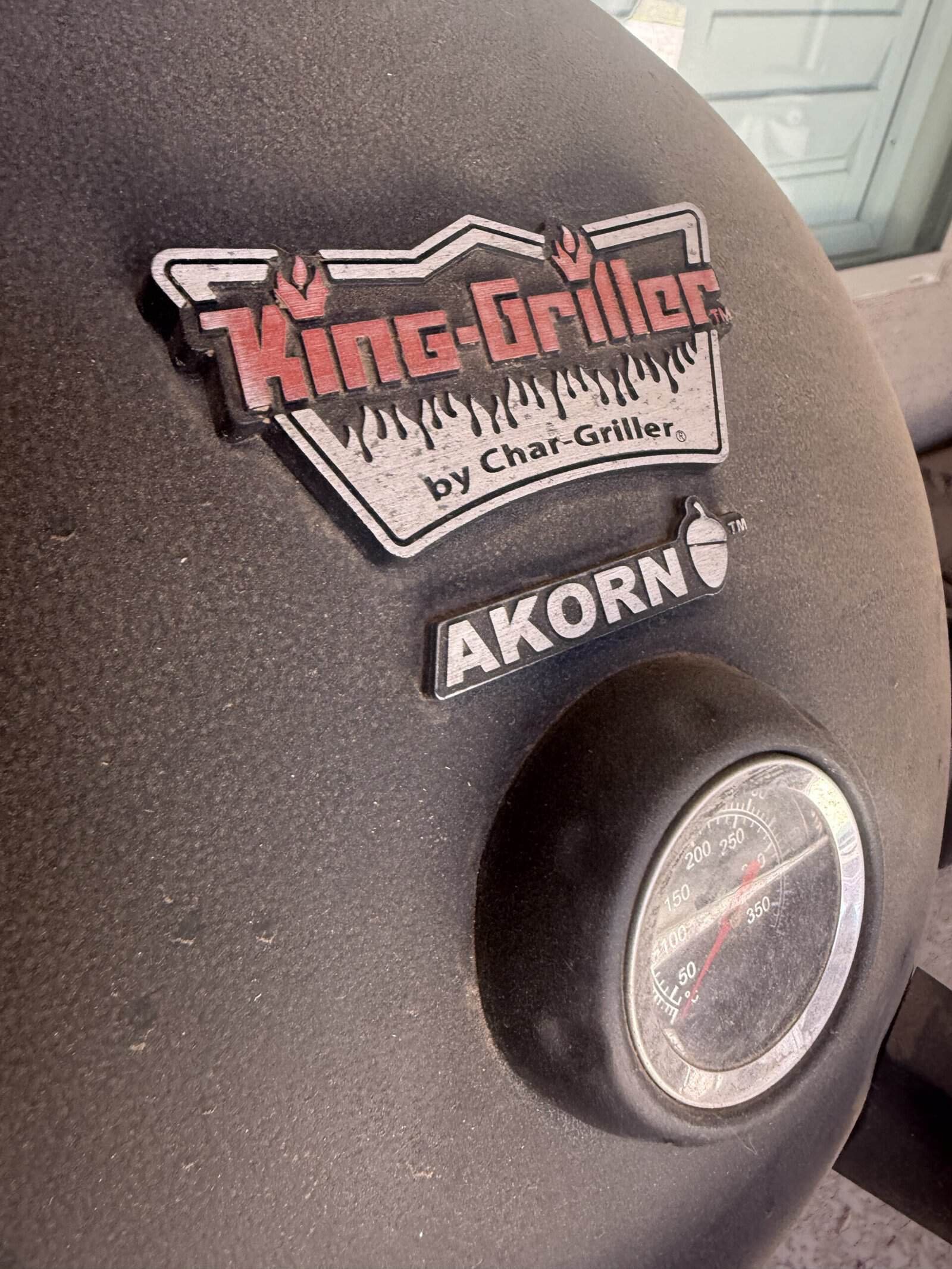
Mine is a Char-Griller Akorn I have had for over three years, and it is always under overhead cover. So the rain question has not come up for me the way it does for someone whose cooker sits in the open.
What three years has changed is the hardware. The grates and everything else have become noticeably harder to open, gradually enough that I only notice it by comparison.
Anything harder to open is something you handle less willingly, and cleanup is already the part I like least.
If I were doing it again I would treat the hinges, latches and vent hardware as maintenance items from the first year rather than waiting for them to stiffen. That is the part of this that applies whether or not a kamado ever gets wet.
Wet Charcoal Is the Actual Problem
Charcoal absorbs moisture from the air, not just from direct rain. A bag stored outdoors under shelter still takes on humidity.
Damp fuel is slow to light, produces more smoke early on, and struggles to reach high temperatures at all. It reads as a cooker fault and it is a fuel fault.
Leftover charcoal in the firebox is the case people forget. If the cooker sat through wet weather with fuel inside, that fuel is damp.
Store bags somewhere genuinely dry and sealed. Our guide to how long it takes to smoke chicken covers a long cook where damp fuel shows up as a temperature that will not settle.
Storage Is Different From Cooking
Using a kamado in the rain is fine. Leaving it out in the rain for years is the thing that costs you.
Hinges, latches, band bolts, vent threads and the lid gasket are the parts that suffer. Every one of them is metal or fabric and none of them enjoy repeated wetting.
Ash left inside makes it worse, because wet ash holds moisture against metal and sets hard. Our guide to cleaning a kamado grill covers emptying it before storage.
A cover or overhead shelter is the cheap version of a long life. Our roundup of fire pits covers the other outdoor fixture with the same exposure problem.
Cooking Through Weather Without Making It Harder
- Shield the top vent, do not close it. Airflow has to stay open or the fire goes out.
- Bring the fuel out dry. Load from a sealed bag rather than one that lived outside.
- Clear old ash first. Damp ash blocks airflow even more effectively than dry ash does.
- Expect the wind to matter more than the rain. Gusts change the draw through the vents.
- Keep the lid closed. Every lift lets rain in and heat out at the same time.
- Do not hose it down afterward. Water inside a kamado is the one rule with no exceptions.
Our roundup of oven mitts and pot holders covers handling a wet lid and hot hardware, and our roundup of meat thermometers covers reading the food so you are not lifting the lid to check in bad weather.
Recommended Reading
Frequently Asked Questions
Can you use a kamado grill in the rain?
Yes. The thick, sealed, insulated body means rain has almost no effect on the temperature inside, which is one of the genuine advantages over an open grill. Shield the top vent so water does not run into the firebox and keep the charcoal dry.
Will rain crack a ceramic kamado?
Only in a specific case: a sudden cold drenching while the cooker is at searing heat. That produces the uneven expansion that cracks ceramic. Ordinary rain at roasting or smoking temperatures is not the scenario, and insulated steel bodies tolerate the swing far better.
Should you close the top vent when it rains?
No. Closing the top vent cuts the draw and the fire goes out, which is exactly how you shut a kamado down deliberately. Use a rain cap or a shield that covers the opening while leaving the airflow path clear.
What happens if water gets on the charcoal?
At high heat, very little, since it turns to steam. During a long low cook it can dampen the fuel and make the temperature unstable. Damp charcoal is slow to light and struggles to reach high heat, which reads as a cooker fault.
Can you leave a kamado outside in the rain?
Cooking in rain is fine; long-term exposure is what costs you. Hinges, latches, band bolts, vent threads and the lid gasket are all metal or fabric and they degrade faster with repeated wetting. A cover or overhead shelter is the cheap answer.
Is steel or ceramic better in wet weather?
Insulated steel handles temperature swings better because metal flexes where ceramic fractures, so the thermal shock risk is lower. Ceramic holds heat slightly more steadily. For wet climates specifically, steel is the more forgiving choice.
Does rain make temperature control harder?
Less than you would expect. Wind has a bigger effect than rain, since gusts change the draw through the vents. The cooker’s thermal mass absorbs weather changes that would visibly move an open grill.
Should you dry it out after cooking in rain?
Wipe the exterior and leave it dry rather than closing a wet cooker up. Never put water inside to clean it. Empty ash before any period of storage, because damp ash holds moisture against metal and sets hard.
