
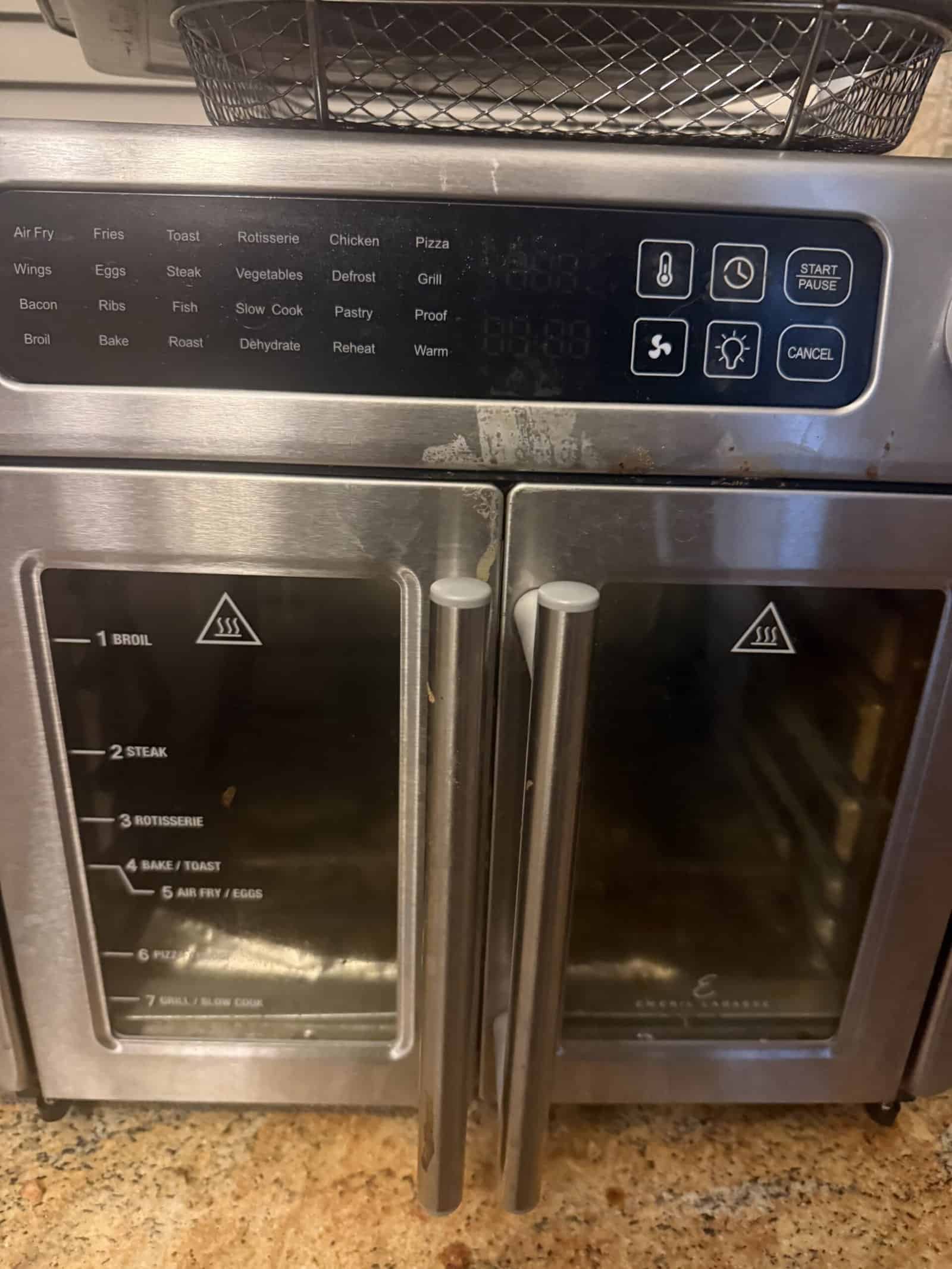
Yes, with limits that matter more than most people realize. Foil is safe in an air fryer as long as it does not block airflow, does not touch a heating element, and is weighed down by food rather than left loose.
I line mine because cleaning it is genuinely tough otherwise. It is a combo cooker I have had a couple of years, and the foil is there to keep the surfaces manageable rather than to change how anything cooks.
Quick Answer
Foil works in the basket or on the tray, under food, never covering the whole surface, and never in an empty machine. Blocked airflow is the real risk, since an air fryer is a small convection oven and circulation is the entire mechanism.
The Rules That Matter
| Do | Do not |
|---|---|
| Place foil under food | Line the whole basket floor |
| Leave gaps around the edges | Cover the perforations |
| Weigh it down with food | Run the machine with loose foil |
| Use it for messy or saucy items | Use it for anything needing crisp undersides |
| Keep it clear of the element | Preheat with foil and no food |
Why Airflow Is the Whole Issue
An air fryer cooks by circulating hot air fast enough to crisp surfaces. The perforated basket exists so air reaches the underside of food as well as the top.
Foil covering those holes turns the basket into a solid pan. Food still cooks, and it steams and browns unevenly rather than crisping, which is the one thing you bought the appliance to do.
Blocked circulation also makes the machine work harder than it should, since the thermostat is reading air that is not moving the way the design assumes it will.
That is why the guidance is foil under food rather than foil lining the basket, and why common air fryer mistakes almost all come back to airflow.
Loose Foil Is the Actual Danger
The fan in an air fryer moves air quickly enough to lift a light sheet of foil. If it reaches the heating element, you get sparking or a fire.
That is why running an empty machine with foil in it is the one thing to avoid outright. Food holds the foil down, and without food there is nothing keeping it in place.
Preheating with an empty foil-lined basket is the specific mistake that catches people, since it feels like sensible preparation.
Tearing foil to size rather than folding a larger sheet over on itself also helps, because loose corners and folded edges are what the airflow catches first.
Why I Line Mine
Cleaning is the honest reason. Mine is tough to clean without it, and foil turns a scrubbing job into lifting something out and throwing it away.
I use it for the things that make a mess. Chicken, anything with a marinade on it, anything that renders a lot of fat.
For basic fries and appetizer things I skip it, since those are exactly the items where you want air reaching the underside and where the crisping is the entire point.
It is a compromise rather than a trick. I am accepting slightly worse results on some items in order to avoid a cleaning job I dislike, and I would rather say that plainly than pretend the foil improves anything about the cooking.
If your machine cleans up easily, you probably do not need to do any of this, and general technique is covered in how to clean an air fryer.
When Foil Is a Bad Idea
Anything you want crisp underneath
Fries, wings, and breaded items all need air below them. Foil under those defeats the purpose entirely.
Acidic foods
Tomatoes, citrus, and vinegar-based marinades react with aluminum, which can leave a metallic taste and pit the foil. Parchment suits those better.
Very short cooks
Reheating something for four minutes rarely makes enough mess to justify it, and the foil costs you crisping in that time.
Machines with a bottom element
Some designs place the element under the basket, where foil sits closer to direct heat. Check the manual before lining anything.
Delicate or very light foods
Leafy items and small pieces can shift and expose the foil edge, which is exactly the situation where the fan lifts it.
How to Cut Foil So It Works
Most foil problems are shape problems, and a couple of minutes of thought removes nearly all of them.
Cut it smaller than the basket floor, leaving a visible margin of exposed perforations all the way around. That margin is what keeps air moving even though the middle is covered.
Fold the edges up slightly to make a shallow tray rather than a flat sheet. That catches fat and marinade without spreading foil into the corners where the fan can lift it.
Press it down against the basket before adding food, so it starts flat rather than relying on the food alone to hold it.
Do not run foil up the sides of the basket. It reduces the surface area available for airflow and puts material closer to the heating element on most designs.
For a tray or rack rather than a basket, the same rule applies with less margin needed, since air moves around the tray edges rather than through it.
And remove it before any cooking stage that involves the grill or broil setting, where the element runs hotter and sits closer to the food.
Parchment and Liners as Alternatives
Perforated parchment liners are made for this, with holes matching the airflow pattern so circulation continues.
They handle acidic food without reacting, and they are single-use like foil with the same convenience.
Silicone liners are reusable and reduce waste. They are also thicker, which insulates the food underneath and noticeably slows browning.
All of them share the loose-material rule. Nothing goes in an empty preheating machine regardless of what it is made of, and accessory options sit in air fryer accessories.
Keeping It Clean Without Liners
Cleaning immediately after cooking is the single biggest factor, since baked-on fat is far harder to remove once it has cooled and set.
Soaking the basket in warm water while you eat does most of the work without any scrubbing, which also protects whatever nonstick coating the basket has.
The parts people miss are the heating element and the interior ceiling, which accumulate splatter and eventually start to smoke during cooking. Both need wiping down when the machine is completely cold.
A drop of dish soap and a soft brush handles the perforations, and abrasive pads take coating off along with the residue, covered in how to use an air fryer combo cooker.
Related Reading
- cleaning an air fryer
- common mistakes to avoid
- air fryer accessories
- what to cook in one
- preheating
- using a combo cooker
Frequently Asked Questions
Can you use foil in an air fryer?
Yes, placed under food and never covering the whole basket. Blocked perforations stop the circulation that makes an air fryer work, and loose foil can reach the element.
Why can foil be dangerous?
The fan can lift a loose sheet into the heating element, which causes sparking or fire. Food weighing the foil down prevents it, which is why an empty machine is the risk.
Can I preheat with foil in the basket?
No. That is the specific situation to avoid, since there is no food holding the foil in place while the fan runs at full speed.
Does foil stop food crisping?
Under items that need air below them, yes. Fries and wings lose their crisp undersides, which is why foil suits messy items rather than crispy ones.
Can I use foil with tomatoes or lemon?
Better not to. Acidic foods react with aluminum and can leave a metallic taste, and parchment handles those without the reaction.
Is parchment better than foil?
Perforated parchment liners are designed for it, with holes that preserve airflow, and they do not react with acidic food. They cost more than foil.
How should I cut the foil?
Smaller than the basket floor, with a visible margin of exposed holes all the way around, and edges folded up slightly to catch fat rather than lying flat.
How do I avoid needing a liner at all?
Clean immediately after cooking and soak the basket while you eat. Baked-on fat is far harder to remove once it has cooled and set.
Recommended Reading
See our note on choosing the right air fryer.
For the wider picture, see our guide to air fryer vs oven.
