
For the foundational guidance behind these picks, see what to buy first and what to skip in cast iron.
To fix sticky or tacky cast iron seasoning, scrub off the gummy layer with a stiff brush or coarse salt, then re-season with a very thin coat of oil baked past its smoke point, because stickiness almost always comes from too much oil or seasoning that never fully cured. Fixing sticky cast iron seasoning is straightforward once you know the cause, and it rarely means starting over. If your pan also needs a routine refresh, our guide on how to season a cast iron skillet pairs well with the steps below.
Quick Verdict
Sticky cast iron seasoning is caused by excess oil or under-baked seasoning that stayed gummy instead of hardening. Fix it by scrubbing off the tacky layer, drying the pan fully, then baking a paper-thin coat of oil past its smoke point. Thin coats and enough heat are what keep it from happening again.
Why Trust This Guide
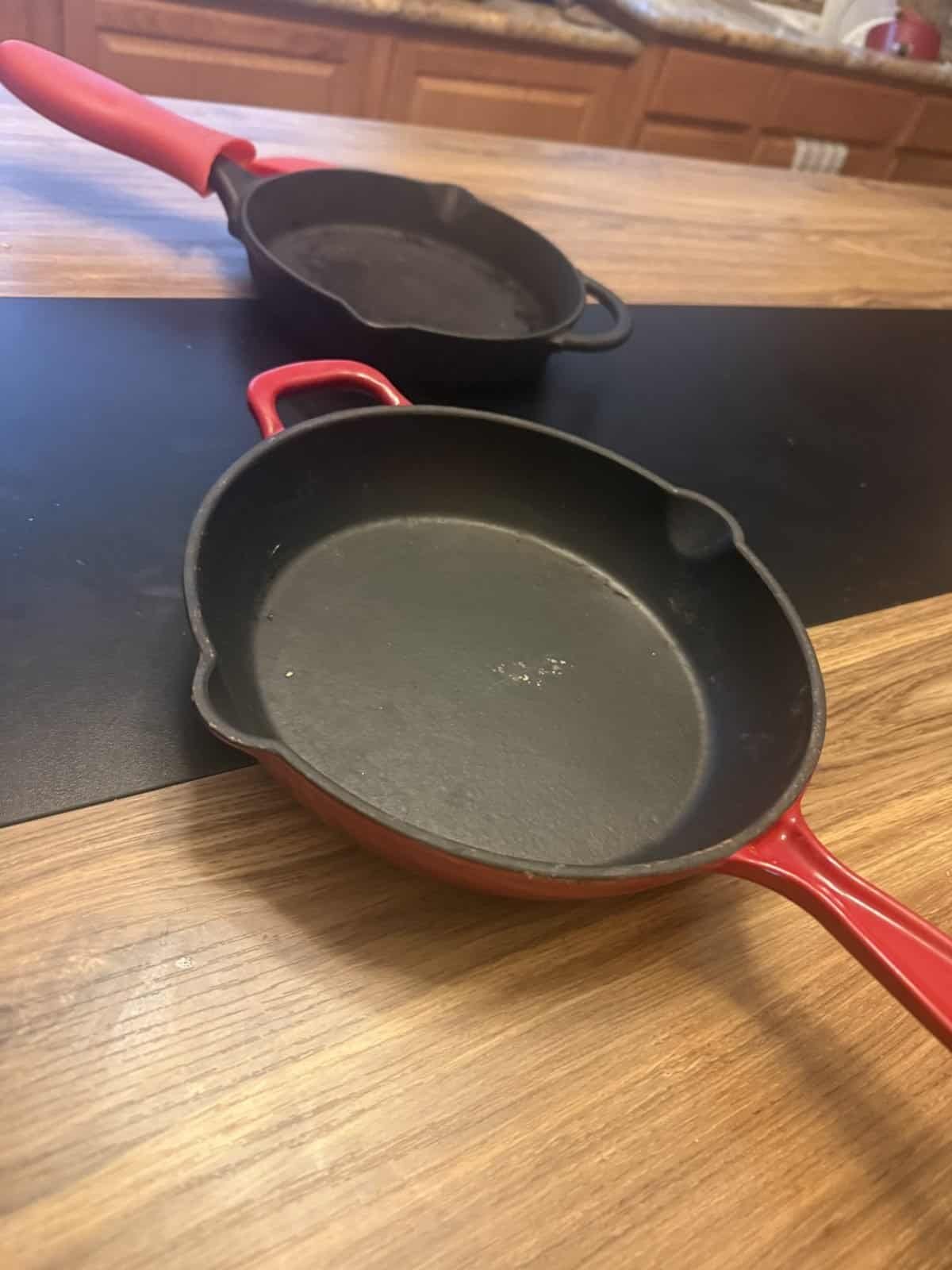
I keep several cast iron pieces in regular rotation, both bare skillets and enameled cookware, and some of them have been seasoned and reseasoned for years. Living with that much cast iron teaches you exactly how seasoning behaves, including why it turns sticky and what actually resets it.
Key Takeaways
- Sticky seasoning comes from too much oil or under-curing.
- Scrub off the tacky layer before you re-season.
- Bake a paper-thin coat of oil past its smoke point.
- Thin coats and high heat prevent a repeat.
- You rarely need to strip the pan completely.
How to Fix Sticky Seasoning Step by Step
This is the reliable reset for a tacky pan, and most cases clear up in one pass.
- Scrub off the sticky layer. Use a stiff brush, a pan scraper, or coarse salt with a little hot water to work the gummy film loose.
- Rinse and dry completely. Dry with a towel, then set the pan on low heat for a minute so no moisture remains.
- Apply a paper-thin oil coat. Rub a small amount of a high smoke point oil over the pan, then wipe it back until it looks almost dry.
- Bake past the smoke point. Heat the pan in the oven, upside down, well above the oil’s smoke point so the coat polymerizes into a hard layer.
- Cool and repeat if needed. Let it cool, then add another thin baked coat if any tackiness remains.
Why Does Cast Iron Get Sticky or Tacky?
Cast iron gets sticky when the oil on it never fully hardened. Seasoning works by heating a thin layer of oil until it chemically transforms into a smooth, solid coating, and two things stop that from finishing. The first is too much oil, which pools instead of bonding and stays gummy. The second is not enough heat or time, so the oil warms but never passes the point where it cures. In both cases you are left with a tacky film rather than a slick, baked-on surface, which is the exact problem this fix targets.
How to Remove Sticky Seasoning Without Stripping the Pan
You can almost always remove sticky seasoning without a full strip-down. Because the tacky layer sits on top and has not hardened, it comes off with mechanical scrubbing rather than harsh chemicals. Coarse salt is a favorite because it is abrasive enough to lift the gum but gentle on the good seasoning underneath. A stiff brush or a plastic pan scraper does the same job. Work in circles, rinse, and check your progress; once the surface feels smooth rather than sticky, you are ready to dry and re-season. Full stripping is only for rust or heavy buildup, not everyday tackiness.
How to Re-Season So It Does Not Happen Again
The fix for good is thinner oil and hotter, longer baking. The single most common mistake is using too much oil, so apply the smallest amount you can and then wipe the pan until it looks nearly dry, since the coat you leave should be almost invisible. Then bake it above the oil’s smoke point, not just warm, so the layer actually cures rather than sitting soft. Repeating two or three paper-thin baked coats builds a durable surface far better than one thick coat ever will. Get the oil thin and the heat high, and sticky seasoning stops being a problem.
How to Tell If Your Seasoning Needs a Full Reset
Most sticky pans need only a spot fix, but a few signs point to a fuller reset. If the tackiness covers the whole cooking surface, feels thick and gummy rather than lightly sticky, or comes with dark, gummy buildup in the corners, the seasoning has layered up unevenly and is worth scrubbing back further before rebuilding. Patchy, flaking seasoning alongside the stickiness is another cue that the surface is uneven and a more thorough scrub-and-reseason will give a better result than patching over it. None of this means the pan is damaged; it simply means starting the seasoning cleaner. If you also see rust under the sticky spots, treat that first, since bare metal needs removing and re-sealing. When in doubt, a light pan is quick to reset, so erring toward a fuller scrub rarely wastes much time and leaves you with a smoother, more even surface.
Recommended Reading
- cleaning a cast iron skillet, for routine care.
- restoring a rusty skillet, when rust is the issue.
- when a pan is beyond repair, the rare dealbreakers.
- storing cast iron, to keep seasoning intact.
- the best cast iron skillets, if you want a fresh one.
Common Mistakes to Avoid
Using too much oil
This is the root of most tackiness. Wipe the pan until it looks almost dry before baking, since a visible film will stay gummy.
Not baking hot enough
Warm is not enough. The oil must pass its smoke point to cure, so bake above that temperature rather than just heating the pan.
Skipping the scrub step
Baking over a sticky layer just bakes in the stickiness. Remove the tacky film first, then apply a fresh thin coat.
Rushing with one thick coat
One heavy layer stays soft in the middle. Several thin, fully baked coats build a harder, smoother surface that lasts.
Sticky Cast Iron Seasoning FAQ
Why is my cast iron sticky after seasoning?
Because the oil layer was too thick or did not get hot enough to cure. Excess oil stays gummy instead of bonding. Scrub off the tacky film and re-season with a paper-thin coat baked past the oil’s smoke point.
Can I cook on sticky cast iron?
You can, but food will stick and the surface will not perform well. It is better to fix the tackiness first, which only takes one reset. A quick scrub and a thin baked coat restore a smooth, usable surface.
What oil should I use to re-season cast iron?
Use a neutral oil with a high smoke point, applied in the thinnest possible layer. The exact oil matters less than the amount and the heat. A wiped-thin coat baked well above its smoke point is what cures properly.
How thin should the oil layer be?
Almost invisible. After rubbing oil on, wipe the pan back until it looks nearly dry to the eye. A layer you can clearly see is too thick and is the main reason seasoning turns sticky.
Do I need to strip the pan to fix stickiness?
Usually not. Sticky seasoning sits on the surface and scrubs off with salt or a stiff brush. Full stripping is reserved for rust or heavy uneven buildup, not routine tackiness.
How many coats does it take to fix?
Often one properly baked thin coat does it, though two or three build a more durable surface. Let the pan cool between coats and stop once it feels smooth and slick rather than tacky.
Can I just bake a sticky cast iron pan to fix it?
Baking alone will not fix it if too much oil is the cause, since heating a thick layer can bake the stickiness in. Scrub off the tacky film first, then apply a paper-thin coat and bake past the smoke point. The scrub-then-bake order is what matters.
Does dish soap cause sticky cast iron seasoning?
No. Sticky seasoning comes from excess oil or under-baking, not from soap. A small amount of mild dish soap is fine on seasoned cast iron. The stickiness fix is about applying thinner oil and baking hotter, not avoiding soap.
On avoiding it in the first place, the cleaning tools that prevent this.
See the complete guide: the full guide to choosing the right cookware for your kitchen.
