
For the foundational guidance behind these picks, see the foundational guide to building a cast iron kitchen.
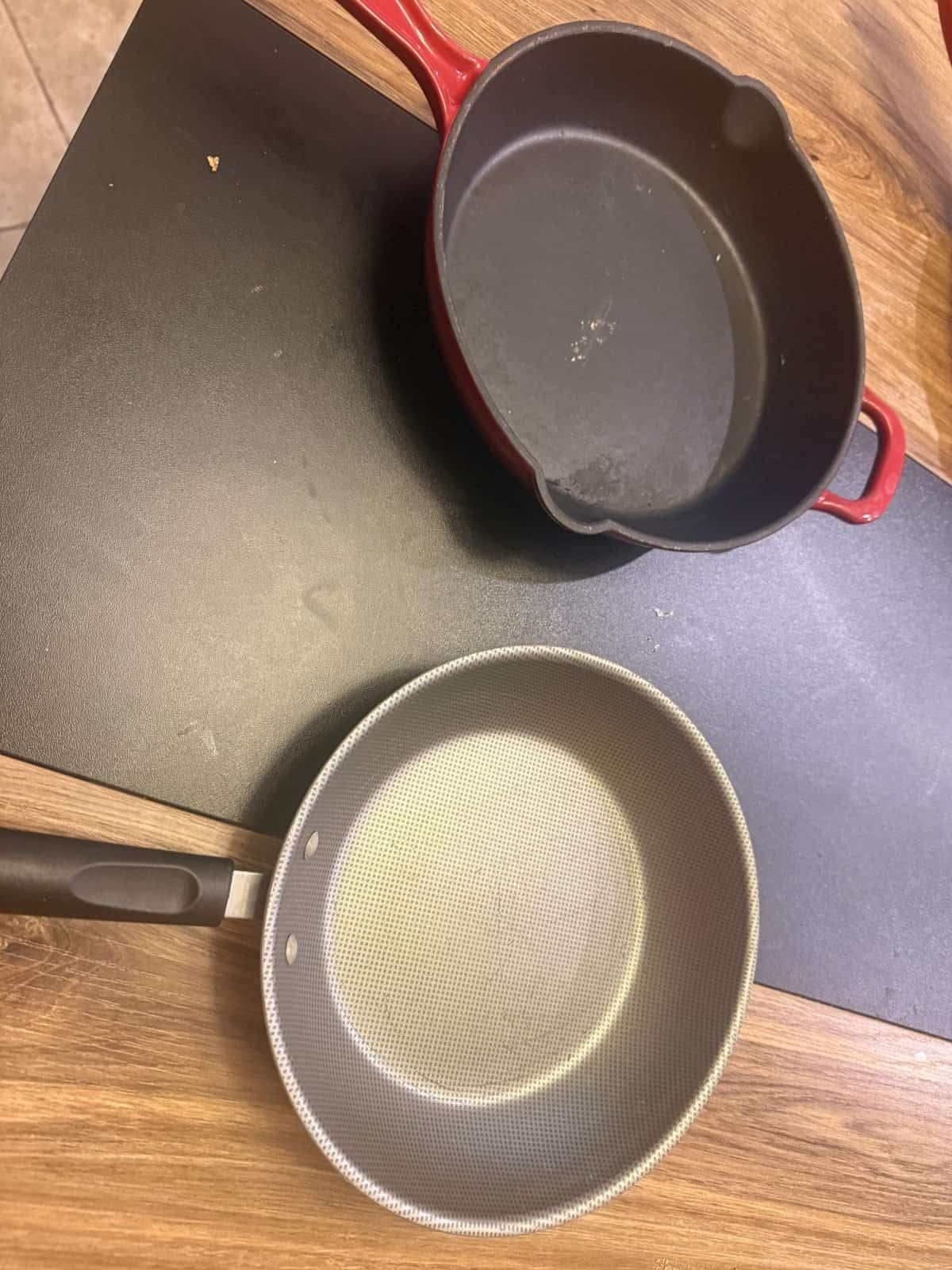
Cast iron wins for searing, high heat, durability, and oven work, while nonstick wins for delicate foods like eggs and pancakes and for easy cleanup, so most kitchens are best served by owning both rather than choosing one. In the cast iron vs nonstick decision, the honest answer is that they excel at opposite jobs. If you are leaning toward building a cast iron collection, see our cast iron skillet picks, and read on for exactly where each pan wins. For deeper dives, see our guides on ceramic versus Teflon nonstick coatings and whether nonstick pans are safe.
Quick Verdict
Choose cast iron for searing, high-heat cooking, oven use, and a pan that lasts a lifetime. Choose nonstick for eggs, pancakes, delicate foods, and effortless cleanup with less heat. Cast iron rewards maintenance and improves with age, while nonstick trades longevity for convenience. For most home cooks, owning one of each covers everything.
Why Trust This Guide
I cook with both. Cast iron is my go-to for searing steak and roasting vegetables, and I reach for nonstick on occasion when I want the easiest release and cleanup. Using them side by side for different tasks is what shaped this comparison, rather than favoring one style on principle.
Key Takeaways
- Cast iron sears and holds heat far better than nonstick.
- Nonstick releases delicate foods and cleans up easiest.
- Cast iron is oven-safe at high heat; most nonstick is not.
- Cast iron lasts generations; nonstick coatings wear out.
- Owning both covers searing and delicate cooking alike.
How We Compared
We judged these two on what actually matters in daily cooking: searing and heat, how they handle delicate foods, durability, maintenance, oven safety, and cost. The comparison assumes real home use rather than lab conditions, so the focus is on the tasks each pan is asked to do most. Cast iron and nonstick are not really rivals so much as specialists, and the sections below name the winner for each job so you can see which belongs in your kitchen, and for which meals.
Cast Iron vs Nonstick at a Glance
| Factor | Cast iron | Nonstick |
|---|---|---|
| Searing and browning | Excellent | Poor |
| Delicate foods and eggs | Good with seasoning | Excellent |
| Max heat and oven use | Very high, oven-safe | Limited, coating degrades |
| Maintenance | Seasoning and drying | Simple, gentle care |
| Durability | Lasts generations | Coating wears out |
| Cost over time | Low, buy once | Higher, replace often |
Cast Iron, Pros and Cons
- Pros: unbeatable searing and heat retention, oven-safe at high temperatures, extremely durable, improves with use, naturally nonstick once well seasoned, inexpensive to own long term.
- Cons: heavy, needs seasoning and careful drying, reacts with acidic foods when bare, slower to heat up.
Cast iron is for the cook who wants a hard sear, oven versatility, and a pan that lasts forever. It is less ideal for someone who wants zero maintenance and mostly cooks delicate foods.
Nonstick, Pros and Cons
- Pros: effortless food release, ideal for eggs and pancakes, easy cleanup, lightweight, no seasoning required, gentle learning curve.
- Cons: poor searing, limited to lower heat, coating wears out and needs replacing, generally not for high oven temperatures, less durable.
Nonstick is for the cook who prioritizes easy release and cleanup, especially for eggs and delicate foods. It is less suited to searing, high heat, or anyone wanting a lifetime pan.
Which Sears and Browns Better?
Cast iron wins searing decisively. Its dense body holds a large reserve of heat, so when food hits the surface the temperature barely drops, which is exactly what drives deep browning and a crisp crust. Nonstick does the opposite: its coating is not meant for the high heat that searing needs, and pushing it there degrades the surface while still delivering a paler result. For steak, burgers, blistered vegetables, and crispy chicken skin, cast iron is the clear winner, and it is the pan I reach for whenever a hard sear is the goal.
Which Is Easier for Eggs and Cleanup?
Nonstick wins on delicate foods and cleanup. Eggs, pancakes, crepes, and flaky fish slide off a nonstick surface with little fat and almost no fuss, and afterward a quick wipe or gentle wash is all it needs. Cast iron can cook eggs well once its seasoning is built up, but it demands more attention and fat to match nonstick’s easy release. For the lowest-effort delicate cooking and the simplest cleanup, nonstick is the more convenient tool, which is why it earns a spot even in a cast-iron-heavy kitchen.
Which Lasts Longer?
Cast iron wins durability by a wide margin. A well-kept cast iron pan can last for generations and actually improves as its seasoning builds, so buying one is often a once-in-a-lifetime purchase. Nonstick is the opposite story: even quality coatings wear down with use and heat, and eventually the pan must be replaced. That difference compounds over the years, since one cast iron skillet can outlive a long series of nonstick pans. If longevity and value over time matter most, cast iron is the lasting investment.
Which Fits Your Situation
| If this is you | Better choice |
|---|---|
| Sear steak, burgers, and roast at high heat | Cast iron |
| Cook lots of eggs and delicate foods | Nonstick |
| Want one pan to last a lifetime | Cast iron |
| Want zero maintenance and easy cleanup | Nonstick |
| Cook a bit of everything | Both |
How to Choose Between Them
Start with what you cook most. If your kitchen runs on seared meats, roasted vegetables, and oven finishes, cast iron earns its place first. If it runs on eggs, pancakes, and quick delicate dishes with minimal fuss, nonstick is the smarter primary pan. Budget and effort tilt toward whichever you will actually maintain: cast iron rewards a little care with decades of service, while nonstick offers convenience now at the cost of replacing it later. In practice, most cooks land on both, using each for the jobs it does best, a theme in choosing the right cookware rather than forcing one pan to do everything.
The Verdict
Cast iron is the stronger all-around pan for searing, high heat, oven work, and sheer longevity, making it the better single choice for serious cooking. Nonstick wins clearly for eggs, delicate foods, and low-effort cleanup, which is a real and daily need. Choose cast iron if you value performance and a lifetime pan, choose nonstick for convenience and delicate cooking, and own both if you can, since together they leave almost no gap. Explore your options in the roundups below.
Recommended Reading
- the best cast iron skillets, our full picks for searing and heat.
- nonstick pans that actually last, for delicate foods and easy cleanup.
- cast iron vs stainless steel, another key cookware matchup, like cast iron vs carbon steel.
- what to cook in cast iron, to get the most from the pan.
Common Misconceptions
Cast iron cannot do eggs
It can, with good seasoning and a little fat. Nonstick is easier for eggs, but a well-seasoned cast iron pan handles them cleanly.
Nonstick is fine at any heat
No. High heat degrades nonstick coatings and their performance. Keep nonstick to low and medium heat, and use cast iron for searing.
Cast iron is high-maintenance
Basic care is simple: dry it, keep it seasoned, avoid long soaks. In return it lasts for generations, unlike a nonstick pan.
You must pick just one
Most kitchens benefit from both. Cast iron handles searing and oven work; nonstick handles eggs and delicate foods.
Cast Iron vs Nonstick FAQ
Is cast iron or nonstick better for eggs?
Nonstick is easier for eggs, releasing them with little fat and minimal effort. Cast iron can cook eggs well once its seasoning is built up and with enough fat, but nonstick is the more forgiving choice for delicate, everyday egg cooking.
Can you sear steak in a nonstick pan?
Not well. Searing needs high heat that degrades nonstick coatings, and the result is paler than a proper crust. Cast iron holds heat far better and is the right pan for searing steak, burgers, and other high-heat browning.
Is cast iron healthier than nonstick?
Cast iron avoids coatings entirely and can add trace dietary iron, while modern nonstick is considered safe when used at proper temperatures and not overheated. The bigger practical difference is performance and durability rather than a dramatic health gap.
Does cast iron last longer than nonstick?
By far. A cared-for cast iron pan can last generations and improves with use, whereas nonstick coatings wear out and require replacement. Over time, one cast iron skillet can outlast many nonstick pans, making it the better long-term value.
Which is easier to clean, cast iron or nonstick?
Nonstick is easier day to day, needing only a gentle wipe or wash. Cast iron requires drying and occasional seasoning and avoids long soaks. Nonstick wins convenience, while cast iron trades a little effort for far greater longevity.
Should I own both cast iron and nonstick?
For most cooks, yes. Cast iron covers searing, high heat, and oven cooking, while nonstick handles eggs and delicate foods with easy cleanup. Together they span nearly every task, which is why many kitchens keep one of each.
If you are cooking everything in one pan, which pan suits one-pan cooking.
