
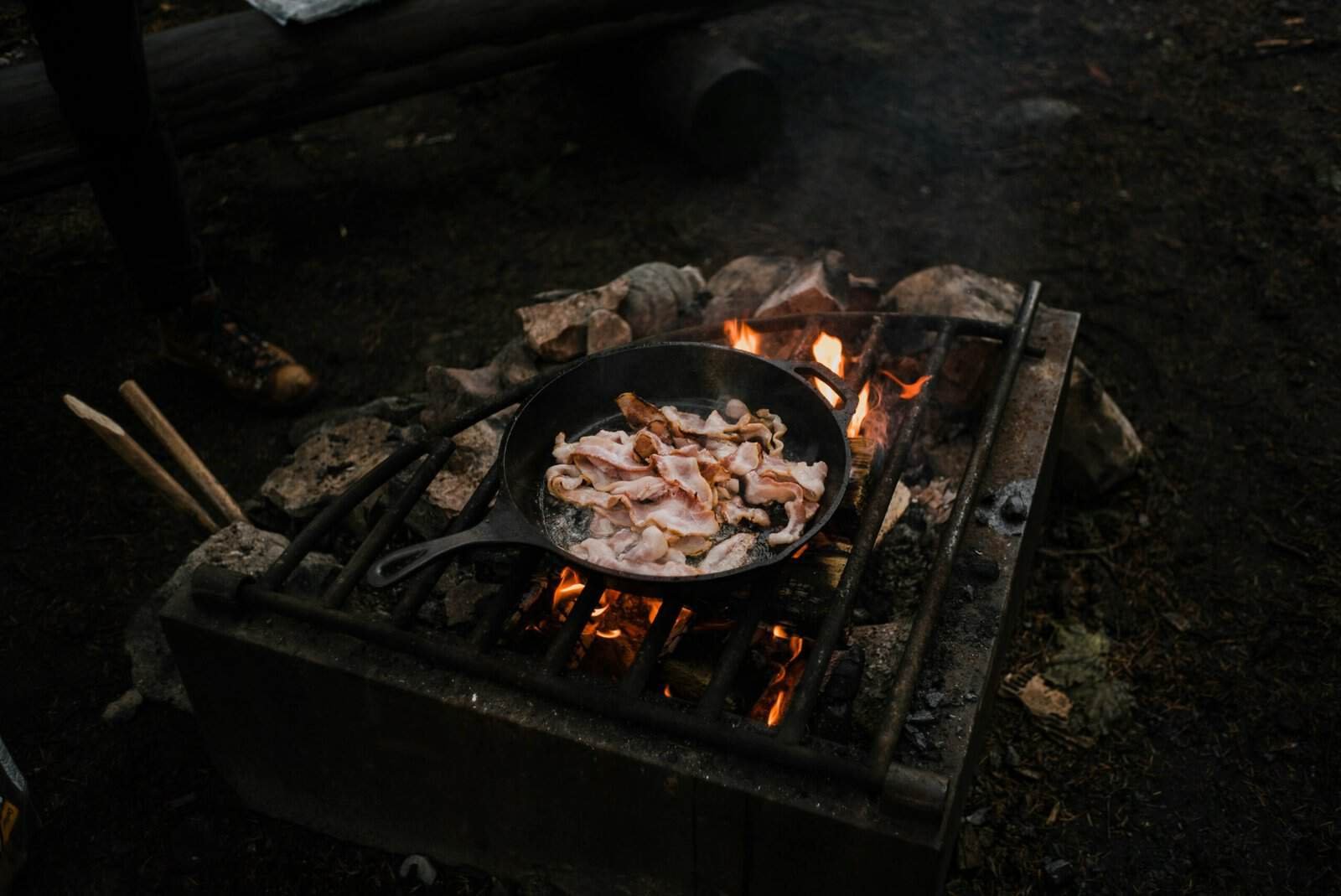
A lightweight cast iron skillet is one cast or machined thinner than a traditional pan, cutting several pounds from the same cooking diameter without giving up the seasoned iron surface. Weight is the most common reason people stop using cast iron, and the best lightweight cast iron skillets exist to remove that specific objection rather than to improve the cooking. The trade is heat mass: a thinner pan holds less stored heat, so it recovers more slowly when cold food hits it. Whether that matters depends almost entirely on what you cook.
Lightweight Cast Iron Skillets at a Glance
| Type | Why it is lighter | Trade-off | Best for |
|---|---|---|---|
| Smooth-milled thin-wall | Machined thinner after casting | Costs considerably more | Anyone who finds standard iron too heavy |
| Smaller diameter classic | Less iron overall | Cooks less food at once | One or two servings |
| Carbon steel pan | Different metal, thinner gauge | Not cast iron, seasons differently | Stovetop cooking and tossing |
| Enameled lightweight | Thinner body, no seasoning layer | Enamel can chip | Acidic foods, low maintenance |
| Skillet with a helper handle | Not lighter, easier to lift | Same weight on the shelf | Full pans, two-handed lifts |
| Long-handled thin skillet | Easier to control at the same mass | Takes more burner space | Reducing wrist strain |
The short version: a smooth-milled thin-wall pan is the direct answer if budget allows, and dropping a size on a classic skillet is the cheap answer that works nearly as well. Our roundup of cast iron skillets generally covers the full range; this page is about the weight problem specifically.
How We Picked
Options are grouped by how they reduce the load on your hand and wrist, which is not always by reducing the pan’s mass. Diameter, wall thickness, handle length, and the presence of a helper handle all change how heavy a skillet feels in use, and some of those cost nothing.
Weights and dimensions are compared from published specifications at matching diameters, since that is the only fair way to read the word lightweight. No pan here has been lifted, seasoned, or cooked in for this guide.
1. A Smooth-Milled Thin-Wall Skillet, Best Overall
Why It Stands Out
These are cast conventionally and then machined down, which removes iron from the walls and base and leaves a polished cooking surface behind. The weight saving on a ten inch pan is substantial, often several pounds against a traditional skillet of the same diameter.
The milled surface is a secondary benefit. A polished face releases food a little more readily early in a pan’s life, before seasoning has built up depth.
Worth Knowing
Machining is expensive, and these pans cost several times what a classic pre-seasoned skillet does. Thinner walls also hold less heat, so a cold steak drops the surface temperature further than it would in a heavy pan.
This suits anyone whose main complaint about cast iron is lifting it. Skip it if you sear large quantities of cold protein and want maximum heat mass.
2. A Smaller Diameter Classic Skillet, Best Cheap Fix
Why It Stands Out
Iron weight scales with the amount of iron, and dropping from a twelve inch pan to a ten or an eight cuts the load noticeably for a fraction of the price of a milled pan. For a lot of people this solves the problem entirely.
It also solves a storage problem alongside it, since smaller pans stack and hang more easily than large ones.
Worth Knowing
You cook less at once, which matters if you are feeding several people. An eight inch pan is a one or two portion pan and no amount of technique changes that.
This suits cooking for one or two on a budget. Skip it if batch size is the point of your skillet. Our picks for mini cast iron skillets cover the smallest end of this.
3. A Carbon Steel Pan, Best Alternative Material
Why It Stands Out
Carbon steel seasons like cast iron and cooks similarly, but it is formed from sheet rather than cast, so the walls are far thinner and the pan is dramatically lighter at the same diameter. It also has a sloped side that suits tossing and stirring.
For anyone whose objection is purely weight, this is often the answer they actually wanted, since it keeps the seasoned surface and the searing ability.
Worth Knowing
It is not cast iron, and it behaves differently. Carbon steel heats and cools faster, warps more readily under a sudden temperature change, and its seasoning builds up in a slightly different way. Our comparison of cast iron and carbon steel covers where each one wins.
This suits stovetop cooking where you move food around. Skip it if you want the heat mass of a heavy pan.
4. A Lightweight Enameled Skillet, Best Low Maintenance
Why It Stands Out
Enameled pans in thinner bodies come in lighter than traditional bare iron and skip the seasoning routine altogether. For anyone reducing both the physical effort and the upkeep, that combination is the appeal.
Enamel also handles acidic food without complaint, which bare iron does not, so tomato and wine based cooking is available in a way it is not with a seasoned pan.
Worth Knowing
Enamel chips, and a chipped pan is on its way out rather than repairable. It also does not develop the surface that a bare seasoned pan does over years of use. Our roundup of enameled cast iron covers the category properly.
This suits cooks who want less maintenance alongside less weight. Skip it if the seasoning layer is part of why you wanted cast iron.
5. A Skillet With a Helper Handle, Best for Full Pans
Why It Stands Out
A helper handle does not reduce weight at all, and it changes the lift completely. Two hands distribute the load and remove the wrist torque that makes a full skillet feel heavier than it is on the scale.
Most of the strain from a heavy pan comes from holding it out on one long handle. Adding a second grip point at the far side addresses the actual problem rather than the number.
Worth Knowing
The pan is still heavy in the cupboard and still heavy to hang. This helps at the moment of lifting a loaded pan, which is when it matters most, and not before or after.
Cover that helper handle before you use it, since it runs as hot as the main one, and our cast iron accessories roundup covers what fits. This suits anyone lifting full pans. Skip it if your pan is already light enough to move one-handed.
6. A Long-Handled Thin Skillet, Best for Wrist Strain
Why It Stands Out
Handle length changes how the load sits in your hand, and that changes how heavy a pan feels. A longer handle on a thinner pan gives you more control over tilting and pouring without the pan wanting to rotate out of your grip.
For anyone whose issue is wrist rather than arm strength, this combination often works better than shaving another half pound off the body.
Worth Knowing
Long handles take burner and oven space, and they get in the way on a crowded stove. A longer handle also puts the pan’s mass further from your hand, which cuts the other way if your grip is the limiting factor.
This suits pouring, tilting, and basting. Skip it if your stove is tight or your oven is small.
What to Look For in a Lightweight Skillet
How much weight are you actually saving?
Compare listed weights at the same diameter rather than trusting the word lightweight. The difference between a milled pan and a classic one is meaningful; the difference between two classic pans of the same size usually is not.
What are you cooking in it?
Thin iron suits eggs, vegetables, fish, and anything that goes into the pan near room temperature. Heavy iron suits thick cold protein that needs the pan to hold its temperature through the sear.
Is a helper handle available?
It costs nothing extra on most pans and it changes the lift more than a pound of saved iron does. If your complaint is about lifting rather than storing, this is the feature to look for first.
Does the surface finish matter to you?
Milled pans arrive smooth and classic pans arrive slightly textured. Both season and both cook well, and the difference narrows considerably once a pan has been used for a while.
Thin Iron vs Heavy Iron
What thin iron gives up
Stored heat. A heavy pan acts as a reservoir, so when cold food lands the surface temperature dips less and recovers faster. That is the mechanism behind a hard crust on a thick steak, and thinner walls have less of it.
Why it often does not matter
Most home cooking does not push a pan that hard. Eggs, vegetables, fish, cornbread, and reheating all sit well within what a thinner pan handles, and a preheated thin pan sears a thin cut perfectly well. Our guide to cooking steak on the stove covers when the extra mass earns its keep.
Common Misconceptions
That lightweight cast iron is a lesser pan
It is the same metal with less of it. The seasoning behaves the same way, the durability is comparable, and the only genuine difference in the cooking is heat retention.
That thinner pans warp
Cast iron of any thickness resists warping far better than thin sheet metal. Carbon steel is the material that warps under thermal shock, and even that mostly recovers.
That weight equals quality
Weight equals iron. Older pans are often lighter than modern ones because they were cast thinner and machined, which is the same approach modern milled pans use.
That you cannot season a milled surface
You can, and it takes to it well. A smooth face builds a seasoning layer perfectly happily, as our guide to seasoning a skillet covers.
Worth reading next: our notes on choosing cast iron cookware, a guide to cleaning a skillet, our comparison of cast iron against nonstick, and storing pans without trapping moisture, and choosing the right cookware.
Lightweight Cast Iron Skillet FAQ
Is a lightweight cast iron skillet worth it?
If weight is what stops you using cast iron, yes. A milled thin-wall pan removes several pounds at the same diameter while keeping the seasoned iron surface. If weight has never bothered you, the money is better spent elsewhere, since the cooking difference favors the heavier pan slightly.
How much lighter are these pans?
The saving is meaningful rather than marginal, often several pounds on a ten inch skillet compared with a traditional cast pan of the same size. Compare the listed weights directly, since manufacturers describe pans as lightweight at very different actual weights.
Does thinner cast iron sear as well?
On thin cuts and anything near room temperature, yes. On thick cold protein the heavier pan holds its temperature better through the sear, which produces a stronger crust. Preheating longer narrows the gap considerably.
Is carbon steel lighter than lightweight cast iron?
Usually, yes, because it is formed from sheet rather than cast. It seasons and cooks similarly and suits stovetop work well, though it heats and cools faster and is more prone to warping under sudden temperature changes.
Do lightweight pans need different seasoning?
No. The process is the same regardless of wall thickness, and a milled surface takes seasoning readily. Thinner pans do heat faster during seasoning, so watch them rather than relying on timings written for a heavy skillet.
Why are old cast iron pans lighter than new ones?
Older manufacturing cast thinner and then machined the surface smooth, which is close to what modern milled pans do. Mass-market pans got heavier when production shifted toward thicker sand-cast bodies that need no machining.
What size should I buy if weight is my concern?
Ten inches is the usual compromise, cooking enough for two or three while staying manageable. Dropping to eight inches cuts the weight further and limits you to one or two portions, which is the real constraint rather than the cooking.
Can a lightweight skillet go in the oven?
Bare iron pans go in the oven regardless of thickness, and thinner ones simply heat through faster. Check any handle cover you have fitted, since silicone has a temperature ceiling that oven use can exceed.
