
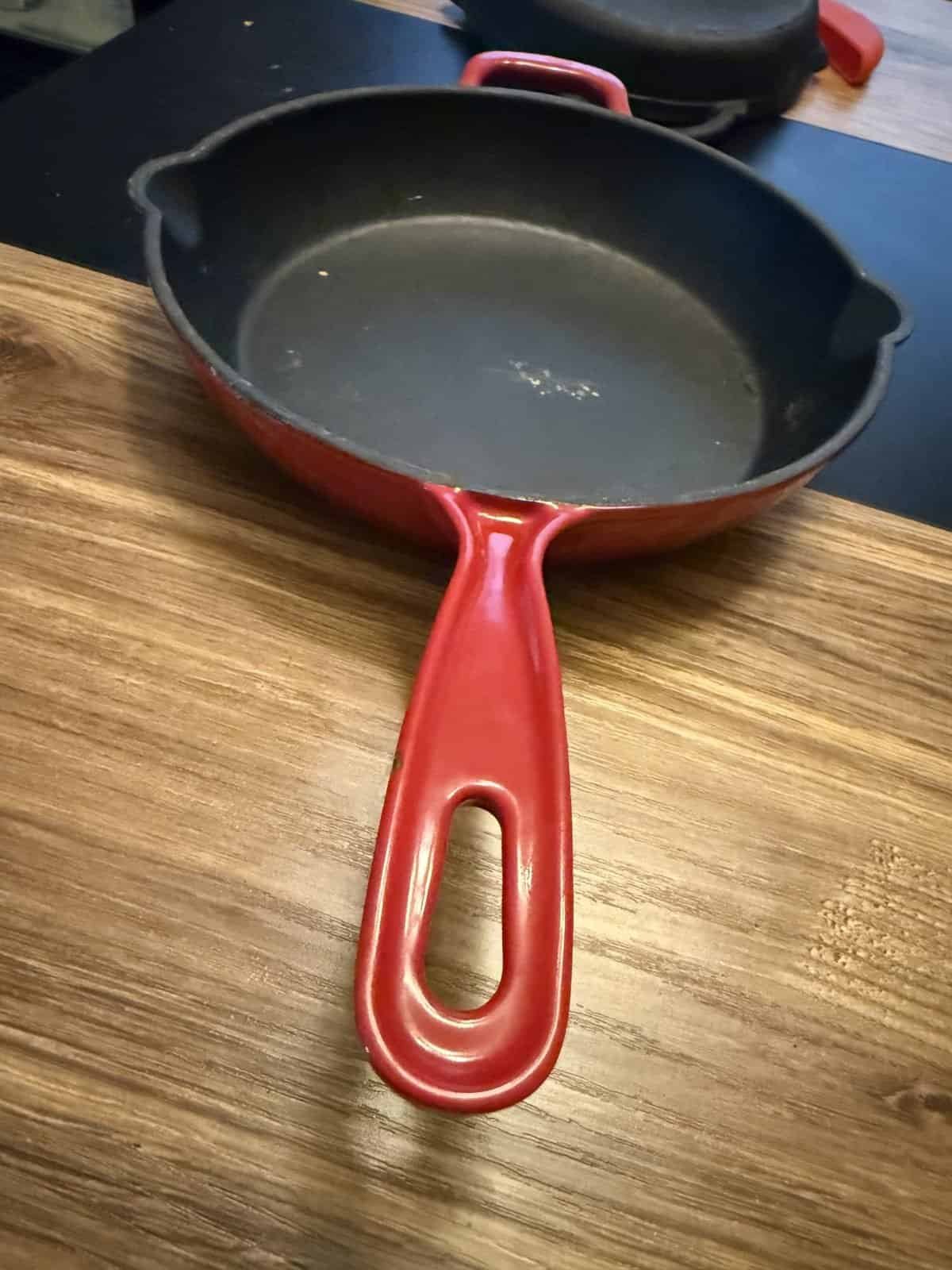
For the foundational guidance behind these picks, see the full framework for choosing cast iron.
Cast iron wins for searing, heat retention, and naturally nonstick cooking once seasoned, while stainless steel wins for versatility, acidic foods, pan sauces, and low maintenance, so the best answer for most kitchens is to keep both. In the cast iron vs stainless steel decision, each pan owns different strengths rather than one being simply better. If you are weighing your cookware, our cast iron skillet picks and the sections below show where each one wins.
Quick Verdict
Choose cast iron for searing, heat retention, and a naturally nonstick surface once seasoned. Choose stainless steel for versatility, acidic dishes, building fond for pan sauces, and hands-off maintenance including the dishwasher. Cast iron rewards care with a lifetime of use, while stainless steel is the low-fuss all-rounder. Serious cooks tend to keep both.
Why Trust This Guide
I cook with both. Cast iron is what I reach for to sear steak and get a hard crust, and I use stainless steel on occasion for its versatility and easy upkeep. Cooking with each in the same kitchen, for the jobs each does best, is what informed this head-to-head rather than loyalty to one style.
Key Takeaways
- Cast iron holds heat and sears better than stainless.
- Stainless handles acidic foods without any reaction.
- Stainless builds fond, ideal for pan sauces.
- Cast iron needs seasoning; stainless is low maintenance.
- Both last for decades, making either a lasting buy.
How We Compared
We compared these on heat and searing, acidic cooking, pan sauces, maintenance, versatility, and durability, focused on everyday home cooking rather than lab tests. Cast iron and stainless steel are the two workhorses many cooks debate between, and they win at genuinely different tasks. Each section below names the winner for that specific job, so you can match the pans to how you actually cook instead of picking one on reputation alone.
Cast Iron vs Stainless Steel at a Glance
| Factor | Cast iron | Stainless steel |
|---|---|---|
| Searing and heat retention | Excellent | Good |
| Acidic foods | Poor when bare | Excellent |
| Pan sauces and fond | Limited | Excellent |
| Nonstick when used right | Yes, once seasoned | No |
| Maintenance | Seasoning and drying | Very low, dishwasher-safe |
| Durability | Generations | Decades |
Cast Iron, Pros and Cons
- Pros: outstanding searing and heat retention, naturally nonstick once seasoned, oven-safe at high heat, extremely durable, inexpensive to own for life.
- Cons: heavy, reacts with acidic foods when bare, needs seasoning and careful drying, slower to heat and adjust.
Cast iron suits the cook who wants a hard sear and a naturally slick, lifetime pan. It is less ideal for acidic cooking or anyone who wants zero maintenance.
Stainless Steel, Pros and Cons
- Pros: non-reactive with any food, superb for pan sauces and fond, versatile, low maintenance and often dishwasher-safe, responsive to heat changes.
- Cons: food can stick without proper technique, less heat retention than cast iron, no natural nonstick surface, quality sets cost more.
Stainless steel suits the cook who wants a versatile, low-fuss all-rounder that handles acids and sauces. It is less ideal for someone chasing the deepest sear or a naturally nonstick surface.
Which Sears and Holds Heat Better?
Cast iron wins searing and heat retention. Its heavy body stores far more heat than a stainless pan, so it stays hot when cold food lands, driving the deep, even browning a great sear depends on. Stainless steel sears well too and heats more responsively, but it loses surface temperature faster when food hits it, giving a slightly less aggressive crust. For steak, chops, and anything that needs maximum browning power, the kind of dish covered in what to cook in cast iron, cast iron is the winner, and it is the pan I reach for whenever the crust is the point of the dish.
Which Is Better for Acidic Foods and Pan Sauces?
Stainless steel wins acidic cooking and pan sauces cleanly. Because stainless is non-reactive, it handles tomato sauce, wine, and citrus with no metallic taste and no harm to any coating, whereas bare cast iron can react with acids and dull its seasoning. Stainless also builds fond, the browned bits that stick to the pan, better for deglazing into rich pan sauces. For a weeknight tomato dish or a wine reduction to finish a protein, stainless steel is the right tool, which is exactly why it complements cast iron so well.
Which Needs Less Maintenance?
Stainless steel wins on maintenance and convenience. It needs no seasoning, tolerates soap and scrubbing, and is frequently dishwasher-safe, so upkeep is close to effortless. Cast iron asks for more: dry it promptly, keep the seasoning built up, and avoid long soaks. Neither is difficult, but stainless is the lower-effort pan day to day. That said, cast iron’s maintenance buys a naturally nonstick surface and a pan that can last generations, so the extra care is a trade rather than a pure downside.
Which Fits Your Situation
| If this is you | Better choice |
|---|---|
| Sear steak and chase a hard crust | Cast iron |
| Cook acidic dishes and pan sauces | Stainless steel |
| Want a naturally nonstick, lifetime pan | Cast iron |
| Want low maintenance and dishwasher ease | Stainless steel |
| Cook a wide range of dishes | Both |
How to Choose Between Them
Match the pan to your cooking style. If you sear often and want a naturally slick, lasting pan, cast iron leads. If you cook varied dishes with acids and sauces and want minimal upkeep, stainless steel is the more flexible daily driver. Weight and maintenance favor stainless, while raw searing power and lifetime value favor cast iron. Most experienced cooks stop trying to crown a single winner and simply keep both, using cast iron for high-heat browning and stainless for versatility and sauces, which together cover nearly everything.
The Verdict
Cast iron is the better pan for searing, heat retention, and a naturally nonstick, generational surface, making it the choice when browning power and longevity matter most. Stainless steel wins for versatility, acidic foods, pan sauces, and easy maintenance, which suits a broader range of everyday cooking. Choose cast iron for the sear and the lifetime, choose stainless for flexibility and low fuss, and keep both for a kitchen with no real gaps. Compare full options in the roundups below.
Recommended Reading
- the best cast iron skillets, for searing and heat retention.
- the best stainless steel cookware sets, for versatile everyday cooking.
- cast iron vs nonstick, the other big cookware matchup.
- why stainless steel sticks, and how to prevent it.
Common Misconceptions
Stainless steel always sticks
It sticks only without proper technique. A preheated pan, enough fat, and letting food release on its own keep stainless surprisingly clean to cook on.
Cast iron can do everything stainless can
Not acidic cooking. Bare cast iron reacts with tomatoes, wine, and citrus, where non-reactive stainless is the better and safer choice.
Stainless does not sear well
It sears well, just not quite like cast iron. Stainless browns effectively and builds excellent fond for pan sauces.
You have to choose one
Most cooks keep both. Cast iron handles searing and oven work; stainless handles acids, sauces, and versatile everyday cooking.
Cast Iron vs Stainless Steel FAQ
Is cast iron or stainless steel better for searing?
Cast iron is better for searing because it holds more heat and keeps the surface hot when food lands, building a deeper crust. Stainless steel sears well too, but cast iron’s superior heat retention gives it the edge for maximum browning.
Can you cook acidic foods in stainless steel?
Yes. Stainless steel is non-reactive, so it handles tomato sauce, wine, and citrus with no metallic taste or damage. This is a clear advantage over bare cast iron, which can react with acids and lose seasoning.
Why does food stick to stainless steel?
Usually because the pan was not hot enough or lacked fat. Preheat stainless properly, add oil, and let food release naturally rather than forcing it. With that technique, sticking largely disappears despite the lack of a nonstick surface.
Which is easier to maintain, cast iron or stainless?
Stainless steel is easier, needing no seasoning and often going in the dishwasher. Cast iron requires drying and occasional seasoning and avoids long soaks. Stainless wins convenience, while cast iron trades upkeep for a naturally nonstick, lifetime surface.
Does stainless steel last as long as cast iron?
Both are very durable. Quality stainless lasts for decades, and well-kept cast iron can last for generations and improves with use. Either is a lasting purchase, so longevity rarely needs to be the deciding factor between them.
Should I buy cast iron or stainless steel first?
It depends on your cooking. If you sear often and want a lifetime pan, start with cast iron. If you cook varied dishes with acids and sauces and want low upkeep, start with stainless. Many cooks eventually own both.
