
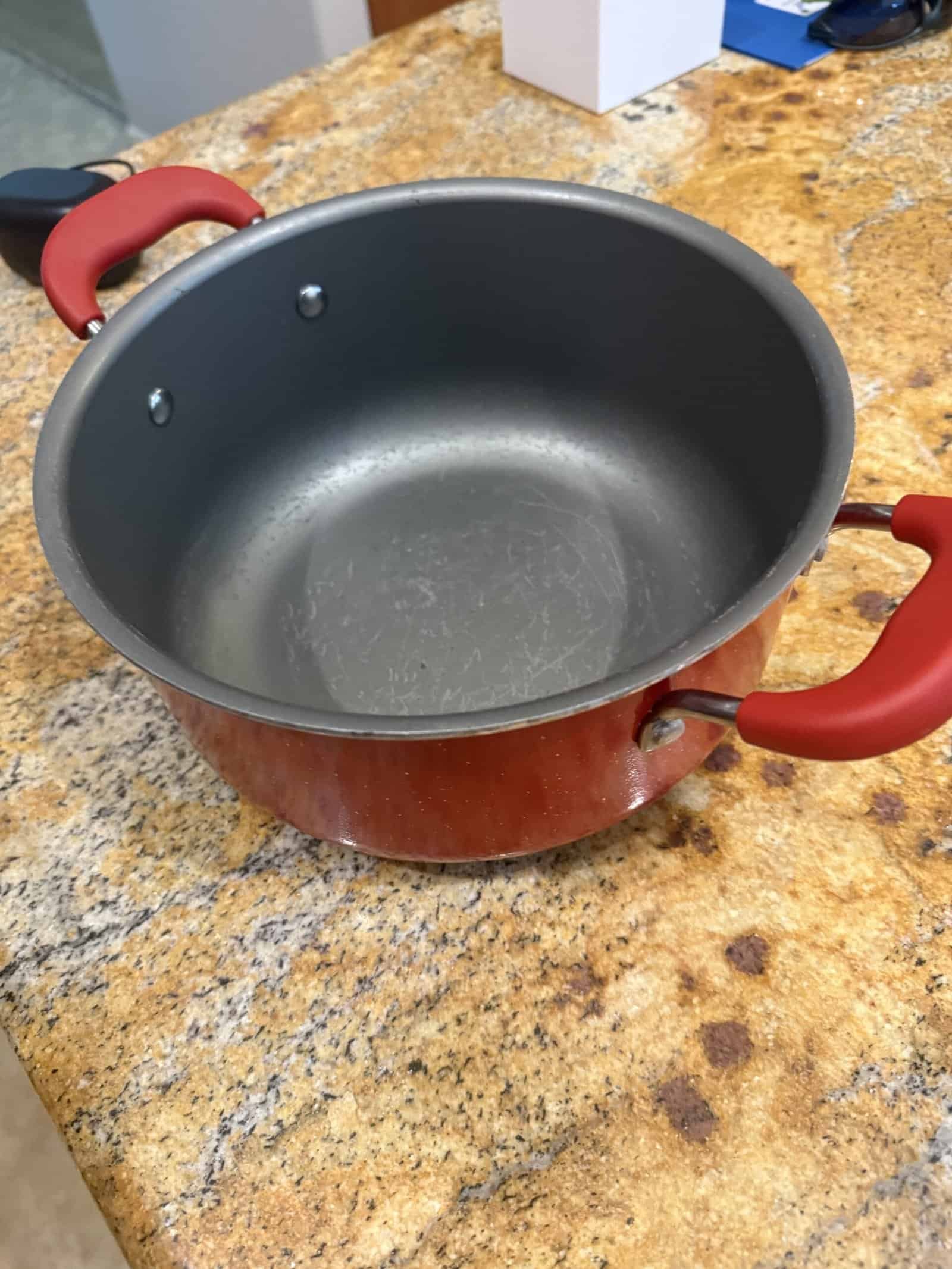
Most Dutch oven cleaning advice assumes enameled cast iron, and a lot of people own something else. Bare cast iron, enameled cast iron, and non-stick coated pots in the same shape all need different handling, and the advice for one will damage another. Working out which you have is the first step and it takes about five seconds. Our roundup of Dutch ovens covers the types.
Quick Answer
Identify the material first. Bare cast iron gets hot water, minimal soap, and immediate drying. Enameled cast iron gets soaking and a plastic scraper, never abrasives. Non-stick coated pots get gentle washing and no metal, no scouring, and no high heat.
Key Points
- Material decides the method entirely.
- Soaking beats scrubbing on every version.
- Abrasive pads ruin both enamel and non-stick coatings.
- Thermal shock cracks enamel, so let the pot cool first.
- Manufacturers differ on dishwashers, so check the manual.
Work Out What You Have
Bare cast iron
Matte black inside and out, slightly rough, and heavy. The surface is seasoned oil rather than a coating, and that seasoning is what you are protecting.
Enameled cast iron
Glassy and smooth, usually colored outside with a cream or dark interior. Very heavy for its size. The enamel is glass fused to iron, so it chips rather than scratches.
Non-stick coated
A dark gray or black coating over a lighter metal underneath, and noticeably easier to lift than cast iron of the same size. This is the version most cleaning guides skip entirely, which is a problem because the care rules are the strictest of the three.
Bare Cast Iron
Clean it while still warm, since food releases far more easily before it cools and hardens. Hot water and a stiff brush handle most of it, and a small amount of soap is fine on modern seasoning despite the old advice against it.
Stuck food comes off with coarse salt as an abrasive, or by simmering water in the pot for a few minutes to lift it. A metal scraper works too, and a knitted stainless scrubber is the gentler version of the same idea.
Dry it completely and immediately, ideally on a low burner, then wipe a thin film of oil over the interior. Water left standing is what produces rust. Our guide to cleaning a cast iron skillet covers the same routine in more detail.
Enameled Cast Iron
Let it cool before it meets water. Enamel is glass, and a sudden temperature change can crack or craze it, which is not repairable.
Warm soapy water and a soak handle most residue. For anything baked on, a plastic scraper or a soft brush works, and abrasive pads are what dull the enamel and eventually chip it.
Brown staining on a light interior is normal after enough braising, and a paste of baking soda and water lifts most of it without abrasion. That is cosmetic rather than a performance issue.
Our comparison of Dutch ovens and cast iron skillets covers the material differences.
Non-Stick Coated Pots
The coating is the whole thing you are protecting, and it is more fragile than either cast iron version. No metal utensils, no scouring pads, no abrasive powders.
Warm soapy water and a soft cloth or sponge handles nearly everything, because the coating is doing the work that scrubbing would otherwise do. If something has stuck, soaking rather than scrubbing is the answer.
High heat also degrades non-stick coatings over time, so the damage often starts at the stove rather than the sink. A pot cleaned gently but preheated aggressively will still lose its surface.
How I Clean Mine
Mine is the coated kind rather than cast iron, and cleaning it is genuinely easy. I rinse it and then it goes in the dishwasher.
What I cook in it is part of why that works. Taco meat, sausage, that kind of thing, and nothing has stuck or burned on. There is no baked-on residue to deal with because the cooking I do in it does not create any.
Worth flagging the caution I did not check at the time: plenty of manufacturers advise hand washing non-stick cookware, because dishwasher detergent and heat can degrade the coating over repeated cycles. Mine has been fine and yours might be a model where the manual says otherwise, so it is worth reading before copying my routine.
I have no experience cleaning a bare cast iron Dutch oven or an enameled one, so those sections come from research rather than from pots I have scrubbed. The braiser I use is enameled, which is a different pot.
What Not to Do
Do not shock hot enamel with cold water
Thermal shock cracks glass. Let an enameled pot cool before it goes near the sink.
Do not use abrasives on coated surfaces
Scouring pads and powders strip non-stick and dull enamel. Once the surface is compromised, food sticks worse every time.
Do not leave bare cast iron wet
Rust starts with standing water. Dry immediately and oil lightly.
Do not assume the dishwasher is fine
Manufacturers differ, and non-stick in particular is commonly advised against. The manual is the source rather than what worked for someone else.
Dealing With Stuck Food
The universal answer is soaking. Warm water in the pot for twenty minutes lifts most of what scrubbing would fight, on every material.
For bare cast iron, simmering water on the stove for a few minutes works even better, and coarse salt gives you abrasion the seasoning can survive.
For enamel, baking soda paste and time. For non-stick, patience and nothing harsh, because there is no acceptable abrasive.
Our note on cast iron cleaning tools covers what to reach for.
How Often
After every use, on all three materials. Cast iron in particular does not benefit from sitting dirty, and the old idea that a seasoned pan should not be washed has been thoroughly overtaken.
A deeper clean, meaning stain removal on enamel or a seasoning refresh on bare iron, comes up occasionally rather than routinely.
Related reading: our roundup of Dutch ovens under fifty dollars, our comparison of Dutch ovens and stockpots, our note on slow cookers and Dutch ovens, and a guide to enameled cast iron cookware.
Dutch Oven Cleaning FAQ
Can I put a Dutch oven in the dishwasher?
It depends entirely on the material and the manufacturer. Bare cast iron should never go in, since detergent strips seasoning and standing water causes rust. Enameled and non-stick versions vary by brand, and non-stick in particular is often advised against because repeated cycles degrade the coating.
How do I get burnt food off?
Soak rather than scrub, on any material. Warm water sitting in the pot for twenty minutes does most of the work. Bare cast iron tolerates simmering water and coarse salt; enamel takes baking soda paste; non-stick takes patience and nothing abrasive.
Can I use soap on cast iron?
Yes, in moderation. Modern seasoning is polymerized oil rather than a fragile grease layer, and a small amount of dish soap does not strip it. Leaving it wet is the actual risk.
Why is my enamel staining?
Light interiors discolor over time from browning and long simmers, which is cosmetic rather than a fault. Baking soda paste lifts most of it. Abrasives will remove the stain and dull the enamel with it.
What ruins a non-stick coating fastest?
High heat and abrasion. Preheating an empty coated pot hard is a common way to damage one, and metal utensils and scouring pads do the rest. Once the surface goes, food sticks and the pot does not recover.
Should I clean it hot or cold?
Bare cast iron cleans best while still warm, since food has not hardened. Enameled cast iron should cool first, because thermal shock can crack the glass. Non-stick should cool to avoid warping a lighter pot.
Do I need to re-season after cleaning?
Bare cast iron benefits from a thin film of oil after each wash, which maintains rather than rebuilds seasoning. Enameled and non-stick pots need no seasoning at all.
How do I know which material I have?
Weight and surface tell you. Bare cast iron is heavy and matte black. Enameled is heavy with a glassy colored finish. Non-stick coated pots are noticeably lighter, with a dark coating over a lighter metal underneath.
Recommended Reading
See our note on choosing a Dutch oven size, and what to cook in a Dutch oven, and choosing the right cookware.
