
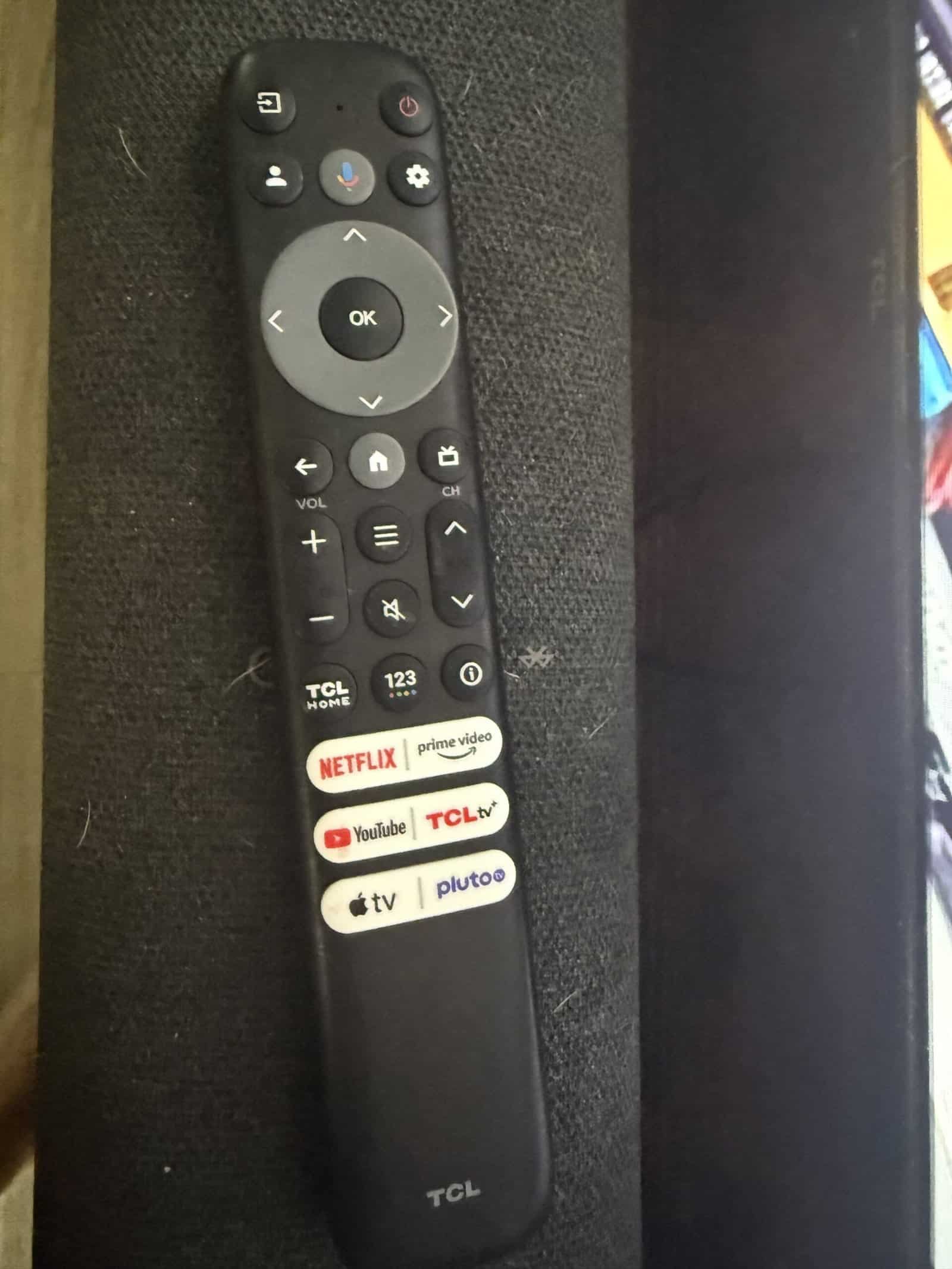
Universal remotes solved a problem that has largely gone away. A living room in 2010 might have had five remotes on the table; most now have one or two, because televisions absorbed the streaming box and HDMI CEC absorbed the volume control.
I do not own one. The TV remote handles volume through ARC, and a phone app covers the soundbar settings I rarely touch. Our note on soundbar app versus remote control covers that split.
Quick Answer
Probably not, if you have a smart TV and a soundbar on HDMI ARC. Worth it if you have three or more devices, legacy equipment, or accessibility needs a standard remote does not meet.
When It Earns Its Place
| Situation | Verdict |
|---|---|
| Smart TV plus ARC soundbar | Rarely needed |
| Three or more sources | Genuinely useful |
| Legacy AV receiver | Useful |
| Devices without CEC | Useful |
| Accessibility requirements | Frequently the best option |
| Shared household, mixed ability | Simplification has real value |
What CEC Already Does
HDMI CEC lets connected devices send control commands to each other over the same cable carrying audio and video.
The practical result is that a TV remote adjusts soundbar volume, the soundbar powers on with the television, and the set switches to the right input when a device wakes.
That covers most of what people bought universal remotes for, without buying anything.
Manufacturers all rename it, so it appears as Anynet+, SimpLink, Bravia Sync, Viera Link, or EasyLink depending on the brand. Our note on whether you need CEC for ARC covers enabling it.
Why Device Counts Fell
Streaming moved into the television
A smart TV removes the separate box that used to need its own remote.
Soundbars replaced receivers
One device rather than a receiver plus speakers plus a disc player.
Physical media declined
Fewer households have a disc player connected at all.
Apps replaced buttons
Manufacturer apps handle setup and settings that used to need a remote. Our note on whether you need a streaming stick covers the first of those.
What I Use Instead
The television remote does the volume, because ARC passes the command through to the soundbar.
There is no physical soundbar remote anywhere in the setup at all, and a manufacturer phone app covers the handful of settings that come up rarely enough not to need a button.
That is two controls for two different frequencies of use, which reads as a reasonable division of labor rather than a compromise forced by missing hardware.
The argument for a universal remote gets steadily weaker the fewer devices there are to control, and a television with streaming built into it is already most of the way toward being the only remote a room needs. Our note on whether any HDMI port works for ARC covers the connection.
What Replaced the Old Setup
Understanding why universal remotes mattered explains why they matter less now.
A typical mid-2000s living room ran a television, a cable box, a DVD or Blu-ray player, an AV receiver, and often a games console, each with its own remote and none of them talking to each other.
Switching from television to a disc meant changing the TV input, powering the player, and setting the receiver to the right source, which is three remotes for one action.
Macros were the selling point. One button that performed the whole sequence turned a genuinely annoying process into something anyone could do.
Almost every element of that setup has since been absorbed into the television or the soundbar, which is why the problem shrank rather than being solved. Our roundup of smart speakers covers another route to voice control.
When One Genuinely Helps
Three or more sources is the practical threshold, since that is where input switching becomes a chore rather than a keypress.
Legacy equipment is the clearest case, as older receivers and disc players predate CEC and cannot be controlled any other way.
Mixed-brand setups sometimes handle CEC badly, and a universal remote sidesteps compatibility problems rather than troubleshooting them.
Accessibility is the strongest argument of all, since a remote with large buttons and simplified functions can make a system usable for someone a standard remote excludes.
Voice Control as an Alternative
The other answer to too many remotes is not using one at all.
Many current televisions include voice control in the remote itself, which handles input switching and app launching without navigating menus.
Smart speakers extend that to devices around the room, and some soundbars respond to voice commands directly.
Volume is where voice works least well, since it is adjusted constantly and in small increments, which is faster with a button than a sentence.
The realistic pattern is voice for the occasional command and a physical button for the frequent one, which is the same division that makes an app plus a remote work. Our roundup of TV wall mounts covers positioning equipment for line of sight.
Types Available
Basic infrared universal
Inexpensive, programmed with codes, and controls several devices without any smart features.
Learning remotes
Copy commands directly from existing remotes, which handles obscure equipment codes miss.
Hub-based smart remotes
Use a hub to control devices in cabinets and integrate with home automation.
Phone apps with IR blasters
Some phones and add-on dongles turn a handset into a remote, which suits occasional use.
The Case Against
Setup takes real time. Programming several devices, testing macros, and correcting what does not work is an evening rather than a task.
Batteries are another thing to maintain, and a smart remote with a rechargeable cell eventually needs replacing entirely.
Household adoption matters more than people expect. A remote only one person can operate makes the system worse for everyone else.
And a universal remote that replaces two working remotes with one imperfect one is a downgrade rather than a simplification. Our roundup of TV stands and media consoles covers keeping equipment accessible.
Try CEC First
Before buying anything, it is worth checking whether CEC is enabled on every device, since it frequently ships switched off.
Both ends need it. A soundbar with CEC disabled will not respond however the television is configured.
A full power cycle after enabling it matters, because the handshake happens at startup rather than continuously.
If that produces single-remote operation, the universal remote was solving a problem that had a free fix. Our note on turning off TV speakers covers a related setting.
Working through those four in order costs nothing and settles most cases, and the power cycle is the step people skip because it feels like it should not be necessary.
Common Mistakes to Avoid
Buying before checking CEC
Most single-remote setups are achievable without spending anything.
Choosing a smart hub for two devices
The complexity outweighs the benefit well before that point.
Ignoring who else uses it
A remote only one person can operate is a net loss for the household.
Assuming every device is supported
Obscure and older equipment sometimes needs a learning remote rather than a code database.
Universal Remote FAQ
Do I need a universal remote?
Probably not with a smart TV and an ARC soundbar. Three or more devices, legacy equipment, or accessibility needs are the cases where one earns its place.
Do you use one?
No. The TV remote handles volume through ARC and a phone app covers soundbar settings, so there is no physical soundbar remote at all.
What is CEC?
A control layer over HDMI letting devices command each other. It is why a TV remote can adjust soundbar volume without anything extra.
Why do device counts matter?
Universal remotes solve input switching and multiple controls. With two devices there is little switching to simplify.
What if CEC does not work?
Check it is enabled on both devices and power cycle fully. Mixed-brand setups sometimes handle it badly, which is a real case for a universal remote.
Which type should I get?
Basic infrared for a few devices, a learning remote for obscure equipment, and a hub-based smart remote only for larger or cabinet-hidden systems.
Are phone apps a substitute?
For settings, yes. For volume, an app is slower than a button, which matters for the control used most often.
What about accessibility?
This is the strongest argument for one. Large buttons and simplified functions can make a system usable for someone a standard remote excludes.
