
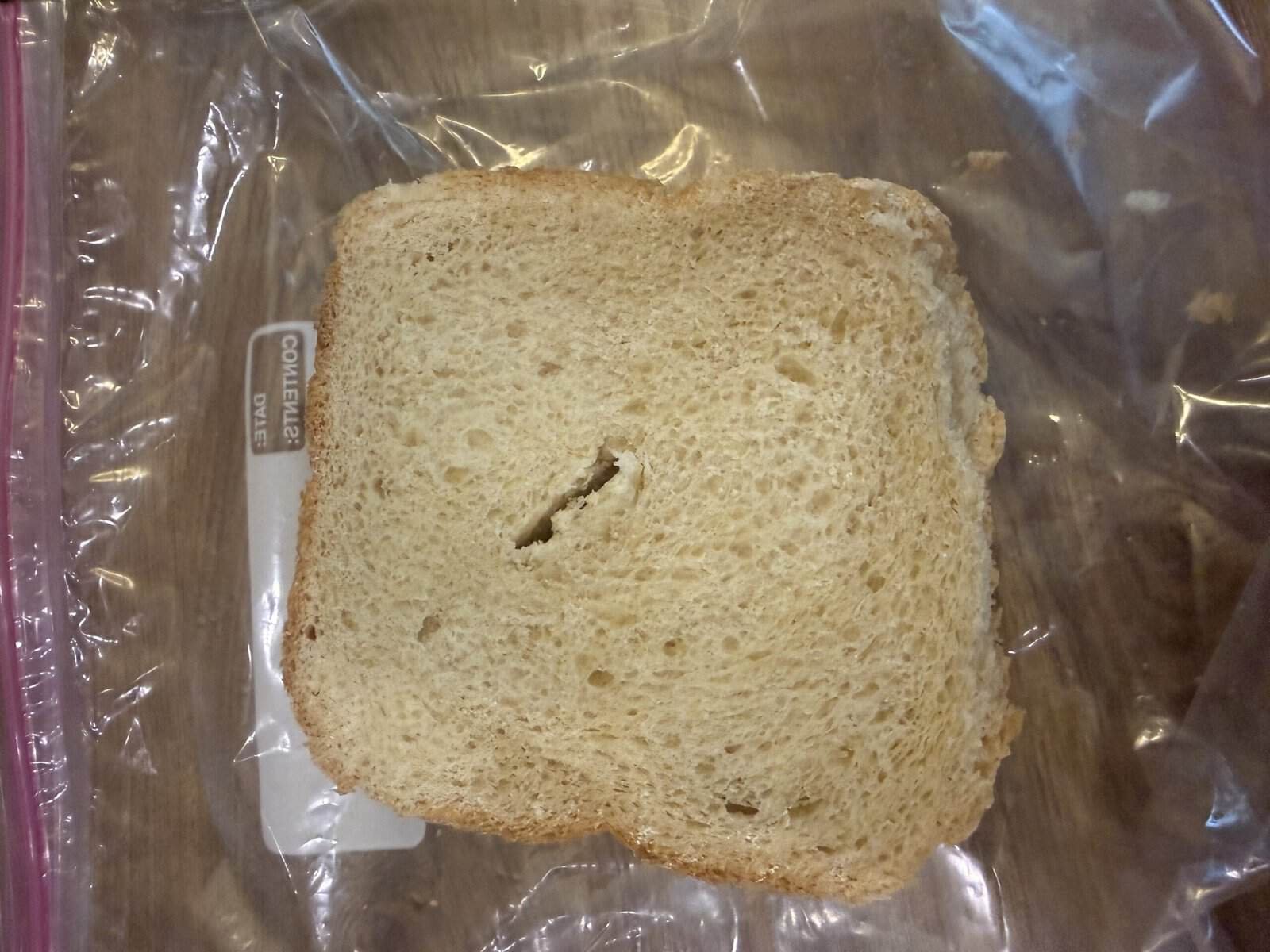
This is the white bread I actually make in my bread machine, with the amounts I use and the setting I run. It comes out really good, good enough for sandwiches and toast both, and the crust is my favorite part. There is no trick to it beyond getting the measurements right and picking the white cycle, but getting the measurements right is the whole game, because a white loaf lives or dies on the flour and the yeast. Here is exactly what I do.
Key Takeaways
- My white loaf uses a mix of regular and bread flour for structure.
- The amounts matter more than any technique with a bread machine.
- I run it on the plain white setting with no special loaf size.
- The result works for both sandwiches and toast, with a crust I love.
- Accurate measuring is what separates a good loaf from a dense one.
Related: bread machines for sandwich loaves.
The Recipe I Use
These are the exact amounts that give me a loaf I am happy with.
I use 1 and 1/8 cups of water, 3 tablespoons of oil, 2 cups of flour plus 1 cup of bread flour, 2 tablespoons of light brown sugar, 1 and 1/2 teaspoons of salt, and 1 and 1/2 teaspoons of bread machine yeast. That is the whole ingredient list, and it makes a standard white loaf that has become my regular.
The mix of regular flour and bread flour is worth noting. Bread flour has more protein, which gives the loaf more structure and a better rise, and blending it with regular flour lands the loaf where I like it. This is a plain, honest white bread, not an enriched or specialty loaf, and the ingredient list reflects that.
These amounts work in my machine. Bread machines and flours vary, so treat this as a starting point and adjust if your loaf comes out too wet or too dry, watching the dough during the mix. Why a loaf comes out dense covers how to read and fix the flour-to-liquid balance.
The Setting I Run
Simple, because white bread does not need anything complicated.
I use the plain white setting. My machine has no separate loaf size selection, so I load the ingredients, choose the white cycle, and let it run. There is no special program, no custom cycle, nothing beyond the basic white bake that most machines have.
That simplicity is part of why white bread is a good place to start with a bread machine. The white cycle is the one every machine does well, and it asks nothing of you beyond measuring the ingredients and pressing start. If your machine offers a crust color option, that is the one setting worth playing with to suit your taste.
Once the cycle is running, the machine handles the mixing, rising, and baking on its own. Using a bread machine covers the general operation if you are new to the process.
Why the Measurements Matter So Much
The one thing that decides whether this recipe works for you.
Bread is more sensitive to accurate measurement than most cooking, and a bread machine does nothing to hide a mismeasured batch. Too little flour gives a wet, slack dough that bakes down dense. Too little or old yeast gives a loaf that never rises properly. The amounts in this recipe are balanced, and getting them right is what produces the good result.
This is not a place to eyeball it, at least not until you know how your machine and flour behave. Measure the flour carefully, use fresh bread machine yeast, and follow the amounts closely the first few times. Precision here is the difference between the loaf I get and a heavy, disappointing one.
Once you have made it a few times and know what the dough should look like, you can start adjusting to taste. Until then, accuracy is your friend.
How It Comes Out
The part that makes it worth the counter space.
The loaf comes out really good. It is a proper white bread that works for sandwiches and holds up to toasting, which is most of what I want from a basic loaf. The versatility matters: a white bread that only works one way is half a bread, and this one covers both the everyday sandwich and the morning toast.
The crust is my favorite part. It comes out with a good texture and character that makes the loaf feel like something worth having made, rather than just a substitute for store bread. For me the crust is the payoff, and it is the thing that keeps me making this rather than buying a loaf.
That is the honest appeal of a homemade white loaf: it is simple, it is versatile, and the result is genuinely better than the bagged equivalent in the ways that matter to you. Whether a bread machine is worth it covers the trade of making your own.
Getting the Loaf Out
The one small hassle worth mentioning.
When the cycle finishes, the loaf bakes around the machine’s mixing paddle, which tends to come out lodged in the bottom of the bread. Working it free without tearing the loaf is a small skill you develop, and it is the only fiddly part of the whole process. It is not difficult, just something nobody warns you about the first time.
Let the loaf cool before slicing, since cutting into hot bread gives you a gummy texture and a ragged slice. A little patience at the end gives you clean slices and the crust at its best. That wait is the last step, and it is worth it.
After that, the machine cleans up easily, and you are left with a loaf that cost you a few minutes of measuring and no real skill. How to store bread covers keeping it fresh, since homemade bread has no preservatives and stales faster than store bread.
Adjusting the Recipe to Your Machine
Because no two machines and flours are identical.
My amounts are a reliable starting point, but your machine may behave a little differently, and flours vary in how much water they absorb. If your first loaf comes out too dense, check that you measured the flour accurately and consider whether your yeast is fresh. If the dough looks too wet during the mix, a touch more flour helps; too dry and stiff, a little more water.
The dough should form a smooth, slightly tacky ball as it mixes. That visual is the best guide to whether your ratio is right, better than the raw numbers, because it accounts for your specific flour and conditions. Watch it the first few times and you will learn what your machine wants.
Once you have dialed it in, this becomes a loaf you can make without thinking, which is the whole point of a good basic recipe. Bread machines for beginners covers the wider set of early adjustments.
Recommended Reading
See using a bread machine, why a loaf comes out dense, and how to store bread.
Bread Machine White Bread FAQ
What is a good white bread recipe for a bread machine?
The one I use is 1 and 1/8 cups water, 3 tablespoons oil, 2 cups flour plus 1 cup bread flour, 2 tablespoons light brown sugar, 1 and 1/2 teaspoons salt, and 1 and 1/2 teaspoons bread machine yeast, run on the white setting. It makes a versatile loaf good for sandwiches and toast.
Why mix regular flour and bread flour?
Bread flour has more protein, which gives structure and a better rise. Blending it with regular flour lands the loaf where I like it, with enough structure to hold up without being heavy. It is a small thing that improves a basic white loaf.
What setting do I use for white bread?
The plain white cycle, which every machine has and does well. I do not use any special loaf size setting because my machine does not have one. If your machine offers crust color, that is the one option worth adjusting to taste.
Why did my white loaf come out dense?
Almost always a measuring problem. Too little flour gives a slack dough that bakes down dense, and old or mismeasured yeast keeps the loaf from rising. Measure carefully, use fresh yeast, and check that the dough forms a smooth ball during mixing.
Can I use this loaf for sandwiches and toast?
Yes, that is the point of it. It holds up as a sandwich bread and toasts well, which is most of what you want from a basic white loaf. A bread that only works one way is only half useful; this one covers both.
How do I get the loaf out of the machine?
Carefully, since it bakes around the mixing paddle, which tends to lodge in the bottom of the loaf. Work it free gently to avoid tearing the bread. Let the loaf cool before slicing, because cutting hot bread gives a gummy texture and ragged slices.
Do I need to measure exactly?
At first, yes. Bread is sensitive to accurate measurement and a machine does not hide a mismeasured batch. Follow the amounts closely until you know how your machine and flour behave, then you can adjust to taste once you know what the dough should look like.
Will this recipe work in any bread machine?
It is a reliable starting point, but machines and flours vary. If your loaf comes out too wet or too dry, adjust the flour or water a little and watch the dough ball as it mixes. Once dialed in for your machine, it becomes a loaf you can make without thinking.
Related guides: how to make cinnamon rolls in a bread machine.
For the full picture: the comprehensive baker’s workspace methodology.
