
Decide by frequency rather than by size. Anything used several times a week earns counter space regardless of how much room it takes, and anything used monthly goes away regardless of how small it is. That single rule resolves most kitchen storage arguments.
The second rule is that retrieval friction determines use. An appliance stored somewhere awkward gets used less than one within reach, and people mistake that for not needing it when the storage location caused it.
Quick Answer
Keep daily and near-daily appliances on the counter, put weekly ones in accessible cabinets, and send monthly or seasonal ones to high shelves and back corners. Store heavy items low, light items high. Above the fridge suits things you rarely reach for and can lift safely.
Key Points
- Frequency of use decides placement, not footprint
- Awkward storage reduces how often something gets used
- Heavy appliances belong low, light ones can go high
- Above the fridge is real storage for infrequent items
- Cords and accessories need a plan or they end up loose
- An appliance unused for a year is a candidate for going
Sort by How Often You Use It
| Frequency | Where it belongs | Typical items |
|---|---|---|
| Daily or near-daily | Counter, plugged in | Coffee maker, air fryer, toaster |
| Weekly | Accessible cabinet at waist height | Blender, stand mixer, rice cooker |
| Monthly | High shelf, back of cabinet | Waffle maker, slow cooker, food processor |
| Seasonal or rare | Above fridge, top shelf, elsewhere in the home | Ice cream maker, dehydrator, roasting equipment |
| Unused for a year | Out of the kitchen entirely | Whatever you cannot remember using |
Counter Space Goes to Frequency
Counter is the most valuable storage in a kitchen because it costs nothing to access. An appliance sitting there is one you will use on a weeknight when you are tired, and that is the whole point.
Size should not decide this. A large appliance used daily earns its footprint, and a small one used twice a year does not, even though the small one looks like it belongs.
The test is honest frequency rather than intended frequency. Plenty of counters hold appliances people meant to use often, and countertop appliances worth the space covers which ones typically justify it.
How My Kitchen Splits
My air fryer combo cooker and deep fryer stay on the counter permanently. Those are the ones that come out most, and they never get put away.
Currently my bread machine, stand mixer, and blender are on the counter too. That is more than I would ideally have out, and it reflects what I have been using rather than a plan.
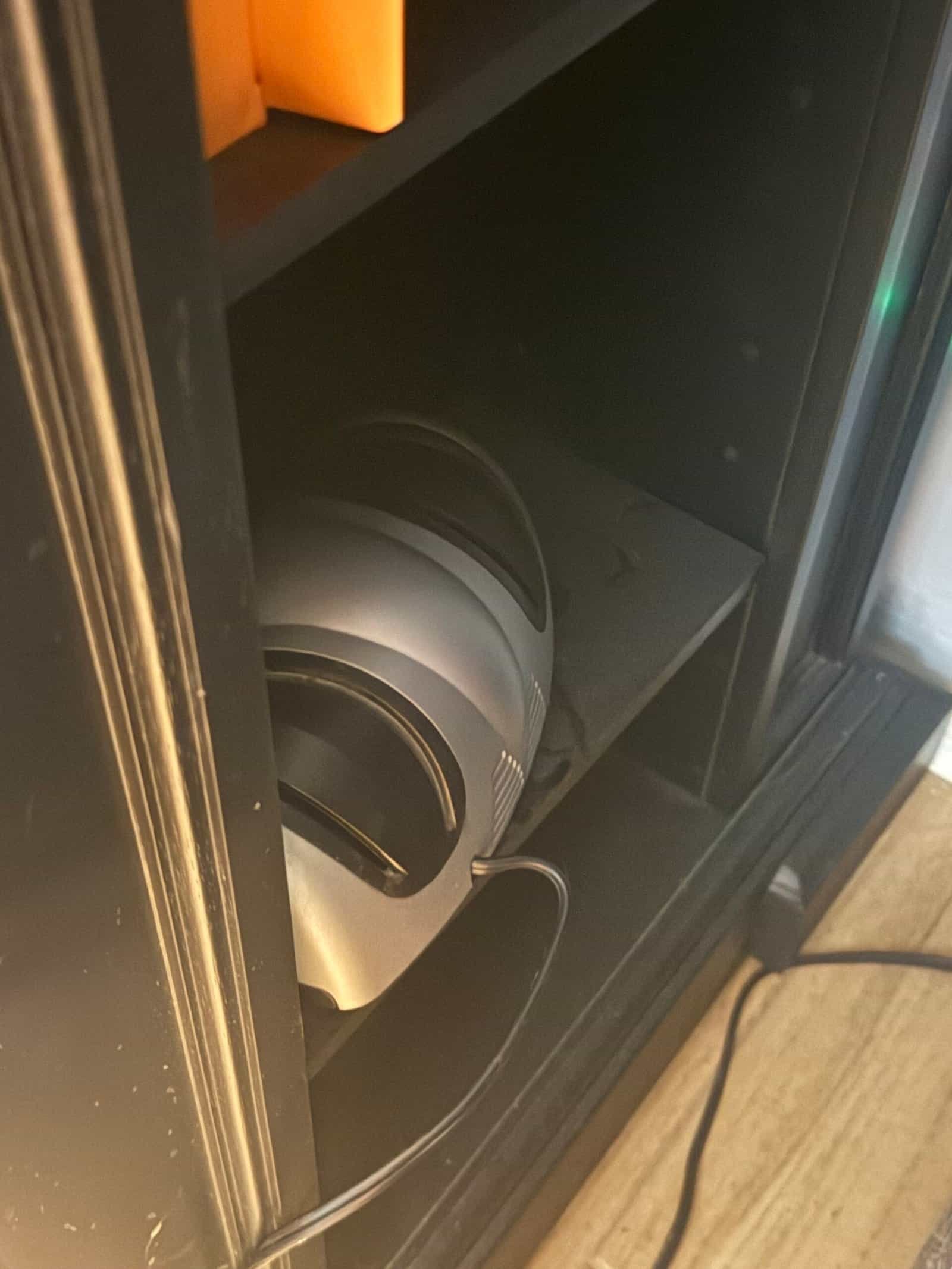
Everything else gets put away, and not all in the same place. My waffle maker lives above the fridge. My slow cooker is in a cabinet, and so is my knife sharpener, which I put away most of the time. The rest sits in cabinets or drawers depending on what fits where.
The waffle maker above the fridge is the arrangement I would point at as working. It is light enough to lift down safely and I use it rarely enough that the height is not a nuisance, which is exactly what that space suits.
My experience covers an apartment kitchen with generous counter and pantry space and less cabinet room than I would like. It does not cover kitchens with islands, walk-in pantries, or dedicated appliance garages, where the options are different.
Heavy Low, Light High
Weight decides height. A stand mixer or a heavy slow cooker overhead is a genuine hazard when you are lifting it down at an angle with one hand.
Low cabinets and under-counter space suit anything substantial. Pulling something heavy toward you at waist height is manageable in a way that lowering it from above your head is not.
Above the fridge, high shelves, and top cabinets suit light items used rarely. A waffle maker or a small food processor fits that description, and options for making those spaces usable sit in cabinet and shelf organizers.
Retrieval Friction Is Real
An appliance behind two other things gets used less than one you can reach directly. That is not laziness, it is a real cost paid every time, and it compounds over months.
This is why nesting and stacking cut both ways. They save space and add a step, and the item at the bottom of a stack effectively becomes storage rather than equipment. The same tradeoff appears in stackable cookware.
Where you notice yourself avoiding an appliance, check whether the location caused it before concluding you do not need the thing.
Group by Task, Not by Type
Most kitchens store appliances wherever they fit, which scatters things used together.
Baking equipment works better kept as a set. A stand mixer, bread machine, and the tins and tools that go with them belong near each other, since starting a bake means gathering all of it.
The same applies to a coffee setup, where the machine, grinder, beans, and filters used in one sequence every morning should live in one zone rather than three cupboards.
Task grouping also reveals duplicates. Two appliances doing the same job are obvious when stored together and invisible when they are in different rooms of the kitchen.
Cords and Accessories
Cords are the untidy part of appliance storage and the easiest to fix. Velcro straps or clips keep them wrapped rather than tangling with everything nearby.
Accessories are worse, since blender jars, mixer attachments, and air fryer baskets separate from their appliances and scatter. Keeping each set with its machine, in a box or a labelled bin, prevents the hunt.
Manuals rarely need keeping, since almost every model has them available online. A photo of the model number on your phone covers what you actually need later.
Making Awkward Spaces Work
Above the fridge
Usable for light infrequent items, and it needs something to stop things sliding to the back where you cannot reach. A shallow bin turns it into a drawer you pull forward.
Deep corner cabinets
Whatever goes to the back becomes invisible. A turntable or a pull-out organizer is the difference between usable and lost.
Above-counter cabinets
The lower shelf is prime storage and the upper one is not. Weekly items low, monthly items high, within the same cabinet.
Vertical gaps
Most cabinets waste height between shelves. A shelf riser doubles capacity in the same footprint, and it works particularly well for small appliances.
When to Stop Storing and Start Removing
An appliance unused for a year is occupying space something else could use. That is true whether or not it was expensive, and the money is already spent either way.
Duplicates deserve the same scrutiny. Two appliances doing the same job means one is redundant, and comparisons like bread machine against stand mixer and instant pot against slow cooker cover where the overlap is real.
The exception is genuinely seasonal equipment. Something used heavily for one month a year is worth keeping and worth storing somewhere other than the kitchen.
Related Reading
- working with limited space
- which earn a permanent spot
- making cabinets usable
- the nesting tradeoff
- drawer solutions
- the adjacent storage problem
Frequently Asked Questions
Which appliances should stay on the counter?
Anything used daily or near-daily, regardless of size. A large appliance used every day earns its footprint more than a small one used twice a year, and honest frequency beats intended frequency here.
Is it safe to store appliances above the fridge?
For light items you use rarely, yes. Heavy appliances overhead are a hazard when lowering them at an angle, so weight decides height more than anything else does.
How do I stop appliances cluttering the counter?
Move anything used less than weekly into a cabinet, and be honest about how often you actually use each one. Most cluttered counters hold appliances someone meant to use often.
Where should heavy appliances go?
Low cabinets or under-counter space. Pulling something heavy toward you at waist height is safe in a way that lowering it from above your head is not, and that applies to stand mixers especially.
Should I keep appliance boxes?
Only if you plan to move soon or resell. Boxes take substantial space for a benefit most people never use, and the storage cost usually exceeds what the box is worth.
What do I do with accessories?
Keep each set with its appliance in a box or labelled bin. Blender jars, mixer attachments, and air fryer baskets scatter otherwise, and hunting for them is what stops people using the appliance.
When should I get rid of an appliance?
When it has gone a year unused, or when something else does the same job. The purchase cost is already spent, and continuing to store it adds a cost on top of that.
Appliance storage is part of the wider layout. organising the whole kitchen covers the approach.
