
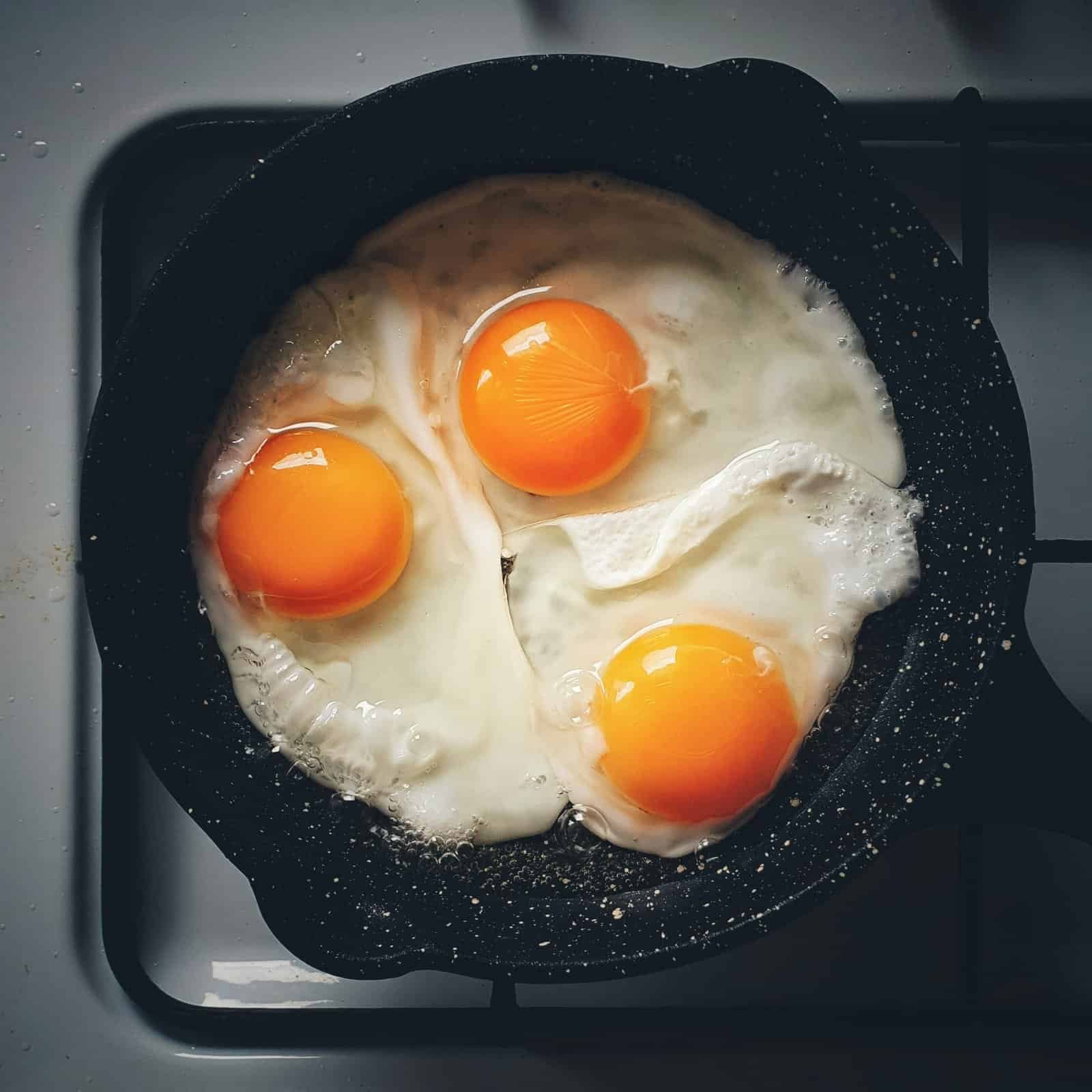
Eggs stick to the pan mainly because the pan is not hot enough or not properly prepared with fat, because egg proteins bond to bare metal, and because the pan’s surface or seasoning is not up to the job. It is one of the most common cooking frustrations, and it is very fixable once you know the causes. Getting the heat, fat, and pan right lets eggs slide out cleanly.
Quick Answer
Eggs stick when the pan is too cool, has too little fat, or has a bare or poorly seasoned surface that egg proteins bond to. Preheat the pan properly, add enough butter or oil, and use a nonstick or well-seasoned pan. Getting heat and fat right solves most sticking.
Key Takeaways
- A pan that is too cool is a top cause of sticking.
- Egg proteins bond to bare or hot dry metal.
- Enough butter or oil creates a barrier.
- Nonstick or well-seasoned pans release eggs best.
- Preheating and the right fat solve most cases.
Why Eggs Stick
| Cause | Why it sticks | Fix |
|---|---|---|
| Pan too cool | Proteins seep in and bond | Preheat properly |
| Too little fat | No barrier between egg and metal | Add butter or oil |
| Bare metal surface | Proteins bond to metal | Nonstick or seasoned pan |
| Pan too hot and dry | Egg bonds and scorches | Moderate heat with fat |
Eggs stick because their proteins chemically bond to the pan’s surface when conditions are wrong. Egg is largely protein, and when it meets bare, improperly heated metal, those proteins latch onto the surface as they cook, gluing the egg down. The main culprits are a pan that is not at the right temperature and too little fat to act as a barrier. Understanding that it is a protein-to-metal bonding problem points directly to the fixes: control the heat, add fat, and use a surface eggs do not bond to. Address those and eggs release cleanly. Why cookware sticks covers the bonding in more depth.
The Heat Has to Be Right
Temperature is the most common issue, and it cuts both ways. A pan that is too cool lets the egg sit and seep into the surface before it sets, giving the proteins time to bond, so eggs go into a properly preheated pan. But a pan that is too hot and dry can bond and scorch the egg just as badly, and burnt egg sticks hard. The sweet spot is a pan preheated to a moderate temperature with fat added, hot enough to set the egg promptly but not so hot it scorches. A quick way to check is to add the fat and watch it: butter should foam gently without browning fast, and oil should shimmer without smoking. If the fat browns or smokes immediately, the pan is too hot and worth pulling off the heat for a moment before the egg goes in. Getting the heat right is often the single biggest fix for sticking eggs. Nonstick cookware covers forgiving surfaces for eggs.
You Need Enough Fat
Fat is the barrier between the egg and the pan, and skimping on it is a frequent cause of sticking. A good amount of butter or oil coats the surface so the egg cooks on the fat rather than directly on the metal, letting it slide freely. Too little fat leaves bare spots where the egg bonds. Adding the fat to a properly heated pan and letting it coat the surface before the egg goes in makes a big difference. You do not need to drown the egg, but enough fat to fully coat the cooking area is what keeps eggs from grabbing the pan. Choosing cookware covers matching pans to tasks.
The Pan Surface Matters
What the pan is made of, and its condition, has a big effect. Nonstick pans are designed so eggs release easily and are the most forgiving choice for eggs. A well-seasoned cast iron or carbon steel pan builds up a natural slick surface that also releases eggs well, but the seasoning has to be maintained; a stripped or poorly seasoned pan will stick. Bare stainless steel can cook eggs cleanly but demands good heat and fat technique, since it has no nonstick help. Choosing a nonstick or well-seasoned pan for eggs, or mastering the heat and fat on stainless, addresses the surface side of sticking. Nonstick sets cover egg-friendly pans.
Putting It Together
Cleanly cooked eggs come from combining these factors: a properly preheated pan at moderate heat, enough butter or oil to coat the surface, and a nonstick or well-seasoned pan, or good technique on stainless. Get those right and the egg sets on a layer of fat, over a surface it does not bond to, at a temperature that cooks it without scorching, so it slides out. When eggs stick despite this, the usual culprit is one of the three, the pan was too cool, there was too little fat, or the surface was bare, and adjusting it solves the problem. Eggs sticking is almost always a fixable technique issue. Cookware sets cover everyday pans.
Technique Beyond the Pan
A few habits at the stove help eggs release even further. Letting the egg set undisturbed for a moment after it hits the pan, rather than pushing it around immediately, gives it time to firm up so it lifts cleanly instead of tearing and sticking. Using a thin, flexible spatula to gently ease under the egg once it has set, rather than forcing it, helps it release without leaving bits behind. Cracking eggs into a properly prepared pan, and not crowding several eggs so they cook unevenly, also keeps them from sticking in spots. And keeping your egg pan in good condition, maintaining nonstick coatings or the seasoning on cast iron, preserves the release surface over time. These small techniques, on top of the heat, fat, and pan basics, are what separate eggs that slide right out from eggs that fight you, and they cost nothing but a little attention. Choosing cookware covers pans suited to eggs.
Recommended Reading
Worth reading next: why cookware sticks, nonstick cookware, choosing cookware, and nonstick vs stainless.
Why Do Eggs Stick to the Pan FAQ
Why do my eggs stick to the pan?
Mainly because the pan is too cool, has too little fat, or has a bare or poorly seasoned surface that egg proteins bond to. Preheat the pan properly, add enough butter or oil, and use a nonstick or well-seasoned pan. Getting heat and fat right solves most sticking.
Should the pan be hot before I add eggs?
Yes, preheated to a moderate temperature with fat added. A too-cool pan lets the egg seep in and bond before it sets. But avoid a too-hot dry pan, which scorches and bonds the egg. Moderate heat with fat is the sweet spot for eggs releasing cleanly.
How much butter or oil do I need for eggs?
Enough to fully coat the cooking area, so the egg cooks on the fat rather than bare metal. You do not need to drown the egg, but skimping leaves bare spots where it bonds. Adding fat to a preheated pan and letting it coat the surface makes a big difference.
What pan is best for eggs?
Nonstick pans are the most forgiving and release eggs easily. A well-seasoned cast iron or carbon steel pan also works well if the seasoning is maintained. Bare stainless can cook eggs cleanly but needs good heat and fat technique, since it has no nonstick help.
Why do eggs stick to my stainless steel pan?
Because stainless has no nonstick surface, so it relies entirely on proper heat and fat. If the pan is too cool or dry, egg proteins bond to the metal. Preheating properly and using enough fat lets eggs cook cleanly even on stainless, but the technique has to be right.
Why do eggs stick even in my nonstick pan?
Usually because the coating is worn, the pan was too cool, or there was too little fat. A degraded nonstick surface loses its release, and even nonstick benefits from a little fat and proper heat. If a nonstick pan sticks badly despite good technique, the coating may be worn out.
Does adding fat to a cold pan help?
It is better to heat the pan first, then add the fat, and let it coat the surface before the eggs go in. Fat in a properly heated pan forms an effective barrier. Starting with a cold pan means the egg can begin bonding before the surface reaches the right temperature.
