
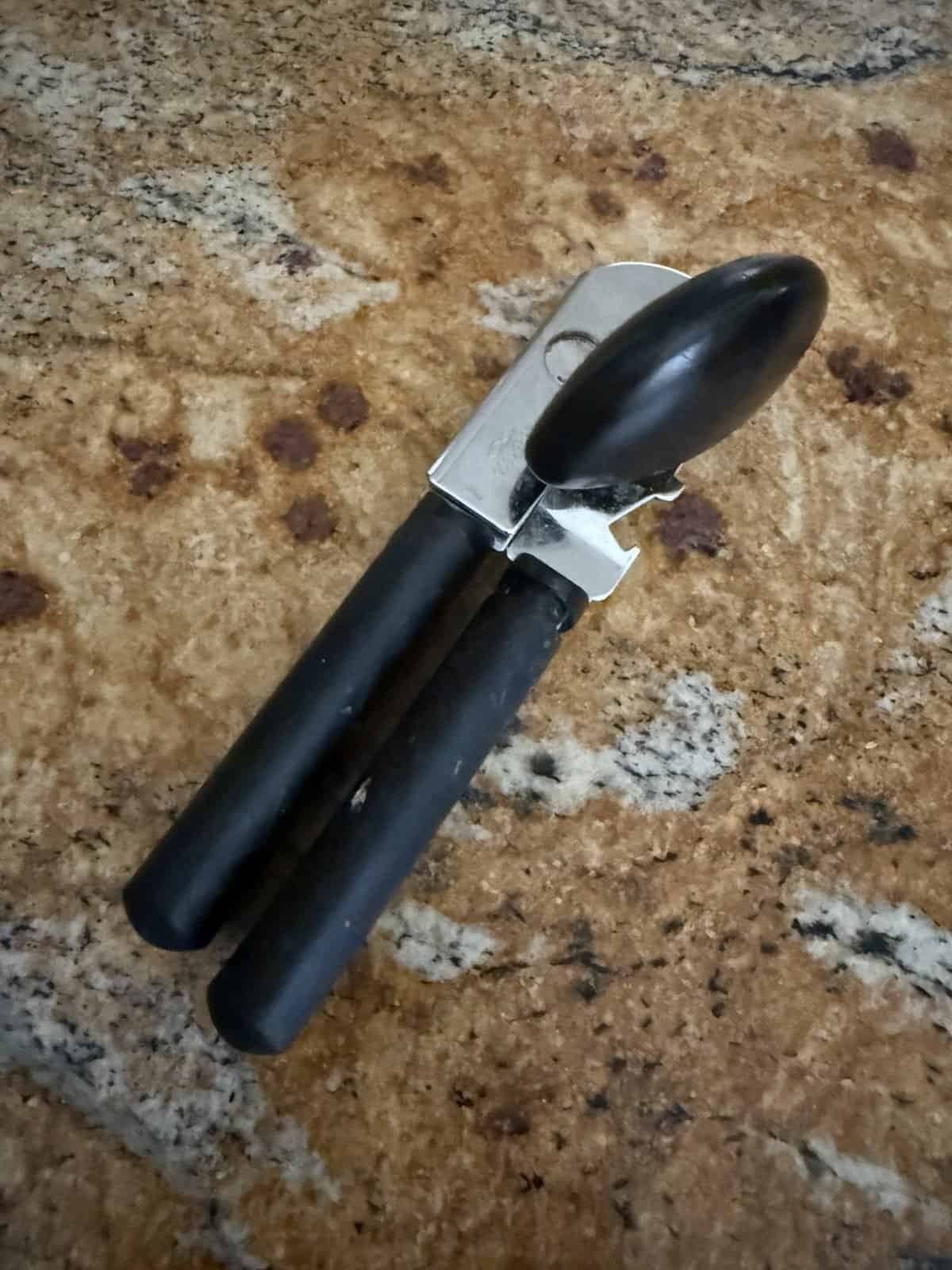
An electric can opener is fine until the power goes out, the motor dies, or it hogs counter space you do not have. A good manual can opener does the same job with nothing but your hand, takes up a drawer slot instead of a countertop, and often outlives three electric ones. The trick is picking one that turns smoothly, grips the can without slipping, and survives years of use rather than rusting or stripping its gears. Here are six of the best manual can openers for 2026, including the plain one I have cranked in my own kitchen for years. See also our guide on the best jar openers.
SmartLifeItems is reader-supported; purchases made through links on this page may earn a commission at no added cost to you.
Quick verdict: For most kitchens, the OXO Good Grips is the easy call, with a comfortable grip and a smooth gear that just works. If you hate the sharp lid a traditional opener leaves, a side-cut safety model like the OXO Smooth Edge leaves a clean, touchable edge. Want something that will outlast everything else in the drawer? The all-steel EZ-DUZ-IT. And for weak grip or arthritis, the Zyliss and Kuhn Rikon take the strain out of the turn.
Why Keep a Manual Can Opener
A manual opener is the tool that always works: no batteries, no motor to burn out, no cord, and no waiting through a power outage. It stores flat in a drawer instead of claiming counter space, and a well-built one lasts for years. It also gives you full control over the cut, which matters more than it sounds when a lid is stubborn. If you would rather push a button, our roundup of electric can openers covers that side; this guide is for the hand-cranked classics.
How We Chose These Can Openers
Picks were judged on how smoothly the gear turns, how securely the opener grips and stays on the can, whether the handle is comfortable for a full turn, and above all durability, since a can opener that skips or rusts after a year is worse than useless. Cut type mattered too, with traditional top-cut openers weighed against safer side-cut models. Choices were cross-checked against current hands-on testing and reviews, with a real option for each priority rather than six near-identical tools.
1. OXO Good Grips Can Opener, Best Overall
The OXO Good Grips is the manual opener most kitchens should own. Its soft, grippy handles feel secure through a full turn, the gear runs smoothly with no rattling or looseness, and it has been named a top pick by respected test kitchens for good reason. It is the sturdy, no-drama choice.
Why It Stands Out
The build quality is the draw: it feels solid in the hand, the oversized knob turns easily, and the cushioned handles take the strain out of opening a stubborn can. It is a traditional top-cut opener, so it clamps to the top and works quickly. For a lifetime kitchen staple, this is the safe bet.
Worth Knowing
Like all top-cut openers, it leaves a sharp lid edge that drops toward the can, so handle the lid with care. The stainless gear can rust if stored wet, so rinse and dry it after use. It hangs on a rack next to the rest of your kitchen tools without fuss.
2. The Manual Can Opener in My Kitchen, What I Use
The can opener I actually use is a plain two-handled model I crank by hand, and it has quietly outlasted every kitchen gadget I bought around the same time. It works well every single time, it has held up for years without a hint of trouble, and it rinses clean in seconds. There is nothing fancy about it, and that is exactly why it keeps earning its spot in the drawer.
Why It Stands Out
Reliability is the whole story. A can opener is a tool you want to forget about, and this one has never given me a reason to think about it, from a smooth turn to a clean release. Because there is no motor and no electronics, there is simply less to break, which is a big part of why a good manual opener lasts the way mine has.
Worth Knowing
Mine is unbranded, so rather than point you at a model you cannot buy, the button below goes to the current manual can openers, which are exactly this style of hand-cranked tool. Look for a smooth gear, a comfortable grip, and all-metal construction if you want the longest life. Dry it after washing so the cutting wheel does not rust.
3. OXO Good Grips Smooth Edge, Best for Safe Edges
If the sharp lid a traditional opener leaves makes you nervous, the OXO Good Grips Smooth Edge solves it. Instead of cutting through the top, it grips the side and slices along the seam, so the lid lifts off like a jar top and neither the lid nor the can has a sharp edge to catch a finger.
Why It Stands Out
The side-cut design is genuinely safer, which makes it the pick for homes with kids or anyone who has nicked themselves on a jagged lid. Built-in pliers grab and lift the cut lid so you never touch it, and the soft-grip handle keeps the turn comfortable. A placement guideline on the tool takes the guesswork out of lining it up.
Worth Knowing
It turns a little slower than a traditional opener and uses more plastic in its build, so it may not last quite as long as an all-steel model. The payoff is a cleaner, safer result every time. It pairs well with the safety mindset behind our cutting boards guide.
4. EZ-DUZ-IT Deluxe, Best for Durability
When you want a can opener that will simply never quit, the EZ-DUZ-IT Deluxe is the one. Made in the USA with all-steel construction and carbon-steel blades, it is a commercial-kitchen staple that routinely outlasts openers costing several times as much, which is why testers keep naming it a durability and value champion.
Why It Stands Out
The all-metal build is the point: there is no plastic gear to strip and no soft parts to wear out, so it keeps cutting cleanly for years. The gear action is smooth and the rubberized handles stay comfortable. For anyone who wants to buy once and forget it, this is the workhorse.
Worth Knowing
It is a traditional top-cut opener designed for right-handed use, so it leaves a sharp lid and is less friendly to lefties. The look is utilitarian rather than pretty. Keep it dry between uses and it will likely outlast the rest of your kitchen tools.
5. Kuhn Rikon Auto Safety Master, Best for Lefties
Most manual openers assume you are right-handed, which leaves lefties fighting the tool. The Kuhn Rikon Auto Safety Master fixes that with an ambidextrous top-mounted knob and a fast side-cut action, making it the most intuitive opener for anyone without a dominant right hand, and a smooth-edge safety model on top of that.
Why It Stands Out
The top knob works equally well for either hand, and the Swiss-engineered gear is quick, taking fewer turns than most to get around a can. Like the OXO Smooth Edge, it cuts the side seam for a safe, touchable edge, and a built-in gripper lifts the lid cleanly. For left-handed cooks, it is the clear pick.
Worth Knowing
It uses a plastic button to pinch and lift the lid, which some find less sturdy than an all-metal design over the long haul. It costs a bit more than a basic opener. If safe edges matter across your kitchen, it fits the same philosophy as our kitchen shears guide.
6. Zyliss Lock N’ Lift, Best for Weak Grip
For cooks with arthritis or limited hand strength, the turning and squeezing a can opener demands can be the hard part. The Zyliss Lock N’ Lift is built around that problem, with a locking mechanism that clamps onto the can so you do not have to squeeze while you turn, plus an ergonomic handle that reduces strain.
Why It Stands Out
The lock-on design is the standout feature, since it lets you crank without maintaining a tight grip, which is a real relief for tired or aching hands. A lid magnet lifts the cut top away so you avoid the sharp edge, and the whole tool is easy and comfortable to use. It is the accessibility pick.
Worth Knowing
Some long-term reviews note the mechanism can wear faster than an all-steel opener, so it trades a little durability for ease of use. That is a fair swap if grip is your main concern. It belongs in the same easy-on-the-hands drawer as a good garlic press.
Manual Can Openers at a Glance
Prices shift with sales and seller, so treat cost as a rough tier and confirm current pricing before buying.
| Opener | Cut type | Edge | Build | Best for |
|---|---|---|---|---|
| OXO Good Grips | Top | Sharp lid | Steel + soft grip | All-round use |
| My opener (brand-free) | Top | Standard | Lasted years | Simple daily use |
| OXO Smooth Edge | Side | Smooth, safe | Steel + plastic | Kids, safe edges |
| EZ-DUZ-IT Deluxe | Top | Sharp lid | All steel, USA | Maximum durability |
| Kuhn Rikon Auto Safety | Side | Smooth, safe | Steel + plastic knob | Left-handed cooks |
| Zyliss Lock N’ Lift | Top | Standard | Ergonomic, lock-on | Weak grip, arthritis |
How to Choose a Manual Can Opener
Top-Cut or Side-Cut
Traditional top-cut openers clamp to the lid and cut through the top, which is fast and familiar but leaves a sharp edge on the removed lid. Side-cut safety openers grip the outer seam and lift the whole lid off clean, leaving no sharp edge on the lid or the can. Choose top-cut for speed and durability, side-cut for safety.
Grip and Ease of Turning
The handle and knob decide how much effort a can costs you. Soft, cushioned grips and an oversized knob reduce hand fatigue, which the Arthritis Foundation specifically favors for joint pain, and a lock-on design like the Zyliss removes the squeezing entirely. If your hands tire easily, prioritize ergonomics over everything else.
Build Material and Durability
All-steel openers like the EZ-DUZ-IT outlast plastic-geared models by years, since there is no soft part to strip or wear. If you want a buy-it-once tool, favor metal construction. If you value safety features or a lighter feel, some plastic in the build is a reasonable trade for the convenience it brings.
Keep It From Rusting
The most common way a good can opener dies is rust on the cutting wheel from being put away wet. Rinse it after each use and dry it completely before storing, and it will keep cutting cleanly for years. A worn wheel that skips or leaves jagged edges is the sign it is finally time to replace it.
Which Can Opener Fits You
| Your situation | OXO Good Grips | OXO Smooth Edge | EZ-DUZ-IT | Kuhn Rikon | Zyliss |
|---|---|---|---|---|---|
| Everyday all-rounder | Best fit | Workable | Best fit | Workable | Workable |
| Want safe, smooth edges | Skip | Best fit | Skip | Best fit | Workable |
| Want it to last decades | Workable | Skip | Best fit | Workable | Skip |
| Left-handed | Skip | Workable | Skip | Best fit | Workable |
| Arthritis or weak grip | Workable | Workable | Skip | Workable | Best fit |
| Tight budget | Workable | Workable | Best fit | Skip | Workable |
Frequently Asked Questions About Manual Can Openers
Are manual can openers better than electric ones?
For most people, a good manual opener is more reliable and longer-lasting, since it has no motor to fail, needs no power, and stores in a drawer. Electric openers win mainly on convenience and for cooks with limited hand strength. If you open cans occasionally, a quality manual opener is usually the smarter buy.
What is the difference between a top-cut and side-cut can opener?
A top-cut opener cuts through the top of the lid, which is fast but leaves a sharp edge, while a side-cut, or safety, opener slices the outer seam so the whole lid lifts off with smooth, touchable edges. Side-cut is safer, especially around children; top-cut is quicker and often more durable.
Which manual can opener lasts the longest?
All-steel openers with no plastic gears last the longest, and models like the EZ-DUZ-IT are known for surviving years of heavy use. The biggest enemy of any opener is rust, so drying it after washing does more for its lifespan than the brand alone. A metal build plus good care is the recipe for a decade or more.
How do I stop my can opener from rusting?
Rinse it right after use to clear food residue, then dry it completely, paying attention to the cutting wheel and gears where water hides. Store it somewhere dry rather than in a damp drawer. Most can openers rust because they were put away wet, so that one habit prevents the most common failure.
Are manual can openers good for arthritis?
Some are designed specifically for it. Look for cushioned, oversized handles and a lock-on mechanism like the Zyliss that clamps the can so you do not have to squeeze while turning. Side-cut models also help by removing the sharp lid you would otherwise have to handle. Prioritize grip comfort over speed.
Can I put a manual can opener in the dishwasher?
Some are dishwasher safe, but the heat and moisture can encourage rust on the cutting wheel over time, so many owners prefer to hand wash and dry them. Check the manufacturer’s guidance, and whichever route you take, make sure the opener is fully dry before you store it.
Why does my can opener skip or stop cutting?
A wheel that skips, slips, or needs much more effort usually means the cutting wheel is worn or gummed up with residue. Clean it thoroughly first, and if it still struggles, the blade has likely dulled and it is time to replace the opener. A dull wheel is both frustrating and less safe.
Do manual can openers leave metal shavings?
A clean, sharp opener should not leave shavings in your food, but a worn or dirty one can, which is another reason to keep the wheel clean and replace it when it dulls. Side-cut openers that lift the lid off the seam tend to produce even less debris than top-cut models.
Recommended Reading
Round out your kitchen-tool drawer with our guides to kitchen shears, vegetable peelers, and kitchen utensil sets. For draining that can of beans, see our colanders and strainers guide, and for the cans themselves, our pantry organization guide. See also our electric wine openers guide. See also our guides to manual juicers. See also our guides to ice cream scoops.
