
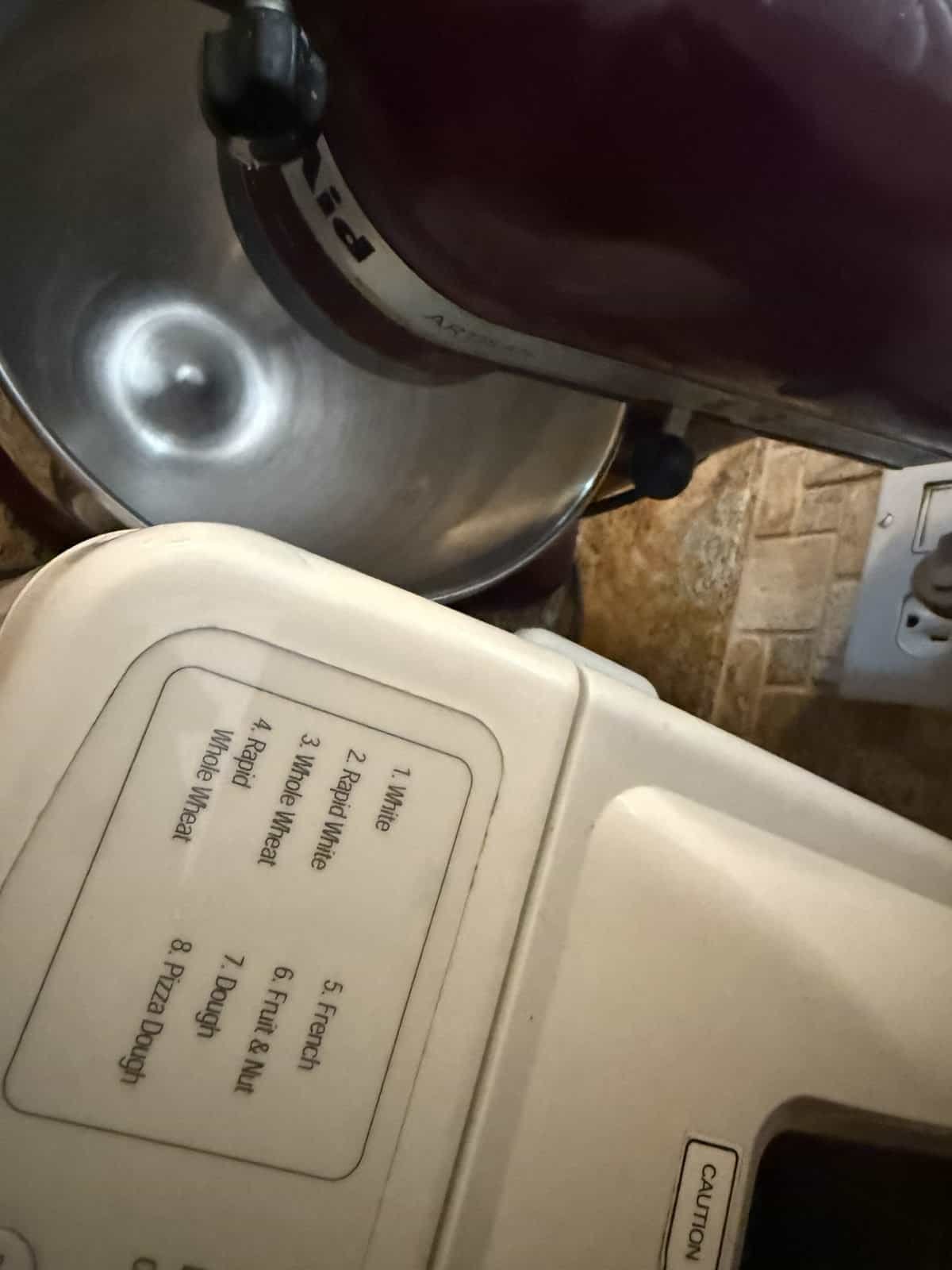
If you mainly want fresh bread with almost no hands-on work, a bread machine is the better buy; if you want one appliance that handles cakes, cookies, doughs, and whipping, a stand mixer wins. The bread machine vs stand mixer choice comes down to a simple split: one bakes the loaf for you start to finish, while the other is a versatile mixing workhorse that leaves the baking to you. Both earn a spot on plenty of counters, so it helps to know exactly what each one does before you spend. Our bread machines worth owning guide covers models once you have decided which tool fits. If you are weighing options, our guide on using a bread machine goes deeper.
Quick Verdict: Pick a bread machine if you want hands-off bread on a schedule with a gentle start. Pick a stand mixer if you bake a wide range and want one appliance for doughs, batters, and whipping. Many home kitchens end up keeping both, since they solve different jobs rather than the same one.
Why Trust This Guide: I use both a bread machine and a stand mixer at home. The bread machine is a recent addition, and I am still working through the learning curve of dialing in a good loaf, which I have genuinely enjoyed. This comparison is written from that hands-on setup rather than spec sheets alone, and where a point reflects general kitchen knowledge instead of my own use, it is framed that way.
Key Takeaways:
- A bread machine mixes, kneads, proofs, and bakes in one sealed unit, so it makes the whole loaf with little supervision.
- A stand mixer handles mixing and kneading for almost anything, but you still shape, proof, and bake in your oven.
- For bread alone with minimal effort, the machine wins; for range across all baking, the mixer wins.
- Both have a learning curve, though the machine gets you to a finished loaf faster while you learn.
- They are complementary tools, and keeping both is a reasonable setup rather than a redundancy.
How We Compared Them
This comparison looks at the factors that actually change your baking: how much work each machine does for you, how versatile it is beyond bread, how steep the learning curve runs, and how well it holds up over time. Space and cost are folded into the tables and the choosing section below. The goal is to match each machine to the kind of baker you are and the food you actually want to make, because a tool that fits your habits gets used and one that does not ends up in a cabinet. Where the write-up draws on first-hand use, it is my own kitchen; where it reflects how these machines generally behave, it is written as general guidance. If you are choosing a mixer specifically, our walkthrough on how to choose a stand mixer goes deeper on capacity and attachments.
Bread Machine vs Stand Mixer at a Glance
| Decision factor | Bread machine | Stand mixer |
|---|---|---|
| Main job | Makes the whole loaf: mix, knead, proof, bake | Mixes and kneads; you bake separately |
| Versatility | Bread, dough, some jams and cakes | Doughs, batters, whipping, plus attachment tasks |
| Hands-on effort | Low; add ingredients and start | Moderate; you shape, proof, and bake |
| Learning curve | Gentle to a first loaf, then dial-in | Rewards technique across many recipes |
| Footprint | Single tall unit, stores upright | Heavy base, often stays out |
| Entry price | Lower way into homemade bread | Wider range, higher ceiling |
| Best for | Reliable bread with minimal supervision | Broad, frequent baking of all kinds |
The Bread Machine: Pros and Cons
A bread machine is a self-contained baker. You add ingredients in order, choose a program, and it handles the rest inside one insulated chamber, ending with a baked loaf.
Pros
- Hands-off from ingredients to finished loaf
- Consistent results once you learn your machine
- Delay-start programs let bread finish on a schedule
- Dough-only cycles let you mix and knead, then bake in the oven
- Compact and easy to store upright between bakes
Cons
- Built mainly for bread, so its range is narrow
- Loaf shape is dictated by the pan, not your hands
- A kneading-paddle hole often remains in the finished loaf
- Less control over crust and crumb than oven baking
Who it is for: anyone who wants dependable homemade bread with almost no supervision. Who should skip it: bakers who want to shape artisan loaves by hand or bake far beyond bread.
The Stand Mixer: Pros and Cons
A stand mixer is a mixing and kneading engine. It powers through stiff bread dough, whips cream and egg whites, creams butter and sugar, and takes attachments that push it well past baking.
Pros
- Handles nearly every mixing and kneading task in the kitchen
- You control shaping, proofing, and oven baking for artisan results
- Attachments extend it to grinding, shredding, and more
- Large batches and back-to-back recipes are comfortable
- One appliance covers bread, cakes, cookies, and batters
Cons
- It does not bake, so bread still needs your oven and attention
- Heavier and often left out on the counter
- More technique required to get the best from it
- Full-size models are a bigger upfront spend
Who it is for: frequent bakers who want range and control across many recipes. Who should skip it: anyone whose only goal is easy bread with the least possible effort.
Which One Actually Makes the Bread for You?
The bread machine wins this outright, because making bread is its entire purpose. It mixes, kneads, gives the dough its rise, and bakes the loaf without you touching it again after the start button. A stand mixer only handles the mixing and kneading stage, so you still transfer the dough, shape it, let it proof, and bake it in the oven yourself. That extra involvement is what some bakers want and others would rather avoid. If your priority is walking away and coming back to a finished loaf, the machine is built for that. If you enjoy shaping and baking and want help only through the tiring knead, the mixer suits you better. For pure convenience on bread specifically, the machine is the clear pick, and our roundup of bread machines narrows the field. Bakers who want to go a step further back can start with a home grain mill and grind the flour fresh.
Which Is More Versatile in the Kitchen?
The stand mixer wins versatility by a wide margin. Bread is one small slice of what it does, since the same machine whips cream, beats egg whites to stiff peaks, creams butter and sugar for cookies, mixes cake batter, and kneads pizza and pasta dough. Add the accessory ports and it can grind, shred, and roll, turning one base into a small fleet of tools. A bread machine, by contrast, stays in its lane; most models add only a dough cycle and perhaps a jam or cake setting on top of their bread programs. If you bake a variety of things across the week, the mixer earns its counter space many times over. If bread is essentially all you make, that versatility goes unused. For breadth of baking, the stand mixer is the decisive winner. A stand mixer against a hand mixer comparison helps if you are still sizing up mixer types.
Which Has the Gentler Learning Curve?
The bread machine gets you to a finished loaf faster while you learn, so it takes this one, though neither is free of skill. When I brought my bread machine home, the first bakes were about learning its rhythm: how the flour, water, and yeast balance behaves, which program suits which loaf, and how the dough should look through the window. It has been a rewarding process rather than a frustrating one, and even the early loaves were edible bread. A stand mixer asks more of you from the start, since it handles only part of the job and leaves shaping, proofing, and baking to your judgment, which means more variables to master before results feel consistent. Understanding how yeast behaves in dough shortens the curve on either machine. For the fastest path to a real loaf as a newcomer, the machine leads.
Which One Lasts Longer?
Both are the kind of appliance people keep for a long time when they are cared for, so this comes down to build and maintenance rather than a clear category winner. Both machines on my counter feel solidly built, and each type is generally designed as a long-term kitchen tool rather than something you replace often. The wear points differ: a bread machine relies on a motor, a heating element, and a kneading paddle, while a stand mixer depends on its motor and gears under repeated heavy loads. Keeping either one clean, not overloading its capacity, and following the maker’s care guidance goes a long way toward a long service life. Because durability tracks so closely with how you treat the machine, I would call this a tie in practice. Both are reasonable long-term choices when you match the model to how hard you plan to work it.
Which Fits Your Situation?
| If this is you | Better choice |
|---|---|
| You want fresh bread with the least possible effort | Bread machine |
| You bake a wide range: cakes, cookies, doughs, whipping | Stand mixer |
| You are new to baking and want a reliable first loaf | Bread machine |
| You want to shape artisan loaves by hand | Stand mixer |
| Counter space is tight and bread is occasional | Bread machine |
| You have a permanent baking station and bake often | Stand mixer |
| You want both hands-off bread and general baking | Both |
How to Choose Between Them
Start with the food you actually make, not the machine that looks most capable. If your honest answer is that you mostly want good bread without babysitting it, the bread machine matches that life. If you picture cookies one day, a cake the next, and pizza dough on the weekend, the stand mixer keeps up with that variety. Effort tolerance is the next filter: the machine trades control for convenience, while the mixer trades convenience for control and range.
Space and budget settle the close calls. Tight counters and a lower budget nudge toward the machine, since entry bread makers are the cheaper way in and store away easily. A dedicated station and broader ambitions favor the mixer, which pairs well with loaf pans for oven-shaped loaves. If bread is the entry point but you expect your baking to grow, a budget bread maker now and a mixer later is a sensible order.
The Verdict
These two appliances are not really rivals, because they answer different questions. The bread machine wins decisively for hands-off bread, a gentle start, and a small footprint, making it the right first buy for anyone whose main goal is homemade loaves without fuss. The stand mixer wins decisively for versatility, control, and everything beyond bread, making it the better choice for bakers who want one workhorse across cakes, cookies, and doughs. If you must choose one and bread is the point, buy the machine; if variety is the point, buy the mixer. And if your baking is heading in both directions, owning both is a genuinely sensible setup rather than an indulgence, which is exactly where my own kitchen landed.
Recommended Reading:
- Bread machine vs oven baking, another way to compare.
- How to choose a bread machine, if the machine wins.
- Bread machines for sourdough, for tangy loaves.
- Bread machines worth owning, for picking a model once you have decided.
- Stand mixers under $200, if the mixer is your pick and budget matters.
- A proofing basket, for hand-shaped loaves once you have a mixer.
Common Mistakes to Avoid
Expecting a stand mixer to bake the bread
A mixer mixes and kneads; it does not bake. If you buy one assuming bread appears at the end, you will still be doing the shaping, proofing, and oven work yourself.
Expecting bakery-perfect loaves on day one
A bread machine gets you a real loaf quickly, but dialing in your favorite results takes a few bakes. Treat the first ones as learning, not failure.
Buying on price alone
The cheapest option is only a bargain if it makes what you want. Match the machine to the food you plan to make before you compare prices.
Overloading either machine
Pushing past the rated capacity strains the motor on both appliances. Respecting the maximum load protects the machine, and accurate ratios help too, which is why measuring flour accurately matters.
Bread Machine vs Stand Mixer FAQ
Can a stand mixer replace a bread machine?
It can replace the mixing and kneading, but not the baking. A stand mixer makes dough well, yet you still shape, proof, and bake it in your oven. A bread machine does all of those steps in one unit, so it replaces the whole process rather than one stage of it.
Does a bread machine knead better than a stand mixer?
Neither is clearly better; they knead differently. A bread machine kneads inside a sealed chamber with a paddle and heat management for a controlled rise. A stand mixer kneads with a dough hook and lets you watch and adjust. Both develop gluten well when used within their capacity.
Is a bread machine good for beginners?
Yes. A bread machine is one of the friendliest ways to start baking bread, since it handles the technical steps and gets you to a finished loaf while you learn. There is a short dial-in period to find your preferred settings, but early loaves are usually perfectly good bread.
Can you make dough in a stand mixer and bake it in the oven?
Absolutely, and that is one of its strengths. Use the dough hook to mix and knead, then shape, proof, and bake in your oven for full control over crust and crumb. This route gives you artisan-style loaves that a bread machine’s fixed pan cannot shape.
How long do these machines last?
Both are generally built as long-term kitchen tools and can serve for a long time with care. Longevity depends more on how you treat them than on the type: avoid overloading, keep them clean, and follow the maker’s guidance. The motor is the key part to protect on either appliance.
Should I buy both?
If your baking spans easy everyday bread and a wider mix of recipes, owning both is a sensible setup. The machine covers hands-off loaves while the mixer covers everything else. Many committed home bakers keep both because they complement each other rather than overlap.
