
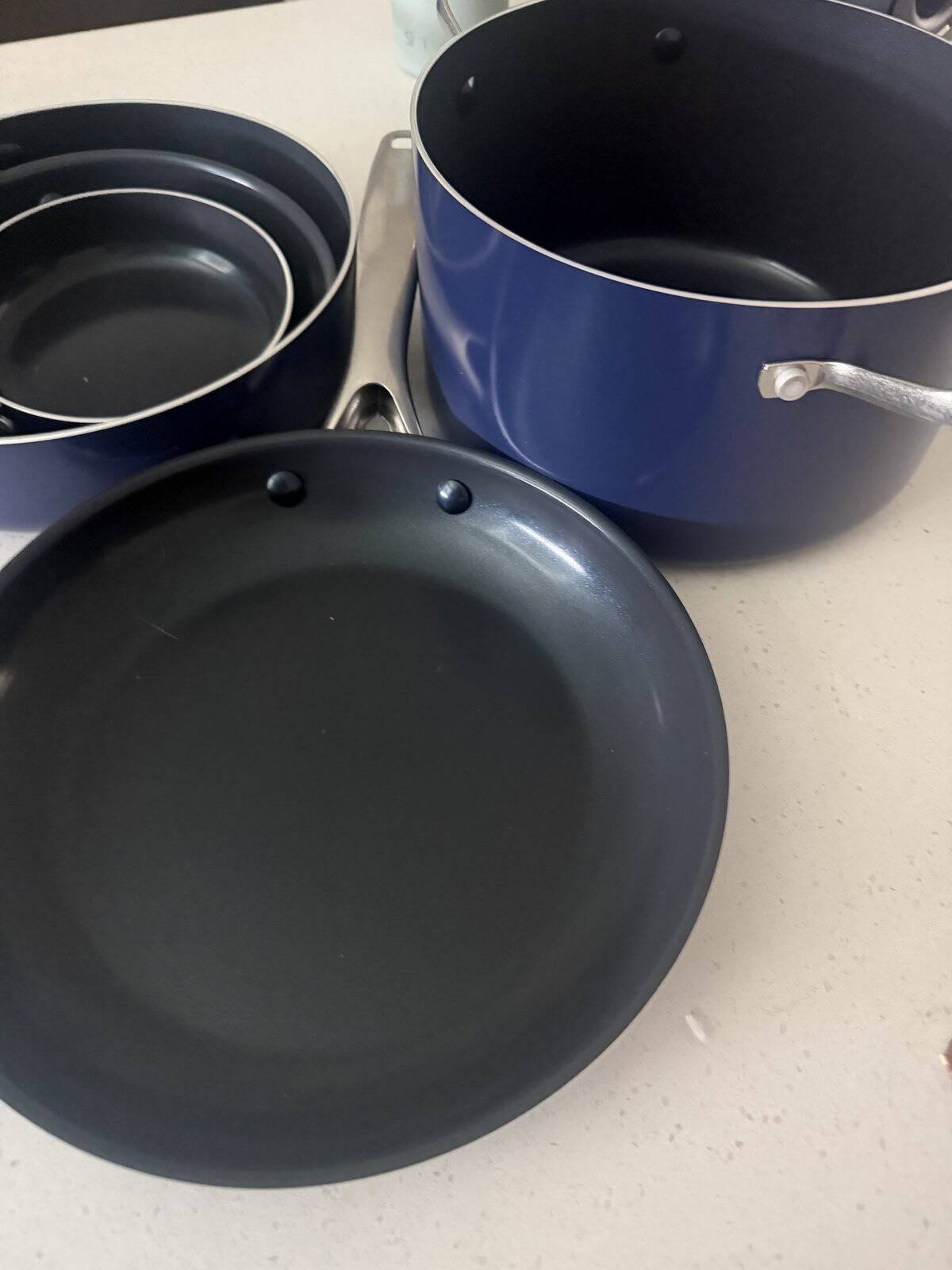
Nonstick pans are generally considered safe for everyday cooking when used correctly, since modern nonstick is made without PFOA and health authorities report no established risks from PFOA-free cookware; the main precaution is avoiding overheating, especially an empty pan on high heat, which can degrade the coating and release fumes. Understanding whether nonstick pans are safe comes down to how you use them. Here is the balanced picture, and for choosing a pan see how to choose a nonstick pan.
Quick Answer
Used correctly at low-to-medium heat, modern nonstick cookware is generally considered safe. The old concern, the chemical PFOA, has been phased out of production. The real precaution is not overheating pans, particularly empty ones on high heat, which can release fumes. Use gentle heat, ventilate, avoid metal utensils, and replace pans when the coating is badly worn.
Key Takeaways
- Modern nonstick is made without PFOA, the old chemical of concern.
- The American Cancer Society reports no established risks from PFOA-free nonstick.
- The key precaution is not overheating, especially empty pans.
- PTFE nonstick is not the same as PFAS-free; ceramic is PFAS-free.
- Use gentle heat, ventilate, and replace badly worn pans.
The Honest Answer
For everyday home cooking, the consensus among health authorities is reassuring. Traditional nonstick coatings are made from PTFE, widely known as Teflon, and using nonstick cookware at normal cooking temperatures for tasks like frying eggs, sautéing vegetables, and gentle cooking is generally considered safe. The American Cancer Society states there are no established risks to people from new, PFOA-free nonstick cookware. This does not mean there is nothing to know, but it does mean the everyday fear that a nonstick pan is inherently dangerous is not supported by the authorities. The important part is using the pan correctly, which the rest of this guide covers.
PFOA Has Been Phased Out
Much of the historical worry traces to a single chemical, PFOA, which was used in the past to manufacture Teflon and raised legitimate health and environmental concerns. That chemical has largely been eliminated from nonstick production. Under the U.S. Environmental Protection Agency’s PFOA Stewardship Program, major manufacturers committed to removing PFOA and related chemicals from products by 2015, and modern nonstick cookware has been made without PFOA since around 2013. So the specific chemical that drove the early alarm is no longer part of how these pans are made, which is central to why authorities now regard modern nonstick as safe for normal use.
The Real Precaution: Do Not Overheat
If there is one genuine rule, it is this: do not overheat a nonstick pan, and never preheat an empty one on high heat. PTFE coatings are stable at normal cooking temperatures but can begin to degrade when heated to high extremes, generally above around 500 degrees Fahrenheit, releasing fumes. Breathing concentrated fumes from a badly overheated pan can cause a temporary, flu-like reaction sometimes called polymer fume fever. Normal stovetop cooking stays well below the problem range, so this is easily avoided by keeping the heat low to medium and not leaving an empty pan on a hot burner. This is also why nonstick suits gentle tasks rather than high-heat searing.
A Note for Bird Owners
One specific caution is worth calling out: the fumes from a severely overheated PTFE pan are especially dangerous to pet birds, whose respiratory systems are highly sensitive. Bird owners have historically used the phrase about a canary in the kitchen for good reason. If you keep birds, be particularly careful never to overheat nonstick cookware, ensure good ventilation, and consider keeping birds well away from the kitchen during cooking. For most households this is a minor point, but for bird owners it is a real and easily managed one.
What About Scratches and Worn Coatings?
A common worry is ingesting bits of coating from a scratched pan. Small amounts of nonstick coating that flake off are generally considered to pass through the body without being absorbed, so a stray fleck is not cause for alarm. That said, a pan whose coating is actively peeling, flaking, or worn through to the metal has stopped performing and is worth replacing, both for cooking quality and peace of mind. Light cosmetic scratches on an otherwise intact coating are normal and not a safety emergency. Our guide on when to replace a nonstick pan covers where that line is.
PFOA-Free Is Not the Same as PFAS-Free
One nuance is worth understanding. PTFE itself belongs to the broader PFAS family, the group sometimes called forever chemicals for their persistence in the environment. So a pan labeled PFOA-free can still contain PTFE and therefore is not PFAS-free. For everyday cooking safety, authorities focus on correct use of the finished cookware, and the food-contact risk at normal temperatures is considered low. But cooks who want to avoid PFAS entirely, whether for personal or environmental reasons, often choose ceramic nonstick, which is made from a mineral, silica-based coating and contains no PTFE or PFAS. Our comparison of ceramic versus Teflon nonstick lays out that choice.
How to Use Nonstick Safely
Safe use comes down to a handful of habits, and they overlap neatly with the habits that make pans last. Cook on low to medium heat and never preheat an empty pan on high. Turn on the exhaust fan or open a window for ventilation. Use wood, silicone, or nylon utensils to avoid scratching the coating. Wash gently rather than with harsh abrasives, and replace pans when the coating is genuinely deteriorating. These are exactly the habits I follow with my own nonstick: I keep it to eggs and low-heat cooking, let my cast iron handle high heat, and stick to soft utensils, which keeps both the pan and its use well within the safe range.
PFAS and Ongoing Research
It is fair to acknowledge the broader context honestly. PFAS as a chemical family, which includes PTFE, is an active area of research and public concern, largely because these compounds persist in the environment and have been detected widely. For cookware specifically, the food-contact risk at normal cooking temperatures is regarded as low by authorities, and the everyday safety guidance is settled: use gentle heat, do not overheat, and replace worn pans. Cooks who nonetheless want to minimize PFAS exposure have straightforward options, from ceramic nonstick to cast iron and stainless steel. This is less about immediate kitchen danger and more about personal and environmental preference.
Recommended Reading
- making nonstick pans last, safe-use habits.
- when to replace a nonstick pan, on worn coatings.
- ceramic versus Teflon nonstick, the PFAS-free option.
- choosing a nonstick pan, the full overview.
Are Nonstick Pans Safe FAQ
Are Teflon nonstick pans toxic?
Modern Teflon-style nonstick is generally considered safe for normal cooking. It is made without PFOA, the old chemical of concern, and the American Cancer Society reports no established risks from PFOA-free nonstick cookware. The main precaution is not overheating the pan, especially when empty.
Is it safe to cook with nonstick pans every day?
Yes, for everyday tasks like eggs and sautéing at low-to-medium heat, nonstick is generally considered safe. Keep the heat moderate, avoid overheating empty pans, ventilate while cooking, and replace pans when the coating is badly worn, and daily use is not a concern for most people.
What happens if you overheat a nonstick pan?
At high extremes, generally above around 500 degrees Fahrenheit, PTFE coatings can degrade and release fumes that may cause a temporary flu-like reaction called polymer fume fever. Normal cooking stays below this range, so keeping the heat moderate and never heating an empty pan on high avoids it.
Is it safe to eat food from a scratched nonstick pan?
Small flecks of coating are generally thought to pass through the body without being absorbed, so a light scratch is not an emergency. However, a pan that is actively peeling or flaking or worn to the metal should be replaced, both for safety peace of mind and cooking performance.
Are ceramic nonstick pans safer than Teflon?
Ceramic is free of PTFE and PFAS, so it appeals to cooks wanting to avoid those chemicals entirely. Teflon-style PTFE is considered safe by authorities when used correctly. Ceramic avoids the PFAS question, while PTFE is regarded as low-risk at normal cooking temperatures.
How can I make my nonstick cookware safer to use?
Cook on low-to-medium heat, never preheat an empty pan on high, ventilate the kitchen, use wood or silicone utensils, wash gently, and replace worn pans. These habits keep use well within the range authorities consider safe, and they extend the pan’s life at the same time.
Do I need to worry about PFAS in my nonstick pan?
For everyday cooking at normal temperatures, authorities consider the food-contact risk low, and PFOA is no longer used. PTFE is a PFAS material, though, so cooks wanting to avoid PFAS entirely can choose ceramic, cast iron, or stainless steel instead.
Sources
- American Cancer Society, position on Teflon and nonstick cookware safety.
- U.S. Environmental Protection Agency, PFOA Stewardship Program and phase-out.
See the complete guide: the full guide to choosing the right cookware for your kitchen.
