
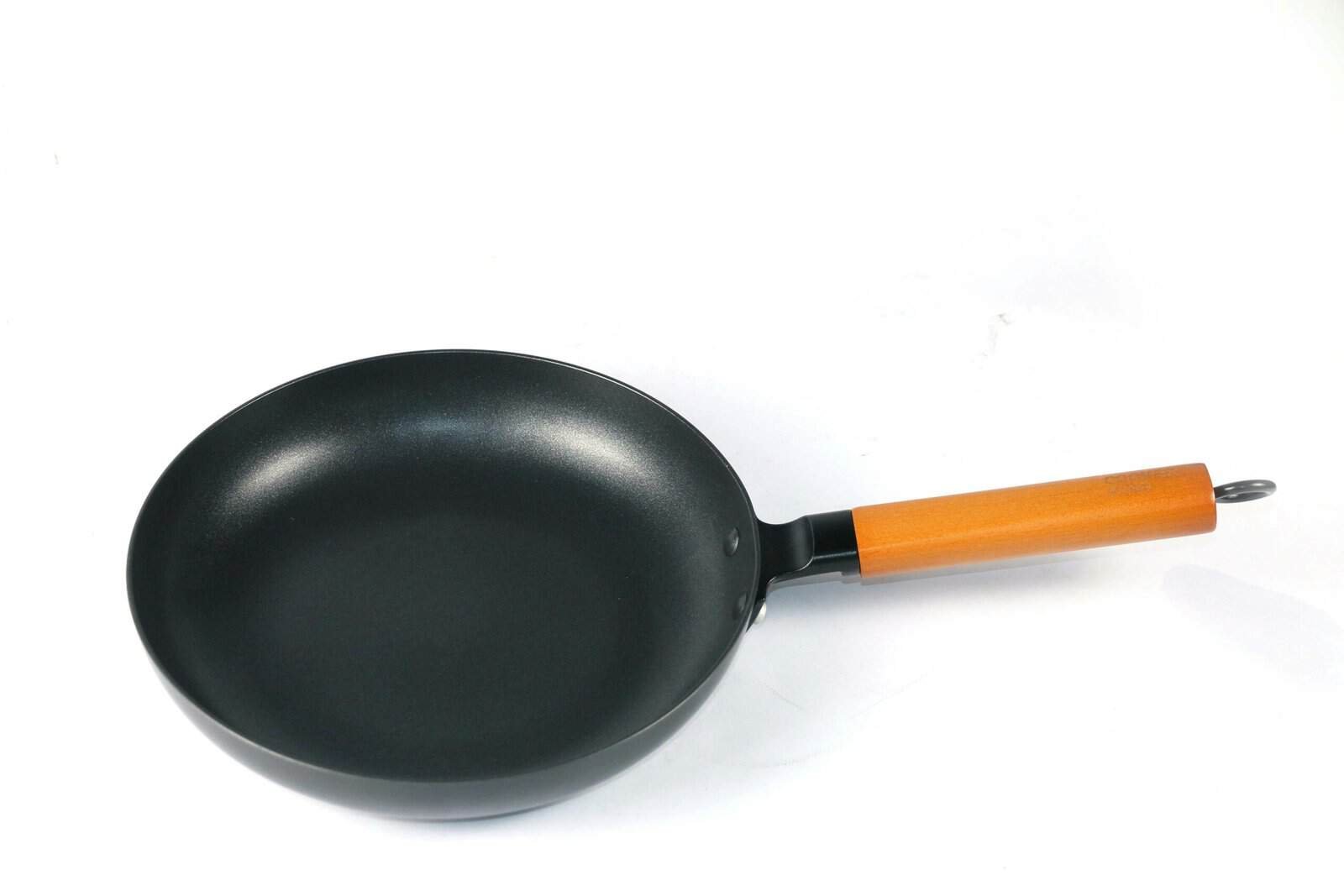
A saute pan is the workhorse most kitchens are missing: a wide, flat base like a skillet but with tall, straight sides and usually a lid, so it holds liquid and food that a sloped skillet would spill. That makes the best saute pans ideal for searing then simmering in the same pan, shallow frying, and big one-pan dinners for a crowd. If you are building out your pots and pans, our guide to choosing the right cookware for your kitchen puts the saute pan in context, and our saucepan roundup covers its everyday partner.
Quick Verdict
For most cooks, the Cuisinart MultiClad Pro saute pan is the smart all-rounder: tri-ply stainless that sears well, holds liquid for braising, and lasts for years. Value shoppers should look at the Tramontina Tri-Ply, nonstick fans at the T-fal hard-anodized, and anyone investing for the long haul at the All-Clad D3. Match the size to how many you cook for and the surface to your cooking style.
Key Takeaways
- Straight sides and a lid let a saute pan hold liquid for braising and simmering.
- A wide flat base gives lots of searing surface, more than a same-size skillet.
- Stainless sears and browns best; nonstick is easier for delicate foods and cleanup.
- A three-quart pan suits couples; four to six quarts suits families and batch cooking.
- A helper handle matters, since a full saute pan is heavy to lift one-handed.
How We Picked the Best Saute Pans
We focused on the traits that make a saute pan versatile: a flat, even base for searing, tall enough sides to hold sauce and shallow-fry without splatter, and a well-fitting lid for braising. We looked at stainless, hard-anodized, and ceramic surfaces so different cooking styles are covered.
We also weighed weight and handle comfort, since a loaded saute pan is heavy, and whether the pan moves from stovetop to oven. Every pick is a widely available line so you can compare sizes and prices to your kitchen.
Cuisinart MultiClad Pro Saute Pan
Why It Stands Out
The Cuisinart MultiClad Pro is a tri-ply stainless saute pan with a flat, even base that browns food well and a helper handle for lifting when full. Stainless takes high heat and moves to the oven, so you can sear, deglaze, and braise in one pan. It is the durable, do-everything choice.
Worth Knowing
Stainless rewards a preheat and a little fat to keep food from sticking. It works on induction. For stainless technique and care, our stainless cookware guide goes deeper.
Best for cooks who want a durable, oven-safe all-rounder. Skip it if you want a nonstick surface out of the box.
Tramontina Tri-Ply Clad Saute Pan
Why It Stands Out
The Tramontina Tri-Ply Clad delivers stainless tri-ply performance and a flat searing base at a friendlier price than premium lines. It browns evenly, holds liquid for braising, and stands up to daily use without shedding any coating. It is a strong value for a lasting saute pan.
Worth Knowing
Like all stainless, it needs a preheat and some fat to prevent sticking. It works on induction and moves to the oven. It is an easy recommendation when you want durability without the top-tier cost.
Best for value-minded cooks who want stainless durability. Skip it if you prefer nonstick.
T-fal Ultimate Hard Anodized Saute Pan
Why It Stands Out
The T-fal Ultimate pairs a hard-anodized body with a nonstick interior, so eggs, fish, and delicate foods release easily while the straight sides still hold sauce. The nonstick surface makes cleanup quick, which suits everyday cooking. It heats evenly and resists warping.
Worth Knowing
Nonstick coatings wear over time and need low-to-medium heat and soft utensils to last. It is less suited to high-heat searing than stainless. For more nonstick options, see our nonstick cookware guide.
Best for cooks who want easy release and simple cleanup. Skip it if you sear at very high heat or want lifetime durability.
Calphalon Premier Hard Anodized Saute Pan
Why It Stands Out
The Calphalon Premier is a heavy hard-anodized saute pan with a durable nonstick interior and an oven-safe build, balancing easy release with sturdier construction than basic nonstick. The thick base heats evenly and holds its shape, and the pans stack neatly for storage. It suits cooks who want long-lasting nonstick.
Worth Knowing
Even durable nonstick benefits from moderate heat and soft utensils. The heftier build is still manageable with the helper handle. It sits between budget nonstick and premium stainless.
Best for cooks who want durable, oven-safe nonstick. Skip it if you want the lowest price.
All-Clad D3 Stainless Saute Pan
Why It Stands Out
The All-Clad D3 is the premium pick, a fully-clad tri-ply stainless saute pan known for even heating and lifetime durability. It sears, browns, and braises with professional consistency and moves seamlessly to the oven. For a pan to keep for decades, it is the benchmark.
Worth Knowing
The premium price buys build quality and even heating rather than a different result. Like all stainless, it needs a preheat and some fat. It is the choice when you want a lasting investment piece.
Best for cooks investing in a lifetime saute pan. Skip it if you are on a tight budget.
GreenPan Valencia Ceramic Saute Pan
Why It Stands Out
The GreenPan Valencia uses a ceramic nonstick coating over a hard-anodized body, appealing to cooks who want a coating free of traditional nonstick chemistry. The straight sides hold liquid, and the ceramic surface releases food cleanly when new. It is a lighter, easy-clean option.
Worth Knowing
Ceramic coatings tend to lose their slickness sooner than hard-anodized nonstick, so keep heat moderate. It is best for lower-heat everyday cooking. It suits cooks who prioritize a ceramic surface.
Best for cooks who want a ceramic nonstick saute pan. Skip it if you want the longest-lasting surface or high-heat searing.
Saute Pans at a Glance
| Pan | Material | Surface | Best for | Oven-safe |
|---|---|---|---|---|
| Cuisinart MultiClad Pro | Tri-ply stainless | Uncoated | All-round durability | Yes |
| Tramontina Tri-Ply Clad | Tri-ply stainless | Uncoated | Value stainless | Yes |
| T-fal Ultimate | Hard-anodized | Nonstick | Easy release | Limited |
| Calphalon Premier | Hard-anodized | Nonstick | Durable nonstick | Yes |
| All-Clad D3 | Tri-ply stainless | Uncoated | Lifetime investment | Yes |
| GreenPan Valencia | Hard-anodized | Ceramic nonstick | Ceramic coating | Limited |
How to Choose a Saute Pan
Size It to Your Cooking
A three-quart pan suits couples and small batches, while four to six quarts handles family dinners and big one-pan dishes. A pan too small crowds food and steams it instead of searing. Pick the capacity that matches your usual portions.
Pick the Surface
Stainless sears and browns best and moves to the oven, while nonstick makes eggs and fish effortless and cleanup quick. Ceramic is a lower-heat nonstick alternative. Choose based on what you cook most, not the pan type.
Check the Handle and Weight
A full saute pan is heavy, so a helper handle opposite the main handle makes lifting and pouring much safer. Heavier pans heat more evenly but are harder to maneuver. Balance even heating against how much weight you want to lift.
Confirm Oven and Stovetop Compatibility
If you sear then finish in the oven, choose an oven-safe pan and lid, and check induction compatibility if your stove needs it. Our guide to cookware for glass top stoves helps if you have a smooth top.
Saute Pan vs Skillet vs Saucepan
How a Saute Pan Differs
A saute pan has straight, tall sides and a wide flat base, so it holds more liquid than a sloped skillet and offers more searing surface than a saucepan. That makes it the best single pan for searing-then-simmering dishes. The lid seals in heat for braising.
When to Reach for Each
Use a skillet for quick fries and flipping, a saucepan for boiling and sauces, and a saute pan when a recipe browns then simmers. Many cooks find the saute pan their most-used pan once they own one.
Common Saute Pan Mistakes
Buying Too Small
A crowded pan steams food instead of searing it, so size up if you cook for a family. A wide base is the whole point of a saute pan.
Overheating Nonstick
High-heat searing degrades nonstick coatings fast. Save nonstick saute pans for lower-heat cooking and use stainless or cast iron for a hard sear.
Skipping the Preheat on Stainless
Adding food to a cold stainless pan is the top cause of sticking. Preheat the pan, add fat, then add food for clean release and a good sear.
Caring for a Saute Pan
Preheat Stainless, Protect Nonstick
Stainless saute pans sear best after a preheat with a little fat, while nonstick ones last longest at low-to-medium heat with soft utensils. Matching your technique to the surface prevents both sticking and coating wear. It is the habit that keeps a pan performing for years.
Clean Without Damaging the Surface
Deglaze stuck-on bits with a splash of water rather than scouring, and hand wash nonstick to protect the coating. Stainless tolerates more scrubbing and often the dishwasher. Our guide to induction-ready cookware helps if your stove needs magnetic pans.
Recommended Reading
Recommended Reading
- How to choose cookware for your kitchen
- Saucepans for everyday cooking
- Dutch ovens for braises and soups
- Cookware that moves from stove to oven
Frequently Asked Questions
What is a saute pan used for?
A saute pan has a wide flat base and tall straight sides, making it ideal for searing then simmering, shallow frying, and one-pan dishes with sauce. The straight sides hold liquid a skillet would spill, and the lid lets you braise. It is one of the most versatile pans in a kitchen.
What is the difference between a saute pan and a skillet?
A saute pan has tall, straight sides and usually a lid, so it holds more liquid, while a skillet has lower, sloped sides that make flipping and tossing easier. Use a saute pan for dishes with sauce or braising and a skillet for quick frying. Many cooks own both.
What size saute pan should I buy?
A three-quart pan suits couples and small batches, while four to six quarts handles families and big one-pan meals. Choose based on your usual portions, sizing up if you often cook for a crowd. A pan too small crowds and steams food.
Is stainless or nonstick better for a saute pan?
Stainless sears and browns better and is oven-safe and durable, while nonstick makes delicate foods and cleanup easier. Choose stainless if you sear and braise often, and nonstick for lower-heat everyday cooking. It comes down to your cooking style.
Can you use a saute pan in the oven?
Many saute pans are oven-safe, especially stainless and hard-anodized ones, which lets you sear on the stovetop and finish in the oven. Check the maker’s temperature limit and whether the lid and handle are oven-rated. Nonstick pans usually have lower oven limits.
Do I need a lid for a saute pan?
A lid is what makes a saute pan great for braising and simmering, trapping heat and moisture to cook food through. Most quality saute pans include one. If yours does not, a universal lid that fits the diameter works.
Can a saute pan replace a skillet?
For many tasks, yes, since a saute pan sears and fries like a skillet while also holding liquid for braising. It is less nimble for flipping and tossing because of its tall straight sides. Many cooks find the saute pan handles most jobs, keeping a skillet for quick fries.
What can you cook in a saute pan?
A saute pan handles a wide range: searing chicken or chops then simmering them in sauce, shallow-frying, braising short ribs, cooking risotto, wilting greens, and one-pan pasta dishes. Its wide base and tall sides make it ideal for anything that browns then simmers. It is one of the most versatile pans you can own, which is why many cooks reach for it daily.
