
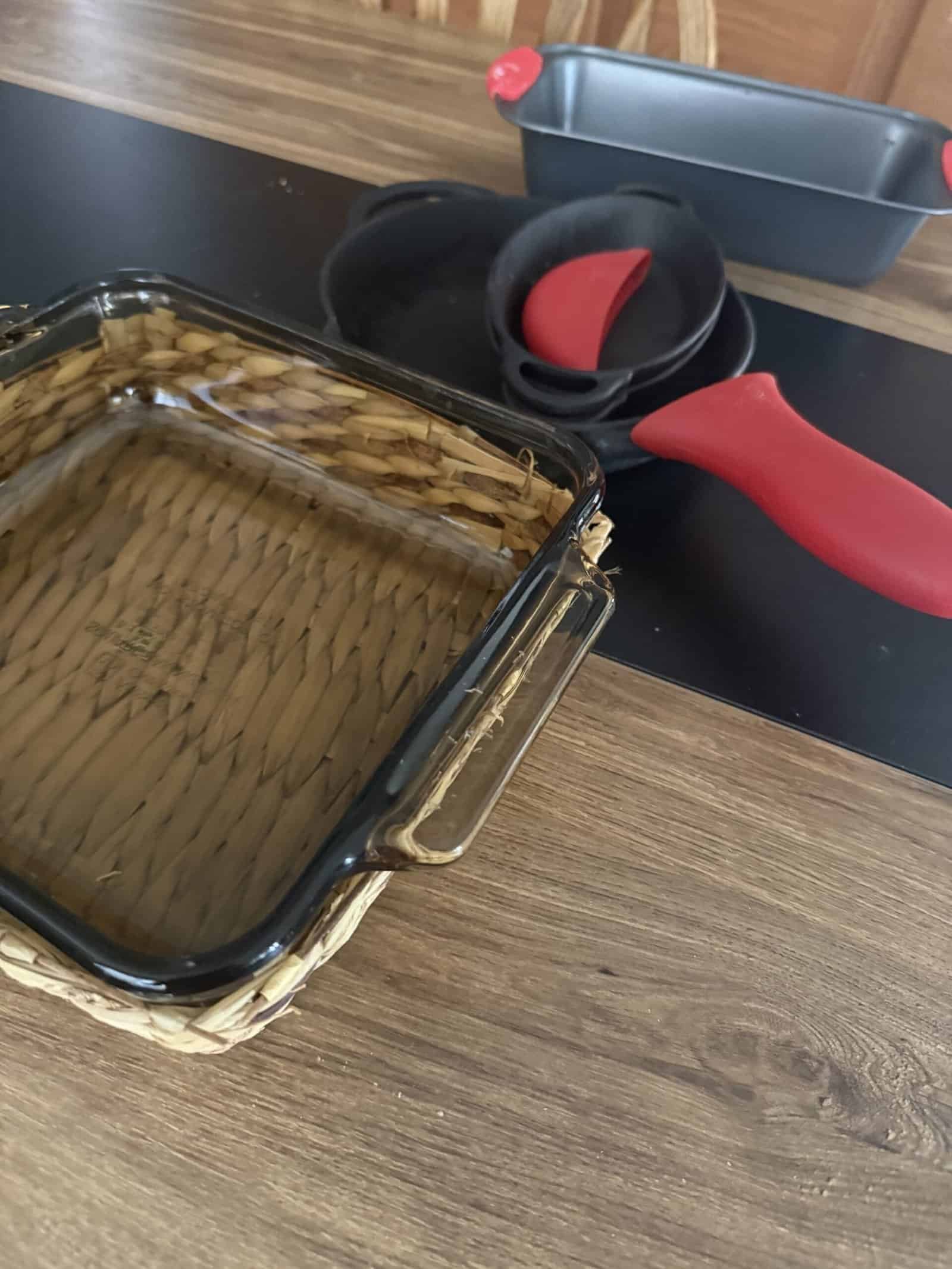
Stove to oven is not something I do every night. Stuffed peppers, some meat, and then weeks go by without it. But the pans that can do it are the pans I use constantly for everything else, which is the thing worth understanding about this category: you are not buying a specialist. You are buying ordinary cookware that happens not to have a plastic handle, and the capability sits there costing you nothing until the night you want it.
Quick Verdict
Cast iron does this best and does everything else too. A Dutch oven is the version for anything with liquid. Stainless if you want pan sauces. The rule underneath all of it is simple: no plastic, no wood, no rubber.
Key Takeaways
- The handle decides it. Everything else is secondary.
- Cast iron is the default answer and it is not close.
- Glass and sheet pans are oven cookware, not stove to oven cookware.
- Nonstick technically goes in the oven and mostly should not.
- You will use the capability rarely and want it badly when you do.
1. A Cast Iron Skillet, Best Overall
The obvious answer and the correct one.
It is one piece of metal. There is no handle to melt, no rivet with a plastic washer, no adhesive, no temperature rating to look up. It goes from a hot burner into a hot oven because there is nothing in it capable of objecting.
That is why it dominates this category despite not being designed for it. Cast iron is stove to oven cookware by accident of construction, and everything else in the category is trying to engineer its way to the same place.
I use mine constantly, mostly for steak, and the oven capability is a thing I reach for occasionally rather than plan around. That is the right relationship with it. Cast iron skillets covers the range including mine, what to cook in one shows the breadth, and choosing cast iron if you are starting.
Best for: nearly everything. Start here.
Skip if: the weight is genuinely a problem, which for some people it is.
2. A Dutch Oven, Best for Anything Wet
The other one I own, and it earns its place on a different axis.
Depth and a lid. That is what separates it from a skillet, and it is what makes braises possible: brown on the stove, add liquid, lid on, into the oven for hours. A skillet cannot hold that volume and cannot trap the steam, so it is not a substitute however good it is at searing.
Enamelled ones save you the seasoning question and cost more. Bare cast iron is cheaper and behaves like a skillet. Both go in the oven without complaint because both are, again, essentially one piece of metal with a handle that is also metal.
Dutch ovens covers the field, under $50 the budget end, and Dutch oven vs skillet if you are choosing between the two.
Best for: braises, stews, bread, anything that needs a lid and hours.
Skip if: you have a slow cooker and no interest in browning first.
3. Stainless Cookware, Best for Pan Sauces
The one that does something cast iron cannot.
Stainless builds fond, that browned layer stuck to the pan, and then lets you deglaze it into a sauce without any of it being complicated by seasoning. Cast iron builds fond too and scrubbing wine into it is a conversation with your seasoning that you may not want.
The construction question is the whole thing here. All-metal with riveted handles goes in the oven indefinitely. Anything with a bonded plastic or silicone grip has a temperature ceiling, usually printed somewhere nobody reads.
It also survives the dishwasher, which cast iron does not, and that matters more to how often a pan gets used than any performance argument. Stainless cookware sets covers the range, cast iron vs stainless the comparison, and why stainless sticks which is the complaint everyone has.
Best for: sauces, deglazing, acidic things, people who dishwasher everything.
Skip if: you want food to release, which is a different pan entirely.
4. A Braiser, Best Specialist
Shallower than a Dutch oven, wider than a skillet, and it exists for a specific job.
The shape is the point: enough surface to brown properly and enough depth for an inch or two of liquid, with a lid. That is exactly what a braise wants, and it is the geometry a Dutch oven gets wrong by being tall and a skillet gets wrong by being shallow and open.
Whether you need one depends on whether you braise. It is a real gap in a kitchen that does, and a redundant object in a kitchen that does not, and there is no middle position.
For most people a Dutch oven covers it well enough. Braisers covers the category if the shape appeals.
Best for: people who braise often and know they do.
Skip if: you own a Dutch oven. It does most of this.
5. Carbon Steel, Best Lightweight Option
The answer for people who want cast iron performance without the weight.
It heats like cast iron, seasons like cast iron, and goes in the oven like cast iron, and it weighs considerably less. The trade is that it is thinner, so it does not hold temperature the same way, which matters when cold food hits it.
It is also more reactive and less forgiving about acid and moisture, so it asks for more attention than a stainless pan does. That is a real cost and it is why it stays a smaller category despite the advantages.
I own stainless and cast iron rather than carbon, so this is the research-voice entry on the page. Carbon steel pans covers it properly, and cast iron vs carbon steel is the comparison worth reading first.
Best for: anyone finding cast iron too heavy but wanting the same behavior.
Skip if: you do not want another thing to maintain.
6. A Roasting Pan, Best for Volume
The one that goes the other direction: oven first, stove second.
A proper roasting pan with metal handles sits across two burners, which is how gravy gets made from what the roast left behind. That is stove to oven in reverse and it is the only time most people use the capability all year.
The thing to check is whether it is rated for a burner at all. Plenty of roasting pans are oven-only, thin, and will warp on direct heat, and finding that out with a Thanksgiving roast resting nearby is a bad time.
Roasting pans covers the range, and telling if cookware is oven safe is the piece to read before trusting anything.
Best for: large roasts, gravy, once or twice a year.
Skip if: a sheet pan covers your roasting. For most people it does.
What Goes Both Ways
| Cookware | Stove | Oven | Both? |
|---|---|---|---|
| Cast iron skillet | Yes | Yes | The default |
| Dutch oven | Yes | Yes | Yes, with a lid |
| Stainless, all-metal | Yes | Yes | Yes |
| Carbon steel | Yes | Yes | Yes |
| Nonstick | Yes | Low heat only | Technically |
| Glass bakeware | No | Yes | Oven only |
| Sheet pans | No | Yes | Oven only |
| Anything with a plastic handle | Yes | No | No |
The Handle Decides Everything
If you remember one thing from this page, it is that the pan is almost never the problem. The handle is.
Metal handles go in the oven. Plastic melts, wood cracks and dries out, silicone has a ceiling that is lower than you want. The cooking surface is rarely the limit, because most metal does not care about 400 degrees.
Which means the test is physical rather than technical. Look at what the handle is made of and what joins it to the pan. One piece of metal is unarguable. Riveted metal is fine. Anything bonded, molded, or comfortable to hold when the pan is hot is telling you something.
That last one is the useful heuristic: a handle designed to be grabbed without a towel is a handle designed to stay cool, which means it is not metal, which means it is not going in the oven. Telling if cookware is oven safe covers the checks properly.
Glass and Sheet Pans Do Not Count
Worth separating clearly, because I own plenty of both and neither belongs in this conversation.
Glass bakeware and sheet pans are oven cookware. They are excellent at that and they do not go on a burner. Glass on direct heat is a thermal shock problem with a shattering outcome, and a sheet pan on a burner warps and heats in a ring.
The distinction matters because “I have a variety of cookware” and “I have cookware that does stove to oven” are different statements. Most kitchens have plenty of the first and one or two things that do the second, and the second is usually the cast iron.
If your stove to oven need is really “roast this on a tray”, that is a sheet pan job and the stove never enters it.
The Nonstick Question
Nonstick pans usually say oven safe to some temperature and the honest answer is that you should mostly not.
The coating degrades faster at high heat, and the temperatures that make stove to oven worth doing are the temperatures that shorten a nonstick pan’s life. You can do it. The pan will be worse afterward, incrementally, in a way you will not notice until the pan is three years old instead of five.
I use nonstick constantly, for one-pan things, vegetables, quesadillas. It is not the pan I reach for when something needs finishing in the oven, and that is not a rule I follow so much as an instinct about which pan suits which job. Choosing a nonstick pan covers lifespan, and making them last the maintenance.
Recommended Reading
See telling if cookware is oven safe, cast iron skillets, and Dutch oven vs skillet.
Stove to Oven Cookware FAQ
What cookware can go from stove to oven?
Cast iron, Dutch ovens, all-metal stainless, and carbon steel. The common factor is construction rather than material: one piece of metal, or metal joined to metal with rivets. Anything with a plastic, wooden, or bonded handle is out regardless of how good the pan is.
How do I know if my pan is oven safe?
Look at the handle, not the pan. The cooking surface is rarely the limit since most metal is indifferent to 400 degrees. A handle you can grab comfortably while the pan is hot is a handle designed to stay cool, which means it is not metal, which means it is not going in the oven.
Can glass bakeware go on the stove?
No. Glass is oven cookware and direct heat is a thermal shock problem with a shattering outcome. Same for sheet pans, which warp and heat in a ring on a burner. Having a variety of cookware and having stove to oven cookware are different things.
Can nonstick pans go in the oven?
Usually to some stated temperature, and mostly you should not. The coating degrades faster at high heat, and high heat is the whole reason to finish something in an oven. The pan survives and gets worse incrementally. I use nonstick constantly and not for this.
Do I need a Dutch oven if I have a cast iron skillet?
If you cook anything with liquid, yes. The skillet cannot hold the volume or trap the steam, so braises and stews are outside what it does however well it sears. They are not competing, they are covering different halves.
Is a braiser worth buying?
Only if you braise often. The shape is genuinely better for it, wide enough to brown and deep enough for a couple of inches of liquid. For everyone else a Dutch oven covers it and a braiser is a redundant object.
How often will I actually use stove to oven?
Less than the category suggests. For me it is stuffed peppers, some meat, and then nothing for weeks. The reason it does not matter is that the pans that do it are pans you use daily anyway, so the capability costs you nothing to have and is there when you want it.
Cast iron or stainless for finishing in the oven?
Cast iron for searing and holding heat, stainless if you want to build a pan sauce afterward without negotiating with your seasoning. Both go in the oven indefinitely provided the stainless is all-metal. I own both and reach for cast iron most.
This guide is part of the full guide to choosing the right cookware for your kitchen.
