
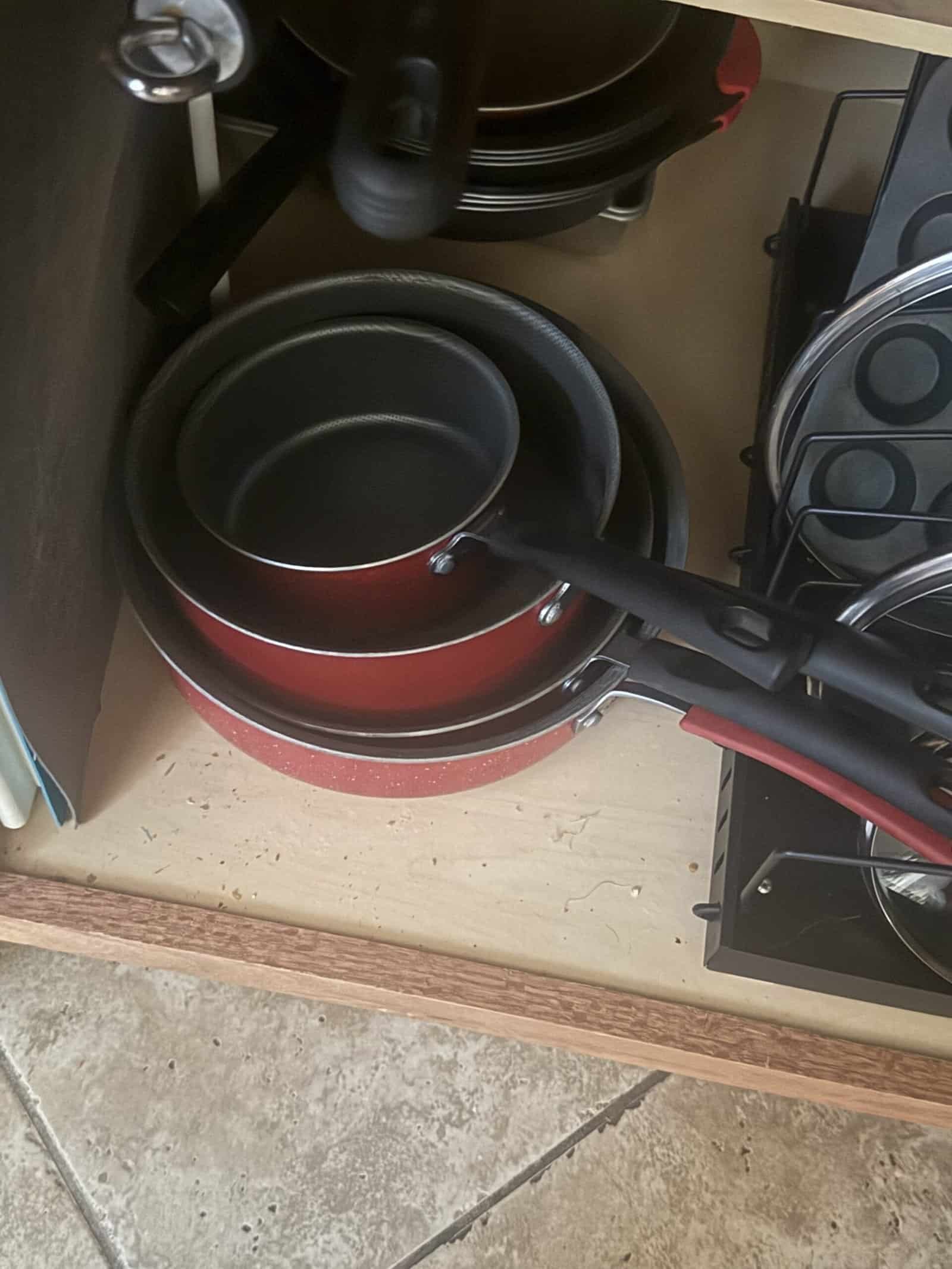
I keep a stackable set in the cabinet beside my oven, and it solves the problem it is supposed to solve: an apartment kitchen where drawer space is the binding constraint and a full set has to live in one place. What nobody mentions is the tradeoff you accept in return, which is that getting to a piece in the middle of a stack is genuinely more annoying than reaching for one that stands alone.
The best stackable cookware sets for small kitchens earn their place on footprint rather than on cooking performance, and they are worth it when cabinet space is what you have least of. For the wider question of what cookware to buy, see our guide to choosing the right cookware.
How We Picked These Cookware Sets
Quick Verdict
A set designed so pans nest closely in one cabinet is the right pick when storage is your constraint. Choose removable-handle cookware for the tightest spaces, a stainless set for durability, and a nonstick set if easy release matters more than longevity. Count the pieces you will actually use rather than buying the largest set available.
We prioritized how tightly a set nests, since that is the entire reason to buy stackable rather than conventional cookware. Sets where pans stack flush take dramatically less vertical space than ones that sit at an angle inside each other.
We then looked at handle design, because handles are what usually stop cookware from stacking properly. Removable and detachable handles solve this most completely, while low-profile fixed handles are the compromise.
Piece count and lid storage came third, since lids are the classic small-kitchen failure point and a set that stacks perfectly while its lids sprawl has not actually saved you space. Every pick here is a widely available type.
Removable-Handle Stackable Cookware Set
Why It Stands Out
Detachable handles let pans nest almost completely flat, which is the most space-efficient arrangement available in cookware. With the handles off, a full set collapses into a stack barely taller than the largest pan.
This design also makes the pans oven-safe more easily and lets them go from stovetop to table without a handle in the way.
Worth Knowing
The handle clip is a mechanism that can loosen over time, and you need to attach it every time you cook. Some people find that constant step irritating rather than clever.
Best for the tightest storage situations. Skip it if you want to grab a pan and go without attaching anything.
Nesting Stainless Steel Cookware Set
Why It Stands Out
A stainless nesting set combines space efficiency with the durability that makes stainless the long-term choice, since there is no coating to wear out. For cookware that will be stacked, unstacked, and knocked against itself daily, that matters.
Stainless also tolerates the scraping and shifting that stacking inevitably involves.
Worth Knowing
Stainless needs more technique to cook without sticking than nonstick does. Sets are heavier, which is noticeable when lifting a stack. Our guide to stainless steel cookware sets covers the material in depth.
Best for durability alongside space saving. Skip it if you want the easiest possible cleanup.
Nonstick Stackable Cookware Set
Why It Stands Out
Nonstick nesting sets release food easily and wash quickly, which is the practical daily benefit most people are actually after. In a small kitchen with limited counter and sink space, faster cleanup has real value.
Many are designed with low-profile handles specifically to stack.
Worth Knowing
Stacking is harder on nonstick than on stainless, since pans rubbing against each other is exactly how coatings get scratched. Protectors between pans help. Our guide to nonstick cookware sets covers care.
Best for easy cooking and cleanup. Skip it if you stack aggressively and want maximum coating life.
Compact Set With Integrated Lid Storage
Why It Stands Out
Sets that address lids directly, whether through lids that nest into each other or that seat inside the pans, close the gap that most stackable cookware leaves open. Lids are usually what defeats a tidy stack.
Solving lid storage as part of the set design is more reliable than solving it afterwards with an organizer.
Worth Knowing
Integrated lid systems tie you to that set’s specific pieces. Our guide to pot lid organizers covers the retrofit approach.
Best for kitchens where lids are the actual problem. Skip it if you already have a lid solution.
Small Five-Piece Starter Set
Why It Stands Out
A smaller set covers the pans most people genuinely use, which for many households is a skillet, a saucepan, and a larger pot. Buying fewer pieces is the most direct way to solve a storage problem.
It also avoids the specialty pans in larger sets that get used twice a year and occupy space permanently.
Worth Knowing
You may need to add a piece later for a specific job. Our guide to saucepans for everyday cooking covers filling gaps individually.
Best for people who cook a narrow range of things. Skip it if you cook widely and need variety.
Ceramic-Coated Stackable Set
Why It Stands Out
Ceramic-coated nesting sets offer easy release without traditional nonstick coatings, appealing to people who want food to slide off but prefer a different surface. Many come with stacking protectors included.
They tend to be lighter than stainless, which helps when lifting a stack in a cramped cabinet.
Worth Knowing
Ceramic coatings generally have a shorter usable life than stainless and are sensitive to high heat. Handle stacking carefully. Our guide to cookware for glass-top stoves covers surface compatibility.
Best for easy release with a lighter set. Skip it if you want maximum longevity.
Stackable Cookware Sets at a Glance
| Type | Space saved | Durability | Best for |
|---|---|---|---|
| Removable handle | Most | Varies | Tightest storage |
| Nesting stainless | High | Highest | Long-term use |
| Nonstick stackable | High | Moderate | Easy cleanup |
| Integrated lid storage | High | Varies | Lid problems |
| Five-piece starter | Highest by count | Varies | Narrow cooking range |
| Ceramic coated | High | Moderate | Lighter easy-release |
What Living With a Stacked Set Actually Involves
It Does Solve the Space Problem
Mine lives in the cabinet beside the oven, and the entire set fits there. In an apartment kitchen where drawer space is the real constraint and I keep few pots and pans with no duplicate tools, consolidating cookware into one cabinet is exactly what I needed. On the thing it promises, it delivers.
The Retrieval Friction Is Real
Here is the honest downside, and it is the one I would want to know before buying. When pieces are stacked, getting the one you want is harder when it is sandwiched between two others. You end up lifting things off to reach the middle of the pile, which is a small irritation that repeats every time you cook.
It is worth it for the space saved, but it is not free. If you cook several dishes at once and need two or three pans simultaneously, that friction multiplies.
I Do Not Store Things Inside the Pots
One habit worth mentioning because it runs against common small-kitchen advice: I do not put other items inside the pots to save space. Plenty of guides suggest nesting unrelated things in your cookware, and I would rather not open a pot and find something random in it. The pans nest with each other and that is all.
If you cook without much notice, that preference costs you a little storage efficiency and buys back the ability to grab a pot and use it immediately.
What to Look For in a Stackable Set
How Tightly It Nests
The difference between pans that stack flush and pans that sit at an angle inside each other is substantial in a cabinet. Removable handles nest most completely; low-profile fixed handles are the middle ground. This is the specification that determines whether the set solves your problem.
Where the Lids Go
Lids defeat more small-kitchen storage plans than pans do, since they do not stack usefully on their own. Sets that address lids in their design save you solving it separately. Our guide to cabinet and shelf organizers covers retrofits.
Piece Count You Will Actually Use
Large sets include specialty pans that occupy space permanently and get used rarely. In a small kitchen, buying fewer pieces is often more effective than buying pieces that stack well. Count what you genuinely cook with.
Coating and Stacking Together
Stacking coated pans means surfaces rubbing against each other, which is how coatings get scratched. If you buy nonstick or ceramic, use pan protectors between pieces. Our guide to saute pans covers individual pieces worth adding.
Stackable Set vs Buying Individual Pieces
The Case for a Set
A matched set is designed to nest together, arrives complete, and usually costs less than the same pieces bought separately. In a small kitchen that consolidation is the point, since mismatched pans stack badly.
The Case for Individual Pieces
Buying pans one at a time means every piece is one you chose for a reason, and nothing occupies cabinet space out of obligation. That is how you end up with few pots and pans and no duplicates, which is its own kind of space saving. The tradeoff is that unmatched pieces rarely nest as neatly. Our guide to kitchen drawer organizers covers the other half of a small kitchen.
What Trips People Up
Buying the Biggest Set Available
More pieces means more permanent cabinet occupancy. In a small kitchen, a smaller set usually beats a stackable large one.
Forgetting About Lids
A set that nests beautifully while its lids sprawl across a shelf has not solved the problem. Plan lid storage before buying.
Stacking Coated Pans Bare
Pan surfaces rubbing together scratch coatings. Use protectors between nonstick or ceramic pieces.
Underestimating Retrieval Friction
Reaching a pan in the middle of a stack means unstacking. If you regularly cook with several pans at once, factor that in.
Recommended Reading
- How to choose the right cookware
- Stainless steel cookware sets
- Nonstick cookware sets
- Pot lid organizers
- Cabinet and shelf organizers
- Saucepans for everyday cooking
Frequently Asked Questions
Are stackable cookware sets worth it in a small kitchen?
If cabinet space is your binding constraint, yes. Mine consolidates the whole set into one cabinet beside the oven, which is exactly what I needed in an apartment. The tradeoff is retrieval friction, since reaching a pan in the middle of a stack means lifting others off first.
What is the downside of stacking cookware?
Two things. Getting to a piece in the middle of a stack is harder than reaching one that stands alone, which is a small irritation that repeats every time you cook. And with coated pans, surfaces rubbing together during stacking can scratch the coating, which is why protectors between pieces are worth using.
Do removable handles actually help with storage?
They are the most space-efficient option available, since pans nest almost completely flat without handles sticking out. The cost is that you attach a handle every time you cook, which some people find fiddly. If your storage is genuinely tight, the space saved is substantial.
How do you store pot lids in a small kitchen?
Lids are the usual failure point, since they do not stack usefully alone. Some sets are designed with lids that nest into each other or seat inside the pans, which solves it at the source. Otherwise a dedicated lid organizer, either in-cabinet or door-mounted, is the common retrofit.
Should you store other items inside your pots?
Plenty of small-kitchen advice suggests it, but I do not, because I would rather not open a pot and find something unrelated inside it. It costs a little storage efficiency and buys back the ability to grab a pot and use it straight away. It comes down to whether you cook spontaneously.
How many pieces should a small-kitchen cookware set have?
Fewer than most sets include. Large sets carry specialty pans that occupy cabinet space permanently and get used rarely, which works against you in a small kitchen. Counting the pans you genuinely cook with, then buying that many, usually beats buying a big set that happens to stack.
