
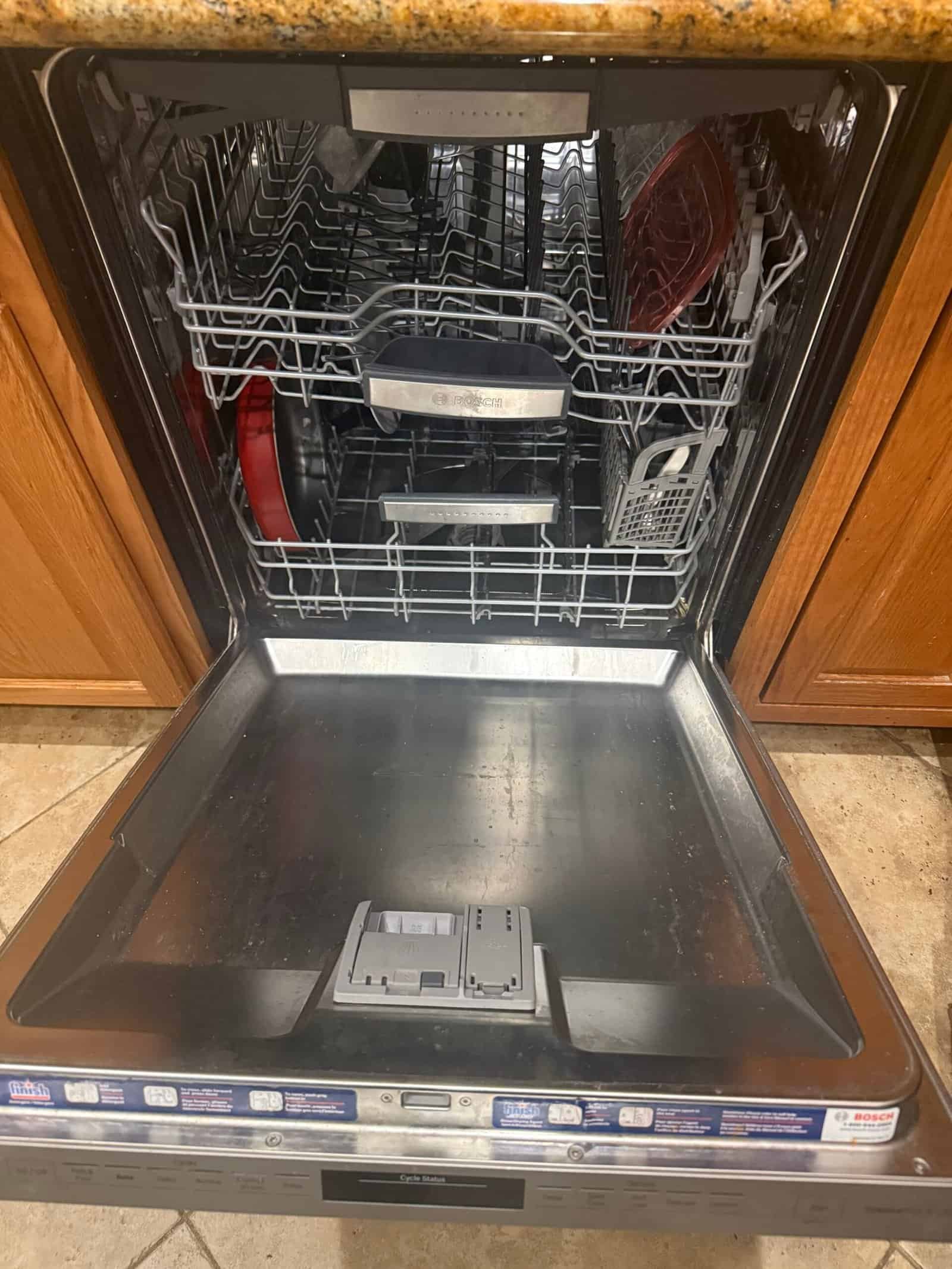
Modern dishwashers and detergents do not need you to. Enzyme-based detergents work by attaching to food residue, and a plate rinsed completely clean gives them nothing to act on, which can leave a film rather than a better result.
Scraping is a different matter and it still helps. Removing bones, large chunks, and anything that will clog the filter is worth doing, and running every plate under the tap first is water and time spent on something the machine already handles.
Quick Answer
Scrape solids into the bin and load. Skip the rinse for most items unless dishes will sit for a day or more, or unless your machine is old enough to lack a soil sensor. Burnt-on residue and dried egg are the exceptions that genuinely benefit from a soak.
Key Points
- Enzyme detergents need residue to work against
- Soil sensors adjust the cycle based on how dirty the load is
- Scraping matters, rinsing usually does not
- Pre-rinsing uses a meaningful amount of water over a year
- Dishes sitting for days are the real exception
- Older machines without sensors behave differently
Scrape, Rinse, or Load
| Situation | What to do |
|---|---|
| Ordinary plates after a meal | Scrape and load |
| Bones, corn cobs, large solids | Scrape thoroughly, no rinse needed |
| Dried egg, cheese, or oatmeal | Soak briefly, then load |
| Burnt-on pans | Soak or hand wash |
| Dishes sitting until tomorrow | Rinse to prevent hardening |
| Older machine with no soil sensor | Rinse lightly |
Why the Advice Changed
Older dishwashers sprayed water and relied on heat and detergent to do the rest. Pre-rinsing helped because the machine had no way to detect or respond to how dirty a load was.
Current machines commonly include soil sensors that measure how cloudy the water is and adjust cycle length accordingly. A load of spotless pre-rinsed dishes reads as clean, and the machine runs a shorter, gentler cycle than the dishes may actually need.
Detergents changed alongside them. Enzyme formulations target specific food compounds, and they need those compounds present to act on. Removing everything first removes what the detergent was designed to attach to.
What I Do and Why It Does Not Match
I rinse everything, completely, under running water before it goes in. Nothing goes in the machine with food on it, and I never skip it.
That is not a decision I arrived at by reading anything. It is how I was taught as a kid and I have never done it any other way, so it is habit rather than a considered position.
Which means my practice does not match what the evidence says about modern machines and enzyme detergents. I know that, and I still rinse, and I think that is worth saying rather than writing an article that quietly implies I follow my own advice.
What I would say in defense of the habit is that it costs me water and time and it has never produced a bad result. What I would say against it is that a considerable amount of both is going into something the machine could handle.
My experience covers one apartment dishwasher and a habit formed long before I owned it. It does not cover commercial machines, older units without soil sensors, or households where dishes sit for days before a load is run.
When Rinsing Genuinely Helps
Dishes that will wait
If a load runs every few days, food dries and hardens onto surfaces in a way that a normal cycle will not shift. A quick rinse before dishes sit is worth it.
Egg, cheese, and starches
These bond strongly as they dry. A brief soak rather than a full rinse handles them, and it matters more on flat surfaces than in bowls.
Older machines
A dishwasher without a soil sensor cannot adjust its cycle, so pre-rinsing compensates for what the machine cannot detect.
Overloaded racks
Water needs to reach every surface. A packed rack blocks spray, and pre-rinsing partly compensates for a loading problem better solved by running two loads.
What Actually Improves Results
Loading matters far more than rinsing. Dirty surfaces should face the spray arms, bowls angle downward, and nothing should nest inside anything else.
Filter cleaning is the maintenance step most people skip. A clogged filter recirculates dirty water, which produces the gritty residue people blame on not rinsing, and it takes a couple of minutes to clean.
Water temperature matters too. Running the tap hot before starting a cycle means the machine begins with hot water rather than warming cold water on its own. Related issues sit in why dishwashers leave spots.
What Should Not Go In
Cast iron loses its seasoning and rusts. Wooden boards and utensils crack and dry out. Anything with a wooden handle or glued joint comes apart over time.
Good knives are the one people argue about. Heat, harsh detergent, and contact with other items dull edges and loosen handles, which is why most guidance says wash them by hand. That case is made in whether knives can go in the dishwasher, and plenty of people including me do it anyway, accepting the tradeoff.
Nonstick coatings degrade faster with repeated dishwasher cycles even when labelled safe, covered in making nonstick pans last. Cookware built for it sits in dishwasher-safe cookware.
Scraping Is the Part That Matters
The distinction people miss is between scraping and rinsing. They are different actions with different purposes, and only one of them is worth your time.
Scraping removes solids that would otherwise sit in the filter. Bones, corn cobs, fruit stones, and anything fibrous cause problems regardless of how good the machine is, and no cycle dissolves them.
Rinsing removes the film and residue that detergent is designed to attack. That is the part the machine handles, and removing it first works against the chemistry rather than helping it.
A plate scraped clean of solids and still visibly greasy is exactly what a dishwasher wants. It looks wrong to anyone raised to rinse, and it produces better results than a plate that arrives already spotless.
The Water Question
Running a tap while rinsing a full load uses a substantial amount of water, often more than the dishwasher itself uses for the entire cycle.
That makes pre-rinsing the most water-intensive part of the process for households that do it thoroughly. Over a year the difference is meaningful.
It is also the easiest habit to change and among the hardest, since it usually predates any thinking about it. Knowing the arithmetic does not automatically change the behavior, which is worth acknowledging rather than pretending otherwise.
Rinse or Do Not
Do not rinse if you run the machine daily, have a reasonably modern dishwasher, and use enzyme detergent. Scrape solids, load properly, and let it work.
Rinse if dishes sit for days before a load runs, if your machine is old enough to lack a soil sensor, or if you are dealing with egg, cheese, or dried starches. And if it is a habit you were raised with, know that it costs water and time rather than results.
Related Reading
- diagnosing poor results
- the knife question
- cookware built for it
- protecting coatings
- handling what stays out
- the wider routine
Frequently Asked Questions
Do you need to rinse dishes before the dishwasher?
Usually not with a modern machine and enzyme detergent. Scraping solids matters, and rinsing every surface clean removes the residue the detergent is designed to work against.
Why do enzyme detergents need food residue?
They target specific food compounds, so they need something present to attach to. On a completely clean plate they have nothing to act on, which can leave a film rather than improving the result.
What is a soil sensor?
A sensor that measures how cloudy the water is and adjusts cycle length accordingly. A load of pre-rinsed dishes reads as clean, so the machine may run a shorter cycle than the dishes actually need.
Should I rinse if dishes will sit overnight?
Yes. Food that dries and hardens over a day or more is harder for a normal cycle to shift, and a quick rinse before dishes sit prevents that. This is the main genuine exception.
Does pre-rinsing waste water?
Running a tap through a full load often uses more water than the dishwasher uses for the whole cycle. For households that rinse thoroughly, it is the most water-intensive part of doing the dishes.
What actually improves dishwasher results?
Loading properly so spray reaches every surface, cleaning the filter regularly, and running the tap hot before starting. A clogged filter recirculates dirty water and produces the residue people blame on not rinsing.
What should never go in a dishwasher?
Cast iron, wooden boards and utensils, anything with glued joints, and good knives according to most guidance. Nonstick coatings degrade faster with repeated cycles even when the label says they are safe.
