
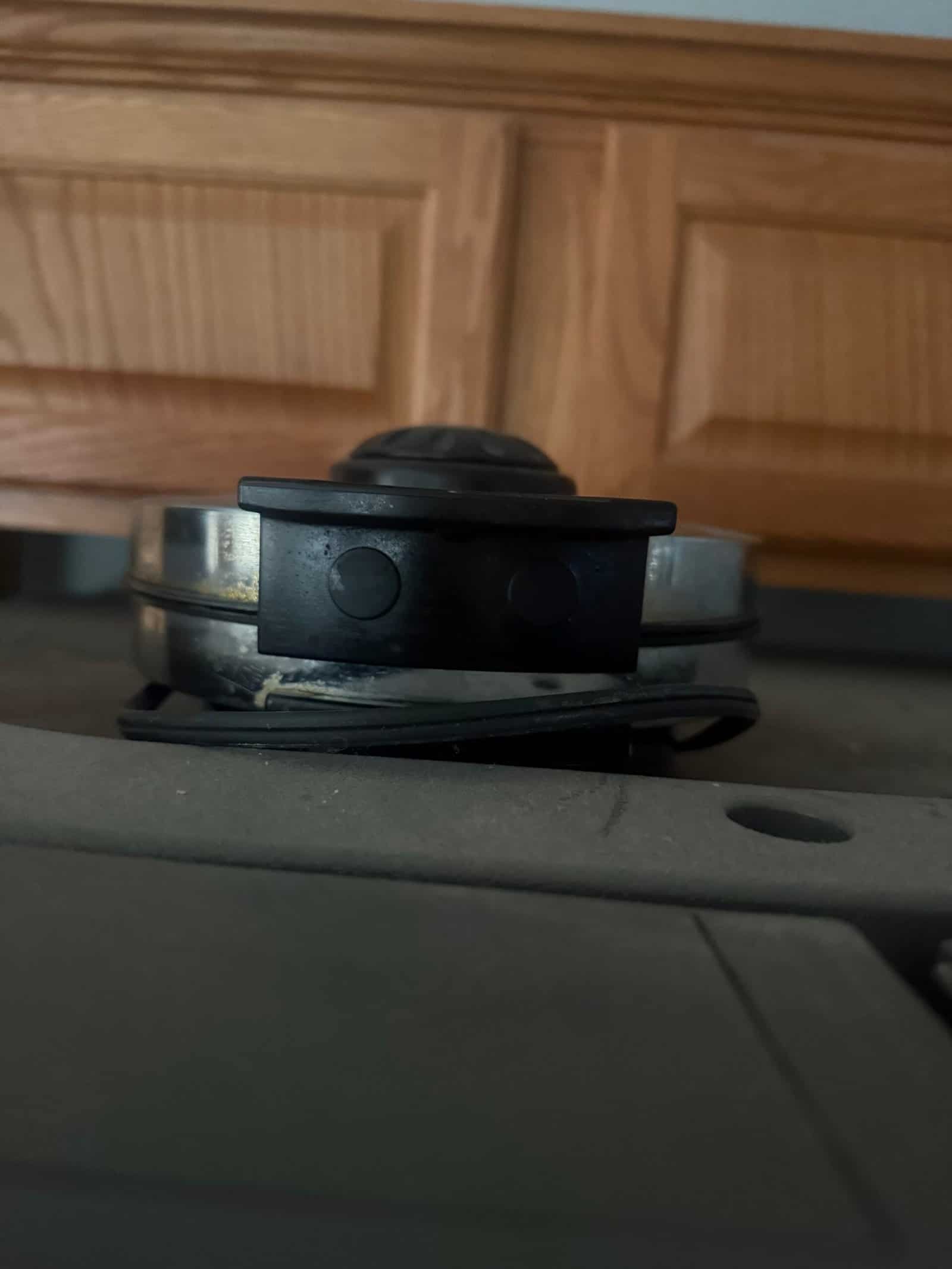
A waffle maker used a few times a year does not belong on the counter, and it does not belong somewhere you dread reaching. Above the fridge, the top shelf of a cabinet, or the back of a low cupboard all work, and which one depends on weight and how often you actually use it.
The one rule that matters mechanically is storing it flat with the lid closed. Standing one on its side puts the hinge under load it was not designed for, and hinges are the part that fails.
Quick Answer
Store it flat with the lid closed, cord wrapped loosely, somewhere out of the way that you can still reach safely. Above the fridge suits light appliances used rarely. Make sure it is completely cool and clean before it goes away, since trapped moisture causes residue to develop.
Key Points
- Flat with the lid closed protects the hinge
- Weight decides height more than frequency does
- Above the fridge suits light, rarely used appliances
- Cool completely before storing to avoid trapped moisture
- Wrap the cord loosely rather than tight around the housing
- Retrieval friction determines how often it gets used
Where It Should Go
| Frequency | Location | Notes |
|---|---|---|
| Weekly | Accessible cabinet at waist height | Easy to reach without moving anything |
| Monthly | Higher shelf or back of a cabinet | Still reachable, out of prime space |
| Few times a year | Above the fridge, top shelf | Only if light enough to lift down safely |
| Almost never | Outside the kitchen entirely | Or consider whether to keep it |
Flat, Lid Closed
Waffle makers are designed to sit flat, and the hinge carries the lid’s weight in that orientation. Stored on its side or upright, the hinge takes the load sideways instead, which loosens it over time.
A loose hinge means the plates no longer close evenly, and uneven plates cook unevenly. It is the most common way a waffle maker degrades short of coating failure.
Closing the lid also protects the plates from dust and from anything stacked nearby, which matters more in a cupboard than people expect.
Where Mine Lives
Mine goes above the fridge, and it is the only thing that really goes up there. That space suits it because I use the waffle maker rarely enough that the height is not a nuisance.
It sits flat with the cord wrapped. Nothing complicated, and it has worked without issue.
The reason it works is the match between how often I use it and how awkward the spot is. Something I reached for weekly would end up somewhere easier, and something heavier would not go overhead at all.
That is the calculation I would offer rather than a rule about waffle makers specifically. Above the fridge is real storage for light things used rarely, and putting the wrong appliance there is how people end up not using it.
My experience covers one Oster in an apartment kitchen where cabinet space is the constraint. It does not cover kitchens with pantries or appliance garages, where the options are different.
Cool and Clean First
Storing a waffle maker warm traps moisture inside the closed plates. That moisture encourages the sticky film that builds up in the grid over months.
Leaving it open until completely cool takes an hour and prevents the problem entirely. Closing it and putting it away straight after use is the habit worth breaking.
Storing it dirty is worse. Residue left for weeks hardens and bonds to the plates, turning a wipe into a real job next time, covered in cleaning a waffle maker.
The Cord
Wrap it loosely rather than tightly around the body. Tight wrapping stresses the point where the cord enters the housing, and that is where cords fail.
Many machines have a cord wrap channel underneath designed for exactly this. Using it as intended avoids the strain that hand-wrapping creates.
A velcro strap or a twist tie holds a loose loop without tension, which is the tidiest option for machines with no built-in channel.
Weight Decides Height
The rule that matters for overhead storage is weight rather than frequency. Lowering something heavy from above your head at an angle is where accidents happen.
Waffle makers are generally light enough for a high shelf, which is why they suit spaces like above the fridge that will not take a stand mixer or a slow cooker.
Anything you cannot lift down comfortably with one hand while balancing belongs at waist height or lower, and the same rule applies to every appliance in the kitchen.
Retrieval Friction Is Real
An appliance stored somewhere awkward gets used less than one within reach. That is not laziness, it is a small cost paid every single time, and it compounds.
Which means the storage decision partly determines whether you keep making waffles. Somewhere genuinely inconvenient turns an occasional appliance into an unused one.
Where you notice yourself avoiding it, check whether the location caused that before concluding you do not want it, and the wider version sits in tools you never use.
Making a High Space Usable
Above the fridge is deep, and anything pushed to the back becomes unreachable. A shallow bin turns it into a drawer you pull forward rather than a shelf you reach into blindly.
It also runs warmer than the rest of the kitchen, since the fridge vents heat upward. That is fine for an appliance and worth knowing before storing anything heat-sensitive there.
Keeping one item per zone makes retrieval predictable. A single appliance above the fridge stays easy to get at, and three stacked ones do not, which is covered in cabinet and shelf organizers.
Boxes and Accessories
Original packaging takes considerable space for a benefit most people never use. Unless you plan to move soon or resell, the box costs more in storage than it returns.
Any accessories that came with the machine belong with it rather than in a general drawer. Cleaning brushes and recipe inserts scatter otherwise and are never found when wanted.
A photo of the model number on your phone covers what the manual would have told you, without keeping the manual.
Storing It Against Getting Rid of It
Worth storing looks like a machine used a few times a year that you still reach for, in good condition, light enough for the space you have. Above the fridge or a top shelf handles that well.
Worth reconsidering looks like a machine unused for a year, one with a flaking coating, or one stored somewhere so awkward it never comes out. The last case is worth relocating before writing off, since the storage rather than the appliance may be the problem.
Related Reading
- the wider storage approach
- cleaning before it goes away
- machines and their footprints
- making high spaces work
- when to let something go
- working with limited cabinets
Frequently Asked Questions
Should a waffle maker be stored flat or upright?
Flat with the lid closed. The hinge carries the lid’s weight in that orientation, and storing it on its side loads the hinge sideways, which loosens it and causes uneven closing over time.
Can I store a waffle maker above the fridge?
Yes, if it is light enough to lift down safely and you use it rarely. That space suits infrequently used light appliances, and weight rather than frequency is what rules something out.
How should I wrap the cord?
Loosely, or in the cord channel underneath if the machine has one. Tight wrapping around the body stresses the point where the cord enters the housing, which is where cords fail.
Do I need to clean it before storing?
Yes. Residue left for weeks hardens and bonds to the plates, turning a simple wipe into a difficult job. Storing it clean is easier than cleaning it before the next use.
Why should it cool completely first?
A warm machine stored closed traps moisture inside the plates, which encourages the sticky film that builds up in the grid. Leaving it open for an hour prevents that.
Should I keep the box?
Only if you plan to move soon or resell it. Boxes take substantial space for a benefit most people never use, and the storage cost usually exceeds what the box is worth.
Where should it go if I use it weekly?
An accessible cabinet at waist height rather than a high shelf. An appliance stored awkwardly gets used less, and that cost is paid every time rather than once.
