
Between half and three quarters full. Below half the food spreads thin and dries out at the edges, and above three quarters the contents heat too slowly and can push liquid past the lid as they expand.
That range is not arbitrary. Slow cookers heat through the sides and base rather than from below only, so the amount of food determines how evenly the heat distributes.
Quick Answer
Aim for two thirds to three quarters. Below half, food overcooks and dries. Above three quarters, it heats slowly enough to sit at unsafe temperatures for longer and risks bubbling over. Match the cooker size to what you usually cook rather than adjusting recipes to a large pot.
Key Points
- Half to three quarters is the working range
- Underfilling dries food and overcooks the edges
- Overfilling slows heating, which matters for food safety
- Ingredients expand and release liquid during cooking
- Cook times assume a properly filled pot
- Size the cooker to your usual batch rather than the reverse
What Happens at Each Level
| Fill level | What happens |
|---|---|
| Under one third | Food dries, edges overcook, effectively burns |
| Half | Workable, may cook faster than the recipe states |
| Two thirds | Ideal for most recipes |
| Three quarters | Upper limit, fine for most dishes |
| Near the rim | Slow to heat, may overflow, safety concern |
| Above the rim | Lid will not seal, do not attempt |
Why Underfilling Is Worse Than People Expect
A thin layer of food in a large pot has a high ratio of surface area to volume, so more of it is in direct contact with hot ceramic.
That produces overcooked edges and a dry result long before the cook time is up, which is the opposite of what a slow cooker is meant to do.
Recipes also assume a certain thermal mass. A small amount heats faster and reaches temperature earlier, so following the stated time overcooks it.
This is the specific reason a large cooker suits single-portion cooking badly, covered in whether a slow cooker is worth it for one person.
Where I Land
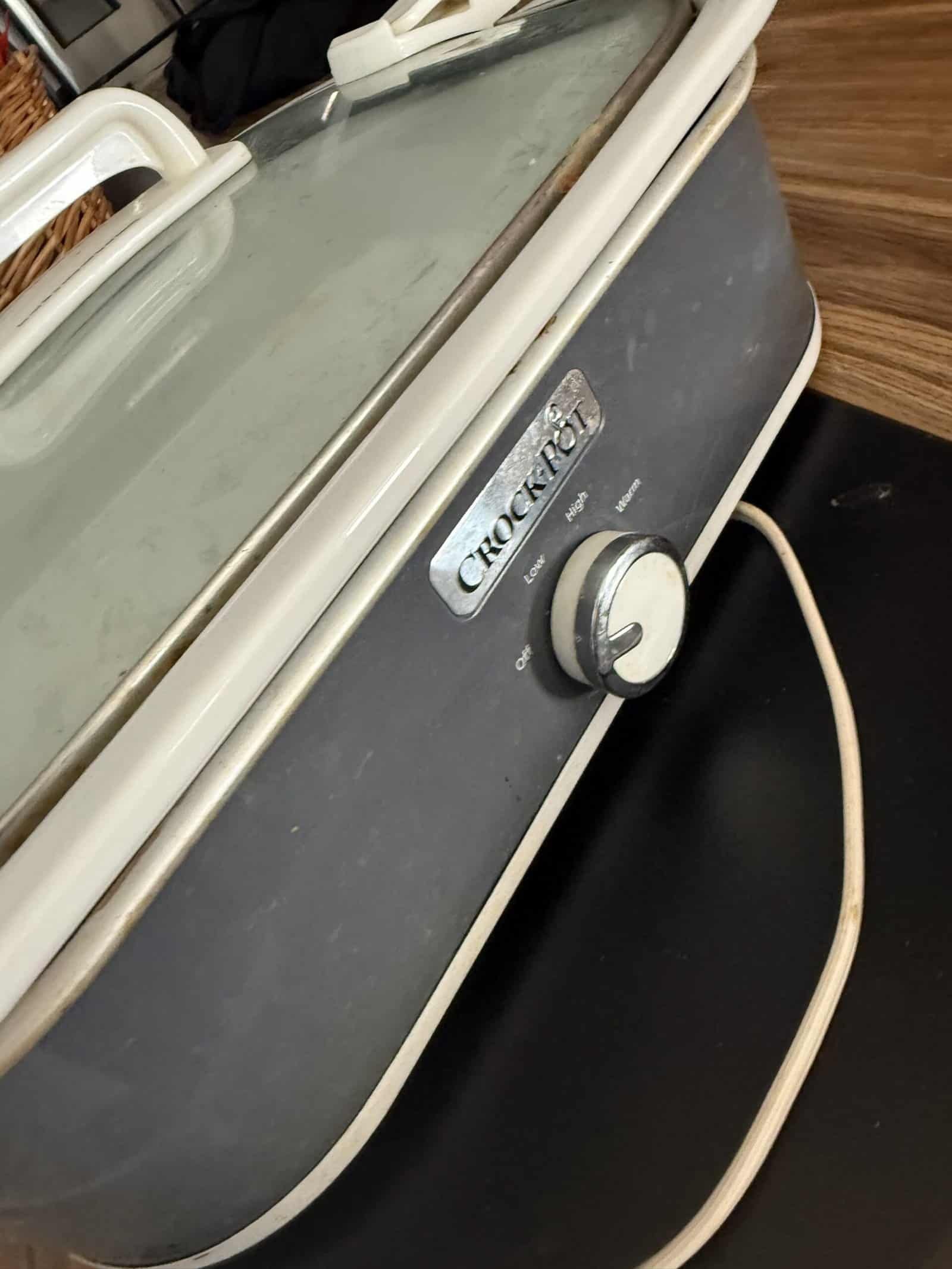
I run mine at about three quarters full, and that is deliberate rather than accidental. I would be scared of overflow going higher.
It has never overflowed at that level. Three quarters seems to be the point where the pot is working properly with enough headroom that nothing pushes past the lid.
Mine is a fairly large cooker and I use full batches for leftovers, so hitting that level happens naturally rather than requiring adjustment.
My experience covers a large slow cooker used regularly at that fill level. It does not cover small units, where the same proportion is a much smaller volume, or oval cookers where the shape changes how food sits. See also our guide to smaller cookers sized to the portion.
Why Overfilling Is a Safety Issue
Food safety guidance centers on how quickly food passes through the temperature range where bacteria multiply fastest, generally cited as roughly 40 to 140 degrees Fahrenheit.
A slow cooker packed to the rim takes considerably longer to bring its contents through that range, which extends the window during which bacteria can grow.
That risk compounds with frozen ingredients, which start colder and take longer again, covered in frozen meat in a slow cooker.
Starting with room-temperature rather than fridge-cold ingredients helps, and the fill level matters more than either.
Ingredients Expand
Beans, rice, pasta, and grains absorb liquid and swell considerably, and a pot filled to three quarters with dried beans and water will be at the rim by the end.
Meat and vegetables release water as they cook, which raises the liquid level even as the solids shrink.
Both mean the fill level to judge is the finished level rather than the starting one, and dishes with expanding ingredients need starting lower.
That interacts with the liquid problem generally, covered in why slow cooker food gets watery.
Adjusting Cook Times for Fill Level
Half full
Expect faster cooking, often by an hour or more on a long recipe. Check earlier than the stated time.
Two thirds to three quarters
Recipe times apply as written, since this is what most recipes assume.
Near the rim
Slower throughout, sometimes by several hours. Adding time is the wrong fix, since the slow heating is itself the problem.
Layering matters too
Dense root vegetables belong at the bottom where the heat is strongest, with meat above them and delicate ingredients added late.
Shape Matters Alongside Volume
Two cookers of the same capacity can behave differently depending on their proportions.
Oval cookers are wider and shallower, which spreads food across more surface area. That suits roasts and whole chickens and dries a small quantity faster than a round pot would.
Round cookers are deeper for the same volume, which keeps liquid over the ingredients and suits stews, soups, and chilis better.
Depth also affects where the fill line sits visually. Three quarters of a shallow oval is a thinner layer than three quarters of a round pot, so the proportion matters more than how full it looks.
Sizing the Cooker to Your Cooking
The fill rule means the cooker size determines what you can sensibly make. A large unit cannot cook small, and a small one cannot batch. For more on this, see our guide to sizing a cooker for batch cooking.
For one or two people cooking single meals, one and a half to three quarts fills properly with realistic quantities.
For batch cooking and leftovers, six quarts and up makes sense, since the whole point is producing more than one meal.
Owning both is overkill for most kitchens, and the storage cost is real. Options sit in slow cookers under fifty dollars, with programmable models in programmable slow cookers.
Checking Without Guessing
Judging fill by eye is unreliable because pot shapes differ, and there are a couple of ways to be sure.
Fill the empty insert with water to the level you plan to cook at, then pour it into a measuring jug. That tells you the working volume once rather than every time.
A mark inside the insert, or simply knowing that a particular recipe lands correctly, removes the guesswork afterward. Most people find one or two recipes that fit their pot and use those as reference.
Where a recipe clearly produces too much, splitting it across two cooks beats packing the pot. Half a batch cooked properly is better than a full batch that heats slowly and unevenly.
Right Against Wrong
Right looks like two thirds to three quarters full at the end of cooking, with the lid seated properly and nothing pushing past it. Recipe times apply and the food cooks evenly.
Wrong looks like a thin layer drying at the edges, or a pot packed to the rim that takes hours to come up to temperature. The first ruins a meal and the second is a food safety concern rather than only a quality one.
Related Reading
Related: is my slow cooker food watery.
Frequently Asked Questions
How full should a slow cooker be?
Between half and three quarters, with two thirds being ideal for most recipes. That range gives even heating without slowing the pot down or risking overflow.
What happens if a slow cooker is too empty?
Food spreads thin, more of it contacts hot ceramic, and the edges overcook and dry out. It also cooks faster than the recipe states, so following the time makes it worse.
Is overfilling a slow cooker dangerous?
It can be. A packed pot takes considerably longer to bring contents through the temperature range where bacteria multiply, which extends the window for growth.
Do I need to adjust cook time for fill level?
Yes. A half-full pot often cooks an hour or more faster on a long recipe. Recipes generally assume two thirds to three quarters.
Will a slow cooker overflow?
It can with expanding ingredients. Beans, rice, and pasta absorb liquid and swell, and meat and vegetables release water, so judge by the finished level rather than the starting one.
Can I cook a small amount in a large cooker?
Not well. Below half full the food dries and overcooks regardless of timing, which is why a small unit suits single-portion cooking better than a large one.
Does it matter how ingredients are layered?
Yes. Dense root vegetables belong at the bottom where heat is strongest, with meat above and delicate ingredients added toward the end.
Cooker size interacts with cabinet space. planning kitchen storage covers where appliances live.
