
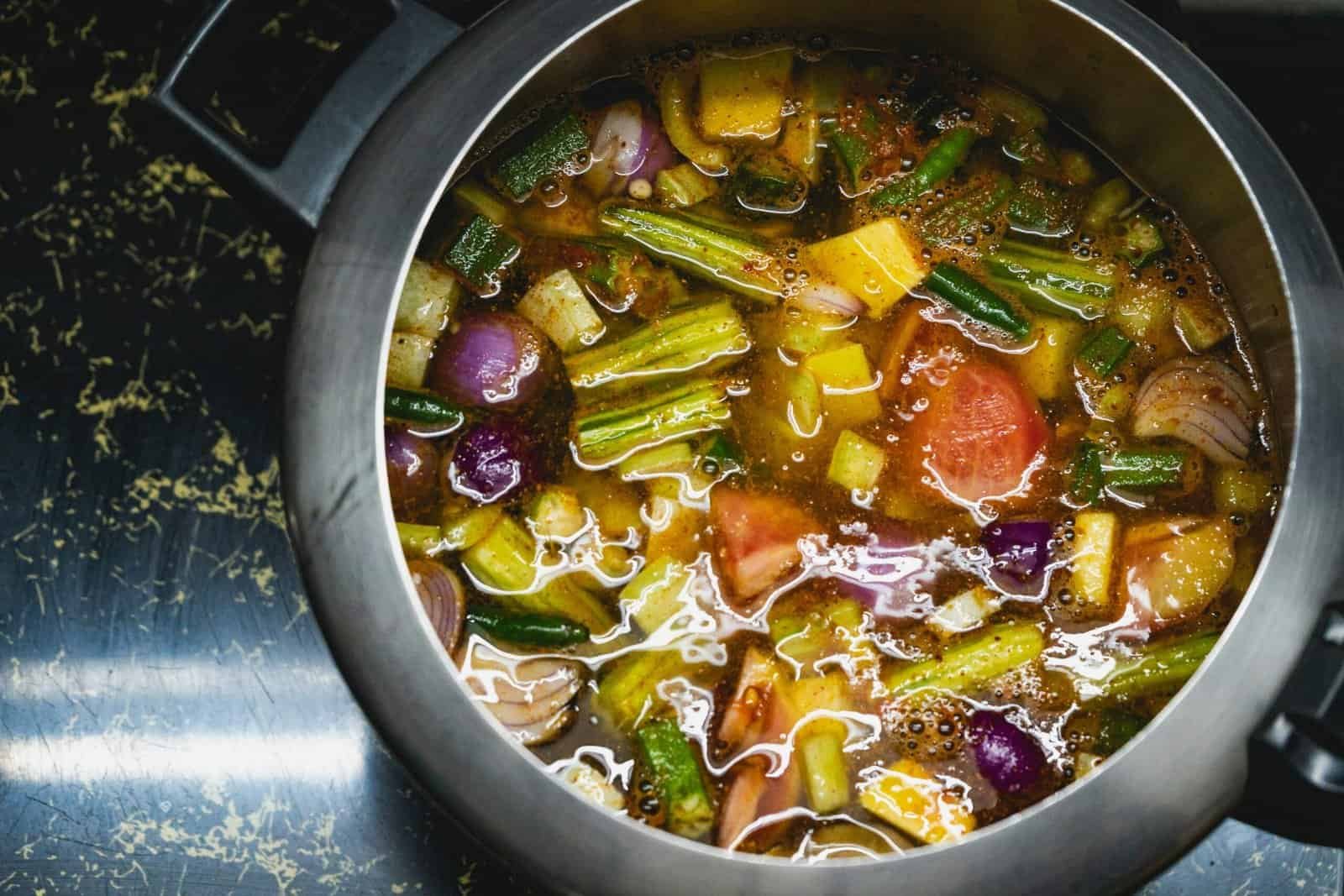
Cooking for one or two in a six-quart slow cooker produces a shallow layer of food that dries out and finishes early, because these appliances are designed around being reasonably full. A smaller cooker fixes that by matching the pot to the portion rather than asking a big one to behave. The complication is that plenty of people cooking for one still want leftovers, which makes the smallest sizes narrower in use than they look. Our note on whether a slow cooker is worth it for one person covers that question directly.
Quick Verdict
A three to four quart cooker is the sweet spot for one or two people, giving properly cooked results plus a portion or two spare. Go smaller only for sides and dips, since a 1.5 quart cooker makes a single serving and little else.
Key Takeaways
- Slow cookers need to be reasonably full to cook correctly.
- Three to four quarts suits one or two people with some spare.
- Very small cookers run proportionally hotter and finish faster.
- Round pots suit stews; oval pots suit whole cuts.
- Cooking times from standard recipes need adjusting downward.
How We Picked
Cookers are grouped by capacity and by what that capacity realistically produces, since the gap between a stated quart figure and a number of servings is where most disappointment lives. Heat behavior at small volumes is weighted alongside size, because small cookers do not simply scale down.
Selections reflect capacity, insert design, and documented features. Descriptions come from product research rather than from cookers used side by side.
1. A Three-Quart Cooker, Best Overall
Why It Stands Out
Three quarts is large enough to fill properly with a meal for two, which is what the appliance needs to cook the way recipes assume, and small enough that it does not dominate a cupboard.
It also produces a spare portion or two rather than a week of the same dish, which suits people who want leftovers without committing to them.
Worth Knowing
Standard recipes are usually written for six quarts, so quantities need halving and cooking times shortening. Treat the first few batches as calibration.
Three quarts will not take a whole roast, so meat needs cutting down. Our note on how full a slow cooker should be covers filling correctly.
This suits most one and two person households. Skip it if you want batch quantities.
2. A Four-Quart Cooker, Best for Some Leftovers
Why It Stands Out
Four quarts is the size that cooks a proper meal for two and still leaves lunches, which is what a lot of people actually want when they say they are cooking for one.
It also handles a small joint of meat, which three quarts often will not.
Worth Knowing
Four quarts is only a little smaller than the standard six, so the storage saving is less than the number suggests.
Recipes still need scaling, though less aggressively than for a three quart. Our note on what to cook in a slow cooker covers dishes that scale well.
This suits two people or one with lunches. Skip it if cupboard space is tight.
3. A 1.5-Quart Mini Cooker, Best for Sides and Dips
Why It Stands Out
Mini cookers hold a single serving or a dip, and they take almost no cupboard space, which makes them a sensible second cooker rather than a first.
They also suit keeping something warm alongside a main dish cooking elsewhere.
Worth Knowing
These run proportionally hotter than larger cookers, so food finishes considerably faster and can scorch at the edges if left on the schedule a recipe suggests.
A single serving of most slow-cooked dishes is an awkward quantity to cook, since the technique suits volume. Our note on why slow cooker food goes watery covers liquid at small volumes.
This suits dips, sides, and warming. Skip it as your only cooker.
4. A Small Oval Cooker, Best for Whole Cuts
Why It Stands Out
An oval three or four quart pot takes a small joint or a couple of chicken thighs laid flat, which a round pot of the same capacity will not accommodate neatly.
Shape matters more than volume when the food does not break down into pieces.
Worth Knowing
Oval cookers take more width on a counter than round ones of the same capacity, which matters in a small kitchen.
For soups, chilis, and anything stirred, the shape offers no advantage at all.
This suits meat-led cooking for two. Skip it for soups and stews.
5. A Small Cooker With a Removable Insert, Best for Cleanup
Why It Stands Out
A removable insert washes in a sink or dishwasher rather than requiring the whole appliance to be wiped around a fixed pot, which on a cooker used regularly is the difference that matters.
It also chills in the fridge before portioning, which avoids decanting hot food.
Worth Knowing
Some small cookers use fixed pots to keep the price down, so check rather than assuming the insert lifts out.
Ceramic dislikes sudden temperature changes, so let it cool before it goes anywhere cold. Our guide to cleaning a slow cooker covers care.
This suits regular use. Skip it only if the price difference is decisive.
6. A Small Multi-Cooker, Best for Tight Storage
Why It Stands Out
A three-quart multi-cooker covers pressure cooking as well as slow cooking, which suits a kitchen where cupboard space rather than money is the binding constraint.
Pressure mode also handles the dishes slow cooking does poorly at small volumes, such as dried beans.
Worth Knowing
Slow cooking on a multi-cooker is generally considered a step below a dedicated cooker, since the pot and heating element are built around pressure.
If slow cooking is the main job, a dedicated small cooker does it better for less. Our comparison of pressure cookers and slow cookers covers the difference.
This suits very small kitchens. Skip it if slow cooking is what you do most.
Small Slow Cookers at a Glance
| Capacity | Realistic servings | Takes a joint | Best for |
|---|---|---|---|
| 1.5 quart | 1 | No | Dips, sides, warming |
| 2 to 2.5 quart | 1 to 2 | No | Single meals |
| 3 quart | 2 to 3 | Small pieces only | One or two people |
| 3 quart oval | 2 to 3 | Small joint | Meat-led cooking |
| 4 quart | 3 to 4 | Yes, small | Two plus lunches |
| 3 quart multi-cooker | 2 to 3 | No | Tight storage |
How to Choose a Small Slow Cooker
How many meals do you want from one session?
One meal for two suits three quarts. One meal plus lunches suits four. A genuinely single serving is what a 1.5 quart produces, and that is a narrow use case.
Will it be full enough?
Slow cookers want to be between about half and three quarters full. A cooker too large for your portions runs hot and dry, which is the problem small cookers exist to solve.
Round or oval?
Round suits anything stirred. Oval takes whole cuts laid flat, which round pots of the same capacity cannot manage.
Does the insert lift out?
Removable inserts wash properly and chill before portioning. Fixed pots are cheaper and considerably more awkward to clean.
Small Cooker or Standard Size?
The case for small
Correct results at the portions you actually cook, less cupboard space, and faster cooking times. For genuinely single-serving meals, a large cooker is the wrong tool rather than a generous one.
The case for standard
Most people cooking for one still end up eating slow cooker food across several days, because the appliance suits dishes that reheat well. If that describes you, six quarts is not oversized, it is correctly sized for how it will be used. Our comparison of slow cookers and Dutch ovens covers another way to cook smaller amounts.
Common Small Cooker Mistakes to Avoid
Using full-size recipe timings
Smaller cookers run proportionally hotter and finish sooner. A recipe written for six quarts will overcook in a two quart pot on the same schedule.
Underfilling even a small cooker
The half to three quarters rule applies at every size. A mini cooker with one portion rattling around it has the same problem as a big one.
Buying the smallest available
A 1.5 quart cooker makes one serving of a dish that is usually better made in quantity. Most people are better served one size up.
Scaling liquid the same as solids
Slow cookers lose very little moisture, so halving a recipe rarely means halving the liquid. Reduce it further or expect a thin result. Our note on leaving a slow cooker on all day covers unattended cooking.
Recommended Reading
See our roundup of slow cookers under fifty dollars, our programmable cooker picks, our note on whether frozen meat is safe in a slow cooker, and a guide to food storage containers.
Small Slow Cooker FAQ
What size slow cooker is best for one person?
Three quarts suits most people cooking for one, since it fills properly and leaves a portion or two spare. A 1.5 quart cooker makes a genuinely single serving, which is a narrower use than it sounds because slow-cooked dishes tend to suit volume.
Can I use a big slow cooker for small portions?
You can, and results suffer. A shallow layer of food in a large pot cooks faster, dries at the edges, and finishes before the recipe says. Filling to between half and three quarters is what these appliances are designed around.
Do small slow cookers cook faster?
Generally yes, since the heating element is proportionally closer to the food. Recipes written for standard cookers need shortening, and the first few batches are worth treating as calibration rather than following the stated time.
How do I scale a recipe down?
Halve the solids and reduce the liquid by more than half, since slow cookers lose very little moisture and a halved recipe with halved liquid comes out thin. Shorten the cooking time and check earlier than the recipe suggests.
Is a 1.5 quart cooker useful?
As a second cooker for dips, sides, and keeping something warm, yes. As a main cooker it is limiting, since one serving of most slow-cooked dishes is an awkward quantity and the technique works better with more in the pot.
Round or oval for a small cooker?
Round suits anything stirred, which is most slow cooker food. Oval earns its extra counter width only if you cook whole cuts that need laying flat, such as a small joint or chicken thighs.
Will a small cooker save much cupboard space?
Three quarts against six is a real difference; four quarts against six is less than the numbers suggest. If storage is the main driver, the step from four to three is where the saving becomes noticeable.
Should I get a small cooker or just make leftovers?
It depends on whether you want them. Slow cooker dishes reheat well, so plenty of people cooking for one use a standard cooker deliberately and eat across several days. A small cooker is the right answer only if you genuinely want one meal at a time.
