
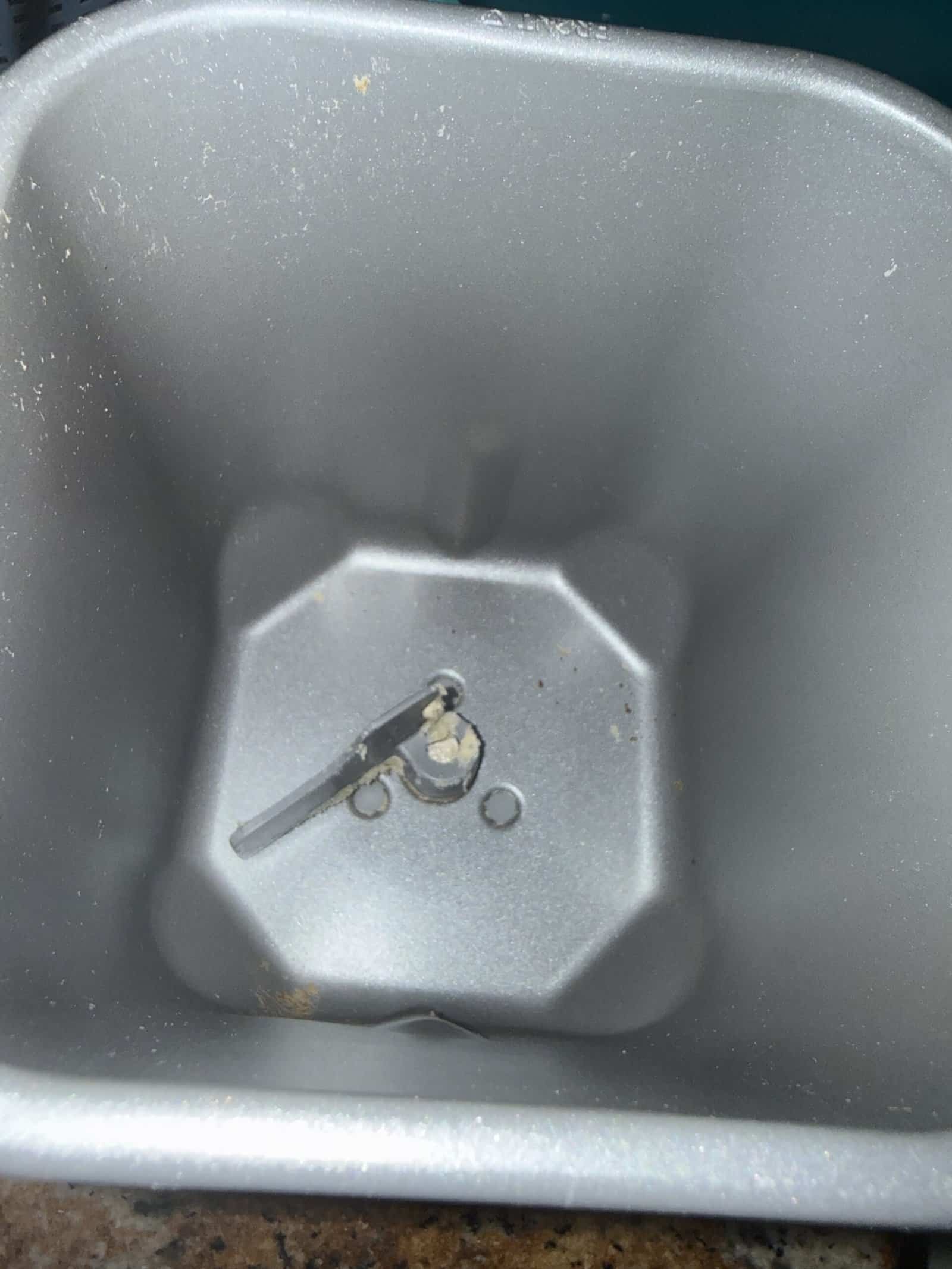
A bread machine is easier to clean than it looks, because almost nothing that needs washing is attached to the appliance. The pan lifts out, the paddle comes off the shaft, and the machine body only ever needs wiping. What trips people up is the paddle, which sits on a spindle and is often stubborn about leaving it. Our guide to using a bread machine covers the rest of the routine.
Quick Answer
Take the loaf out, remove the pan, work the paddle off the shaft, rinse the pan, and wash it. Wipe the machine interior once it is cool. Never put water in the machine body and never submerge the appliance.
Key Points
- The pan and paddle are the only parts that get washed.
- The machine body is wiped, never rinsed or submerged.
- Paddles are meant to be stubborn, since they lock onto a drive shaft.
- Manufacturers differ on whether the pan is dishwasher safe.
- Soaking is better than scrubbing on a non-stick pan.
Take the Pan Out First
Let the machine cool before doing anything, then lift the loaf out and remove the pan. Most pans twist a quarter turn and lift free, and forcing one that has not been twisted is how the locking tabs get damaged.
Emptying the pan while it is still warm makes everything easier, since dough residue has not yet dried onto the surface. A loaf left in the pan to cool bonds to the sides in a way it does not if you turn it out promptly.
Getting the Paddle Off
The paddle sits on a drive shaft inside the pan and holds firm on purpose, because it has to turn stiff dough for an hour without slipping. Working it loose takes a wiggle rather than a pull, and a rock side to side usually frees it faster than lifting straight up.
If it will not budge, warm water in the pan for ten minutes softens whatever is holding it. That is nearly always dried dough in the gap between paddle and shaft rather than the fitting itself.
Some paddles stay in the loaf instead of the pan, which is the other version of the same problem. Our note on why the paddle gets stuck in the loaf covers that case.
Washing the Pan
A rinse straight after emptying handles most of it. What remains is usually a ring where the dough met the pan wall, and that lifts with warm soapy water and a soft cloth.
Avoid anything abrasive. Bread machine pans are non-stick, and a scouring pad takes the coating off, after which dough sticks worse every time. Soaking does the job that scrubbing would, with none of the damage.
Manufacturers differ on dishwashers. Some pans are rated for it and some say hand wash only, because the shaft passes through a seal in the pan base and repeated dishwasher cycles can degrade that seal over years. Check your manual rather than assuming either way.
Wiping the Machine Body
The interior collects crumbs and the occasional splash. A damp cloth once the machine is cool handles both, and the heating element should be left alone beyond brushing loose crumbs away.
Never pour water into the machine or hold it under a tap. The pan cavity is not sealed and water reaching the drive mechanism or the element ends the appliance.
The lid and viewing window wipe like any other surface, and the vent slots benefit from an occasional brush. Our roundup of bread machine pans and paddles covers replacing parts that wear.
How I Clean Mine
My routine is short. I take the loaf out, remove the pan, rinse it, and then it goes in the dishwasher.
The paddle is somewhat difficult to get off, and that makes sense once you think about what it does. It has to grip a shaft firmly enough to turn dough without slipping, so a paddle that came away easily would be a paddle that slipped mid-cycle. The stubbornness is the feature working.
Beyond that there is nothing to it. The machine itself has never needed more than a wipe, and the pan has handled being rinsed and machine washed without complaint so far. Worth noting that I bought the machine used and have only had it a couple of months, so this is a short track record rather than a long one.
Worth adding the caution I did not check at the time: manuals vary on whether the pan should go in a dishwasher, and some advise against it because of the shaft seal. Mine has been fine, and yours might be a model where the manufacturer says otherwise, so the manual is worth reading before copying my routine.
What Not to Do
Do not submerge the machine
Only the pan and paddle go near water. The body houses the motor, the element, and the control board, none of which recover from a soaking.
Do not scour the pan
Non-stick coatings do not survive abrasive pads, and once the surface is scratched dough sticks harder every subsequent bake. Soak instead.
Do not leave the loaf in the pan to cool
Dough bonds to the walls as it cools and steams itself soft. Turning the loaf out promptly makes cleaning easier and the crust better.
Do not force a stuck paddle
Warm water and a wiggle beat brute force. A bent paddle or a damaged shaft is a considerably bigger problem than a stubborn fitting.
How Often to Clean
The pan and paddle after every loaf, since dried dough is much harder to remove than fresh. The machine interior needs a wipe every few bakes rather than every time, depending on how much escapes the pan.
Vent slots and the lid can go longer, and a look every month or so is enough to catch crumb buildup before it becomes a job.
If the machine sits unused between bakes, a wipe before use matters more than one after, since dust settles in a cabinet. Our note on whether bread machines are worth it covers storage between uses.
When Something Is Actually Wrong
A pan that no longer sits square, a shaft that turns loosely, or a leak at the pan base are all beyond cleaning. The seal around the drive shaft is a wear part and a leaking pan usually means replacing the pan rather than the machine.
Persistent smells after cleaning generally trace to residue in the vent area or under the element rather than to the pan.
Related reading: our note on why bread machine loaves come out dense, our guide to adding mix-ins, our roundup of bread machines, and a note on whether a used bread machine is worth buying.
For the wider picture, see our guide to how to clean a nonstick pan.
Bread Machine Cleaning FAQ
Can I put the bread pan in the dishwasher?
It depends on the model. Some manufacturers rate the pan as dishwasher safe and others advise hand washing, because the drive shaft passes through a seal in the pan base that repeated cycles can degrade over years. Check the manual before deciding.
Why is the paddle so hard to remove?
It grips a drive shaft firmly by design, since it has to turn stiff dough without slipping. A wiggle side to side works better than pulling straight up, and ten minutes of warm water in the pan softens dried dough holding it in place.
How do I clean a non-stick bread pan without damaging it?
Soak rather than scrub. Warm soapy water and a soft cloth remove the dough ring that forms at the pan wall. Abrasive pads strip the coating, after which every subsequent loaf sticks worse.
Can I wash the machine itself?
No. Only the pan and paddle go near water. The body contains the motor, heating element, and control board, and water reaching any of those generally ends the appliance. A damp cloth on the cool interior is the correct approach.
How do I get crumbs out of the machine?
Brush them away once the machine is cool, using a dry pastry brush or a soft toothbrush for the vent slots. Avoid poking around the heating element, and never use water inside the cavity.
What if my bread pan is leaking?
That is the shaft seal wearing out rather than a cleaning issue. It is a wear part, and the usual fix is a replacement pan rather than a new machine, which is considerably cheaper.
Should I clean it before or after storing it?
Both help, and a wipe before use matters more if the machine lives in a cabinet between bakes. Dust settles on anything stored, so a quick pass before the first loaf of the month is worth doing.
Does bread stick more as the machine ages?
Usually that is the non-stick coating wearing rather than the machine failing. Abrasive cleaning accelerates it. Replacement pans are available for most models and restore the surface without replacing the appliance.
