
For finding out whether you will actually use one, yes. Bread machines are among the most commonly abandoned kitchen appliances, which means the secondhand supply is large and the prices are low. For more on this, see our guide to how often these actually get used.
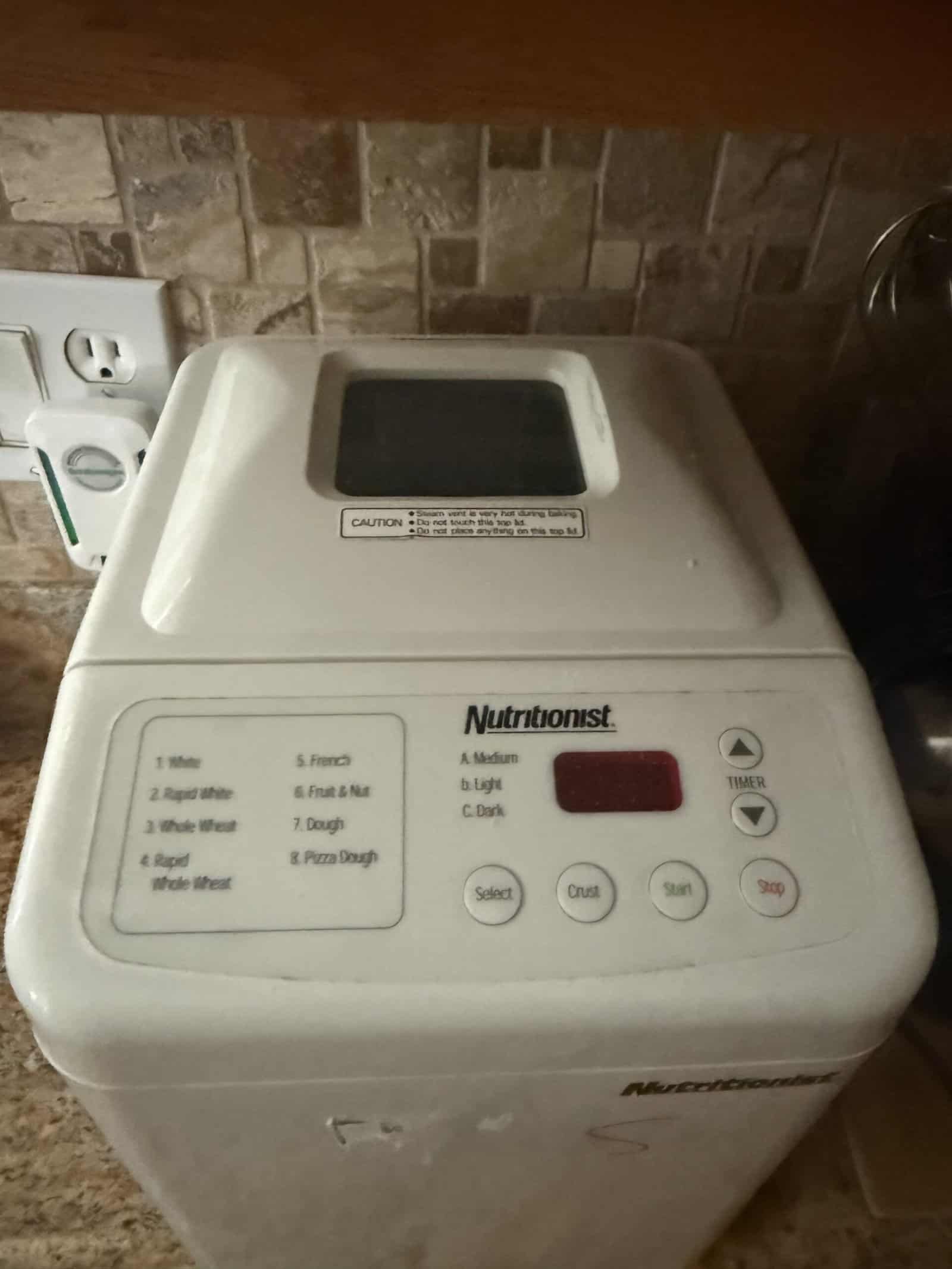
Mine came from a thrift store about a month ago. I wanted to try a bread machine without committing much, since I did not know whether I would use it over the long run, and buying used made that a cheap experiment.
Quick Answer
Buy used if you are testing the idea or want a second machine. Buy new if you need a specific feature, a warranty, or a model with parts still available. Check that it runs, that the pan and paddle are present, and that the nonstick is intact.
Why the Secondhand Supply Is So Large
| Reason people sell | What it means for you |
|---|---|
| Bought with enthusiasm, used twice | Near-new machine, low price |
| Counter space reclaimed | Working machine, no fault |
| Gift never wanted | Often still boxed |
| Upgraded to a better model | Working, older features |
| Something broke | The one to avoid |
Most secondhand bread machines are sold because they were not used, rather than because they failed. That is unusual among appliances and it is why the used market here is worth taking seriously.
The Case for Buying Used
Cost is the obvious one to start with. A machine that cost well over a hundred dollars new frequently sells for a small fraction of that only a few years later.
Low commitment is the better reason. Bread machines have a genuine abandonment rate, and spending a little to find out whether you are the sort of person who uses one is more sensible than spending a lot.
Build quality on older machines is often good, since these were made when the category was more popular and the engineering is not complicated.
And the mechanism is simple. A pan, a paddle, a heating element, and a motor. There is not much to go wrong, and what does go wrong is usually visible, covered in whether bread machines are worth it.
Why I Bought Mine Used
I wanted to try a bread machine and I did not know whether I would keep using it. Buying used made that a low-cost question rather than a commitment.
It has wear on it, which is what you expect from a thrift store, and everything works. That is the outcome I was hoping for rather than a surprise.
It is getting used regularly at the moment, and I would note that it is still new to me. Regular use in the first month is not remotely the same as regular use in the second year, and that gap is exactly the thing I was uncertain about going in.
If it turns out I use it for years, the used purchase saved money. If it ends up in a cupboard, the used purchase saved more, covered in how to use a bread machine.
Either way I found out cheaply, which was the whole point.
What to Check Before Buying
The pan and paddle are present
These are the parts that go missing, and replacements for older models can cost more than the machine or be unavailable entirely. Check before anything else.
The nonstick surface
Scratched or flaking coating on the inner pan is the most common real fault. Some wear is fine and flaking is a reason to walk away.
It powers on and the paddle turns
If you can test it, run a short cycle. The motor turning the paddle under resistance is the thing that matters most.
The seal around the paddle shaft
A worn shaft seal leaks and is a genuine repair. Spin the paddle and check for excessive play, covered in why the paddle gets stuck in the loaf.
What You Give Up
No warranty, which matters less on an appliance this simple and matters a great deal if the motor goes.
No manual, though most are available online and cycle times are usually printed on the machine.
Features are whatever that model had. If you specifically want a gluten-free cycle, a fruit and nut dispenser, or a particular loaf size, buying used means waiting for the right one to appear.
And parts availability on older models is a real limit, since a manufacturer that stopped supporting a line means a broken pan ends the machine, covered in how to choose a bread machine.
When to Buy New Instead
When you already know you will use it. Someone baking weekly for years is better served by choosing exactly the machine they want.
When a specific feature matters. Automatic dispensers, particular crust settings, and gluten-free programs are hard to find on demand secondhand.
When you want the pan and paddle guaranteed available, which matters more than any other spare part.
And when hygiene concerns you, since a used machine has baked someone else’s food and the pan cannot be replaced on every model, covered in bread machines for beginners.
Where to Look and What to Pay
Different sources produce different conditions and prices, and knowing which is which saves time.
Thrift stores are the cheapest and the most variable. Machines arrive untested, pans go missing in transit, and you generally cannot power one on before buying. The low price is what makes the risk acceptable.
Online marketplaces let you ask questions and see photos of the pan and paddle before committing, which removes the biggest unknown. Prices sit higher and you can usually collect in person and check.
Estate and garage sales frequently produce machines used a handful of times, since a bread machine bought with enthusiasm and abandoned is exactly the sort of thing that ends up there.
Refurbished units from a manufacturer cost the most of the used options and come with some warranty, which suits someone who knows they want a specific model.
As for price, the useful test is whether you would be annoyed if it turned out to be broken. If the answer is no, the price is right for an experiment.
Cleaning One Up
Wash the pan and paddle by hand rather than in a dishwasher, since detergent damages the nonstick coating that may already be worn.
Wipe the interior housing and the heating element with a damp cloth once cold, and expect old crumbs in the corners.
Check the vents on the outside, since flour and crumbs collect there and restrict airflow.
And run one loaf that you are willing to throw away as a test, which tells you whether the machine holds its temperature properly and whether anything smells wrong as it heats up.
Related Reading
- are bread machines worth it
- choosing a bread machine
- using a bread machine
- machines for beginners
- making white bread
- why loaves come out dense
Related: bread machines for occasional bakers.
Frequently Asked Questions
Is a used bread machine worth buying?
For testing whether you will use one, yes. Most are sold because they went unused rather than because they broke, so the secondhand supply is unusually good.
What should I check first?
That the pan and paddle are present. Replacements for older models can cost more than the machine or be unavailable, which makes a missing pan a dealbreaker.
Is worn nonstick a problem?
Some wear is normal. Flaking or heavily scratched coating is a reason to walk away, since the pan is the part you cannot easily replace.
Can I test one in a store?
Sometimes. If you can, power it on and confirm the paddle turns, since the motor driving the paddle under load is what matters most.
What if there is no manual?
Most are available online, and cycle times are frequently printed on the machine itself. This is rarely a reason to pass on one.
Should I worry about hygiene?
Wash the pan and paddle by hand and wipe the interior once cold. Running one test loaf you are willing to discard is a reasonable first step.
Where is the best place to buy one used?
Online marketplaces let you confirm the pan and paddle before committing. Thrift stores are cheapest and most variable, and estate sales often have machines used only a handful of times.
When is new the better choice?
When you already know you will use it regularly, when you need a specific feature like an automatic dispenser, or when you want spare parts guaranteed available.
For the wider picture, see our guide to best bread machine.
