
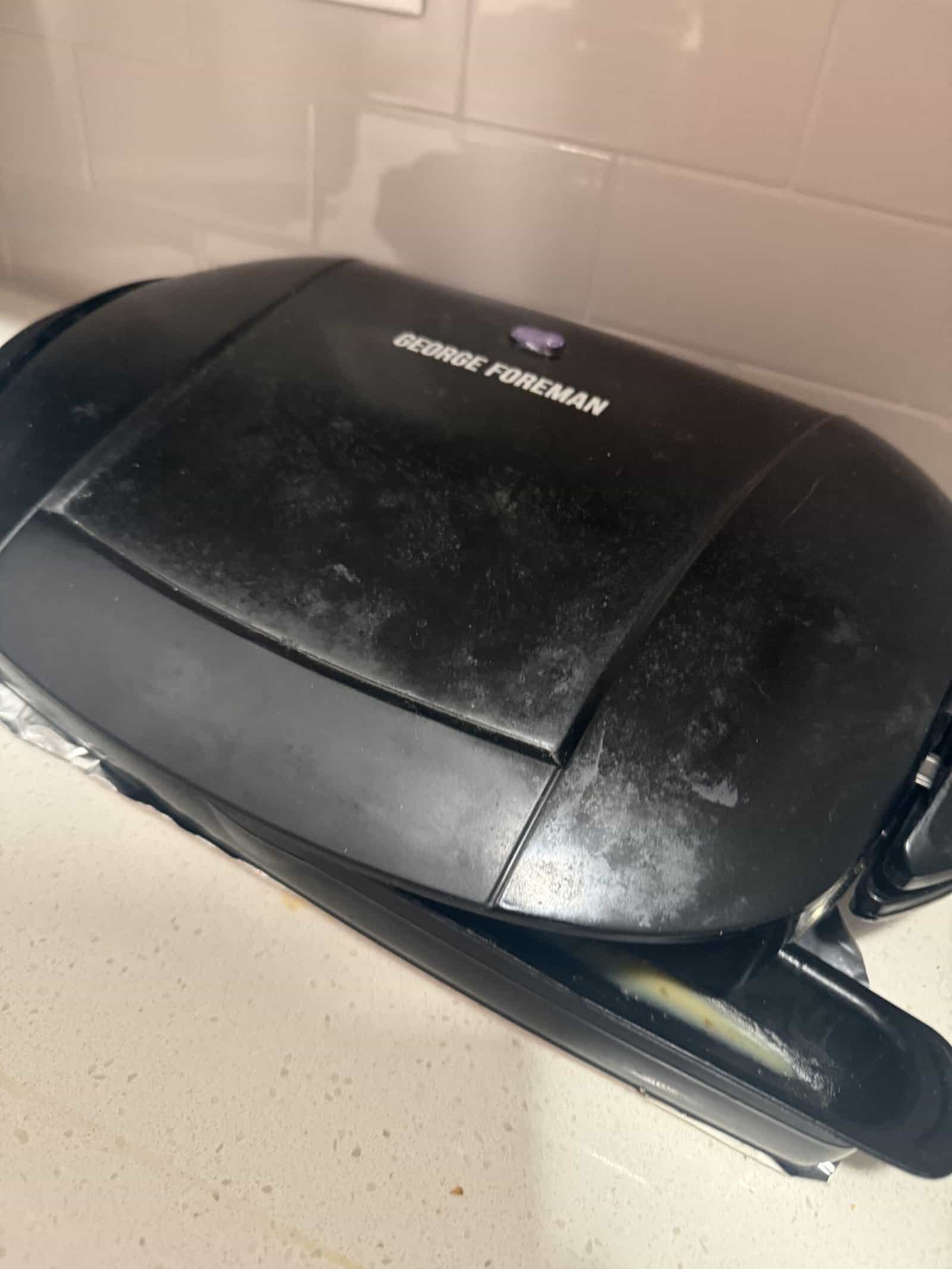
Smoke from an indoor grill is fat hitting a surface hotter than its smoke point. That is the entire mechanism, and everything that reduces smoke works by changing one of those two variables.
Mine barely smokes. Very little, even cooking steak with butter and garlic, which is the combination most likely to produce it. That is worth saying because heavy smoke gets treated as inherent to indoor grilling and it is not. Our roundup of indoor grills covers the machines.
Quick Answer
Fat renders out, lands on hot metal, and burns. Less fat, lower plate temperature, or a design that drains fat away all reduce it. Heavy smoke usually means residue rather than the food.
What Causes It
| Cause | What is happening |
|---|---|
| Fatty cuts | More fat rendering onto hot metal |
| Butter or oil added directly | Dairy solids and oils burn fast |
| Plate temperature too high | Fat exceeds its smoke point instantly |
| Residue from previous cooks | Old fat burning is the biggest offender |
| Sugary marinades | Sugar burns well below grilling temperature |
| No drip channel | Fat pools on the plate instead of draining |
The Smoke Point Explanation
Every fat has a temperature at which it starts breaking down and producing visible smoke, and grill plates routinely run above several of them.
Butter is the lowest of the common ones because of its milk solids, which brown and then burn well before the fat itself does.
Rendered beef fat tolerates more heat, which is why a steak can produce less smoke than the butter you basted it with.
Refined oils sit highest, which is why they are the usual recommendation when anything is being applied to the plate deliberately.
None of that means avoiding butter. It means understanding that butter on a hot plate is the smoke source rather than the meat. Our note on cooking steak on the stove covers the same fats in a pan.
Why Mine Barely Smokes
Mine produces very little smoke even with steak, butter, and garlic on it, and there are a few reasons that combination stays manageable.
Fat that drains away rather than pooling never gets the sustained contact with hot metal that produces continuous smoke.
Plates that are actually clean have no accumulated residue to burn, and old residue is the single biggest contributor most people never consider.
A brief flare when something first hits the plate is different from steady smoke throughout the cook, and the first is normal.
If yours smokes heavily throughout, that is telling you something specific rather than describing how indoor grills work. Our note on cleaning an indoor grill covers residue.
Residue Is Usually the Real Answer
Old fat burns at lower temperatures
Already broken down once, it smokes more readily the second time.
It accumulates where you cannot see
Drip channels, plate edges, and under the hinge.
Smoke that starts before the food does
If it smokes while preheating empty, it is residue.
Cleaning fixes it immediately
Which is how you confirm that was the cause.
Temperature Is the Lever Most People Ignore
Higher is not automatically better on an indoor grill, and maximum heat is the setting most likely to produce smoke without improving the result.
Searing needs a hot plate, and there is a difference between hot enough to sear and hot enough to instantly break down every fat that touches it.
Thicker cuts benefit from a slightly lower setting anyway, since the outside has time to overcook while the inside comes up on maximum heat.
Dropping the setting a notch and accepting a slightly longer cook is the simplest smoke reduction available.
Grills with a single fixed temperature remove that option entirely, which is worth knowing before buying one. Our note on choosing an indoor grill covers controls.
Design Differences That Matter
Sloped plates with a drip channel move fat away from the heat, and that is the single biggest design factor in how much a grill smokes.
Flat plates with a raised lip hold fat on the surface, where it sits against hot metal for the whole cook.
Contact grills that close over the food cook faster, which means less total time for fat to render and burn.
Open grills give better browning and more exposure, and they produce more smoke for the same food as a result.
Some models include a water tray beneath the plates specifically to catch drippings below the heat source, which works well and adds a part to clean. Our note on grill pan versus griddle covers surface types.
Ventilation Does Not Reduce Smoke
Extraction removes smoke from the room and does nothing to stop it being produced, which is a distinction worth making before buying a grill on that basis.
A range hood pulls smoke away if the grill sits under it, and most people use a countertop grill on an island or a table where the hood cannot reach.
Recirculating hoods filter and return air to the room rather than venting outside, which handles odor reasonably and smoke particulates far less well.
Opening a window and running a fan moves air but takes time, which means the smoke is already in the room before the ventilation catches up.
The practical order is reducing production first and extraction second, since no amount of airflow fixes a grill that is smoking because the plates were never cleaned. Our roundup of appliances for kitchens with no vent hood covers the constraint.
What to Change First
Clean the plates properly before assuming anything else, since residue is the most common cause and the easiest to eliminate.
Trim heavy fat caps from cuts that have them, which reduces the amount available to render rather than changing anything about the cooking.
Pat food dry, because surface moisture spatters and carries fat off the plate rather than letting it drain.
Add butter at the end rather than the start if you want it, since a brief moment on a cooling surface produces far less smoke than the whole cook.
Running the extraction fan before starting rather than after the room fills is the one that costs nothing and gets forgotten every time.
When It Is Worth Worrying
Acrid or chemical smell
Different from food smoke, and worth stopping for.
Smoke from the housing
Rather than from the plate surface itself.
Smoking while empty and clean
That points at the appliance rather than the cooking.
A new smell or behavior
Anything that changed recently deserves a look.
Common Mistakes to Avoid
Assuming heavy smoke is normal
Mine barely smokes with steak and butter. Heavy smoke means something specific.
Cooking on residue
Old fat has already broken down once and smokes far more readily.
Running at maximum every time
A notch lower costs a little time and cuts smoke considerably.
Adding butter at the start
Milk solids burn well below grilling temperature. Add it at the end.
Recommended Reading
See our note on whether indoor grills are worth it, our roundup of tools for cooking steak, our note on indoor grill versus air fryer, and a note on what to cook on an indoor grill.
Indoor Grill Smoke FAQ
Why does my indoor grill smoke?
Fat hitting metal above its smoke point. Less fat, lower plate temperature, or a design that drains fat away all reduce it.
Does yours smoke?
Barely. Very little even with steak, butter, and garlic, which is the combination most likely to produce it.
Is smoke normal?
A brief flare when food first hits the plate is. Steady smoke throughout a cook is telling you something, usually residue.
Why does it smoke before I add food?
That is residue from previous cooks burning off. Old fat has already broken down once and smokes more readily the second time.
Should I use butter on it?
You can, at the end rather than the start. Milk solids brown and burn well below grilling temperature, which makes butter the usual smoke source.
Does temperature matter?
Considerably. Maximum heat is the setting most likely to smoke without improving the result. A notch lower costs a little time and cuts smoke.
Do some grills smoke less by design?
Yes. Sloped plates with a drip channel move fat away from the heat. Flat plates with a raised lip hold it against hot metal for the whole cook.
When should I stop using it?
An acrid or chemical smell, smoke coming from the housing rather than the plates, or smoking while empty and clean.
