
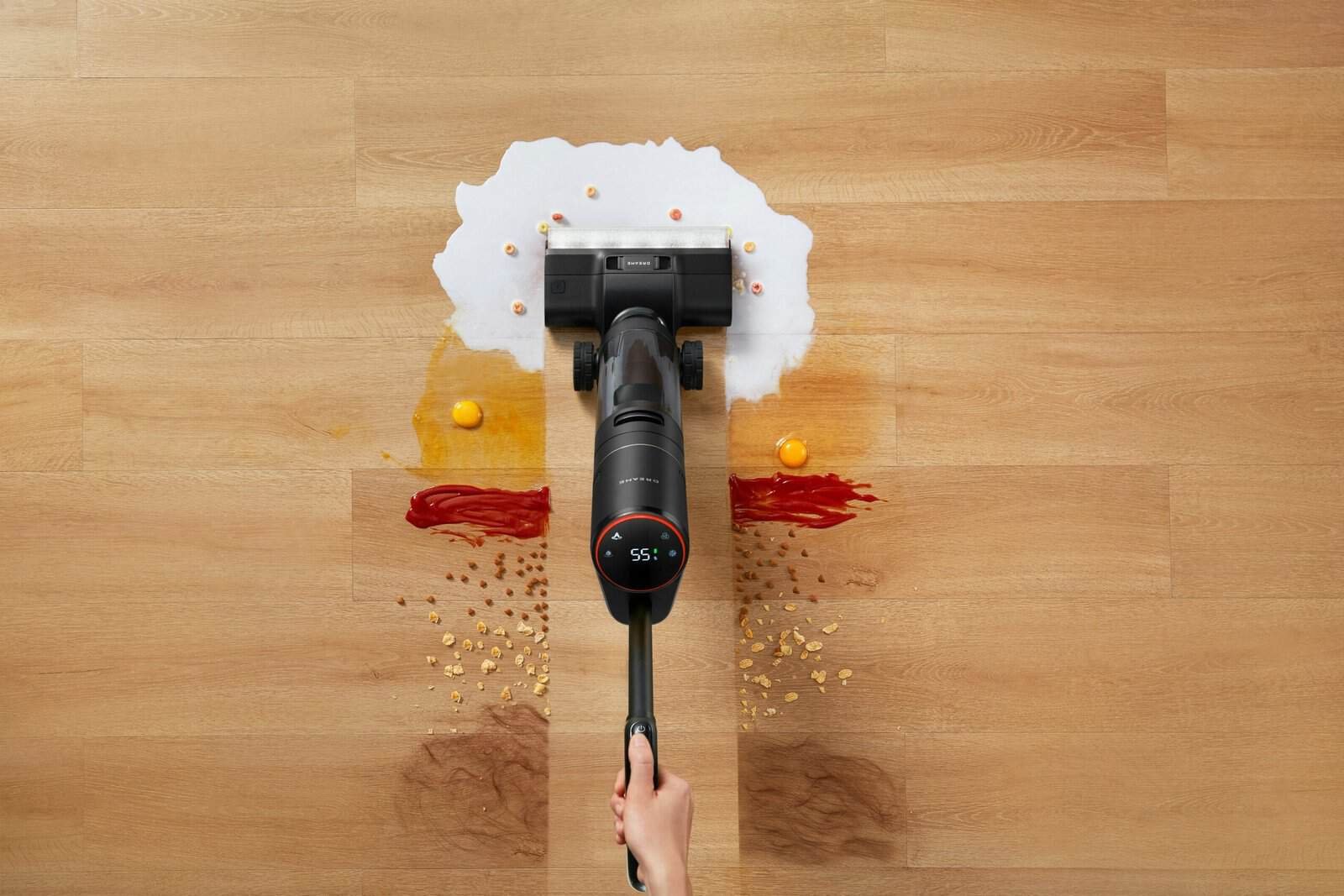
A wet dry vacuum picks up standing water, sawdust, and broken glass that would destroy an ordinary household machine. The best wet dry vacuums split into six clear types, and picking the right type matters far more than chasing a bigger motor number. Most people start shopping after a spill their regular cleaner could not touch, so it helps to know where a cordless household vacuum stops being the right tool.
Hose diameter, hose length, and the included attachments drive nearly every outcome. Those three things predict satisfaction better than tank size or any advertised power figure.
The Short Version
A mid-size shop vacuum covers most garages and workshops without overspending. Compact portable units win for cars and fast indoor spills. Contractor sizes only pay off during active renovation work. Choose based on where the machine will live and how far the hose actually has to reach.
Key Takeaways
- Hose diameter and length affect real pickup more than motor claims do.
- Peak horsepower is a marketing figure, not a measure of everyday suction.
- The dry filter must come out or get swapped before you vacuum any liquid.
- Tank material and a bottom drain port matter once you collect real volume.
- Most owners use two or three attachments, so the accessory set beats raw capacity.
- Fine dust and wet pickup need different filters, and mixing them ruins both.
How We Picked
We compared categories of wet dry vacuum rather than individual units. Model lineups change every year while the underlying designs stay remarkably stable. Each recommendation below describes a type of machine and what that type does well.
Four things shaped the ranking: how the machine handles liquid, how it handles fine dry debris, how easy it is to empty and store, and whether the hose and attachments match the job.
One constraint gets ignored almost every time: hose reach. A strong unit on a short hose forces you to drag the body along, which turns a quick cleanup into a chore. Measure your longest realistic run before comparing anything else.
1. Mid-Size Shop Vacuums for a Garage or Workshop
Why It Stands Out
The mid-size shop vacuum is the default choice for good reason. It holds enough water to matter, accepts a wide hose, and still fits in a corner. Most land between a few gallons and roughly six gallons of capacity.
Worth Knowing
Noise is the honest downside. One of these in an enclosed garage gets loud enough that hearing protection helps during longer sessions.
Storage is the other issue, since the body, hose, and attachments all need a home. A pegboard wall organizer pays for itself quickly here.
Best for: Garages, workshops, and anyone who wants one machine for sawdust, leaves, and spilled liquid. Skip it if your only real need is car interiors, since a smaller unit stores better and costs less.
2. Compact Portable Wet Dry Vacs for Cars and Small Spills
Why It Stands Out
Compact units trade capacity for the ability to carry the machine to the mess. Many weigh little enough to lift with one hand, and most include a strap or top handle. For car interiors, that portability decides everything.
Smaller bodies come with narrower hoses, which sounds like a weakness and often is not. A narrow hose concentrates airflow, so it lifts crumbs, sand, and pet hair out of seat seams better than a wide one.
Worth Knowing
You will empty it constantly. A one or two gallon tank fills fast during any real cleanup.
Narrow hoses also clog on anything chunkier than gravel. Leave larger debris to a bigger machine, and read up on what a handheld vacuum handles well first.
Best for: Car cleanups, apartment spills, and anyone short on storage space. Skip it if you plan to vacuum construction debris or drain a flooded floor.
3. High-Capacity Contractor-Size Units for Renovation Debris
Why It Stands Out
Contractor units start where household sizes stop, typically in the range of ten to sixteen gallons. That capacity lets you strip a floor or clear a flooded utility room without stopping to empty every ten minutes.
Big machines also accept the widest hoses. Wide hoses swallow tile shards, plaster chunks, and wet insulation that would stall a narrow tube instantly.
Worth Knowing
Size cuts both ways. A full tank of water weighs more than most people expect, which is why a bottom drain port stops being a luxury at this scale.
These units also dominate a room. Storing one takes real floor space, and moving it up stairs is awkward work for one person.
Best for: Active remodels, water cleanup, and workshops producing debris in volume. Skip it if your garage is tight or your cleanups are measured in minutes rather than hours.
4. Cordless Handheld Wet Dry Vacs
Why It Stands Out
Cordless handhelds remove the cord, which is the most annoying part of a small cleanup. You grab the unit, deal with the spill, and put it back.
Many run on the same battery platform as cordless drills and saws. If you already own those batteries, the cost of entry drops sharply.
Worth Knowing
Runtime is the limit that matters. Wet pickup drains a battery faster than dry pickup, so plan on short bursts rather than sustained work.
Capacity is tiny as well. Most hold well under a gallon, which is fine for a knocked-over glass and useless for a leaking water heater.
Best for: Kitchen spills, workbench cleanup, and anyone who already owns a matching battery system. Skip it if you need sustained suction or a tank that holds more than a few cups of liquid.
5. Wall-Mounted Stationary Garage Vacuum Systems
Why It Stands Out
Wall-mounted systems bolt the motor and tank to the wall and leave a long hose permanently attached. Nothing gets dragged out or put away, and the floor stays clear. Hoses commonly run twenty to thirty feet, which usually covers a two-car bay from one point.
Because the unit never moves, you stop avoiding small cleanups.
Worth Knowing
Installation is the real commitment. You need a solid wall, proper anchors, and a nearby outlet, so plan the location alongside your other garage upgrades rather than as an afterthought.
Power planning matters too. A vacuum motor should not share a circuit with heavy tools, and a quality surge protector or power strip belongs in the plan.
Best for: Dedicated garages and workshops where the machine has a permanent home. Skip it if you rent, if you move often, or if you need the vacuum in more than one location.
6. Wet Dry Vacs With a Detachable Blower
Why It Stands Out
Blower-capable models reverse airflow so the exhaust port pushes air instead of pulling it. That turns one machine into two tools. Leaves come off a driveway and sawdust comes out of a corner without a second purchase.
Worth Knowing
Blowing is messy by nature. Debris goes wherever the air goes, so you scatter dust widely and often push it somewhere you did not intend.
It also does not replace a dedicated blower, since airflow through a vacuum hose is narrower and less directed. Indoors, it works best on hard surfaces you would otherwise clean with a steam mop.
Best for: Garages and driveways where one machine should cover vacuuming and clearing. Skip it if you already own a leaf blower or your cleanups are mostly indoors.
Best Wet Dry Vacuums at a Glance
| Type | What It Is Good At | The Tradeoff |
|---|---|---|
| Mid-size shop vacuum | Covers most garage jobs, wet or dry, at sensible cost | Loud in enclosed spaces, needs storage for hose and tools |
| Compact portable | Carries to the mess, excellent on car interiors | Fills fast, narrow hose clogs on chunky debris |
| Contractor capacity | Long runs without emptying, widest hose options | Heavy when full, takes serious floor space |
| Cordless handheld | No cord, instant grab for small spills | Short runtime on wet pickup, very small tank |
| Wall-mounted system | Always ready, long hose, zero floor footprint | Permanent install, useless anywhere else |
| Detachable blower | Two tools in one for driveways and corners | Scatters debris, weaker than a real leaf blower |
What to Look For in the Best Wet Dry Vacuums
Why Hose Diameter and Length Beat Motor Claims
Hose diameter sets the ceiling on what a machine can swallow. Common sizes run from about one and a quarter inches up to two and a half inches, and wider always passes bigger debris. Narrower hoses concentrate airflow, which helps on upholstery and car seams.
Length decides how often you move the body, so measure your longest realistic run before you buy.
How the Filter Changes Between Wet and Dry Pickup
This is the part new owners get wrong most often. Dry pickup uses a pleated paper or cartridge filter that traps fine particles. Wet pickup requires that filter to come out, or to be swapped for a foam sleeve rated for liquid.
Skip the swap and the paper filter soaks through, collapses, and stops filtering entirely. Fine dust needs the opposite approach, since standard filters pass very fine powder straight into the motor and back into the room.
A Quick Note
Remove or swap the dry filter before any wet pickup, every time. Never vacuum flammable liquids or fumes, hot ash or embers, or fine drywall dust without the specific filter or bag rated for that material. Getting this wrong can damage the motor, and with flammables or hot ash, it can start a fire.
Tank Material, Capacity, and the Drain Port
Plastic tanks dominate because they never rust and cost less to make. Stainless bodies resist dents better, which matters on a job site and rarely matters in a home garage.
A bottom drain port is the feature people wish they had. Without one, emptying water means lifting a full tank and tipping it, which gets heavy above a few gallons.
Why the Accessory Set Matters More Than Capacity
Most owners settle into two or three attachments and ignore the rest. A wide floor nozzle, a crevice tool, and a squeegee blade cover the vast majority of real jobs.
Check what comes in the box, because buying tools separately erases any savings on the machine.
Wet Dry Vac vs a Household Vacuum
When a Household Vacuum Wins
A household vacuum wins on floors you walk on every day. Brush rolls agitate carpet fibers, sealed filtration keeps fine dust out of the air, and the machine is lighter and quieter.
Convenience also favors household designs. A robot vacuum runs on its own schedule and keeps daily dust in check, and no shop vacuum will ever do that.
When a Wet Dry Vac Wins
Liquid is the clear dividing line. Water, spilled paint, and melted snow go straight through a household vacuum and into its motor. A wet dry unit collects them in a sealed tank.
Sharp and heavy debris is the second line. Screws, tile fragments, and gravel pass through a wide hose without tearing a bag or jamming a brush roll. That is also why the machine belongs near the door, alongside the boot tray that catches the worst of it.
Common Misconceptions
That Peak Horsepower Describes Real Suction
Peak horsepower measures a brief spike under laboratory conditions, not the pull you get while cleaning. Two machines with identical peak figures can perform very differently once a hose and filter are attached.
Airflow and sealed suction describe actual performance, and hose diameter shapes both. Compare hose size and filtration first, then treat power figures as rough grouping rather than ranking.
That a Bigger Tank Is Automatically Better
Capacity only helps if you regularly fill it. A large tank on a machine used for car interiors just takes up space and makes storage harder.
That One Filter Handles Everything
Filters are job-specific, and this is where machines actually die. A paper cartridge belongs on general dry debris, a foam sleeve or no filter belongs on liquid, and fine powder needs a dedicated fine-dust filter or bag.
Odor complaints usually trace back to a filter or tank left damp. The same logic explains why a vacuum starts to smell bad, so dry both parts fully before storing the unit.
That It Replaces Your Regular Vacuum
A wet dry vacuum is a cleanup tool, not a floor-care tool. It has no brush roll, its filtration is coarser, and dragging it through a living room is unpleasant work.
Treat the two as complements. One handles daily dust and carpet, the other handles water, workshop debris, and the messes nothing else will touch.
Recommended Reading
Most wet dry vacuum messes start at the door, and a proper mudroom setup plus decent shoe storage cuts the grit that ever reaches your floors. For spills that soak into fabric instead of pooling on hard surfaces, this guide to cleaning a couch without a steam cleaner covers the right approach.
Frequently Asked Questions
Are the best wet dry vacuums worth buying if you already own a household vacuum?
Yes, because they solve different problems. A household vacuum cannot pick up liquid, and sharp or heavy debris will damage it. A wet dry unit collects water, sawdust, screws, and broken glass in a sealed tank without harm. Keep both if you own a garage, a workshop, or a car you clean yourself.
Do you have to remove the filter to vacuum water?
Almost always, yes. Standard dry filters are paper or pleated cartridges that soak through and collapse when they meet liquid. Either remove the filter entirely or fit the foam sleeve rated for wet use, depending on your machine. Check the instructions for your specific unit, since a few designs handle both with one component.
What size wet dry vacuum do most homes need?
A few gallons up to roughly six covers the majority of home use. That range holds enough water for a real spill while staying light enough to carry and store. Go larger only if you are working through a renovation or clearing standing water regularly. Go smaller only if car interiors are your main job.
Does peak horsepower tell you how strong a wet dry vacuum is?
Not usefully. Peak horsepower reflects a momentary spike measured under ideal conditions, not the suction you experience with a hose and filter installed. Airflow, sealed suction, and hose diameter describe real performance much better. Compare hose size and filter options first, then use power figures only to separate very different classes of machine.
Can a wet dry vacuum pick up drywall dust?
Only with the right filter. Fine powder passes straight through standard filters, clogs them immediately, and blows back into the room and through the motor. A dedicated fine-dust filter or a collection bag rated for drywall is required. Without one, you will spread more dust than you collect and risk damaging the machine.
How do you stop a wet dry vacuum from smelling bad?
Empty and rinse the tank after every wet job, then leave it open to air out. Damp debris left inside grows mildew within days, and the filter holds moisture just as long. Dry both the tank and the filter completely before storing. Skipping this step is the most common cause of odor.
