
Light the charcoal in one or two small spots with both vents wide open, then close the lid and let the fire spread outward on its own. How you light a kamado grill decides the next two hours, because a fire lit in too many places overshoots your target and a sealed cooker is slow to come back down.
The method matters more than the starter you choose. Our guide to controlling temperature on a charcoal smoker covers what happens after the fire catches.
Quick Answer
Fill the firebox with charcoal, open both vents fully, and ignite one small spot for low cooking or two or three for high heat. Leave the lid open for a few minutes while the fire establishes, then close it and start closing the vents down as you approach your target. Approach from below rather than overshooting.
Key Takeaways
- The number of lit spots controls the eventual temperature more than the vents do.
- Both vents wide open while lighting, then progressively closed.
- One ignition point for low and slow, two or three for searing heat.
- Fill the firebox regardless of the cook, since unused charcoal is reusable.
- Clear the ash out first, because ash strangles the airflow the fire needs.
- Coming down from an overshoot is far slower than going up.
| Cook type | Lit spots | Vent approach |
|---|---|---|
| Low and slow smoking | One small spot | Close down early, well before target |
| Roasting | One or two | Close down gradually |
| Grilling | Two | Leave open longer |
| Searing | Two or three | Both vents wide, lid closed to build |
Three Years of Lighting Mine
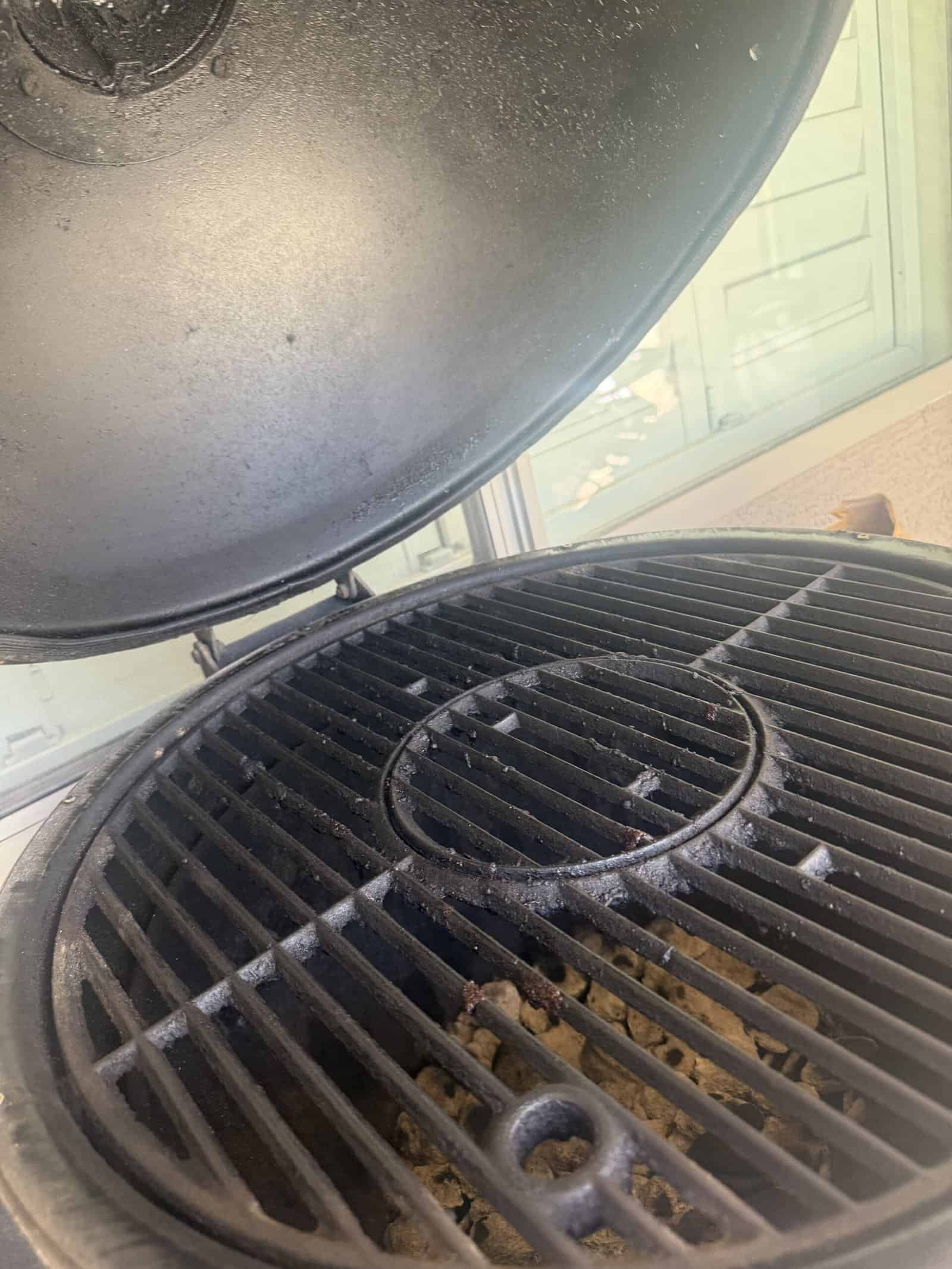
Mine is a Char-Griller Akorn I have had for over three years, and it burns charcoal. I have tried an electric starter and a torch on it.
Both lit the fire. Neither changed the thing that actually sets the cook, which is how many spots are burning when you close the lid.
Temperature control is still something I am adjusting after three years.
The hardware is the part that has changed. The grates and everything else have become noticeably harder to open, gradually enough that I only notice it by comparison, and the vents are part of that.
Clear the Ash Before You Do Anything
Ash sitting under the charcoal grate blocks the air path from the bottom vent. A fire that cannot draw air will not reach temperature no matter what the vents are doing.
This is the most common reason a kamado will not climb. People check the vents, the charcoal and the gasket, and the answer is underneath.
Clear it cold, before loading fuel. Our guide to cleaning a kamado grill covers the full routine.
Old charcoal from the last cook can stay. Add fresh fuel on top of it and light through the new layer.
Fill the Firebox Every Time
Loading charcoal to match the cook is a habit carried over from open grills, and it works against you here. A kamado only burns what the air supply allows.
A full firebox on a low cook simply means most of the fuel is still there at the end. Closing the vents puts it out and it waits for next time.
An underfilled firebox is the actual problem, because running out mid-cook means opening the lid and rebuilding a fire in a hot cooker.
Leave a gap between the top of the charcoal and the grate so air can move. Packing it to the brim restricts flow the same way ash does.
Choosing a Starter
Electric starter
A heating element pushed into the charcoal, left in place for a few minutes and then removed. No fuel, no fumes and it lights a precise spot, which suits the one-spot approach well.
Torch
Fast and direct, and easy to aim at exactly one point. The risk is lighting more than you meant to by sweeping it across the surface.
Paraffin or wax starter cubes
Cheap, reliable in wind, and they burn out completely. Bury one or two in the charcoal rather than sitting them on top.
What to avoid
Lighter fluid has no place in a cooker that holds odor in its walls for a long time. Newspaper leaves ash where you least want it, which is exactly where airflow matters.
How the Lit Spots Set Your Ceiling
A kamado climbs to the temperature its fire size and air supply support, and fire size is set when you light it. Two spots will not hold a low smoking temperature for long even with the vents nearly shut.
The fire spreads outward from wherever it starts. One small ignition point grows slowly and predictably, which is what a long cook needs.
Three spots build a broad fire that keeps climbing. That is what you want for searing and it is why a searing fire is hard to rein in afterward.
Our roundup of meat thermometers covers reading the food rather than the dome, since the lid gauge and the grate rarely agree.
Approach the Target From Below
Start closing the vents well before the number you want. The cooker has a lot of thermal mass and it keeps rising after the air is reduced.
Overshooting is the expensive mistake. Bringing a kamado down means waiting for the body to give up heat, and that takes far longer than the climb did.
Make one change at a time and wait before judging it. Vent changes show up minutes later, not immediately.
Small moves beat large ones. Our guide to how long a kamado grill lasts covers why the vent hardware you are adjusting deserves attention from the start.
Mistakes When Lighting
- Lighting too much charcoal. The single biggest cause of a cook that runs hot from beginning to end.
- Closing the lid too early. The fire needs a few minutes of open air to establish before it is sealed in.
- Skipping the ash. A blocked bottom vent looks exactly like a fuel or gasket problem.
- Chasing the number. Constant vent adjustment produces a cooker that never settles anywhere.
- Trusting the dome gauge alone. It reads the air at the top, not the surface the food sits on.
- Adding fuel to raise heat. More charcoal on a small fire cools it briefly before anything rises.
Our guide to how long it takes to smoke chicken covers a cook where getting the fire size right at the start decides the whole thing.
Recommended Reading
Frequently Asked Questions
How do you light a kamado grill?
Clear the ash, fill the firebox with charcoal, open both vents fully and ignite one small spot for low cooking or two to three for high heat. Leave the lid open a few minutes while the fire establishes, then close it and start reducing the vents before you reach your target.
How much charcoal should you put in?
Fill the firebox regardless of the cook, leaving a gap below the grate for airflow. A kamado burns only what the air supply allows, so surplus fuel stays unburned and relights next time. Running out mid-cook is the problem worth avoiding.
How many spots should you light?
One small spot for low and slow, one or two for roasting, two for general grilling and two or three for searing. The number of ignition points sets the fire size, and fire size sets the ceiling temperature more than vent position does.
Is an electric starter or a torch better?
Both work and the choice matters less than people expect. An electric starter needs no fuel and lights a precise spot. A torch is faster but makes it easy to light more of the surface than intended, which pushes the cook hotter.
Can you use lighter fluid in a kamado?
Avoid it. A kamado seals tightly and its walls hold odor for a long time, so petroleum smell lingers across later cooks. Wax or paraffin starter cubes burn out cleanly and cost very little, which makes them the simpler answer.
Should the lid be open or closed while lighting?
Open for the first few minutes so the fire establishes with plenty of air, then closed so the cooker starts to climb. Closing it immediately can smother a young fire, and leaving it open too long grows the fire larger than you wanted.
Why will my kamado not get hot?
Ash blocking the path from the bottom vent is the usual cause, and it is easy to miss because the symptoms look like a fuel or gasket fault. After that, check for a partly closed vent, packed charcoal with no air gaps, or damp fuel.
Do you need to relight from scratch every time?
No. Leftover charcoal from the previous cook relights without any trouble. Clear the ash underneath, add fresh charcoal on top and ignite through the new layer, which keeps the fuel cost of a kamado low compared with an open grill.
