
Expect roughly two to five years, or somewhere around 300 to 600 full charge cycles, before capacity loss becomes obvious. How long cordless vacuum batteries last depends far more on heat, storage charge level and how deeply you drain them than on the number of hours the motor has actually run.
Runtime per charge and battery lifespan are two different measurements that get confused constantly. Our roundup of cordless vacuums for apartments covers runtime per charge on specific models.
Quick Answer
A lithium-ion vacuum battery loses capacity two ways at once: cycle aging from charging and discharging, and calendar aging that happens regardless of use. Heat accelerates both. Light, infrequent use with the pack kept topped up means calendar aging dominates, which is slower. Removable packs can be replaced; sealed ones mean replacing the vacuum.
Key Takeaways
- Two to five years is the usual window before noticeable capacity loss.
- Cycle aging and calendar aging both happen, and heat speeds up both.
- Running a pack flat every time shortens its life.
- Storing at full charge in a hot place is the worst combination.
- Shorter runtime is the first symptom, not sudden failure.
- Check whether the pack is removable before you buy.
| Factor | Effect on battery life |
|---|---|
| Frequent full discharges | Shortens it, deep cycles cost more than shallow ones |
| Heat, including a hot garage | Shortens it significantly |
| Stored at 100 percent long-term | Accelerates calendar aging |
| Stored fully flat for months | Can leave the cell unrecoverable |
| Light, infrequent use | Calendar aging dominates, which is slower |
| Charging on a hot dock or in sun | Shortens it |
Cycle Aging Against Calendar Aging
Cycle aging is wear from charging and discharging. Every full cycle moves a small amount of capacity permanently out of reach.
Calendar aging happens whether or not the vacuum is ever switched on. Lithium cells degrade on the shelf, slowly, as internal chemistry changes.
Which one dominates depends entirely on how much you use the thing. A vacuum run daily wears out by cycling, and one used occasionally ages mostly by the calendar.
That is why the same model can last very different lengths of time in two homes. Our comparison of robot vacuums against cordless vacuums covers the difference in how hard each gets worked.
Multiple Years With a Cordless Handheld
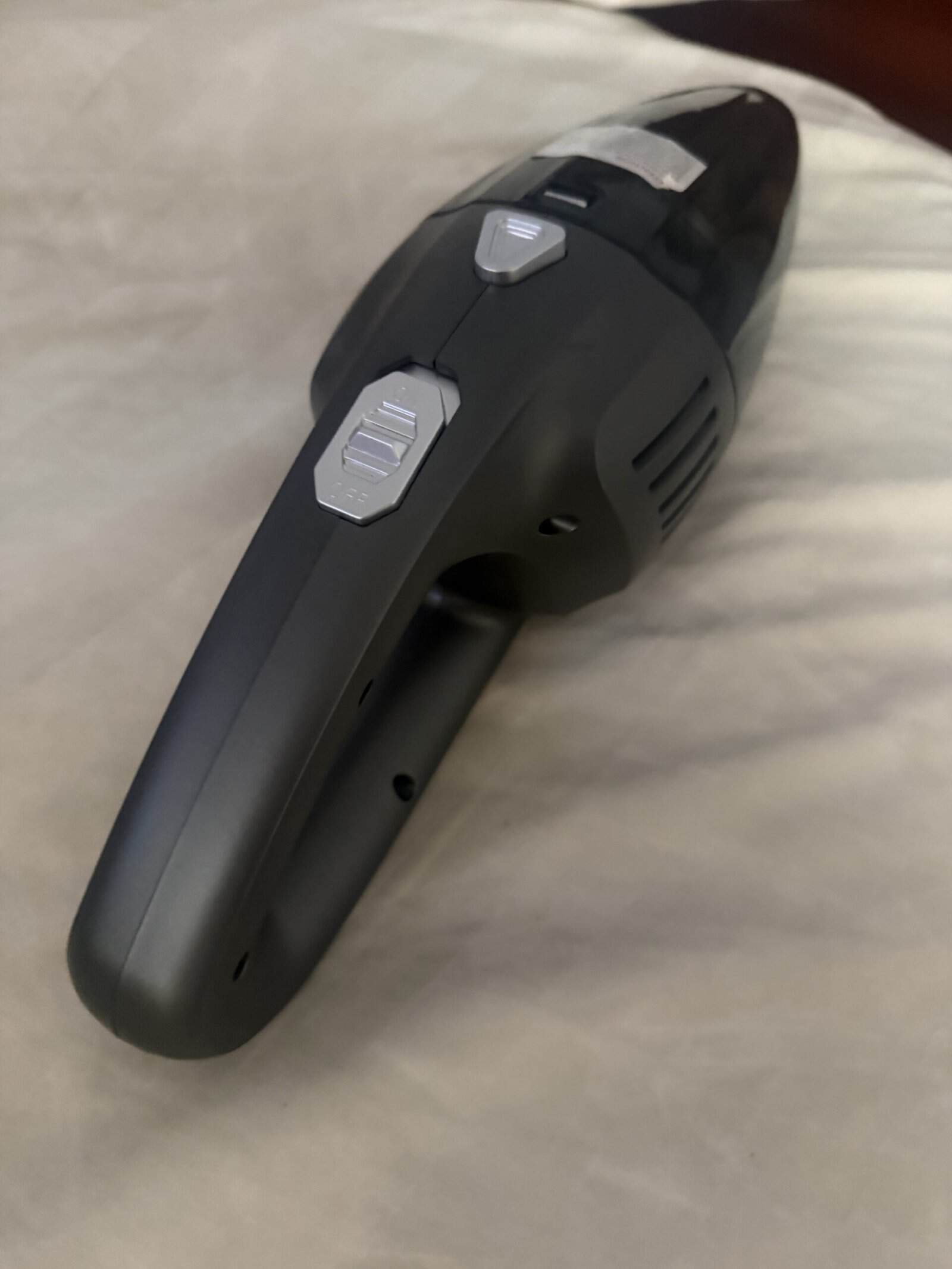
I have a cordless handheld I have had for multiple years, and the runtime has dropped a little bit over that time.
The uses are few and far between. I use it on the couch more than anywhere else, crevices second with the crevice tool only sometimes, and the bed and car from time to time, none of it as a routine.
It has never gone out during a use. I always make sure it is charged beforehand.
The one thing it does not do is lift anything with mass, which gets pushed around rather than picked up. That is a suction limit rather than a battery one.
What That Usage Pattern Does to a Pack
Infrequent use with the pack kept charged is the low-cycle, high-state-of-charge case. Few cycles means very little cycle aging.
Sitting at or near full charge between uses does add calendar aging, and it is the slower of the two mechanisms at normal room temperature.
The net effect over several years is usually a modest decline rather than a cliff, which is consistent with a runtime that is a little shorter than it was.
Storage temperature is the variable that changes this most. The same pack kept somewhere hot ages considerably faster than one kept indoors.
What Actually Kills Them Early
Heat
The single biggest factor. A hot garage in summer, a charging dock in direct sun, or charging immediately after a long run all add heat at the worst moment.
Deep discharges every time
Running the pack flat repeatedly costs more capacity than stopping partway. Shallow cycles are gentler.
Long-term storage at the extremes
Left at 100 percent for months, or left completely flat, both do damage. Flat for long enough can leave a cell that will not take a charge at all.
Cheap replacement packs
Third-party packs with overstated capacity ratings are common. Our roundup of wet dry vacuums covers the corded route for anyone tired of batteries entirely.
Recognizing the Decline
Shorter runtime is the first and main symptom, and it arrives gradually rather than overnight.
Suction fading late in a run is the second. The motor is not getting the voltage it did as the pack nears empty.
A charge that finishes unusually fast is a warning sign, because a pack with less usable capacity fills sooner.
Sudden shutdowns at what the indicator calls half charge point at cell imbalance or a failing protection circuit rather than simple wear.
Getting More Years Out of One
- Keep it out of heat. Indoors rather than a garage, and away from direct sun.
- Let it cool before charging. Charging a warm pack adds heat on top of heat.
- Avoid running it flat as a habit. Stopping partway is easier on the cells.
- For long storage, aim for a middle charge. Around half is kinder than full or empty.
- Charge it before use rather than leaving it on the dock indefinitely. Less time held at full.
- Use the right charger. The supplied one is matched to the pack’s chemistry and cell count.
- Clean the filters. A clogged filter makes the motor work harder and draw more current.
Our roundup of smart plugs covers one way to stop a dock sitting powered around the clock.
Replace the Battery or the Vacuum
Removable packs are the cheaper outcome. A new pack typically costs a fraction of a new vacuum, and swapping it takes seconds.
Sealed or integrated batteries change the arithmetic, because replacement means service work or a new machine. That is worth checking before you buy rather than after.
Availability matters as much as price. A pack for a discontinued model can be hard to source a few years later.
Our roundup of cabinet and shelf organizers covers giving a cordless vacuum and its dock somewhere sensible to live, which is also the coolest spot in most homes.
Recommended Reading
Frequently Asked Questions
How long do cordless vacuum batteries last?
Usually two to five years, or roughly 300 to 600 full charge cycles, before capacity loss is obvious. The range is wide because heat, storage charge level and how deeply you drain the pack matter more than total motor hours.
Is runtime the same as battery lifespan?
No, and confusing the two is common. Runtime is how many minutes you get from one charge. Lifespan is how many years the pack keeps delivering close to that. A vacuum with short runtime can have a long-lived battery.
Does leaving it on the charger ruin the battery?
It does not ruin it, but holding a lithium pack at full charge for long periods does accelerate calendar aging. Modern chargers manage this reasonably well. Charging shortly before use is gentler than leaving it docked for months.
What is the worst thing for a cordless vacuum battery?
Heat, by a clear margin. A hot garage, a dock in direct sun, or charging right after a long run all add heat when the cells are least able to take it. Storing it fully flat for months is the other serious mistake.
Why has my runtime dropped?
Normal capacity loss is the usual answer, and it happens gradually. A clogged filter also shortens runs by making the motor draw more current, so clean that before assuming the battery is the problem.
Can you replace the battery?
On models with a removable pack, yes, easily and for a fraction of the cost of a new vacuum. Sealed or integrated batteries need service work instead. Check which type a vacuum uses before buying rather than after.
Do third-party replacement packs work?
Some do. Capacity ratings on cheap packs are frequently overstated, and protection circuitry quality varies. Matching the original voltage and cell configuration matters, and a pack from a known supplier is worth the difference.
Does light use make the battery last longer?
In years, usually yes, because few cycles means very little cycle aging. Calendar aging still runs in the background regardless. Keeping the pack somewhere cool does more for a lightly used vacuum than anything else.
