
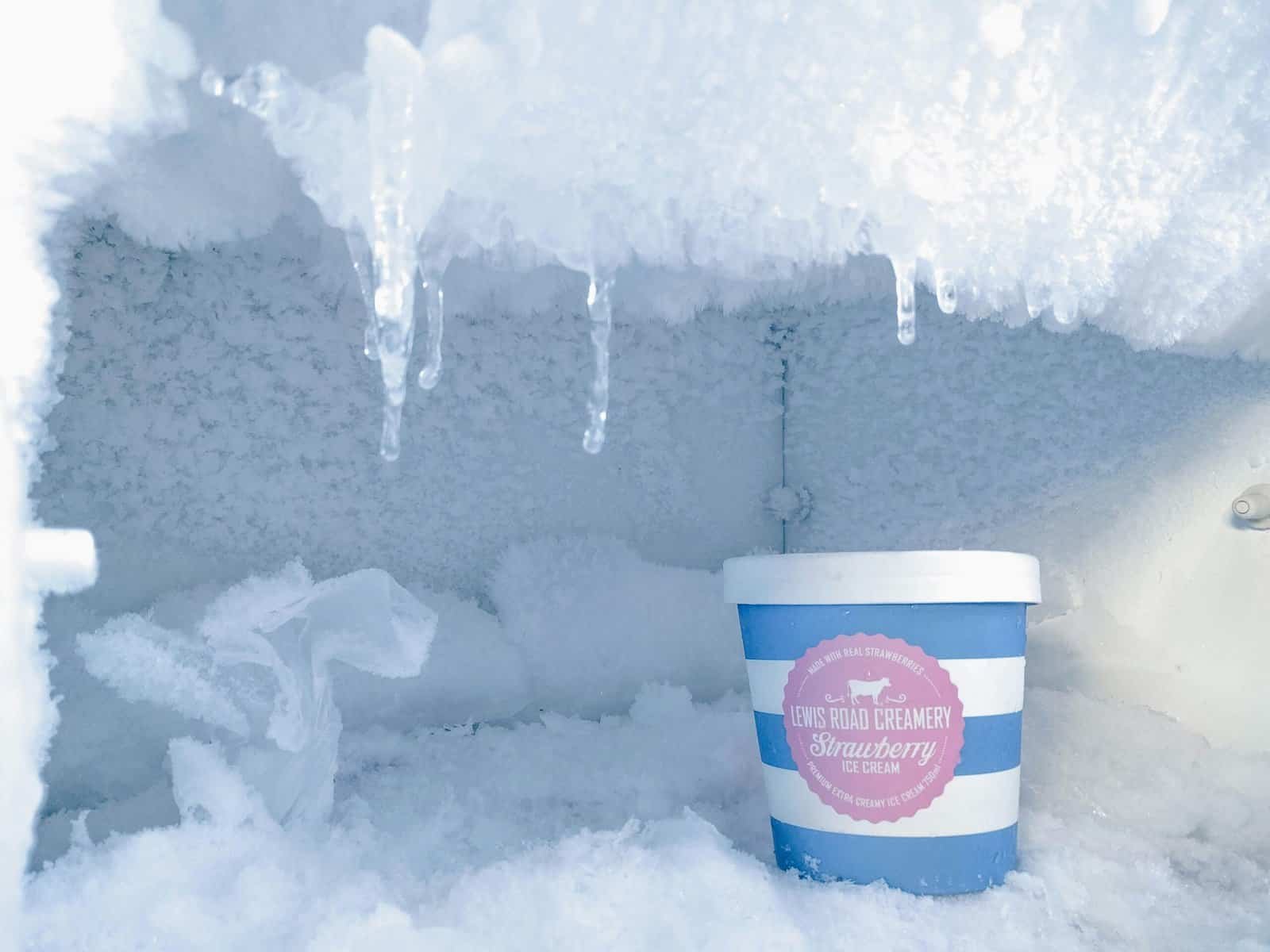
Frost is water that got inside, and almost every case traces to warm humid air reaching the compartment and condensing on the coldest surface it touches. Why is my freezer frosting up faster than it used to? Usually a seal that no longer seals, a door that gets opened and held, or a defrost system that has stopped keeping up.
Where the frost sits tells you which one. Our guide to organizing a fridge covers the door-dwell habit that starts most of it.
Quick Answer
Warm air carries moisture. When it enters the freezer, that moisture condenses and freezes on the nearest cold surface. A worn door gasket, a door left ajar, warm food going straight in, or a failed defrost heater all let it happen repeatedly until frost builds into a visible layer.
Key Takeaways
- Frost is incoming moisture, not a sign the freezer is too cold.
- Where it collects narrows the cause faster than anything else.
- A paper test on the gasket takes seconds and settles the door question.
- Frost-free models run a heater on a cycle, and that heater can fail.
- Frost on the walls and frost inside a package are different problems.
- An overfilled compartment blocks airflow and makes it worse.
- Clearing frost without fixing the cause buys a few weeks at best.
| Where the frost is | Likely cause | First thing to check |
|---|---|---|
| Around the door opening | Worn or dirty gasket | Paper test on all four sides |
| Heaviest near the hinge side | Door alignment or a sagging hinge | Whether the door swings shut on its own |
| Even layer on the back wall | Defrost cycle not clearing the coil | Whether a frost-free model ever runs a cycle |
| Thick on one shelf only | Airflow blocked by packed food | Clearance around the vents |
| Snow-like powder everywhere | Frequent long door openings | How long the door stays open |
| Inside sealed packages | Freezer burn, not appliance frost | Packaging, not the machine |
| Ice sheet on the floor | Blocked defrost drain | The drain channel at the back |
| Around the ice maker only | Water line or fill issue | Fill level and line fitting |
Frost Is Water That Should Not Be Inside
Cold air holds very little moisture. Room air holds a lot, and kitchen air holds more still when something is boiling.
Every time the door opens, a slug of that warm moist air swaps in. It cools fast, cannot hold its moisture, and drops it on the first cold surface available.
So frost accumulation is a record of how much outside air has been through the compartment. A freezer that frosts heavily is telling you about its door, not about its thermostat.
Turning the temperature up does not help and makes food quality worse. Our fridge and freezer storage chart covers where the setting should sit and why that matters for how long things keep.
The Door Is the Usual Culprit
Test the gasket with paper
Close the door on a sheet of paper and pull. Firm resistance means the seal is doing its job. If the paper slides free easily, that spot leaks, and you should repeat the test every few inches around all four sides.
Clean it before replacing it
Gaskets fail from grime as often as from age. Warm soapy water in the folds, then a dry cloth, restores a surprising number of them.
Check whether the door self-closes
A door that stays wherever you leave it, rather than easing shut, points at alignment or a worn hinge. A door held open by a package edge is the same problem with a simpler fix.
Watch how long it stands open
Standing with the door open deciding what to cook moves far more air than a quick grab. A compartment you can see into at a glance gets opened for less time, and our guide to food storage containers covers the uniform packaging that makes that possible.
When the Defrost System Is the Problem
A frost-free freezer is not a freezer that never frosts. It is one that melts its own frost on a schedule.
A timer or control board runs a small heater near the evaporator coil periodically. The melt runs out through a drain and evaporates, and the cycle repeats.
Three parts of that can fail: the heater, the sensor that governs it, and the drain that carries the water away. Each produces a slightly different picture.
A dead heater gives you a thickening even layer on the back wall, worst behind the rear panel, along with a compartment that gradually stops keeping up. A blocked drain gives you a sheet of ice on the floor instead, because the melt has nowhere to go.
Neither is a habit problem, and no amount of careful door discipline fixes them. That is the point at which the question turns into a repair call rather than a routine.
Frost on the Walls Against Frost in the Bag
These get treated as one problem and they are not.
Wall frost is air leaking in. Package frost, the crystals coating the food itself and the dried patches underneath, is moisture leaving the food inside its wrapper.
That second one is freezer burn, and it is a packaging and time issue rather than an appliance fault. Our storage chart covers what it does and does not mean for the food.
Heavy door traffic makes both worse, since every temperature swing drives a little more moisture out of the food. So the same fix helps, for two different reasons.
Better packaging addresses the second directly, and our roundup of vacuum sealers covers the most thorough version of that.
Clearing It, and Keeping It Clear
- Move the food out. Coolers, or a neighbor’s freezer, for however long this takes.
- Unplug and let it melt. Towels on the floor, and patience rather than a sharp tool.
- Never chip at frost with a knife. Puncturing the evaporator ends the appliance.
- Warm water speeds it up safely. A bowl of hot water inside with the door shut works well.
- Clear the drain channel while it is empty. This is the only easy moment to reach it.
- Dry every surface before restarting. Leftover water is next month’s frost.
- Fix the cause before reloading. Gasket, alignment or repair, or the layer just returns.
If ice is the recurring theme in your kitchen rather than frost, our note on ice that tastes bad covers a related freezer-air problem, and our roundup of countertop ice makers covers taking that job out of the freezer entirely.
Related Reading
Frequently Asked Questions
Why is my freezer frosting up?
Warm humid air is getting in and condensing on the coldest surface it reaches. The common causes are a worn or dirty door gasket, a door that does not close properly or stays open too long, blocked airflow from an overpacked compartment, or a defrost system that has failed.
Does frost mean my freezer is too cold?
No, and turning it warmer makes things worse rather than better. Frost is incoming moisture, not excessive cold. A warmer setting shortens how long food keeps without reducing the air exchange that causes the buildup in the first place.
How do I know if the door seal is the problem?
Close the door on a sheet of paper and pull it out. Firm resistance means that spot seals. Easy release means it leaks. Work around all four sides every few inches, and clean the gasket folds with warm soapy water before deciding it needs replacing.
My freezer says frost-free, so why is there frost?
Frost-free means the appliance melts its own frost on a cycle using a small heater near the coil. The heater, its sensor, or the drain that carries the melt away can all fail. A thickening even layer on the back wall is the usual sign.
Can I chip the ice out with a knife?
No. The evaporator tubing sits close behind those surfaces, and puncturing it ends the appliance rather than damaging it. Unplug, let it melt, and speed things along with a bowl of hot water inside and the door closed.
Why is there a sheet of ice on the freezer floor?
That pattern points at a blocked defrost drain. The heater is melting frost as intended, but the water cannot leave, so it refreezes at the lowest point. Clearing the drain channel while the compartment is empty is the fix.
Does a full freezer frost more or less?
A full freezer holds temperature better, which helps. A freezer packed so tightly that air cannot circulate past the vents is a different situation, and that one frosts unevenly with a heavy layer on whichever shelf is blocking the flow.
Is frost inside the bag the same thing?
No. Crystals inside a sealed package, with dried patches on the food underneath, are freezer burn. That is moisture leaving the food through its wrapping over time, so it is a packaging and duration issue rather than an appliance fault.
