
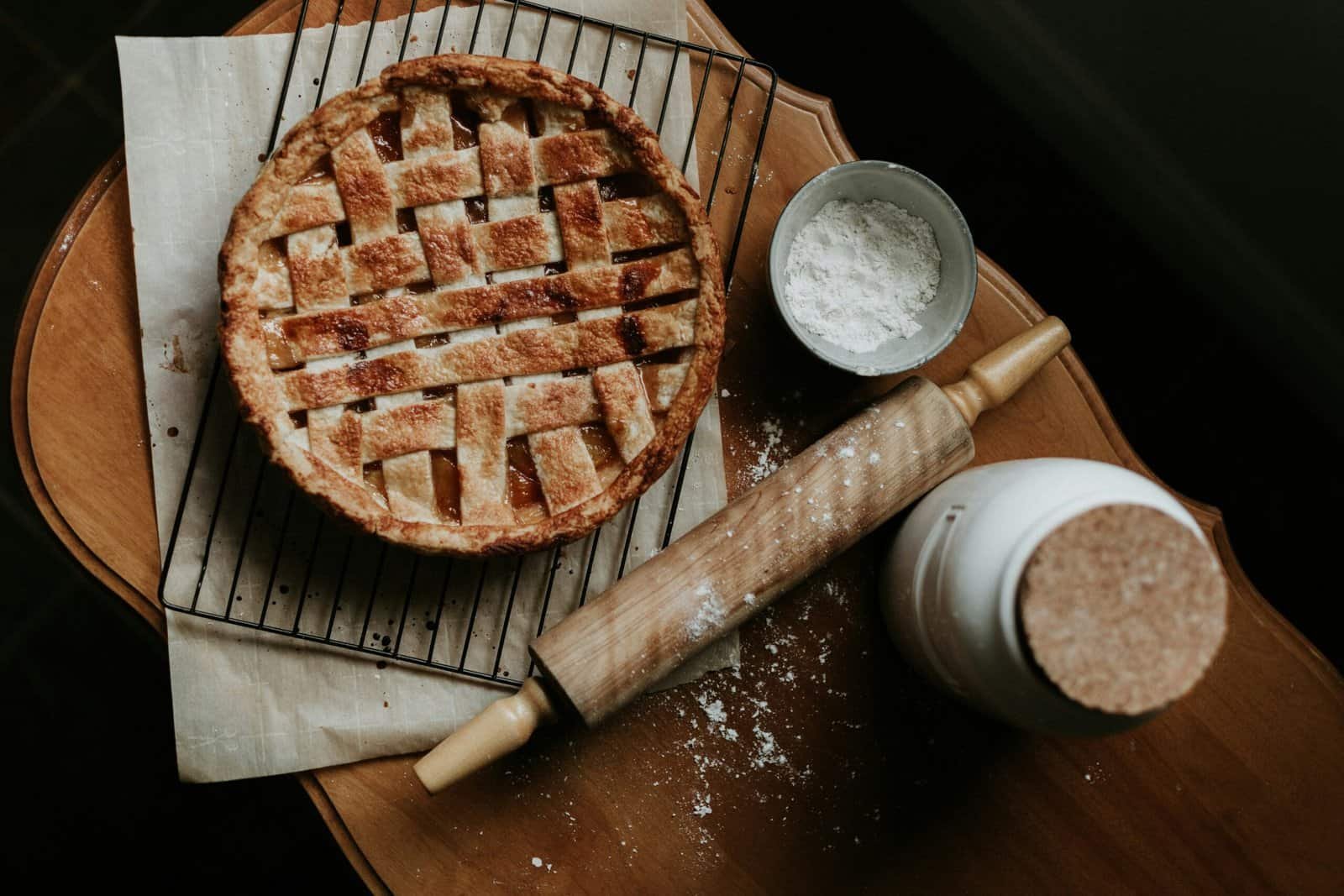
You followed the recipe carefully. You measured your flour. You used cold butter. And yet the pie crust came out tough, chewy, and shrunken away from the pan instead of flaky and tender. Tough pie crust is one of the most common baking frustrations, and the cause is almost always one of three things working against you: too much water, too much mixing, or warmth at the wrong moment in the process.
The good news: understanding the chemistry of what makes pie crust tough versus tender takes the mystery out of the failures. Once you know which mistake produced your last bad crust, the fix becomes specific and reliable.
This guide walks through what’s actually happening when pie dough turns tough, the three main culprits, and how to consistently produce tender, flaky crust.
Key Takeaways
- Tough pie crust comes from gluten development; gluten is formed when flour proteins meet water and get worked together.
- The three main causes are too much water, too much mixing, and dough that warmed up too much before baking.
- Cold butter cut into the flour creates the layers that make the crust flaky; melted butter or fully blended butter produces a denser, tougher result.
- Resting the dough in the fridge before rolling and again before baking allows the gluten to relax and the butter to stay cold
The Chemistry of Tough vs Tender
Pie crust is mostly flour, fat, water, and salt. The texture you get depends on what happens between the flour proteins and the water during mixing.
Flour contains two proteins (glutenin and gliadin) that combine when wet and work together to form gluten. Gluten is what makes bread chewy and elastic, which is great for bread and terrible for pie crust. Pie crust needs minimal gluten development so it stays tender and flaky.
The pie-crust technique is basically a controlled effort to limit gluten development. Cold fat is cut into the flour to coat the protein particles, reducing their ability to bond with water. Cold water is added quickly and mixed minimally. The dough is rested cold, so any gluten that did form can relax. Done well, you get a crust where layers of butter melt during baking, creating steam pockets and the characteristic flake.
Done poorly (too much water, too much mixing, or too warm), the gluten develops freely, the butter blends into the flour instead of staying in distinct layers, and the result is dense and tough.
Cause 1: Too Much Water
Water activates the gluten-forming proteins. The more water in your dough, the more potential for gluten formation, and the more the dough resists being worked without developing toughness.
Most pie crust recipes call for just enough water to hold the dough together. The classic test: the dough should look shaggy and barely come together when you squeeze it, not smooth and uniform. If your dough is smooth and easy to handle, it probably has too much water, and your crust will likely be tough.
Several factors push toward too much water:
Adding water by volume rather than gradually. Different flours absorb different amounts of water, and humidity affects flour. A recipe calling for a fixed amount may give you too much in dry conditions. Add water gradually, mixing between additions, and stop when the dough just barely holds together.
Overcompensating for crumbly dough. If your dough looks too dry, the temptation is to add more water. Often, what it actually needs is more mixing time (gently), or just to be pressed together; it’ll come together with patience.
Misunderstanding “shaggy.” Properly made pie dough should look distinctly shaggy and ragged before its rest, not smooth. If you keep adding water, trying to make it look like cookie dough, you’ve gone too far.
Some recipes substitute vodka for part of the water. The alcohol doesn’t activate gluten the way water does, so you can add more liquid for a workable dough without the same gluten development penalty. The alcohol evaporates during baking. This is a real technique that works.
Cause 2: Too Much Mixing
Each time you work the dough, you develop more gluten. Even minimally hydrated dough will get tough if you mix it aggressively or for too long. The technique is to combine ingredients enough to hold together and no more.
Common over-mixing situations:
Using a food processor at too high a speed or for too long. Food processors can produce excellent pie dough quickly, but if you leave it for a few seconds too long, you’ll develop more gluten than you want. Pulse rather than run continuously, and stop while the mixture still looks crumbly.
Working dough by hand for too long. Hand-mixing should be quick, a few folds to bring the dough together, not extended kneading. The motion is to fold and press, not knead.
Re-rolling scraps multiple times. Each roll adds gluten development. If you re-roll scraps, the second pass will produce a noticeably tougher crust than the first. For lattice tops or decorative cutouts, accept the trade-off; for the bottom crust, use the first roll’s piece.
Pressing the dough into the pan aggressively. Once the dough is in the pan, additional pressing develops more gluten and produces a tougher crust. Lay it gently and trim; don’t work it into shape.
For more on why mixing technique matters across all baking, see our guide on why room-temperature butter matters in baking; the same gluten-control principles apply to other baked goods.
Cause 3: Warm Dough
Temperature matters at every stage of pie-crust making. Cold butter and cold dough stay flaky; warm butter and warm dough don’t.
What goes wrong when the dough warms up:
Butter blends into the flour instead of staying in distinct layers. The whole point of cutting cold butter into the flour is to create discrete butter pieces that will melt during baking and produce steam-generated layers. Once butter softens, it starts to blend with the flour, and you lose the layering effect.
Gluten develops faster. Warmer dough is easier to work with, which feels nice, but it also develops gluten more readily under the same handling.
The dough becomes sticky and harder to roll. Sticky dough leads to adding more flour, which changes the recipe ratios and pushes toward toughness.
Practical temperature control:
Start cold. Cold butter (straight from the fridge, often frozen for some recipes), cold water (sometimes with ice cubes added), cold flour (some bakers chill the flour in the freezer for pie crust work).
Work fast. Don’t dawdle. The longer the dough sits in your warm hands or on a warm counter, the more it warms up.
Rest cold between steps. After mixing, rest the dough in the fridge for at least 30 minutes before rolling. This lets gluten relax and the butter re-firm. After rolling and shaping in the pan, rest again before baking if time allows.
Work surface matters. Marble or stone surfaces stay cooler than wood. If you have a marble slab, use it for a pie crust. Some bakers chill their rolling surface briefly before starting.
Use a marble rolling pin or chill your rolling pin. The rolling pin contacts the dough extensively; warm metal or wood transfers heat to the dough.
The Fat Question: Butter, Shortening, Lard
Different fats produce different pie crusts. The choice affects both flavor and texture.
All-butter crust. Best flavor. Slightly harder to handle because butter has a narrow temperature range where it’s optimal (cold enough to stay solid, soft enough to integrate). Produces excellent flake when done right.
All-shortening crust. Easiest to handle, very forgiving of temperature. Produces tender crust but with less flavor than butter. Also, lower-quality nutritionally because of the hydrogenated fat composition.
Lard crust. Traditional. Produces a very flaky, tender crust with a slightly savory flavor that works well for savory pies. Less common today but worth trying.
Butter-shortening combination. Common compromise. The butter contributes flavor; the shortening contributes handling ease and tenderness. Often a 50-50 mix.
Whatever fat you choose, the principles apply: keep it cold, cut it into the flour properly (some pieces should remain visible), and don’t blend it completely.
📑 Recommended Read: The right rolling pin makes temperature control and even thickness much easier; marble pins keep dough cooler, and tapered pins give you more control over edges. Check out our tested breakdown of the rolling pins for home bakers to find options that match your baking style.
The Resting Step Most Bakers Skip
After mixing your dough, you should rest it in the fridge before rolling. This step matters for two reasons:
First, any gluten that did form during mixing can relax during rest. Worked gluten is tight and tough; rested gluten is more pliable. The same amount of mixing produces a tougher crust without rest than with it.
Second, the butter re-firms after the warmth of mixing. Cold butter rolls and bakes better than warmer butter; the rest period brings it back to the ideal temperature.
Minimum useful rest: 30 minutes. Better: an hour or two. Overnight is fine and sometimes produces even better results. For pies made the day after the dough is mixed, just pull the dough out a few minutes before rolling so it’s not rock-hard.
Some bakers also rest the dough again after rolling and placing it in the pie pan, before adding filling and baking. This second rest helps prevent shrinkage during baking.
Why Pie Crust Shrinks During Baking
Related to toughness: a pie crust that shrinks excessively during baking has the same root cause. Gluten that’s been overdeveloped or stretched too much during rolling will retract when heated, pulling the crust away from the pan edges.
The fix is the same: less mixing, more resting, gentler handling. Some bakers also dock the crust (poking small holes with a fork) and use pie weights during blind baking to physically hold the crust in place while it sets.
Blind Baking and Tough Bottom Crust
Bottom crusts that get soggy from wet fillings sometimes get cooked twice (once briefly empty, then again with filling), called blind baking. Done well, blind baking produces a crisp bottom crust. Done poorly, it produces a tough bottom crust.
The key with blind baking: don’t over-bake during the blind phase. The crust should be just barely golden, not fully browned. The second bake with filling will continue the browning. Over-baked during blind = tough after the second bake.
For more on managing oven temperatures during baking, see why cakes sink in the middle. Temperature control is critical across all baking, not just for the crust.
Common Mistakes and How to Avoid Them
Add water until the dough looks smooth. Stop earlier. Shaggy is correct. Smooth means too much water.
Mixing past the point of “just holding together.” The point you should stop is when the dough looks like it might come together, but hasn’t fully. Resting will finish the job.
Working with warm butter. If your kitchen is warm, the butter softens fast. Work quickly or rest the dough mid-process to re-cool.
Re-rolling the bottom crust scraps. Use the first roll for the bottom. Save scraps for decorative top elements where toughness matters less.
Skipping the rest. The 30-minute fridge rest is the most commonly skipped step and one of the most important.
Pressing the dough hard into the pan. Lay it gently. Each push develops more gluten right where you don’t want it.
Adding lots of flour for rolling. Excess flour absorbs into the dough and throws off the ratios. Use minimal dusting; a marble surface or chilled silicone mat reduces the need for flour.
Frequently Asked Questions
How do I know if my dough has too much water? Properly hydrated pie dough looks shaggy and ragged. If your dough is smooth, uniform, and easy to handle like cookie dough, you’ve gone too far. Some experienced bakers also describe the dough as feeling like coarse cornmeal with larger butter chunks visible.
Can I fix tough dough before baking? Partially. Resting longer can help slightly. But if the dough is significantly over-mixed or over-hydrated, you won’t recover full tenderness; making a new batch is sometimes the better option.
Why does my crust shrink even when I rest the dough? Stretching the dough while rolling or placing it in the pan creates stress that will release as shrinkage during baking. Roll out from the center without stretching, and gently lift and place in the pan rather than pulling.
Is it bad to use a food processor for pie crust? Not at all. Food processors can produce an excellent crust. The trick is pulsing briefly rather than running continuously, and stopping while the mixture still looks crumbly with visible butter pieces.
Why does my crust get tough on the bottom but not the top? Often, a wet filling has soaked into the bottom crust and overworked the gluten during baking. Blind baking the bottom briefly before adding filling, or brushing the bottom with egg white to seal it, both help.
Can I freeze pie dough? Yes. Wrap tightly and freeze either as a disc (to be thawed and rolled later) or pre-rolled in the pie pan. Thaw in the fridge before rolling or baking. Frozen pie dough often performs as well as fresh, sometimes better, because the long thaw acts as an extended rest.
More Baking Guides
Recommended Reading
See also our guides to how to soften butter quickly, and how yeast actually works.
For the bigger picture, see the comprehensive baker’s workspace methodology.
Recommended Reading
