
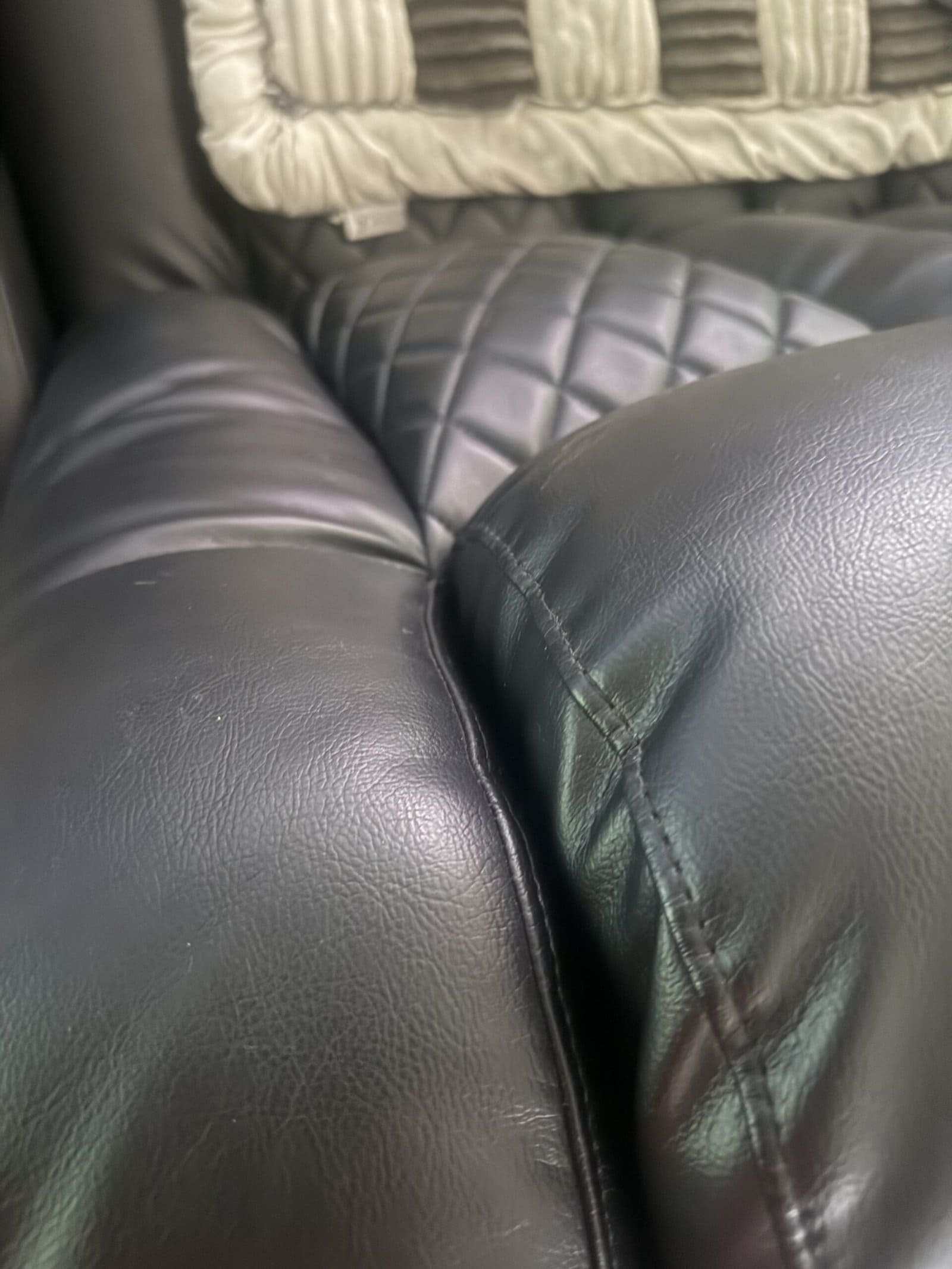
Two products handle almost every leather sofa: a pH-balanced cleaner for the surface and a conditioner that restores flexibility, with a soft cloth to put both on. The useful leather furniture cleaners and conditioners are the ones that say what they are formulated for, because finished upholstery leather, aniline leather and faux leather all want different things. Everything beyond those two items solves a narrower problem.
The reason this category is confusing is that most bottles are sold on the promise of restoration. Conditioner keeps leather flexible, which prevents cracking later, and that is a quieter claim than the packaging usually makes. If you want the routine rather than the products, start with cleaning a couch without a steam cleaner.
Quick Verdict
A combined cleaner and conditioner spray covers most households and is the sensible default. Buy a separate cream conditioner if your room is dry or sunny, wipes if upkeep only happens when you notice it, and a color-matched repair balm only once something has actually scuffed through.
Why Trust This Guide
I live with a black leather couch and use a spray on it occasionally, so the routine sections come from my own habits rather than from a schedule somebody published. The six picks below are a different matter: these are category recommendations based on documented product characteristics, not items I have used, and the guide says so wherever it matters.
Key Points
- Match the product to your leather type before anything else.
- Clean before you condition, or the conditioner sits on a film of body oil.
- Thin coats, buffed off, beat generous ones every time.
- Avoid anything listing alcohol, ammonia or silicone high in the ingredients.
- Test on a back panel and let it dry before committing.
How We Picked
Selection came down to four things. First, whether the product states the leather types it suits, because a bottle that claims to handle everything usually handles finished leather and nothing else well.
Second, formulation transparency. Products that publish an ingredient list let you avoid alcohol and heavy silicone, which are the two things most likely to leave a surface worse than it started.
Third, how it goes on. A product that needs a specific applicator, a buffing stage and a cure time is a product that gets used once, and leather care only works if it is easy enough to repeat.
Fourth, honest scope. A repair balm that promises invisible results is overselling, and a conditioner that promises to reverse cracking is describing something conditioners cannot do.
1. A Cleaner and Conditioner Spray, Best Overall
Best all-round choice | Price: ~$15
Why It Stands Out
A combined spray collapses two steps into one, which is the single biggest predictor of whether leather care actually happens. You spray a cloth, wipe a panel, and buff, and the whole sofa takes minutes rather than an afternoon.
For finished upholstery leather, which is what most sofas sold in the last twenty years use, a combined product is genuinely sufficient. The surface has a protective coating, so the job is cleaning that coating and keeping the material under it supple.
Worth Knowing
Combined products compromise in both directions. They clean less aggressively than a dedicated cleaner and condition less deeply than a cream, which is fine for maintenance and not enough for a sofa that has been neglected for years.
Check the label for your leather type before buying. Spray formulas are generally wrong for unfinished aniline and nubuck, where water marks easily.
This suits finished leather and anyone who wants one bottle. Skip it if your leather is unfinished or already visibly dry. Best for: routine upkeep on a normal sofa.
2. A Cream Leather Conditioner, Best for Dry Rooms
Best for dryness | Price: ~$20
Why It Stands Out
Creams carry more conditioning agents and less water than sprays, so they put more of what leather needs onto the surface per pass. In a dry climate or a room with forced-air heat, that difference shows up over years.
A cream also gives you control. You can work it into an arm that gets sun and leave the shaded back panel alone, which a spray makes harder.
Worth Knowing
Creams are where over-application happens. Too much leaves a tacky film that then grabs dust, so the rule is a thin coat on a cloth and a buff afterward.
Darkening is the other risk. Some creams deepen the color slightly on absorbent leather, which is why the back panel test matters more here than with any other product in this guide.
This suits dry rooms, sunny rooms and older sofas. Skip it if you already use a combined spray and the leather feels fine. Best for: leather that feels stiff to the hand.
3. A Pack of Leather Wipes, Best for Realistic Upkeep
Best for convenience | Price: ~$12
Why It Stands Out
The best leather product is the one you will actually reach for, and wipes win on that measure by a wide margin. Keeping a pack in the room next to the sofa turns upkeep into a thirty-second job you do while the television is on.
They are also the right tool for headrests and arms, where body oils concentrate. Those spots benefit from frequent light cleaning far more than from an occasional deep one.
Worth Knowing
Wipes are a cleaning product with a token amount of conditioner, whatever the front of the pack says. They do not replace a conditioner and should not be your only leather product.
Check that they are made for leather rather than for general household surfaces. Baby wipes and all-purpose wipes carry surfactants that strip finish, and they are the most common way people damage a sofa while trying to look after it.
This suits high-contact spots and households that clean reactively. Skip them as a substitute for conditioning. Best for: headrests, arms and quick marks.
4. A Microfiber Cloth and Applicator Set, Best Overlooked Item
Best supporting buy | Price: ~$10
Why It Stands Out
How the product goes on changes the result more than which product it is. An applicator pad spreads conditioner evenly and thinly, while a hand puts down a thick patch wherever the fingers press.
A second dry cloth for buffing is the other half of it. Buffing is what prevents the tacky surface that makes people decide conditioner was a mistake.
Worth Knowing
Wash new cloths before first use and keep them away from fabric softener, which leaves a coating that defeats the point of microfiber.
Keep leather cloths separate from floor and kitchen cloths. A cloth that has picked up grit becomes an abrasive on a finished surface.
This suits anyone buying a cream conditioner. Skip it if you are only using wipes. Best for: getting an even coat without waste.
5. A Color-Matched Repair Balm, Best for Scuffs
Best for damage | Price: ~$18
Why It Stands Out
Once a scuff has gone through the color layer, no conditioner will bring it back, and a balm is the only non-professional answer. It fills and recolors the spot rather than treating the leather around it.
Pet claws and furniture corners are the usual causes, which means the damage is usually in one place rather than spread out. That makes it a realistic DIY repair.
Worth Knowing
Color matching is the hard part and the reason to set expectations low. A balm blends a repair into the surrounding leather, and on black and dark brown it does that well, while mid-tones and tans are far less forgiving.
Build it up in thin layers and let each one dry. One thick application is the most common way a repair ends up more visible than the scuff was.
This suits isolated scratches on dark leather. Skip it for broad wear or anything you want to look untouched. Best for: claw marks and corner scuffs.
6. A Leather Protectant Spray, Best Preventive Buy
Best for protection | Price: ~$16
Why It Stands Out
A protectant adds a sacrificial layer on top of the finish, so spills bead up and body oils land on the coating rather than on the leather. It is the one product in this guide aimed at preventing work rather than doing it.
It earns its place in households with children or pets, and on light-colored leather where every mark shows.
Worth Knowing
Protectants wear off with use, concentrated exactly where you sit, so reapplication is part of the deal. Treat it as a periodic job rather than a one-time treatment.
Clean and condition first. Spraying protectant over dirt seals the dirt in, which is worse than not using it at all.
This suits light leather and busy households. Skip it on a sofa that already lives under a washable cover. Best for: keeping spills on the surface.
Leather Care Products at a Glance
| Product | Main job | How often | Price band |
|---|---|---|---|
| Cleaner and conditioner spray | Both, at maintenance level | A few times a year | $10 to $20 |
| Cream conditioner | Flexibility, deeper | When leather feels dry | $15 to $30 |
| Leather wipes | Surface cleaning | Whenever you notice | $8 to $15 |
| Applicator and cloth set | Even application | Reusable | $8 to $15 |
| Repair balm | Recoloring scuffs | As damage appears | $12 to $25 |
| Protectant spray | Repelling spills | Periodically | $12 to $22 |
How This Plays Out for Me
My own version of this is deliberately thin. The couch is black leather with a cover over it, and every so often I use a spray to help the leather, not on a schedule, just when it seems like it needs it. That is the extent of the leather-specific maintenance I do.
The cover is where the real numbers sit. Same cloth cover, three-seat sofa, three or four years on, washed about once a month, and it stays put.
With the cover off, the leather is fine. There is some softening and shine wear where people sit, and no cracking or dryness I can see.
That is not a case for buying less. The cover has absorbed the dust and the dog for those years, so the leather has been protected the whole time rather than showing that occasional spray is enough on its own.
What to Look For in a Leather Product
Does it name your leather type?
Finished, aniline, nubuck and faux leather all behave differently with water and oils. A label that lists types is telling you it was formulated for a subset rather than for everything.
What is in it?
Alcohol and ammonia strip finish. Heavy silicone leaves a shine that looks like conditioning and blocks absorption underneath. An ingredient list you can read is worth paying for.
How many steps does it need?
A product with four stages and a cure time will get used once. Count the steps before buying and be honest about which routine you will repeat.
What does it claim?
Restoring cracked leather, removing years of wear and feeding the hide are marketing rather than mechanism. A conditioner keeps leather flexible, and products that stay inside that claim are the more trustworthy ones.
Cleaner Against Conditioner
When a cleaner is the thing you need
Reach for a cleaner when the surface looks dull, feels slightly slick, or has visible marks. Those are all signs of something sitting on the finish, and conditioner applied over it simply traps it.
When a conditioner is the thing you need
Reach for a conditioner when the leather feels stiffer or drier than an unused side panel. That is a moisture problem inside the material, and cleaning will not touch it.
Common Misconceptions
That leather needs feeding
Upholstery leather is a finished material, not a living one. Conditioner replaces plasticizers that evaporate, which is maintenance rather than nourishment.
That more conditioner is better
Leather absorbs what it can and the rest sits on top collecting dust. Thin coats, buffed off, outperform generous ones.
That shine means the product worked
A high gloss straight after application is usually silicone sitting on the surface. Judge a conditioner by how the leather feels a day later, not by how it looks immediately.
That a cover means you never clean the leather
A cover removes most of the wear, and the leather underneath still dries out with the room. Taking the cover off a couple of times a year to check and condition is the whole job.
Recommended Reading
- Couch covers, which change how much of this you need to do
- What to clean with a handheld vacuum, including cushions and seams
- Throw pillows for protecting high-contact spots
- Carpet cleaners for whatever lands on the floor instead
- Low-pile rugs and whether furniture should sit on them
- Area rugs for living rooms and pads for the legs
- Cordless vacuums for the pass around the furniture
Leather Furniture Cleaner and Conditioner FAQ
Which leather furniture cleaners and conditioners do I actually need
For most sofas, one combined cleaner and conditioner spray and a soft cloth. Add a cream conditioner if your room is dry or sunny, and a repair balm only once something has scuffed through the color layer.
How do I know what kind of leather my sofa is
Put a drop of water on a hidden spot. If it beads and wipes off, the leather is finished and takes standard products. If it soaks in and darkens, it is unfinished and needs products made specifically for aniline or nubuck.
Can I use car leather products on furniture
Sometimes, though it is a gamble. Automotive leather is finished for heat and ultraviolet exposure, so car products often carry more silicone and more gloss than upholstery wants. A furniture-specific product is the safer buy.
Will a conditioner fix cracked leather
No. Conditioner keeps flexible leather flexible, which prevents cracks forming. Once the surface has cracked, the color layer has split, and only a repair balm or professional refinishing changes how it looks.
How often should I condition a leather couch
Go by feel rather than by a calendar. Compare a seat cushion to an unused side panel, and condition when the seat feels drier or stiffer. Dry climates and sunny rooms need it more often than shaded humid ones.
Are wipes good enough on their own
They handle cleaning well and conditioning barely at all. Use them freely on headrests and arms, and keep a conditioner for the few-times-a-year job that keeps the material supple.
What should I never put on a leather sofa
All-purpose household spray, dish soap, baby wipes, alcohol, and cooking oils. The first four strip the finish, and the oils do not absorb properly and turn rancid in the material over time.
