
Leather furniture asks for three things: keep it away from direct heat and sun, lift dust off before it grinds in, and put conditioner on when the surface starts to feel dry rather than on a calendar. Knowing how to care for a leather couch is mostly about doing less, more consistently. Most of the damage people blame on neglect comes from heat, sunlight, and products that were never meant for upholstery.
The reason that advice is short is that leather is skin with a finish on it. It wants to stay flexible and out of the sun, and almost nothing else. A couch cover changes the math further, which I will get to, because mine has been on for years.
Quick Answer
Dust weekly with a dry cloth, vacuum the seams with a brush attachment monthly, wipe spills immediately with a damp cloth, and condition when the leather feels dry to the hand. Keep it out of direct sun and away from vents and radiators. Skip household cleaners, baby wipes, and anything with alcohol.
Key Takeaways
- Heat and sunlight do more damage than use does.
- Dust is an abrasive once it is sitting in a crease.
- Condition by feel, not on a schedule.
- Test any product on a hidden panel first.
- A cover removes most of the work and most of the wear.
Leather Couch Care, Step by Step
- Dry dust the surfaces with a soft cloth. Dust that stays on leather works into the grain and dulls it.
- Vacuum the seams, creases and under the cushions with a brush attachment. Grit collects where the panels meet.
- Wipe the surface with a cloth dampened in plain water, then dry it with a second cloth. Water alone handles most everyday grime.
- Spot clean marks with a dedicated leather cleaner, working from the outside of the mark inward.
- Let the leather dry completely before anything else goes on it.
- Apply conditioner thinly with a cloth, not with your hand, and buff off whatever the leather does not absorb.
- Repeat the conditioning step when the surface starts feeling dry or looking flat, which for most rooms is a couple of times a year.
What Actually Wears Leather Out
Sunlight is the biggest factor and the one people move furniture for too late. Ultraviolet light fades dye and stiffens the surface coating, and a sofa that sits in a sun patch will show it along one arm first.
Dry heat is second. A vent or radiator blowing at a sofa pulls moisture out of the leather faster than any amount of sitting does, and dry leather is what eventually cracks.
Body oils and hair products come third, concentrated on headrests and arms. They do not look like damage, but they build a film that stops conditioner from absorbing where it is needed most.
Abrasion is last, and it is the least dramatic. Normal sitting polishes the high points of the grain, which reads as shine rather than as wear.
My Routine, and What the Leather Looks Like Now
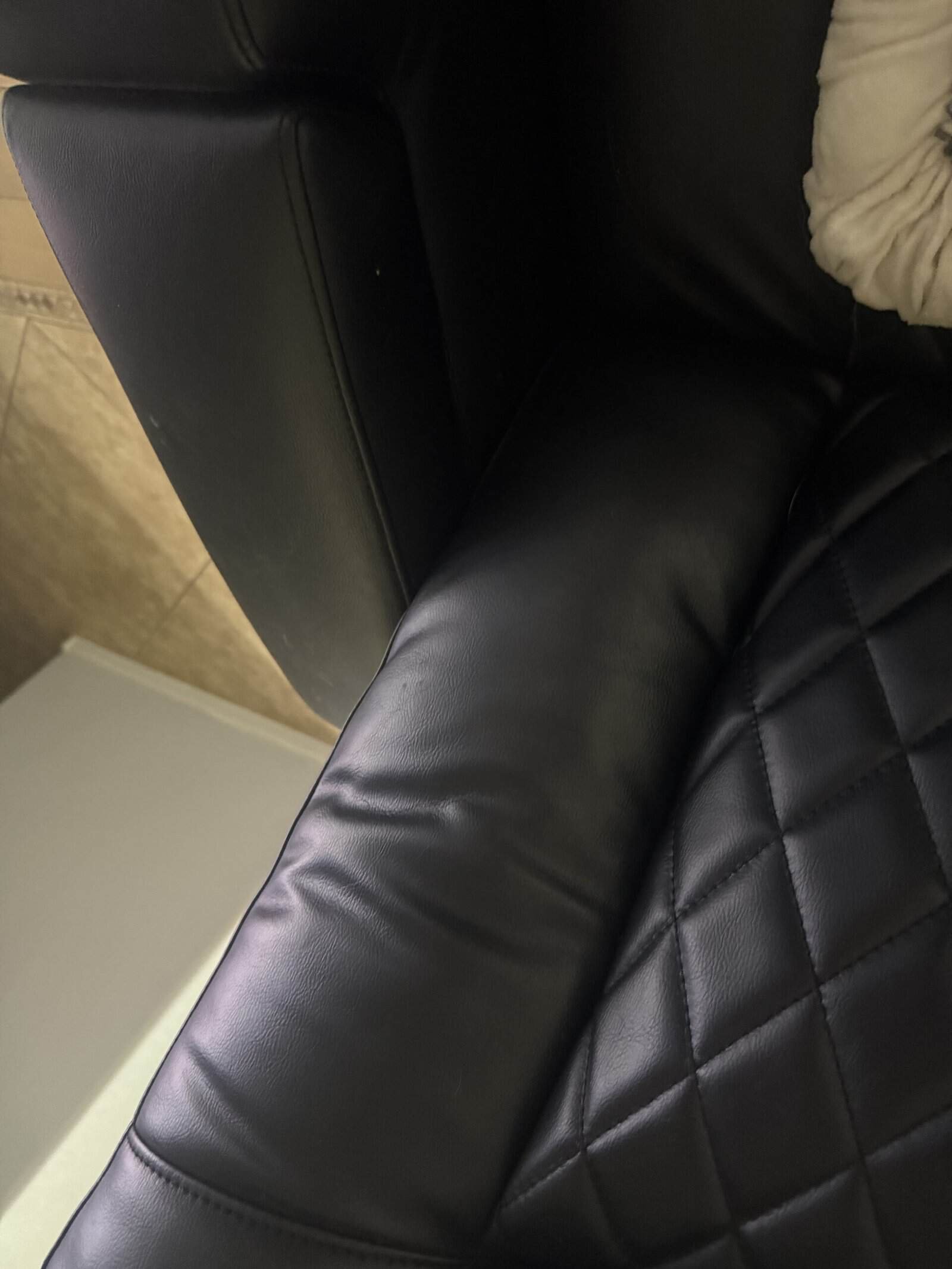
My couch is black leather with a cover over it. Every so often I use a spray to help the leather, not on a schedule, just when it seems like it needs it, and that is the extent of the leather-specific maintenance I do.
The cover is the part with real numbers on it. It is the same cloth cover on a three-seat sofa, soft checkered fabric, machine washable, and I have had it on for three or four years. I wash it about once a month.
It went on for the dog rather than for the leather. A full cover means I am not thinking about which cushion she picked, and the thing I would tell anyone shopping is that it stays put.
So what does three or four years of that produce? When the cover comes off, the leather is fine. There is some softening and shine wear on the surface, which is what sitting does, and no cracking or drying that I can see.
That is a weaker claim than it sounds, and the reason matters. The cover has taken the dust, the dog and most of the contact for those years. My routine has been minimal, but the leather has also been protected the entire time, so this is not evidence that minimal care works on an exposed sofa.
My experience covers one black leather couch under a washable cover, with one dog on it. Multiple-sofa households, light-colored leather, aniline leather and homes with direct sun on the furniture are all outside what I can speak to.
How Often to Condition Leather
Condition when the leather tells you to, which is why no fixed interval works across rooms. Run a hand across a seat and an unused side panel: if the seat feels drier or stiffer than the panel, it is time.
Dry climates, forced-air heat and sun exposure all shorten the gap. A shaded sofa in a humid room can go a long time between applications without any penalty.
Over-conditioning is a real thing and it looks like success at first. Too much product leaves a tacky surface that then attracts dust, so thin coats and buffing off the excess matter more than frequency does.
Covers, and What They Change
A cover converts leather care into laundry, which is a straightforward trade for most households. The leather underneath stops taking sun, dust, pet hair and spills, and the cover takes all of it instead.
There is one thing to watch. A cover left on permanently over a sofa that already has a conditioner film on it can hold moisture against the surface, so put the cover on dry leather and let any product absorb and buff off first.
Pets are the usual reason people go this route, and it works. If hair is the main problem, a handheld vacuum on the cushions handles what the cover collects, and a carpet cleaner deals with whatever makes it past the cover onto the floor.
If you would rather see the leather, the lighter version is throw pillows on the high-contact spots and a cover only where the pet actually sits.
Common Mistakes to Avoid
Using household cleaner or baby wipes
All-purpose sprays, dish soap and wipes carry surfactants and alcohol that strip the finish. They work beautifully once and then leave a dull patch you cannot undo.
Skipping the hidden-panel test
Leather finishes vary enormously between sofas, and a product that is fine on one darkens another. Try everything on the back or underside first and wait for it to dry.
Letting a spill sit
Finished leather gives you minutes, not hours. Blot rather than rub, use plain water, and dry the area rather than leaving it to air dry into a ring.
Treating shine as damage
Polished high points on the grain are what use looks like, and no product reverses it. Conditioner keeps leather flexible, which is a different job from restoring texture.
Recommended Reading
- Cleaning a couch without a steam cleaner, including the leather-specific version
- Area rugs for living rooms, which decide how much grit reaches the furniture
- Furniture pads and floor protectors for the feet underneath
- Cordless vacuums for the weekly pass around and under the sofa
Leather Couch Care FAQ
How do you care for a leather couch day to day
Dust it with a dry cloth, vacuum the seams with a brush attachment every few weeks, and wipe spills right away with plain water and a dry cloth behind it. That covers nearly everything. Conditioner is a few-times-a-year job, not a weekly one.
Can I use olive oil or coconut oil on leather
No. Food oils do not absorb the way a leather conditioner does, they go rancid in the material over time, and they leave a surface that keeps collecting dust. Use a product made for finished upholstery leather.
How do I stop a leather couch from cracking
Keep it out of direct sun and away from heating vents, and condition it when it feels dry. Cracking is a flexibility problem caused by moisture loss, so the fix is preventing the drying rather than treating the cracks afterward.
Is a cover bad for leather
A breathable cloth cover on dry leather is fine and removes most sources of wear. The thing to avoid is sealing damp or freshly conditioned leather under a cover, or using a vinyl-backed cover that traps moisture against the surface.
What is the difference between a leather cleaner and a conditioner
A cleaner lifts dirt and oils off the finish. A conditioner replaces the flexibility that evaporates out over time. Cleaning before conditioning matters, because conditioner applied over a film of body oil does not reach the leather.
Will a dog ruin a leather couch
Claws are the real risk, and they leave scratches rather than stains. Keep nails trimmed, and if the dog has a favorite spot, a washable cover over that section removes the problem completely without you managing it daily.
How do I get a scuff out of leather
Light scuffs often buff out with a dry cloth and a little warmth from your hand. Anything that has broken the color layer needs a repair balm matched to the shade, applied thinly, and even then it blends rather than disappears.
