
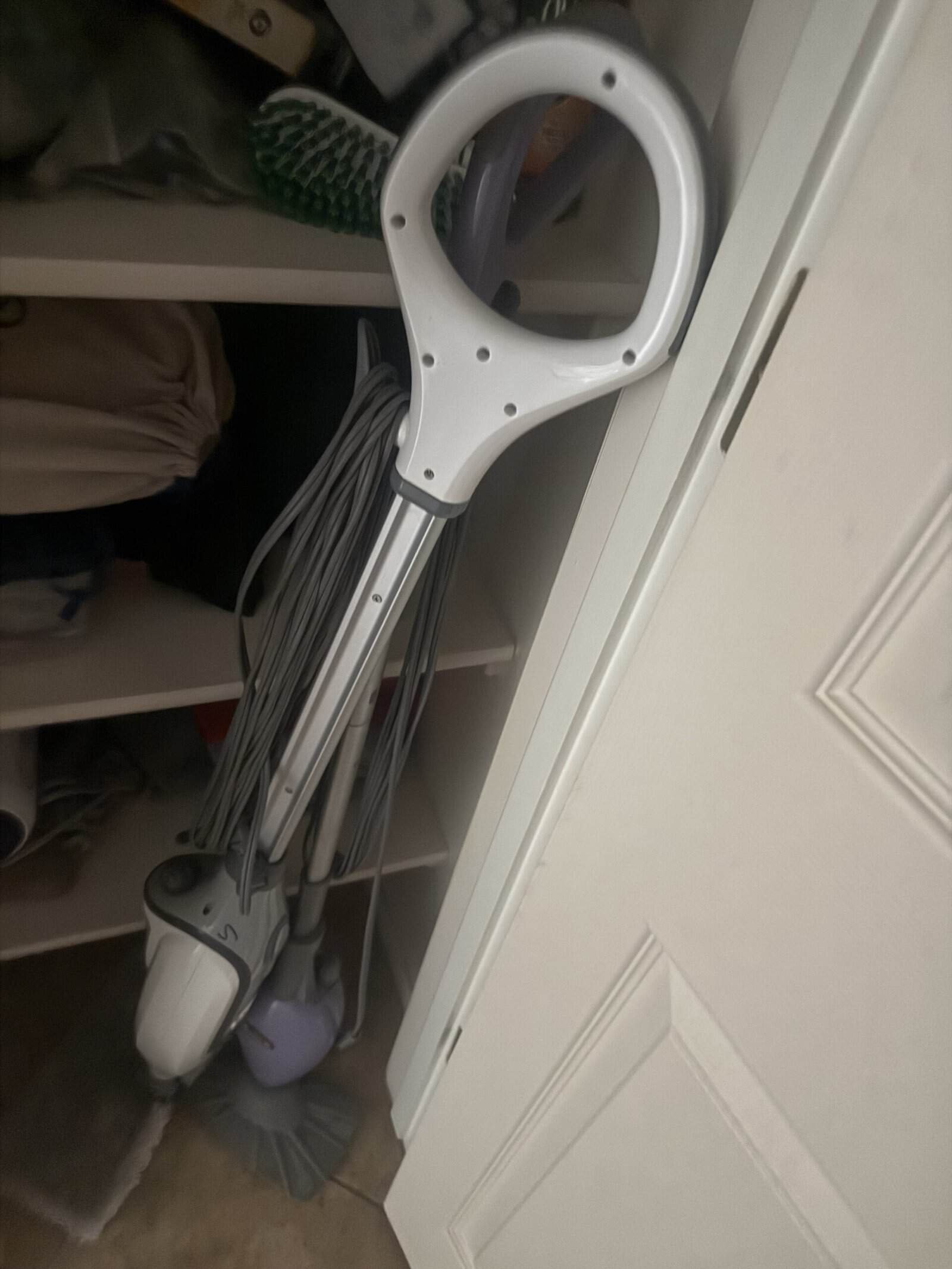
A steam mop can damage a wood floor, and the risk comes down to how the floor is built, how wet the pad is, and how long the head sits still. Running a steam mop on hardwood floors is a smaller risk on a sealed solid plank than on anything with a fiberboard core underneath. The failure mode is rarely dramatic, though. It shows up as a finish that stops looking clear.
I have steamed my own wood floors for years. There is a little cloudiness on the finish now that was not there at the start. It came on gradually, and I have not changed anything about how I mop. That is the honest result, and it is more useful than a warning with nothing behind it. Our roundup of steam mops covers the machines themselves.
What Happened to My Own Floors
The floors I live with are hardwood through the living space, with carpet in the bedrooms only. The steam mop comes out a few times a year, when the floor looks like it needs it rather than on any schedule. Plain tap water goes in the tank and nothing else.
Between those sessions, the real work is dry. Vacuuming happens far more often than steaming does, with a full size vacuum and a handheld, and there is no robot vacuum here. Most of what lands on a floor is grit, and grit comes up dry.
The cloudiness is the part worth reporting. It is light, it is across the open floor rather than in patches, and it did not appear after one bad session. Whether the steam caused it is not something a single floor can settle, so take it as one observation rather than a finding. What I can say is that the floor looks slightly less clear than it used to.
One thing I genuinely do not know is how my floor is built. I could not tell you whether it is solid, engineered, or a laminate with a wood-look layer. That matters for the advice below, which is exactly why the advice below is built around not knowing.
The Short Version
Steam is a real risk to wood, and the risk scales with moisture and dwell time rather than with steam itself. Sealed solid wood tolerates brief, barely damp passes. Engineered and laminate floors have a core that swells, so they tolerate far less. Vacuum first, steam rarely, never stop moving, and never steam an unsealed or waxed floor.
Where this goes wrong is usually one of four things, and each has a different fix.
| What goes wrong | Why it happens | What to do instead |
|---|---|---|
| Cloudy or hazy finish | Residue and moisture left sitting on the surface coat | Wring the pad damp, dry the floor behind you, swap pads when gray |
| Cupped or lifted boards | Water reaching the core or the subfloor through seams | Keep the head moving, never steam a gapped or damaged floor |
| Peeling or soft finish | Heat sitting in one spot long enough to soften the coating | Never pause, never park the mop upright on the floor |
| Swollen seams on a laminate core | Fiberboard underneath absorbing moisture through the joints | Use a damp mop or a dry method, not steam |
Why Steam Reaches Places Mop Water Does Not
Steam gets into a floor because it arrives as vapor and hot, which is a different problem from a wet mop. Vapor moves into seams and micro-gaps before it condenses, so it ends up under the surface layer rather than on top of it.
Heat matters just as much. A finish is a coating, and coatings soften when they warm up. A soft coating holds a scuff pattern and picks up residue more readily than a cold one.
That combination is also why steam cleans well. It loosens anything greasy without a chemical, which is the reason people reach for it in the first place. The same property that lifts grime is the one that gets into the floor.
Floor Construction Changes the Answer Completely
The single biggest factor is what sits under the wood you can see. Three common constructions respond to steam in three different ways.
Solid wood with an intact modern seal
This is the most forgiving case. The plank is wood all the way down, so moisture that does get in has somewhere to go and the board can move and settle. A barely damp pass that never stops moving is a small risk here.
Engineered wood over a plywood core
The top layer is real wood and thin. Underneath it, glued layers can delaminate if moisture reaches them repeatedly. The surface can look fine for a long time while the problem builds in the glue line.
Laminate or wood-look plank over fiberboard
This is where steam does the most harm. The core swells when it gets wet and it does not shrink back, so swollen seams are permanent. Skip steam entirely on these and use a damp mop.
Unsealed, oiled, or waxed wood
Steam will take the finish off a waxed floor and raise the grain on bare wood. Neither outcome reverses. Treat these as off limits whatever the mop’s packaging says it handles.
If you do not know which of these you have, assume the less forgiving case. Look up the flooring in your lease paperwork or ask whoever installed it, and until you know, treat it as a core you cannot soak. That is the position I am in, and it is why my sessions are rare.
What Cloudiness on a Finish Usually Means
A hazy look on a wood floor is almost always something sitting on the finish rather than damage inside the wood. That is good news, because surface problems have surface fixes.
Residue is the usual suspect. Minerals in tap water, leftover film from a cleaner used earlier in the floor’s life, and the gray that builds up in a mop pad all leave something behind when the water evaporates.
Moisture trapped just under the top coat causes the other version, which looks whiter and more cloudlike. This one often fades on its own as the floor dries out over days.
Either way, the response is the same. Stop adding moisture, let the floor dry fully, then clean with a wood floor cleaner on a cloth and buff it dry. If the haze survives that, the finish itself has changed and a refinish is the only real answer.
How to Steam a Wood Floor With Less Risk, Step by Step
- Vacuum or sweep the whole floor first. Steam turns loose grit into a slurry that gets dragged across the finish.
- Check for gaps, lifted edges and damaged boards. Anywhere water can get below the surface is a spot to skip.
- Put a clean pad on and set the machine to its lowest steam setting. More steam does not clean a wood floor better, it just leaves more water.
- Keep the head moving at all times. One slow continuous pass beats scrubbing back and forth over a stubborn mark.
- Work in small sections and dry behind yourself with a microfiber cloth or a dry pad. The floor should feel dry within a minute.
- Swap the pad as soon as it looks gray. A dirty pad redistributes grime rather than removing it.
- Never leave the machine standing on the floor, even for a moment. Park it on tile or on a towel when you stop.
Doing the dry part well is what lets you steam rarely. Keeping a low-pile rug in the high traffic path catches a lot of the grit before it ever reaches open floor, and furniture pads and floor protectors stop the scratches that make a floor look dull for reasons steam has nothing to do with.
When to Reach for Something Else
For routine cleaning, a dry method and a barely damp microfiber mop handle wood floors with no risk at all. That should be the default, with steam kept as the occasional reset.
For spills and tracked-in mess, a wet dry vacuum pulls liquid off the surface instead of spreading it, which is the opposite of what a mop does.
For maintenance you would rather not think about, robot vacuum and mop combos use a damp pad rather than steam, which is gentler by design even though it cleans less aggressively.
What Trips People Up
Believing the sticker on the box
Packaging that says a mop is safe for sealed hardwood is a claim about the mop, not about your specific floor and its specific finish. Your flooring maker’s guidance outranks it.
Going back over a mark
Scrubbing one spot is how a short safe session becomes a long risky one. Lift stubborn marks with a cloth and cleaner afterward instead.
Putting cleaner in the tank
Most tanks are built for water alone, and a cleaner that is fine on a cloth can bake onto a finish as steam. Residue is one of the main causes of the haze people then blame on the machine.
Steaming more often than the floor needs
Frequency is the variable with the most influence and the least attention. A floor that gets vacuumed well rarely needs steam at all.
Related Reading
- How often to vacuum, which is the habit that decides how little mopping you need
- Rug pads for hardwood floors, including when you can skip one
- Keeping an area rug from sliding on a smooth floor
Steam Mop and Hardwood FAQ
Can you use a steam mop on hardwood floors at all
On sealed solid wood, yes, with care. Use the lowest steam setting, keep the head moving, work in small sections and dry behind yourself. On laminate or anything with a fiberboard core, use a damp mop instead, because swollen seams do not recover.
How do I tell whether my floor is solid or engineered
Look at a cut edge where the flooring meets a vent or a doorway. Solid wood shows the same grain through the full thickness, while engineered and laminate show distinct layers. If nothing is exposed, treat it as the less forgiving option.
Will one steam session ruin a wood floor
One careful session on a sealed floor is unlikely to cause visible harm. Damage usually comes from repetition, from parking the mop in one place, or from steaming a floor that already had gaps or a failing finish.
Why does my floor look cloudy after steaming
Usually residue or trapped moisture sitting in the top coat rather than damage to the wood. Let the floor dry fully for several days, then clean with a wood floor cleaner on a cloth and buff dry. Haze that survives that has reached the finish itself.
Should I put anything other than water in the tank
No. Tanks are designed for water, and additives can clog the machine and leave film on the floor. If your tap water is hard, distilled water reduces what gets left behind.
How often should a wood floor be steamed
Far less often than most people assume. Dry cleaning handles the grit that actually wears a floor, so steam is best kept for the occasional reset rather than a weekly routine.
Is a damp mop safer than a steam mop
Yes, on every floor construction. A wrung-out microfiber mop puts less water on the surface, adds no heat, and cannot drive vapor into a seam. It cleans less aggressively, which is the trade.
