
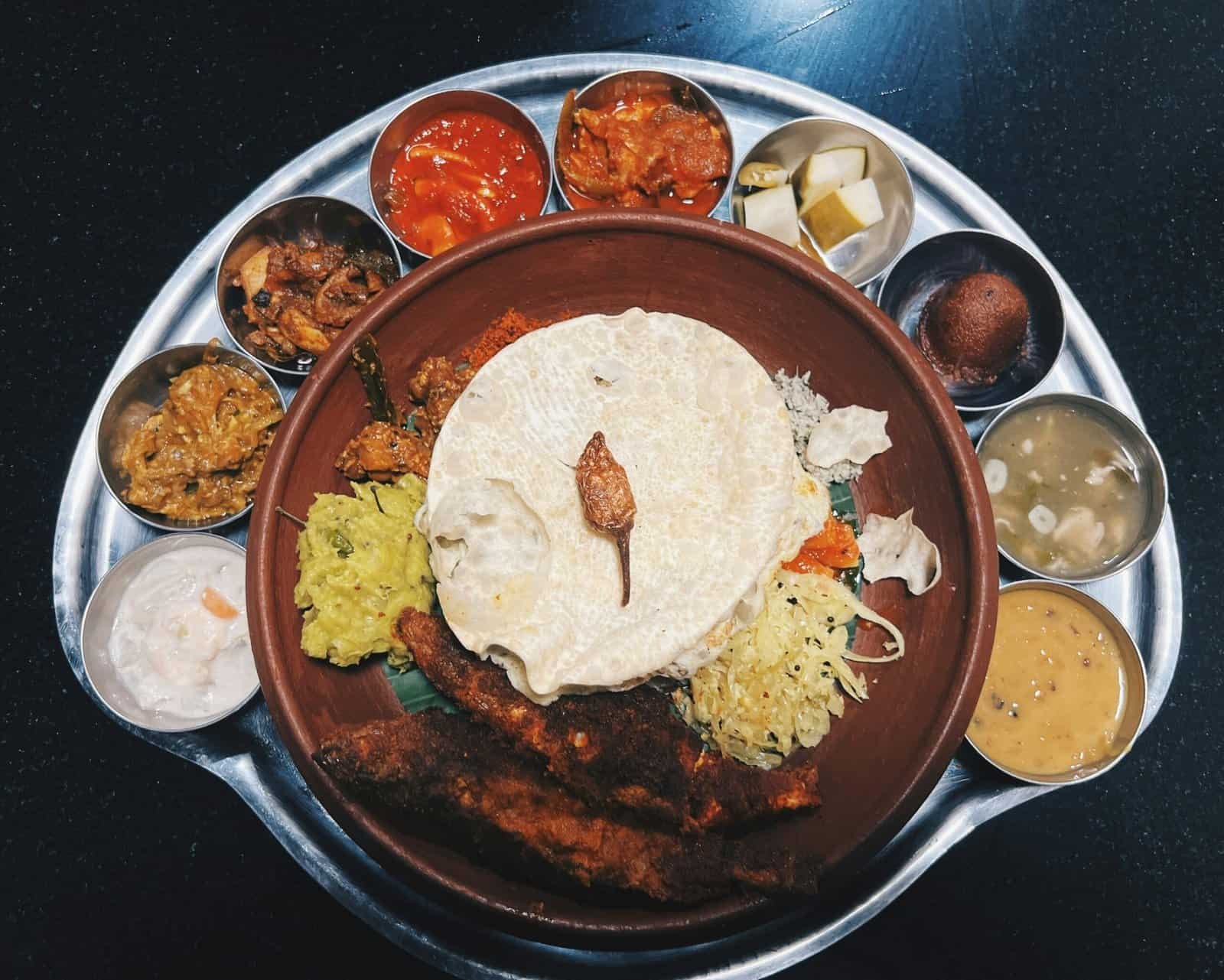
The hardest part of cooking several dishes is rarely any one of them. It is that they finish at different times, and the thing that was ready first is cold by the time everything else arrives.
This covers how to sequence a meal so it lands together. Our guide on organizing your kitchen covers the setup that makes it easier.
Quick Answer
Work backward from the dish that must be hot, then slot everything else around it by how long it takes and how well it holds. Start with what tolerates waiting, finish with what does not. Do all the chopping before anything goes on heat.
Key Points
- Plan backward from serving time, not forward from the first step.
- Some dishes hold well and some collapse within minutes.
- Prep everything before turning on any heat.
- Count your burners and oven space before committing.
- Resting meat is working time, not dead time.
How Long Things Hold
| Dish type | Holding tolerance |
|---|---|
| Braises and stews | Improve with waiting |
| Roasted vegetables | Hold reasonably well |
| Rice and grains | Fine covered off heat |
| Roast meat | Needs resting anyway |
| Pasta | Degrades quickly |
| Anything crisp or fried | Minutes at best |
Work Backward From the Anchor
Every meal has one dish that has to be right when it hits the table, and everything else is scheduled around it.
Identify that dish first, work out when it needs to finish, and count backward to when it needs to start.
That gives you a timeline with a fixed point rather than a list of tasks in an arbitrary order.
Everything else then gets slotted in by working out its own duration and where it has to begin to land in the right place.
Written down on paper, this takes about two minutes and removes most of the panic from the process. Our roundup of meat thermometers covers knowing when the anchor is actually done.
Prep Before Heat
Chop everything first
Chopping while something cooks is how things burn.
Measure in advance
Especially for anything fast.
Read the whole recipe
Steps hide inside other steps.
Clear space as you go
Counter room runs out before burners do.
Some Dishes Wait Well
Knowing what tolerates sitting is what makes a multi-dish meal possible at all.
Braises, stews and anything cooked long and slow generally improve with time and can be made well ahead.
Roasted vegetables hold acceptably in a warm oven, though they lose some crispness.
Rice and grains sit happily covered off the heat, and many actually benefit from ten minutes of steaming after cooking.
Pasta is at the other end, going from correct to soft within a couple of minutes, which is why it is almost always the last thing started. Our roundup of Dutch ovens covers the slow end of that range.
Resting Is Working Time
Roast meat needs to rest before carving, and that window is the most useful part of the whole timeline.
Resting is not optional and it is not waiting. It lets the meat finish cooking through and reabsorb liquid that would otherwise run out on the board.
What matters for sequencing is that the oven is free during that window and so are you.
This is where vegetables go in, where a sauce gets made from the pan, and where anything last-minute happens.
Planning that window deliberately turns the tightest part of a meal into the calmest. Our guide on basting a steak with butter covers the finishing steps.
Do What You Can Ahead
The most reliable way to make a complicated meal manageable is to move work out of the cooking window entirely.
Chopping, measuring, making sauces and washing produce can all happen hours or a day earlier without any loss.
Some dishes are genuinely better made ahead. Braises and stews improve overnight, and reheating gently is easier than cooking under pressure.
Components rather than whole dishes is the useful framing, since a sauce made yesterday and vegetables chopped this morning remove two jobs from the critical hour.
What cannot move is anything that degrades, so leave crisp textures and delicate finishes for the day itself.
Cooking for a Group Changes It
Scaling a meal up changes the timing as much as the quantities.
Larger volumes take longer to heat, and a doubled pot of anything comes to temperature considerably slower than a single one.
Oven capacity becomes the binding constraint quickly, since two trays where there was one changes airflow and adds time.
Serving takes longer too, which means the first plate and the last plate are further apart than they were with fewer people.
Building slack into the timeline rather than assuming the same durations is what separates a calm large meal from a chaotic one.
Count Your Equipment
Most timeline failures are equipment failures rather than timing errors.
Four dishes needing four burners on a stove with four burners leaves no room for a pan that has to come off and go back on.
Oven temperature is the constraint people miss. Two dishes needing different temperatures cannot both be right, and one has to move or wait.
Counter space runs out faster than heat sources, particularly once things start coming off and needing somewhere to sit.
Borrowing oven space is not an option once cooking has started, so the check belongs at the planning stage.
Checking equipment against the plan before starting catches this while there is still time to change something. Our guide on choosing cookware covers building a usable set.
Where Meals Actually Go Wrong
A few failure patterns account for most of it.
Starting with the fastest dish first is by far the most common of them, since it means the quickest thing sits longest.
Underestimating prep is the second, because recipe times usually assume everything is already chopped and measured.
Trying to do too many last-minute dishes is the third, and the fix is choosing at most one thing that has to be finished at the table.
Serving temperature is the last of them, and the easiest to fix. Warming plates costs nothing and buys several minutes of margin on everything.
None of these are skill problems. They are sequencing problems, which means two minutes of planning fixes them rather than years of practice.
Writing the timeline on paper rather than holding it in your head is the change most people find makes the biggest difference, because a written plan survives being interrupted.
Common Mistakes to Avoid
Planning forward instead of backward
Start from when the meal needs to be on the table and count back. A forward list has no fixed point.
Chopping while something cooks
Prep everything before any heat goes on. Chopping under time pressure is how things burn.
Ignoring the oven temperature conflict
Two dishes needing different temperatures cannot both be right. One has to move or wait.
Making several last-minute dishes
Pick one thing that has to be finished at the last moment. Everything else should tolerate waiting.
Recommended Reading
See our guide on setting up a home baking station, our roundup of mixing bowl sets, our roundup of baking sheets, and our recipe scaling calculator.
Meal Timing FAQ
What should I actually start first?
Whatever takes longest and holds best. Braises and roasts go early, pasta and anything crisp goes last.
How do I plan the timeline?
Pick the dish that must be hot, work out when it finishes, and count backward. Slot everything else around that fixed point.
Should I prep everything first?
Yes. Recipe times generally assume ingredients are already chopped and measured, and chopping while something cooks is where things burn.
Which dishes hold well?
Braises, stews, roasted vegetables, and rice or grains covered off the heat. Pasta and fried food do not.
What about resting meat?
Plan around it rather than through it. The oven and your attention are both free during that window.
Can I cook two things at different oven temperatures?
Not simultaneously and correctly. One has to wait, move, or be reworked to a shared temperature.
How do I stop food going cold?
Warm the plates and limit yourself to one dish that finishes at the last moment.
What if I start to fall behind?
Slow down the anchor rather than speeding everything else up. Lowering a roast’s temperature buys time that rushing a sauce does not.
