
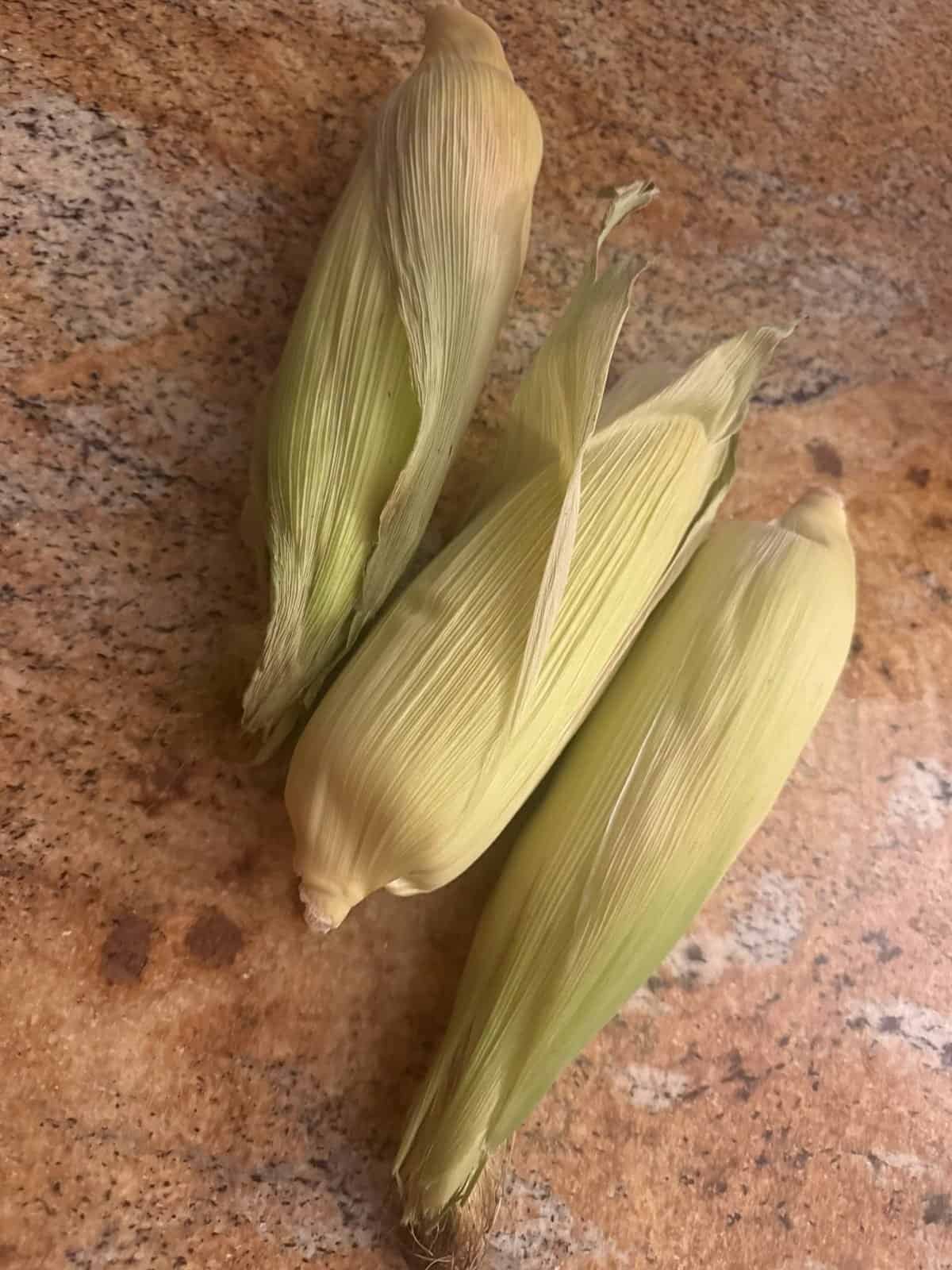
To shuck corn, peel the leafy green husks back from the tip to the base and snap them off with the stem, then strip away the fine silk threads underneath and rinse the ear. Done by hand, shucking corn takes about thirty seconds an ear and needs no tools at all. I like buying corn fresh and shucking my own, and the reason I keep doing it by hand is that a good method keeps the whole job clean and easy, with barely any silk left behind. This guide walks through that method step by step, plus the mess-free tricks that make it painless.
Quick Verdict
Shuck corn by pulling the husks and stem off in one downward motion, then rubbing off the silk with a dry paper towel or a quick rinse. It takes about thirty seconds per ear by hand. For a hands-off option, microwave ears in the husk, then slide the clean cob out. Shuck right before cooking to keep corn sweet.
Key Takeaways
- Shucking means removing the green husks and the silky threads before cooking.
- By hand it takes about thirty seconds an ear and needs no special tools.
- A dry paper towel grabs stubborn silk better than wet hands do.
- Microwaving corn in the husk lets the ear slide out silk-free with no peeling.
- Shuck right before cooking, since the husk keeps corn sweeter in storage.
How to Shuck Corn Step by Step
This is the plain hand method, the one I use for fresh ears, and it is the fastest once it becomes muscle memory. Work over a trash can, compost bin, or a paper bag to keep the husks contained.
- Pull the husks down from the tip. Grip the leafy green layers at the pointed top and peel them down toward the stem in one firm motion, taking several layers at once.
- Snap off the husks and stem together. Bend the peeled husks and the tough stem end over and break them off in a single piece, which removes most of the silk with them.
- Rub away the leftover silk. Run a dry paper towel or a clean, dry vegetable brush from top to bottom against the grain of the kernels to lift the fine threads that cling in the rows.
- Rinse and check. Rinse the ear under cool running water, then look down each row and pick off any silk you missed before cooking.
How do you get the silk off corn?
The trick to removing corn silk is friction from something dry, not water. A dry paper towel, a clean dish towel, or a soft-bristled vegetable brush grips the thin threads and pulls them out of the kernel rows far better than rinsing alone.
Why dry beats wet
Wet silk flattens against the kernels and slides through your fingers, while dry silk stays springy enough to grab. Rubbing an ear down with a dry paper towel before you rinse clears most of the strands in a few strokes.
Work against the grain
Corn silk runs the length of the ear, with each strand tied to a kernel, so wiping from top to bottom follows the threads and lifts them out. A quick rinse afterward washes off the last loose bits and any dust from the husk.
Can you shuck corn in the microwave?
Yes, and microwaving is the cleanest hands-off way to shuck corn. Leave the husk fully on, microwave the ear for a few minutes, let it cool enough to handle, then cut off the wide base and slide the ear out, leaving the husk and silk behind.
How the microwave method works
The steam trapped inside loosens the silk from the kernels, so the cob slips free of both the husk and the threads in one motion. It is the tidiest approach when you want almost no silk cleanup, and it cooks the corn at the same time.
When to use it
Reach for the microwave when you are cooking one or two ears and want zero mess, or when the silk on a batch is being stubborn. For a big pot of corn, shucking by hand and boiling is usually quicker overall.
How do you shuck corn without making a mess?
Keeping shucking clean comes down to two habits: contain the husks as they come off, and clear the silk with a dry cloth before it scatters. Shucking straight over a trash can, compost bin, or open paper bag stops the husks from covering your counter.
My clean-and-easy routine
What keeps it easy for me is doing it in one spot, over the bin, and pulling the husk and stem off together so most of the silk leaves in a single piece. A dry paper towel handles the rest before I rinse, so there is very little to sweep up. Fresh green husks go straight into the compost, which is the tidiest way to deal with them.
Set up your tools first
If you plan to cut the kernels off after, have a stable board and a sharp knife ready before you start, so wet ears are not sliding around while you hunt for a knife. A good cutting board with a lip or groove catches the juice and stray kernels.
Cutting the Kernels Off the Cob
If your recipe calls for loose kernels, cut them off after shucking, not before. Stand the shucked ear upright on a board and slide a sharp knife straight down the cob, turning the ear as you go.
Do it safely
Rest the flat stem end on the board for stability rather than balancing the ear on its point, and keep your guiding hand at the top out of the blade’s path. A sharp chef’s knife cuts cleanly through the kernel bases with less force, so keeping it sharp makes the job both easier and safer.
Catch the kernels
Kernels scatter as they come free, so cut inside a wide bowl or set the ear in the center of a rimmed board. Standing the ear in the hole of a bundt pan is a popular trick that catches the kernels as they fall.
Recommended Reading
- Storing fresh herbs, for keeping the rest of your produce at its best.
- Colanders and strainers, for rinsing corn and produce.
- Vegetable peelers, for the rest of your fresh produce prep.
When to Shuck Corn for the Best Flavor
Shuck corn right before you cook it, not hours ahead. The husk works as a natural wrapper that holds in moisture and slows the sugars from turning to starch, which is what keeps fresh corn sweet.
Keep the husk on until cooking
Virginia Cooperative Extension advises refrigerating corn quickly and cooking it soon, because standard sweet varieties turn starchy within a few days. Leaving the husk on until the last moment protects both the sweetness and the moisture.
If you shuck ahead
Already-shucked corn dries out faster than corn in the husk, so wrap bare ears in a damp paper towel or a bag and use them within a day or two. UC Davis postharvest research notes that cold storage slows the sugar loss that makes corn taste bland, so the fridge is the right place for it.
Common Corn Shucking Mistakes to Avoid
Shucking too far ahead of cooking
Bare corn loses sweetness and moisture quickly once the husk is gone. Shuck right before cooking, and keep unhusked ears in the fridge until then.
Only using water on the silk
Rinsing alone leaves silk pressed into the kernel rows. Rub the ear with a dry paper towel or brush first, then rinse to finish.
Cutting kernels off a wobbly ear
Balancing an ear on its tip invites slips. Stand it flat on the stem end on a stable board, or use a bowl to steady and catch the kernels.
Letting husks pile up on the counter
Shucking away from a bin scatters husks and silk everywhere. Work over a trash can, compost bin, or paper bag so cleanup is almost nothing.
Shucking Corn FAQ
What does it mean to shuck corn?
Shucking corn means removing the leafy green husks and the silky threads that wrap the ear before you cook or eat it. The words shucking and husking mean the same thing and are used interchangeably. Underneath the husk, thin silk strands run the length of the cob, with each strand attached to a kernel.
Do you need a tool to shuck corn?
No, your hands are all you need for the basic method, which takes about thirty seconds an ear. A dry paper towel or a soft vegetable brush helps clear stubborn silk, and a sharp knife is only needed if you plan to cut the kernels off the cob afterward.
What is the easiest way to remove corn silk?
Rub the shucked ear from top to bottom with a dry paper towel or a clean, dry vegetable brush, working against the direction of the kernels. Dry friction grabs the fine threads far better than water. A quick rinse afterward removes any loose strands you missed.
Should you shuck corn before boiling it?
Yes, remove the husks and silk before boiling so the corn cooks evenly and is ready to eat. Some people boil corn in the husk for flavor, but for most cooking you shuck first. If you microwave rather than boil, you can leave the husk on and slide the clean ear out afterward.
How far ahead can you shuck corn?
Shuck corn as close to cooking as possible for the best flavor. If you must do it ahead, wrap the bare ears in a damp paper towel or bag and refrigerate them for no more than a day or two, since husked corn dries out and loses sweetness faster than corn left in the husk.
Can you eat corn silk?
Corn silk is not harmful and is sometimes used in teas, but its fibrous strands are unpleasant to eat on cooked corn, so most people remove them. The goal of shucking is simply to clear away the silk that would otherwise stick between the kernels.
What can you do with corn husks?
Fresh green husks go straight into the compost bin, while dried husks have culinary uses, most famously as the wrapper for tamales. To reuse dried husks, soak them in warm water until soft and pliable before wrapping food in them.
Where can I learn more about handling fresh corn?
For research-backed guidance on selecting, storing, and preserving sweet corn, see the sweet corn page from Virginia Cooperative Extension. University cooperative extension services are a reliable source for produce handling and food safety information.
Related in this cluster: our guide: how to organize your kitchen.
