
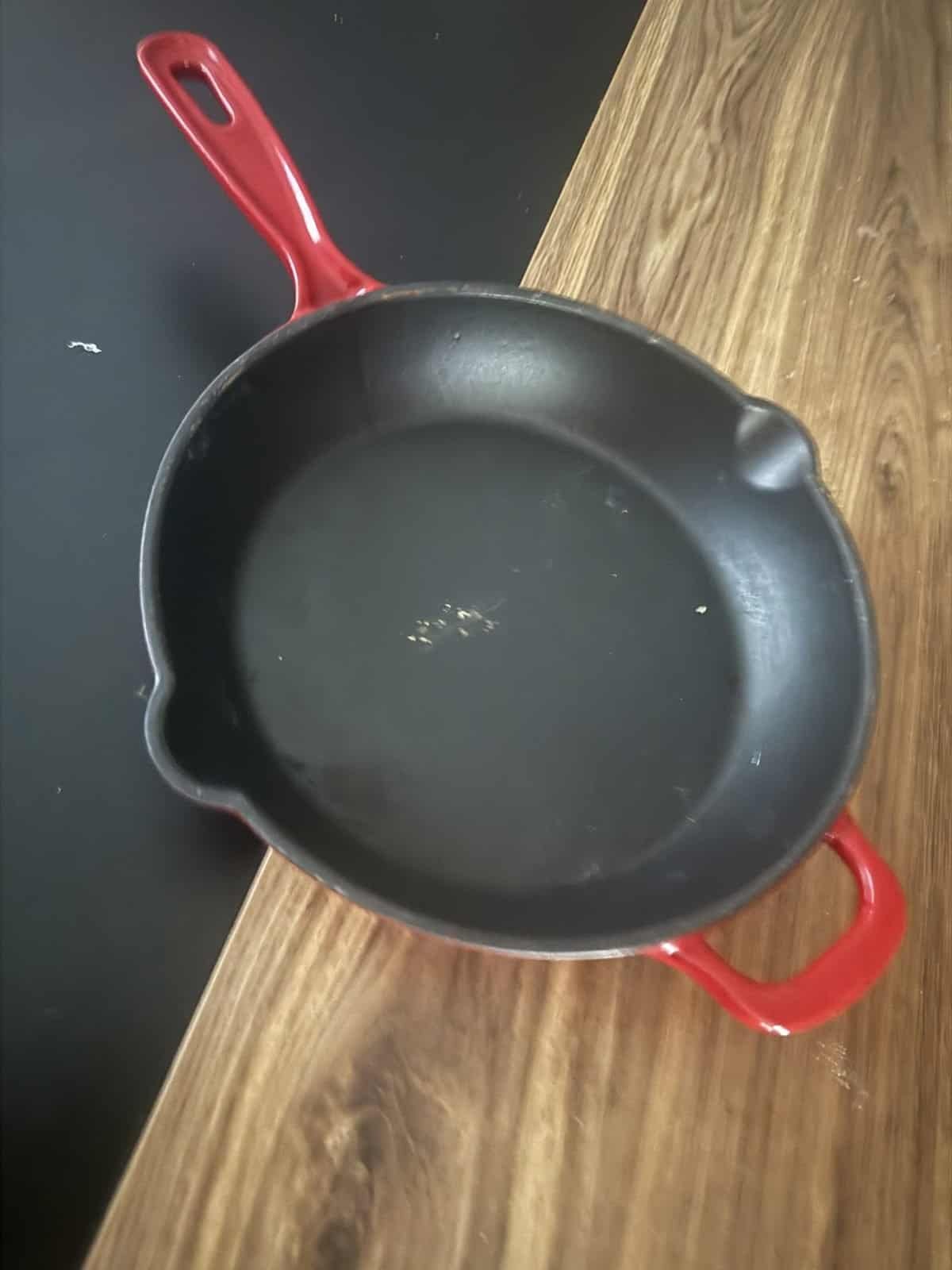
For the foundational guidance behind these picks, see our complete guide to bare and enameled cast iron.
Cast iron shines for anything that wants high, even heat and a hard sear, so it is ideal for steak and burgers, roasted and blistered vegetables, cornbread, fried eggs, and skillet cookies, while it is worth avoiding long-simmered acidic sauces and delicate fish on bare cast iron. Knowing what to cook in a cast iron skillet is really about matching the pan’s strengths, and once you do, it becomes the piece you reach for most. If you are still building your collection, our cast iron skillet picks are a good place to start.
Quick Verdict
Cook anything that benefits from a strong sear and steady heat in cast iron: steak, burgers, chicken, roasted vegetables, cornbread, and eggs all excel. Bare cast iron is less suited to acidic dishes like tomato sauce and to delicate, flaky fish. For acidic cooking, reach for enameled cast iron cookware instead, which handles it without any reactivity.
Why Trust This Guide
Cast iron is in my regular rotation. I sear steak in it, roast and blister vegetables, and cook eggs in a small cast iron pan, and I keep both bare and enameled pieces so I can match the pan to the food. That day-to-day cooking is what shaped the recommendations here.
Key Takeaways
- Cast iron excels at searing and high, even heat.
- Steak, burgers, veggies, cornbread, and eggs are naturals.
- Bare cast iron dislikes acidic sauces and delicate fish.
- Use enameled cast iron for tomato-based and acidic dishes.
- Good seasoning is what makes eggs and sticky foods work.
Best Foods to Cook in Cast Iron, at a Glance
| Great in bare cast iron | Better in enameled or another pan |
|---|---|
| Seared steak and burgers | Long-simmered tomato sauce |
| Roasted and blistered vegetables | Delicate flaky fish |
| Cornbread and skillet cakes | Wine or citrus pan sauces |
| Fried and baked eggs | Braised acidic stews |
| Chicken thighs and pork chops | Boiling or deglazing with acids |
What Is Cast Iron Best For?
Cast iron is best for high-heat cooking and a deep, even sear. The metal holds heat exceptionally well, so it stays hot when food hits the pan instead of dropping in temperature, which is exactly what builds a browned, flavorful crust. That heat retention is why a cast iron skillet outperforms lighter pans for searing steak, getting a crackly skin on chicken, and blistering vegetables. It also moves seamlessly from stovetop to oven, so you can sear on the burner and finish baking without switching pans. Anything that wants to be hot and stay hot belongs in cast iron.
Best Foods to Cook in a Cast Iron Skillet
The standouts are foods that reward a hard sear or steady, radiant heat. Steak and burgers develop a restaurant-style crust, and I reach for cast iron every time I sear a steak. Roasted and blistered vegetables caramelize beautifully thanks to the retained heat. Cornbread, skillet cookies, and Dutch babies bake with crisp, golden edges. Fried and baked eggs work well once the pan is properly seasoned, which is why my small cast iron egg pan gets constant use. Chicken thighs, pork chops, and cornbread round out the list of dishes that genuinely cook better in cast iron than in a lighter pan.
What Not to Cook in Bare Cast Iron
Avoid highly acidic and very delicate foods in bare cast iron. Long-simmered tomato sauce, wine or citrus pan sauces, and acidic braises can react with the iron, which may dull the seasoning and leave a faint metallic taste, especially in a newer pan. Delicate, flaky fish is the other weak spot, since it tends to stick and break apart even on decent seasoning. None of this makes cast iron fragile; it just means those dishes have better homes. For acidic cooking, enameled cast iron is the answer, since its coating is non-reactive and shrugs off tomatoes and wine with no issue.
Does Cast Iron Work for Eggs?
Yes, cast iron cooks eggs well, but only with good seasoning and enough fat. Eggs are the classic test of a pan’s nonstick surface, and a well-seasoned cast iron skillet handles them cleanly, which is why I use a small dedicated cast iron pan for them. The keys are a properly built-up seasoning layer, preheating the pan so it is evenly hot, and a little butter or oil. On a fresh or patchy seasoning, eggs will stick, so if that happens, the fix is more seasoning rather than giving up on the pan. Done right, cast iron fries and scrambles eggs beautifully.
How to Get the Best Results in Cast Iron
A few habits make cast iron cook noticeably better whatever you put in it. Preheat the pan for a few minutes so it heats evenly, since cast iron is slow to warm but holds that heat beautifully once there, and adding food to a cold pan is the main cause of sticking and pale browning. Use enough fat, especially for eggs and anything prone to sticking, because even good seasoning needs a little help. Let seared foods release on their own rather than forcing them, as a proper crust will loosen from the surface when it is ready. Finally, match the piece to the job: a large skillet for searing, a small pan for eggs, a Dutch oven for braises. Get the pan hot, use fat, and be patient, and cast iron rewards you with results a lighter pan cannot match.
Recommended Reading
- seasoning a cast iron skillet, for a nonstick surface.
- mini cast iron skillets, for eggs and small jobs.
- the best Dutch ovens, for braises and stews.
- cast iron vs nonstick, which pan for which food.
- fixing sticky seasoning, if food starts sticking.
Common Mistakes to Avoid
Cooking acidic dishes in bare cast iron
Tomato sauce and other acids can react with bare iron and dull the seasoning. Use enameled cast iron for those dishes instead.
Trying delicate fish on weak seasoning
Flaky fish sticks and breaks on bare cast iron. Save it for nonstick, or use a very well-seasoned pan with plenty of fat.
Not preheating the pan
Cast iron needs a few minutes to heat evenly. Adding food to a cold pan causes sticking and pale, uneven browning.
Skimping on fat for eggs
Even good seasoning needs a little butter or oil for eggs. A dry pan is the fastest way to make them stick.
What to Cook in Cast Iron FAQ
Can you cook acidic foods like tomato sauce in cast iron?
Briefly, yes, but long-simmered acidic dishes can react with bare iron, dull the seasoning, and add a metallic note. For tomato sauce and other acidic cooking, enameled cast iron is the better choice because its coating is non-reactive.
Is cast iron good for cooking steak?
Cast iron is one of the best pans for steak. Its strong heat retention keeps the surface hot when the meat hits it, building a deep, even crust. Preheat well, add a little oil, and it sears steak like a restaurant griddle.
Can you cook eggs in a cast iron skillet?
Yes, with good seasoning and a little fat. A well-seasoned pan releases eggs cleanly, while fresh or patchy seasoning will stick. Preheat the pan evenly and use butter or oil, and cast iron handles fried and scrambled eggs well.
What should you not cook in cast iron?
Avoid long-simmered acidic dishes and delicate flaky fish in bare cast iron. Acids can react with the iron and affect seasoning, and fish tends to stick and fall apart. Enameled cast iron or a nonstick pan suits those foods better.
Can you bake in a cast iron skillet?
Absolutely. Cast iron goes from stovetop to oven and bakes cornbread, skillet cookies, Dutch babies, and more with crisp, golden edges. Its even heat and oven-safe build make it a favorite for skillet baking.
Is fish okay to cook in cast iron?
Sturdy fish like salmon can work on a well-seasoned pan, but delicate, flaky fish tends to stick and break. If you want to cook fish in cast iron, choose firmer fillets, use plenty of fat, and make sure the seasoning is well built up.
Can you boil water or cook soup in bare cast iron?
Briefly, yes, but prolonged boiling and long-simmered soups, especially acidic ones, can strip seasoning and react with bare iron. For soups and stews, enameled cast iron is the better choice, since its coating handles liquids and acids without any effect on the surface.
Can you cook bacon in a cast iron skillet?
Yes, and it works very well. Bacon renders evenly in cast iron, and the fat it leaves behind actually helps maintain the seasoning. Cook it over medium heat, and save a little rendered fat for searing other foods later.
See the complete guide: the full guide to choosing the right cookware for your kitchen.
