
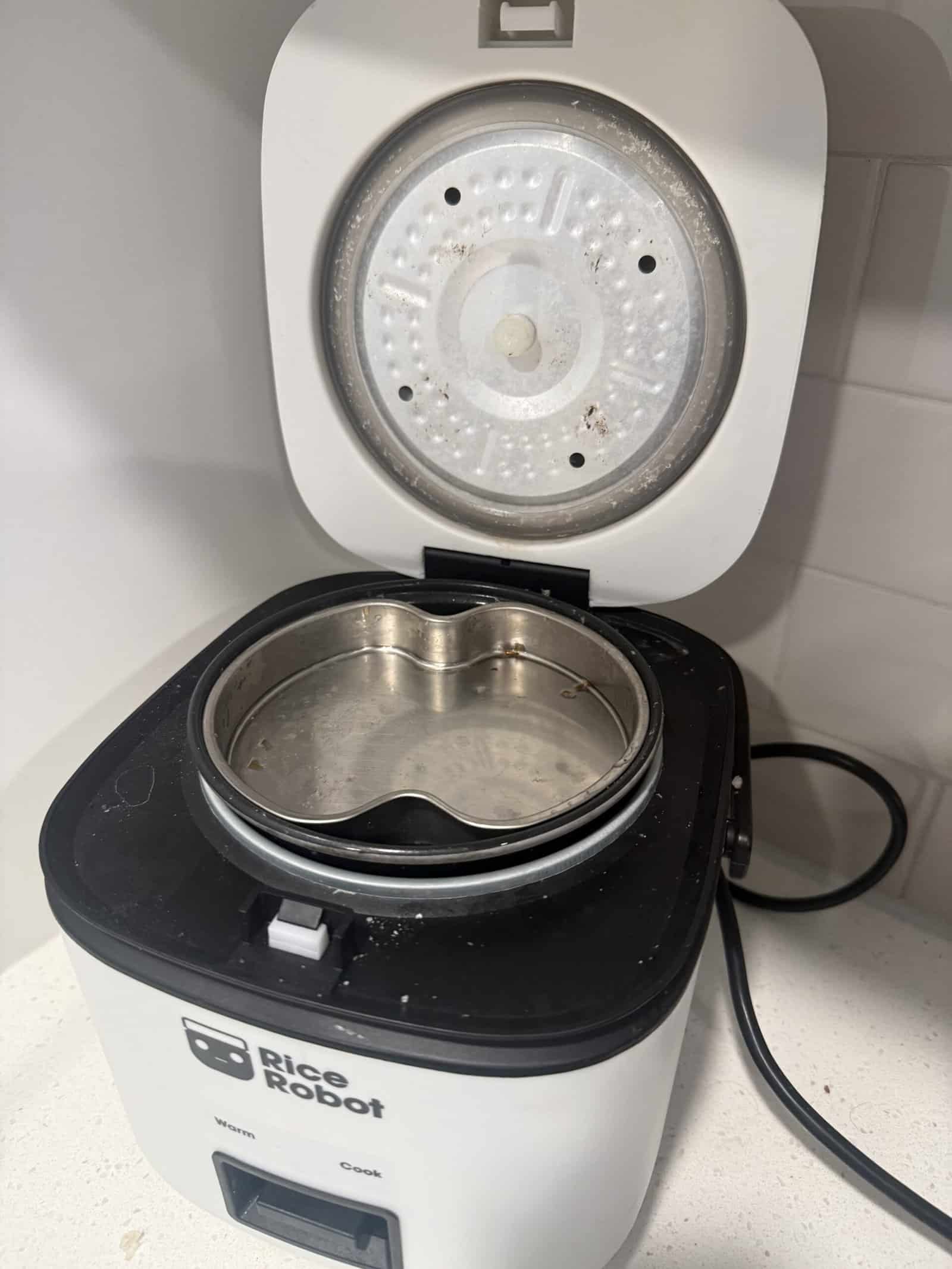
The steam that cooks your rice is doing nothing on its way out of the pot, and a steamer basket is simply the idea of putting it to work. The best rice cookers with steamer include a tray that sits above the rice, cooking vegetables, fish, or dumplings in the same cycle, so one machine and one plug produce a grain and a side. The catch is that both finish on the same clock, which shapes what the format is good at. Here are the picks and the honest limits, with the wider decision covered in our guide on how to choose a rice cooker.
Quick Verdict
A basic cooker with an included steamer basket covers most people, since the tray costs almost nothing and the function is genuinely useful for vegetables. Cooks who steam often should look at fuzzy logic models with a dedicated steam program, which lets timing be set independently rather than tied to the rice cycle. Tiered steamer sets suit anyone cooking multiple things at once, and dedicated food steamers remain better if steaming is the main event rather than a bonus.
Key Takeaways
- The steamer tray uses steam the rice cycle produces anyway.
- On basic cookers, rice and food finish on the same clock.
- A dedicated steam program gives independent timing.
- Vegetables suit the format best; delicate proteins need control.
- If steaming is your main cooking method, buy a real steamer.
How We Picked
We weighed the things that decide whether a steamer tray gets used or ends up in a drawer: tray material and how easy it is to clean, whether the basket sits at a sensible height above the rice, capacity relative to the cooker, whether the machine offers a separate steam program or simply relies on the rice cycle, and how well the lid seals with the tray in place. We also drew the honest line around the format, because a rice cooker with a basket is a two-for-one convenience rather than a replacement for a purpose-built steamer.
Basic Cooker with Included Basket (Best Overall)
A simple one-button cooker that ships with a small steaming tray sitting above the inner pot.
Why It Stands Out
The tray adds almost nothing to the price and turns an already useful appliance into a two-dish machine. This is the tier I use; mine came with a little steamer basket and I have steamed vegetables in it a few times, and it is a genuinely nice thing to have available even when it is not an everyday move. For most people this is all the steaming function they need.
Worth Knowing
No independent timing, so the vegetables cook as long as the rice does. Best for anyone wanting an occasional easy side.
Fuzzy Logic with Steam Program (Best Control)
A microprocessor cooker with a dedicated steam setting, letting you set a steam time separate from a rice cycle.
Why It Stands Out
Independent timing is the whole upgrade, and it is what turns the tray from a bonus into a real cooking method. You can steam without cooking rice at all, or run a proper steam cycle for food that would be ruined by a full rice program, which is the difference between using the basket sometimes and using it deliberately. Our roundup of fuzzy logic rice cookers covers the rest of what that tier buys.
Worth Knowing
Costs several times a basic cooker. Best for people who steam regularly, not occasionally.
Tiered Steamer Cooker (Best for Multiple Foods)
Cookers with two or more stacking steamer trays, letting you separate foods that want different space or cook at different rates.
Why It Stands Out
One tray is a side dish; two trays is a meal. Stacking lets you keep vegetables away from fish, or load more than a single basket holds, which suits households cooking full plates rather than a garnish. It is the format that gets closest to a real steamer while still making rice underneath.
Worth Knowing
Upper tiers get less steam than lower ones, so placement matters. Best for families steaming multiple items regularly.
Large Cooker with Steamer (Best for Families)
Family-capacity machines with a proportionally sized steaming tray, producing a big batch of rice and a full side at once.
Why It Stands Out
A large rice cycle generates plenty of steam, more than enough for a substantial tray of vegetables, so the format scales up well. On a weeknight where the table needs both a grain and a vegetable, one appliance covering both is worth real time, and our roundup of large rice cookers covers the capacity question.
Worth Knowing
Big footprint and a heavy pot when full. Best for families feeding four or more regularly.
Mini Cooker with Steamer (Best for One)
Small-capacity cookers that still include a tray, sized for a single serving of rice and a single portion of vegetables.
Why It Stands Out
Cooking for one is exactly where a two-in-one appliance earns the most, since the alternative is dirtying a pot to steam a handful of vegetables. It puts a complete plate on a dorm desk or a small counter from a single outlet, and our roundup of mini rice cookers covers the small-batch case in full.
Worth Knowing
Small tray, so portions are genuinely single-serve. Best for solo cooks, dorms, and small kitchens.
Stainless Steamer Tray Cooker (Best Build)
Machines whose steaming trays are stainless steel rather than plastic, often paired with better inner pots.
Why It Stands Out
The tray sits directly in the steam path for every cycle, which is hard duty for thin plastic, and a stainless tray simply lasts longer, cleans more easily, and avoids the question of plastic in a hot steam bath entirely. If you plan to use the function regularly, tray material stops being a detail.
Worth Knowing
Stainless trays get very hot, so plan on tongs or mitts. Best for frequent steamers who want durability.
Steamer Cookers at a Glance
| Type | Best for | Trade-off |
|---|---|---|
| Basic with basket | Occasional sides | No independent timing |
| Fuzzy logic steam program | Regular steaming | Costs several times more |
| Tiered trays | Multiple foods | Uneven steam by tier |
| Large with steamer | Families | Footprint and weight |
| Mini with steamer | Cooking for one | Single-serve portions |
| Stainless tray | Frequent use | Tray gets very hot |
How the Format Actually Works
The mechanics are simple and worth understanding, because they explain both the appeal and the limits. Rice cooks by absorbing water and then steaming, and that steam rises through the pot and vents out. A steamer basket intercepts it on the way, cooking whatever sits in the tray. Nothing extra is consumed, no additional heat is needed, and the only cost is a tray. The consequence is that on a basic cooker, the steaming time equals the rice time, which is generous for hard vegetables and often too long for delicate ones. That single fact is what separates the tiers: a dedicated steam program breaks the link and lets you choose the duration, which is why it costs more.
What to Steam and What Not To
Vegetables are the format’s natural home, and firm ones especially: carrots, broccoli, green beans, and potatoes hold up well to the long, unattended cycle a rice program gives them. Dumplings and buns do well too, since they want exactly the moist, sustained heat the pot produces. Where the format struggles is anything needing precision. Delicate fish overcooks in the time it takes rice to finish, and leafy greens collapse into a sad heap. On a basic cooker, the workaround is timing: add quick-cooking items partway through if your machine tolerates opening, or stick to foods that reward patience. For a broader sense of the range, our guide on what to cook in a rice cooker covers the rest of the machine’s repertoire.
Choosing a Cooker with a Steamer
Decide how often you will steam
Be honest here, because the answer picks your tier. Occasional vegetables mean a basic cooker with an included basket is plenty. Regular steaming justifies a machine with a dedicated program and independent timing, since fighting the rice clock every time gets old fast.
Check the tray, not just the cooker
Look at material, capacity, and how it sits above the pot. A tray too shallow to hold a real portion or too flimsy to survive the dishwasher will not get used, and the tray is the entire reason you chose this format.
Match the size to your plate
A mini cooker’s tray holds one person’s vegetables; a family machine’s holds a table’s. Sizing the steamer follows the same logic as sizing the cooker, which our guide on how to use a rice cooker and the capacity notes cover.
Think about cleaning
The tray adds a part to wash, and a steam-soaked basket with vegetable residue is not self-cleaning. Check that it is dishwasher safe if that matters to you, and our guide on cleaning a rice cooker covers the rest of the routine.
The Verdict
For most people, the basic cooker with an included steamer basket is the right answer, because the tray costs almost nothing and gives you a genuine second cooking method for free. That is the tier I use, and while the basket is not an everyday tool for me, it is a good thing to have when a vegetable side would otherwise mean another pot. Upgrade to a fuzzy logic model with a steam program only if you steam often enough that the shared clock genuinely irritates you, take tiered trays if you cook multiple items at once, and size the machine to your table. And if steaming is your primary cooking method rather than a bonus, be honest and buy a dedicated steamer; a rice cooker with a basket is a convenience, not a substitute.
Best Rice Cookers with Steamer FAQ
How does a rice cooker steamer basket work?
The basket sits above the inner pot and intercepts the steam the rice produces as it cooks, using heat that would otherwise vent away. Nothing extra is required, which is why the tray costs so little and why the function is essentially free once the machine has one.
Can you steam and cook rice at the same time?
Yes, that is the entire point of the format. On a basic cooker both finish on the same clock, so the vegetables cook as long as the rice does. Machines with a dedicated steam program let you set the steam time independently, which is the main reason to pay more.
What can you steam in a rice cooker?
Firm vegetables like carrots, broccoli, green beans, and potatoes suit it best, along with dumplings and buns that want sustained moist heat. Delicate fish and leafy greens tend to overcook on a basic cooker’s shared timing, so they need a machine with independent steam control.
Do all rice cookers come with a steamer basket?
No, it varies by model rather than by size or price tier. Mine came with one, but plenty of cookers do not, so check the listing rather than assuming. Baskets are occasionally available separately, though fit is not guaranteed across models.
Is a rice cooker steamer as good as a dedicated steamer?
For occasional vegetables alongside rice, it is genuinely good and far more convenient. For steaming as a primary method, a dedicated steamer wins on capacity, timing control, and tiered space. Buy the rice cooker version for the convenience, not as a replacement.
Can you steam vegetables without cooking rice?
Only easily on machines with a dedicated steam program, which run the heat without a rice cycle. On a basic cooker you would need water in the pot and the rice cycle running, which works but is clumsy and wastes the cycle.
How do you clean a rice cooker steamer basket?
Wash it after each use like any other part, since steam-soaked vegetable residue does not clear itself. Many trays are dishwasher safe, which is worth checking before you buy if you intend to use the basket often rather than occasionally.
Recommended Reading
- rice cookers under fifty dollars, where most basket models live.
- rice cookers for brown rice, the grain that needs a menu.
- why rice turns out mushy, for troubleshooting.
- a rice cooker versus an Instant Pot, the versatility question.
- delay timer models
See the complete guide: the comprehensive choosing a stand mixer guide.
