
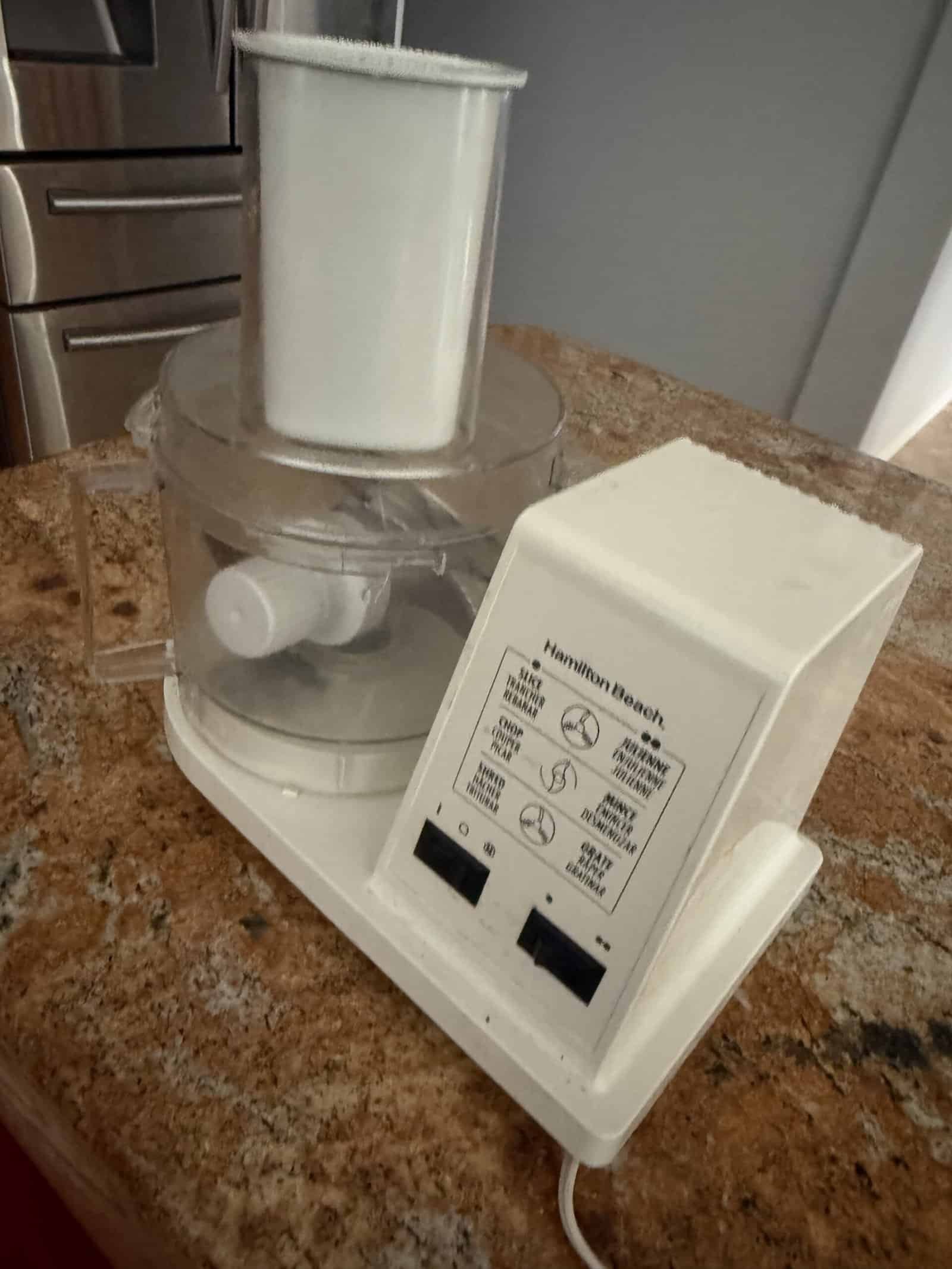
Almost always the lid. Food processors have a safety interlock that prevents the motor running unless the lid is fully locked into position, and a lid that looks closed is frequently not engaged.
Mine takes a couple of seconds to get going sometimes, and it has never been anything that was not an immediate fix or a case of the bowl being clogged. That is the normal version of this problem rather than a fault. Our roundup of food processors covers the machines.
Quick Answer
Reseat the lid until it clicks, check the bowl is locked to the base, and clear anything jamming the blade. Those three cover the overwhelming majority of cases.
Causes in Order of Likelihood
| Cause | What is happening |
|---|---|
| Lid not fully locked | Interlock switch is not depressed |
| Bowl not seated on the base | Second interlock on many models |
| Blade jammed by contents | Motor stalls or refuses to start |
| Overfilled bowl | Too much resistance for the motor |
| Thermal cutout after heavy use | Protection engaged, needs to cool |
| Worn interlock or motor | The genuine fault, and the rarest |
The Interlock Is the Answer Most Times
Food processors run a blade at high speed inside an open bowl, and the interlock exists so the motor cannot start with the lid off.
The mechanism is usually a tab on the lid that presses a switch in the handle or the base, and the switch has to be fully depressed rather than nearly.
A lid resting in place looks identical to a lid locked in place, which is why this is the most common cause and the least obvious one.
Most designs require twisting the lid until it clicks, and the click is the switch engaging rather than the lid seating.
Anyone whose processor suddenly will not start should reseat the lid before doing anything else, since it takes two seconds and resolves it most of the time. Our note on whether a food processor is worth it covers the design.
Two Interlocks, Not One
The bowl to the base
Many models will not run unless the bowl is twisted and locked down.
The lid to the bowl
The one people think of, and the one usually at fault.
Both have to be engaged
Either one out of position stops the motor completely.
Neither gives feedback
There is no light telling you which one is not seated.
Residue on the Interlock
The tab and switch are small, and dried food in either one stops the mechanism engaging fully even when everything is twisted correctly.
That happens most on the bowl handle where the tab sits, since it is an awkward spot that gets missed during cleaning.
The symptom is a processor that used to start reliably and now needs several attempts, which people read as the machine wearing out.
Cleaning the tab and the switch recess with a brush or a cotton swab is the fix, and it takes a minute.
That is also why this shows up gradually rather than suddenly, since residue accumulates over many uses rather than appearing overnight. Our note on cleaning a food processor covers the awkward spots.
When the Blade Is Jammed
A bowl packed with something dense stops the blade physically, and the motor either stalls immediately or will not start at all.
Mine has done this, and clogging is the one situation where a couple of seconds of hesitation makes sense rather than indicating a problem.
The fix is unplugging the machine, removing the lid, and clearing the obstruction by hand rather than repeatedly pressing the button.
Repeated attempts against a jam are what actually damages motors, since the motor draws maximum current while producing no rotation.
Working in smaller batches prevents it entirely, and it produces more even results anyway. Our note on what size food processor you need covers capacity.
Overfilling Is Its Own Problem
Maximum fill lines exist because the motor is sized for a specific load, and exceeding it produces resistance the machine was not built for.
Liquids have a lower fill line than solids on most models, since liquid climbs the bowl wall under rotation and escapes past the lid.
A processor that starts and immediately bogs down is describing a load problem rather than an electrical one.
Half-loads process faster in practice than one overloaded batch, because the blade actually moves the contents rather than pushing against a packed mass.
That is the single habit that prevents most of the situations in this article.
Thermal Protection After Heavy Use
Motors have thermal cutouts that shut them down when they overheat, and the machine then refuses to respond until it cools.
This shows up after extended continuous running, which is more common with dough or nut butters than with ordinary chopping.
The behavior is distinctive. The processor stops mid-task and will not restart at all for a period, then works normally later.
Waiting is the correct response rather than repeatedly pressing the button, since the protection is doing its job.
Repeated cutouts during ordinary light tasks are a different matter and suggest the motor is struggling with loads it should handle. Our note on blender versus food processor covers which handles what.
Power Before You Blame the Machine
The electrical checks are worth doing before concluding a processor has failed, and they take less time than looking up a replacement.
Kitchen outlets are frequently on a GFCI circuit, and a tripped GFCI elsewhere in the room kills power to outlets that show no sign of being affected.
Testing the same outlet with something else takes seconds and separates an appliance problem from a circuit one immediately.
Cords fail at the point where they enter the housing, since that is where repeated flexing concentrates, and damage there can be invisible from outside.
A processor that works intermittently when the cord is moved is describing a cord failure rather than anything internal, and that is one of the few faults here worth acting on quickly. Our roundup of immersion blenders covers simpler alternatives.
What to Check, In Order
Reseat the lid until it clicks
The most common cause by a wide margin.
Check the bowl is locked to the base
The second interlock people forget exists.
Clear anything jamming the blade
Unplug first, then clear by hand.
Clean the interlock tab and switch
Dried residue stops the mechanism engaging fully.
Common Mistakes to Avoid
Assuming the motor is dead
The interlock accounts for most cases, and it is free to check.
Pressing repeatedly against a jam
Maximum current with no rotation is what actually damages motors.
Overfilling past the line
Liquids have a lower fill line than solids on most models.
Ignoring gradual difficulty starting
That pattern usually means residue on the interlock rather than wear.
Recommended Reading
See our note on what the pulse button does, our roundup of food processors for shredding cheese, our roundup of blenders under 100, and a note on organizing your kitchen.
Food Processor FAQ
Why won’t my food processor turn on?
Almost always the lid interlock not fully engaged. A lid resting in place looks identical to a lid locked in place, which is why this is missed so often.
Does yours do it?
Occasionally it takes a couple of seconds to get going, and it has never been anything beyond an immediate fix or the bowl being clogged.
Where is the interlock?
Usually a tab on the lid pressing a switch in the handle or base. Many models have a second one requiring the bowl to be locked to the base as well.
Why did it work yesterday and not today?
Frequently dried residue on the interlock tab or in the switch recess. That builds up gradually and stops the mechanism engaging fully.
What if the blade is stuck?
Unplug it, remove the lid, and clear the obstruction by hand. Repeatedly pressing the button against a jam is what damages motors.
Can I overfill it?
Yes, and liquids have a lower fill line than solids on most models since liquid climbs the bowl wall under rotation.
Why did it stop mid-task?
Possibly a thermal cutout after extended running. The motor shuts down to protect itself and works normally once cooled. Waiting is the right response.
When is it actually broken?
When the lid and bowl are properly seated, nothing is jamming the blade, the interlock is clean, and it still will not run.
