
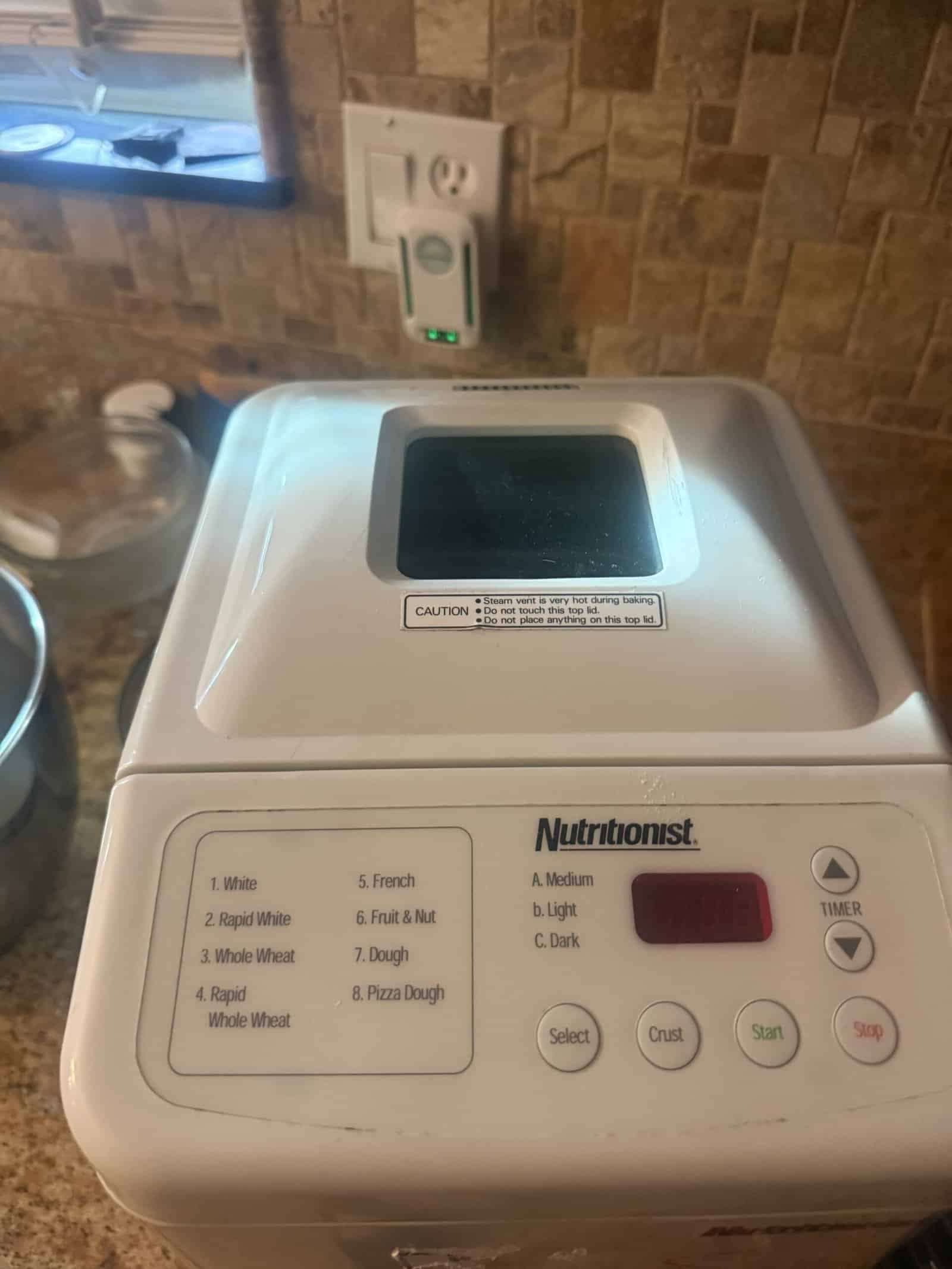
Add mix-ins late in the kneading stage, either when your machine beeps or roughly a few minutes before the knead ends, so the paddle folds them through the dough instead of grinding them into it. Knowing how to add mix-ins to a bread machine is mostly about that one timing decision, because everything else follows from it: added too early and your walnuts become walnut dust, added too late and they never distribute. For the full cycle this sits inside, see our guide to using a bread machine.
Quick Answer
Wait for the mix-in beep, or add during the last few minutes of the knead if your machine has no signal. Scatter ingredients around the edge of the pan rather than dumping them in one pile. Keep total mix-ins modest, since heavy loads weigh down the rise.
Key Takeaways
- Mix-ins go in late in the knead, not at the start with the base ingredients.
- Many machines beep to signal the moment; others require you to watch the clock.
- Scattering around the pan distributes better than dropping one clump.
- Sticky ingredients like cheese are easier by hand than through a dispenser.
- Too much added weight can produce a denser, shorter loaf.
Step by Step: Adding Mix-Ins
- Load the base recipe as normal. Liquids, flour, salt, sugar, and yeast go in per your machine’s stated order. Mix-ins are not part of this stage.
- Start the appropriate cycle. A fruit and nut program, if your machine has one, is built around a mix-in stage. A basic white or whole wheat cycle also works.
- Wait for the beep or the late knead. Most machines signal when to add. If yours does not, aim for the final few minutes of the kneading stage.
- Open the lid and scatter, do not dump. Distribute ingredients around the edge of the dough rather than in a single pile in the middle.
- Close the lid promptly. The cycle continues on its own; the remaining knead time folds everything through.
- Leave it alone for the rest of the cycle. Once mix-ins are in, there is nothing further to do until the loaf is finished.
When Exactly to Add Mix-Ins
The correct moment is late in the kneading stage, once the dough has come together into a ball but before kneading finishes. At that point the gluten structure is developed enough to hold additions, and there is still enough mixing left to distribute them.
Machines with a mix-in signal handle this for you. My own Nutritionist machine beeps during the knead, and that beep is the whole instruction: it is telling you the dough is ready to receive things. Machines without a signal require you to watch the cycle and judge it, which is less convenient but entirely workable.
If your machine has a fruit and nut program, that cycle is designed around this stage specifically. Our guide to choosing a bread machine covers which cycles matter.
What Happens If You Add Them Too Early
Ingredients added at the start go through the entire kneading process, and the paddle treats them the same way it treats dough. Nuts break into fragments, dried fruit smears, and cheese disappears into the crumb rather than staying in identifiable pockets.
The loaf still bakes, but the mix-ins stop being mix-ins and become part of the base. For fruit in particular, early addition can also affect the dough’s moisture as the pieces release liquid over a long knead.
This is the single most common mistake, and it is entirely avoidable by waiting.
How Much Can a Loaf Actually Take?
Less than most people expect. Mix-ins add weight without adding structure, and dough can only lift so much, so a heavily loaded loaf tends to rise lower and bake denser than the same recipe plain.
The practical approach is to start conservative and increase on later bakes once you have seen how your machine and recipe handle it. If a loaf comes out shorter and heavier than usual after you have added a generous quantity, the mix-ins are the likely cause rather than the yeast.
Our guide to why bread machine loaves come out dense covers the other causes worth ruling out first.
Dry Mix-Ins vs Sticky Mix-Ins
Dry, loose ingredients such as walnuts, pecans, seeds, raisins, and dried cranberries are the easiest category. They scatter cleanly, distribute evenly, and work in automatic dispensers as well as by hand.
Sticky ingredients behave differently. Cheese, fresh fruit, and anything oily clings together and to whatever it touches. These are the ingredients where hand-adding beats a dispenser outright, because a hopper struggles to release them cleanly while your hand does not care.
The jalapeno cheese bread I make falls squarely in this category, and adding it by hand at the beep works without any trouble. Our guide to bread machines with automatic dispensers covers the automated alternative and its limits.
How I Do It in My Own Kitchen
The Beep Is the Whole System
My machine has no automatic dispenser, so my process is simple: the machine beeps during the knead, I open the lid, and I add the jalapeno and cheese for the jalapeno cheese bread I like to make. The mix-in cycle is exactly how that loaf gets made.
Because I am nearly always nearby when the machine is running, the beep has never been an inconvenience. Baking is something I plan rather than do spontaneously, since the machine lives in a cabinet and has to come out first, and if I have gone to that effort I am around for the rest of the cycle.
What This Does and Does Not Cover
My experience here is with cheese and peppers in a machine that signals the moment. I have not run mix-ins on a delay timer, which is the one scenario where hand-adding is impossible rather than merely inconvenient. If you want to load a machine at night and wake up to a fruit and nut loaf, an automatic dispenser is the only route.
Our guide to bread machines with viewing windows covers checking the dough at the same stage.
Preparing Ingredients Before They Go In
A few small preparations make distribution noticeably better. Chopping large nuts to a roughly uniform size stops big pieces sinking while small ones stay suspended. Patting fresh or wet ingredients dry limits the extra moisture entering the dough late in the process.
Some bakers toss dried fruit lightly in flour before adding, which helps pieces separate rather than clumping into a single mass. None of this is essential, but it improves how the finished crumb looks.
Our guide to making white bread in a bread machine covers the base loaf these build on.
Recommended Reading
- Using a bread machine step by step
- Bread machines with automatic dispensers
- Why bread machine loaves come out dense
- Making cinnamon rolls in a bread machine
- The best bread machines overall
- Why bread does not rise
Related: you need the mix in beep on a bread machine.
Frequently Asked Questions
When do you add mix-ins to a bread machine?
Late in the kneading stage, either when the machine beeps or during the final few minutes of the knead if there is no signal. By that point the dough has formed a ball and there is still enough mixing left to distribute additions. Adding at the start means the paddle grinds them into the dough instead.
What is the mix-in beep on a bread machine?
It is an audible signal telling you the dough has reached the point where nuts, fruit, cheese, or other additions should go in. Not every machine has one, but many do, and on those it removes any guesswork about timing. Machines with automatic dispensers handle the same moment without needing you present.
Can you add cheese to a bread machine?
Yes, and adding it by hand at the mix-in stage generally works better than using a dispenser, since cheese is sticky and tends to cling inside a hopper. I add jalapeno and cheese to my own machine at the beep without any difficulty. Shredded cheese distributes best when scattered around the pan rather than dropped in one clump. For what to actually add, our roundup of mix-ins for bread machines covers which ingredients survive kneading.
How much mix-in can you put in bread machine dough?
Less than you might think, because mix-ins add weight without adding structure and a heavily loaded dough rises lower. Starting conservative and increasing on later bakes is the practical approach. If a loaf comes out unusually short and dense after a generous addition, the quantity is the likely cause.
Why did my nuts turn to powder in the bread machine?
They were almost certainly added at the start rather than at the mix-in stage. The paddle kneads for a long time and treats anything present the same way it treats dough, so nuts break down into fragments. Waiting until late in the knead preserves them as recognizable pieces.
Do you need a machine with a dispenser to make fruit and nut bread?
Only if you will not be present when the mix-in stage arrives. If you are home while the machine runs, adding by hand at the beep works perfectly well and handles a wider range of ingredients than a hopper can. A dispenser becomes necessary when you are using a delay timer or leaving the house.
Should you stop the machine to add mix-ins?
No. Open the lid, add the ingredients, and close it again while the cycle continues running. The remaining knead time is what distributes them, so interrupting the program works against you. Machines that beep are designed around exactly this brief interruption.
Keeping mix-ins within reach is a storage question as much as a technique one. Arranging a baking station covers where to put them.
Every machine has the same paddle problem. the paddle stuck in the loaf covers what to do about it.
