
An automatic dispenser is a small hopper in the lid that releases nuts, dried fruit, seeds, or cheese into the dough at the correct point in the knead, without you being in the room. The best bread machines with automatic dispensers solve a specific problem: mix-ins have to go in late, and late means being present at a moment the machine chooses rather than one you choose. Whether that is worth paying for depends entirely on whether you are home when your bread machine beeps. For the broader decision, see our guide to choosing a bread machine.
Quick Verdict
Buy a dispenser model if you run the machine on a delay timer or leave the house while it works, since that is the case manual adding cannot cover. Skip it if you are usually nearby, because adding by hand at the beep works fine and costs nothing. Hopper capacity and what it handles matter more than having one at all.
Key Takeaways
- Mix-ins go in late so the paddle does not pulverize them during the main knead.
- A dispenser handles that timing automatically; a mix-in beep asks you to do it.
- Dispensers matter most with delay timers and overnight baking.
- Sticky ingredients like cheese and fresh fruit often clog hoppers.
- Adding by hand at the beep works well if you are home.
How We Picked These Bread Machines
We looked first at what the dispenser actually handles, since hoppers vary considerably in whether they cope with anything beyond dry nuts and raisins. A dispenser that only manages dry ingredients solves a narrower problem than the feature name suggests.
We then considered hopper capacity against typical loaf sizes, because a small hopper means splitting mix-ins between the dispenser and hand-adding, which defeats the purpose.
Timing control mattered third. Some machines release at a fixed point in the cycle, others adjust by program. Every pick is a widely available line, and product descriptions stay in research-voice; first-person notes reflect only my own machine, which has a mix-in beep rather than a dispenser.
Full-Feature Machine With Nut and Fruit Dispenser
Why It Stands Out
The standard implementation is a lidded hopper that tips its contents into the pan partway through the knead. For dry mix-ins like walnuts, raisins, and seeds it works reliably and removes the need to be present.
This is the version most people mean when they shop for the feature, and it does the job it advertises.
Worth Knowing
Dry ingredients are its comfort zone. Anything sticky, oily, or moist is a different proposition. It is the pick for classic fruit and nut loaves.
Best for bakers making raisin, walnut, or seed breads on a timer. Skip it if your mix-ins are cheese or fresh ingredients.
Machine With Large-Capacity Hopper
Why It Stands Out
A bigger hopper holds enough for a full-size loaf’s worth of mix-ins without splitting the load. Small hoppers force you to add some by hand anyway, which means you are still tied to the beep.
Capacity is the specification that decides whether the feature genuinely frees you from the machine.
Worth Knowing
Larger hoppers add bulk to the lid and one more component to clean. Our guide to the best bread machines overall covers the wider field.
Best for full-size loaves with generous mix-ins. Skip it if you add small amounts.
Programmable Machine With Timed Dispenser Release
Why It Stands Out
Machines that release the hopper at a point tied to the specific program handle different breads more sensibly than a fixed-timing dispenser. Whole wheat and white cycles knead for different durations, and mix-ins want to land late in either case.
Programmable release is the more thoughtful version of the feature.
Worth Knowing
More programming means more to learn and more that can be set wrong. Our guide to bread machines for sourdough covers custom cycle needs.
Best for bakers running several different programs. Skip it if you make one kind of loaf.
Machine With Delay Timer and Dispenser
Why It Stands Out
This is the pairing that makes the dispenser genuinely valuable. A delay timer means the machine starts hours after you load it, so you are definitionally not there for the mix-in moment. Without a dispenser, timer baking and mix-ins are incompatible.
If you want to wake up to fruit and nut bread, this combination is the only way to do it.
Worth Knowing
Delay baking has its own considerations around ingredients sitting before the cycle begins. It is the pick for overnight and scheduled baking.
Best for timer baking with mix-ins. Skip it if you always bake while you are home.
Compact Machine With Dispenser
Why It Stands Out
A smaller machine with a dispenser keeps the automation while cutting the footprint, which matters when the machine gets stored between bakes rather than living on the counter.
Storage friction is a real determinant of how often a bread machine gets used.
Worth Knowing
Compact machines pair small hoppers with small loaves, so capacity is proportionally limited. Our guide to whether bread machines are worth it covers the storage question honestly.
Best for small kitchens wanting automation. Skip it if you bake large loaves.
Machine With Mix-In Beep Instead of a Dispenser
Why It Stands Out
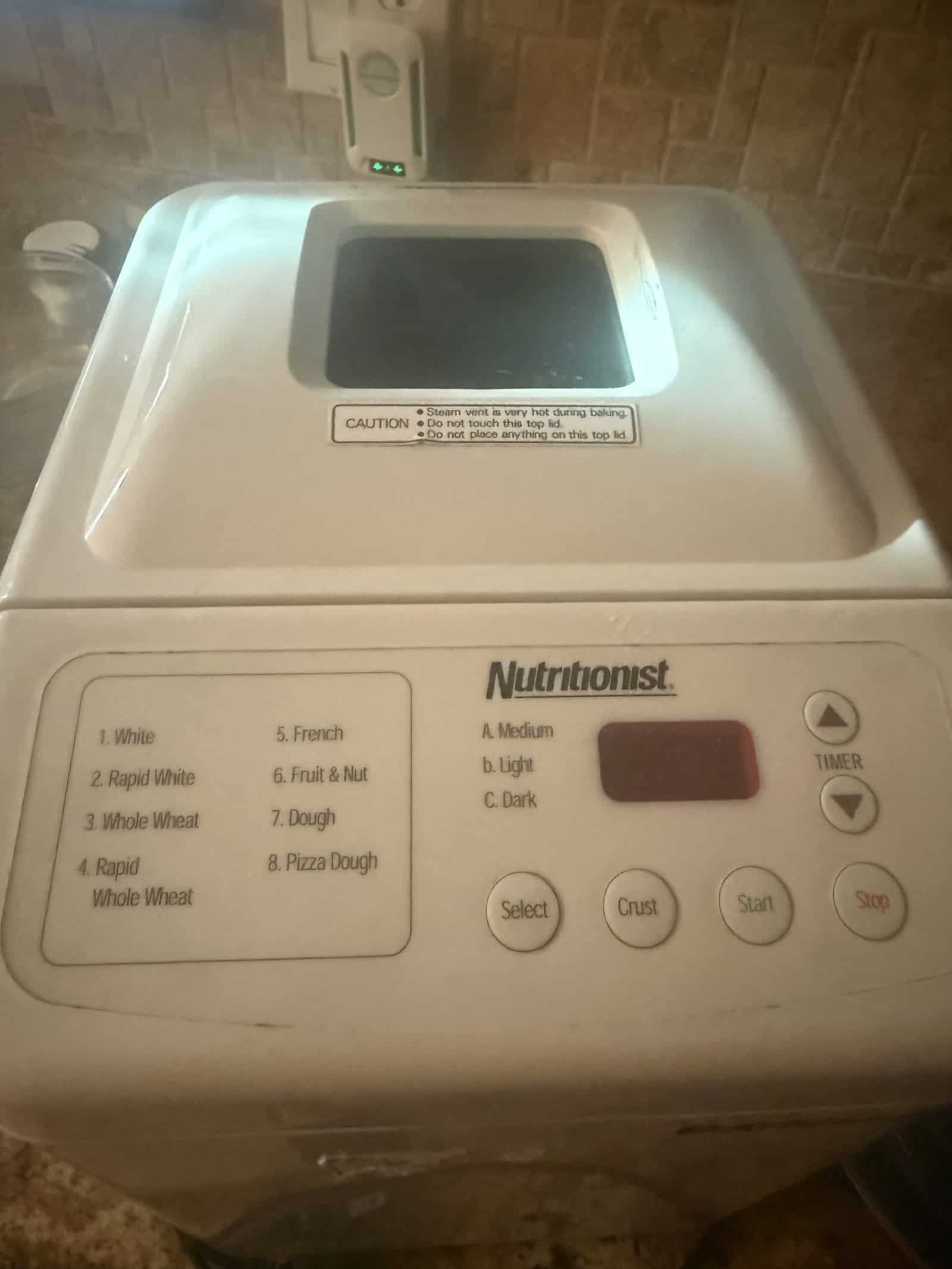
The alternative to a dispenser is a machine that simply beeps when it is time to add things, and you drop them in yourself. This is what my own machine does, and for someone who is home while it runs, it works perfectly well.
It also handles ingredients a hopper cannot, because your hand is not bothered by cheese sticking to it.
Worth Knowing
You have to be within earshot at the right moment, which rules out timer baking and leaving the house. Our guide to bread machines for beginners covers simpler machines.
Best for people who bake while at home. Skip it if you want to load and leave.
Dispenser Machines at a Glance
| Type | Handles | Timer-friendly | Best for |
|---|---|---|---|
| Standard dispenser | Dry mix-ins | Yes | Fruit and nut loaves |
| Large hopper | Dry, larger volume | Yes | Full-size loaves |
| Programmable release | Dry, by program | Yes | Multiple bread types |
| Dispenser plus delay timer | Dry mix-ins | Best | Overnight baking |
| Compact dispenser | Dry, small volume | Yes | Small kitchens |
| Mix-in beep only | Anything | No | Baking while home |
Why I Add Mix-Ins by Hand
My Machine Beeps and I Am Usually There
My Nutritionist machine has no automatic dispenser. It beeps during the knead, and that is when I add the jalapeno and cheese for the jalapeno cheese bread I make. In practice that works fine, because I am nearly always in the kitchen or nearby when it is running.
Baking is something I plan rather than do on a whim, since the machine lives in a cabinet and has to come out first. If I am going to the effort of getting it out, I am around for the beep.
Cheese Is Exactly What a Hopper Struggles With
There is a second reason hand-adding suits what I make. Cheese is sticky, and sticky is the category of ingredient most likely to cling to the inside of a dispenser rather than dropping cleanly into the dough. A hopper that handles walnuts and raisins reliably may not handle shredded cheese at all.
So for my particular loaf, the automation would not obviously help even if I had it.
Where I Would Want One
The case I do not have covered is timer baking. If I wanted to load the machine at night and wake up to a finished fruit and nut loaf, hand-adding is simply impossible, and no amount of being organized fixes that. That is the situation where a dispenser stops being a convenience and becomes the only option.
Our guide to using a bread machine covers the cycle timing this depends on.
What to Look For in a Dispenser Machine
What It Can Actually Dispense
Dry, loose ingredients are what hoppers do well. Sticky, oily, or moist ingredients are where they fail, either clinging inside or clumping. Match the feature to what you actually put in your bread rather than to the feature list.
Hopper Capacity
A hopper too small for a full loaf’s mix-ins means you add some by hand anyway, which puts you back at the beep. Check capacity against how generously you like your bread studded.
Release Timing
Mix-ins go in late so the paddle does not grind them to dust during the main knead. Machines that adjust release timing by program handle different breads better than fixed-timing ones. Our guide to making cinnamon rolls in a bread machine covers a recipe where timing matters.
Cleaning
A hopper is one more component that needs cleaning, and sticky residue in a dispenser is harder to reach than a bread pan. Our guides to loaf pans and bread boxes cover what happens after the bake.
Dispenser vs Adding by Hand
The Case for Automation
It removes a timing dependency entirely. You load and walk away, which is the whole premise of a bread machine in the first place, and it is the only way to combine mix-ins with delay-timer baking.
The Case for Doing It Yourself
It costs nothing, handles any ingredient including sticky ones, and gives you a moment to look at the dough while the lid is open. If you are home while the machine runs, the beep is a minor imposition rather than a real inconvenience. That is why I have never felt the absence of a dispenser on my own machine.
What Trips People Up
Expecting a Hopper to Handle Cheese
Sticky ingredients cling inside dispensers. Dry nuts and fruit are the reliable use case.
Buying a Dispenser and Baking While Home Anyway
If you are always nearby, the beep works and the feature goes unused. Be honest about your baking habits.
Ignoring Hopper Size
A small hopper means hand-adding the remainder, which puts you back where you started.
Adding Mix-Ins Too Early
Ingredients added at the start get pulverized by the paddle during the main knead. Late is the point.
Recommended Reading
- How to choose a bread machine
- Using a bread machine step by step
- Bread machines for beginners
- Are bread machines worth it
- Making white bread in a bread machine
- Bread machine versus stand mixer
Frequently Asked Questions
What does an automatic dispenser on a bread machine do?
It holds nuts, dried fruit, seeds, or similar ingredients in a hopper in the lid and releases them into the dough partway through the knead. Mix-ins go in late so the paddle does not grind them up during the main mixing. The dispenser handles that timing without you needing to be present.
Do you need an automatic dispenser?
Only if you are not around when the machine reaches the mix-in stage. Machines without one simply beep and you add ingredients by hand, which works fine if you are home. My own machine beeps and I add jalapeno and cheese myself, and I have never found it inconvenient.
Can a bread machine dispenser handle cheese?
Usually not well. Hoppers are designed for dry, loose ingredients like nuts and raisins, and sticky items such as shredded cheese tend to cling inside rather than dropping cleanly. For cheese breads, adding by hand at the beep is generally more reliable regardless of what the machine offers.
When do mix-ins get added in a bread machine?
Late in the kneading stage, so the paddle does not pulverize them during the main mix. Machines signal this with a beep or handle it via the dispenser. Adding at the start typically results in fruit and nuts broken down into the dough rather than staying whole.
Can you use a dispenser with a delay timer?
Yes, and this is the strongest argument for the feature. Delay baking means the machine starts hours after loading, so you cannot possibly be there for the mix-in moment. Without a dispenser, timer baking and mix-in breads are effectively incompatible.
Are dispenser machines harder to clean?
They add one more component, and residue inside a hopper is more awkward to reach than a bread pan. Dry ingredients leave little behind, but anything sticky that has clung inside needs attention. If cleaning simplicity matters to you, a machine with a mix-in beep has one fewer part to maintain.
A machine is one part of a working setup. Organizing a space for regular baking covers the counter and storage side.
