
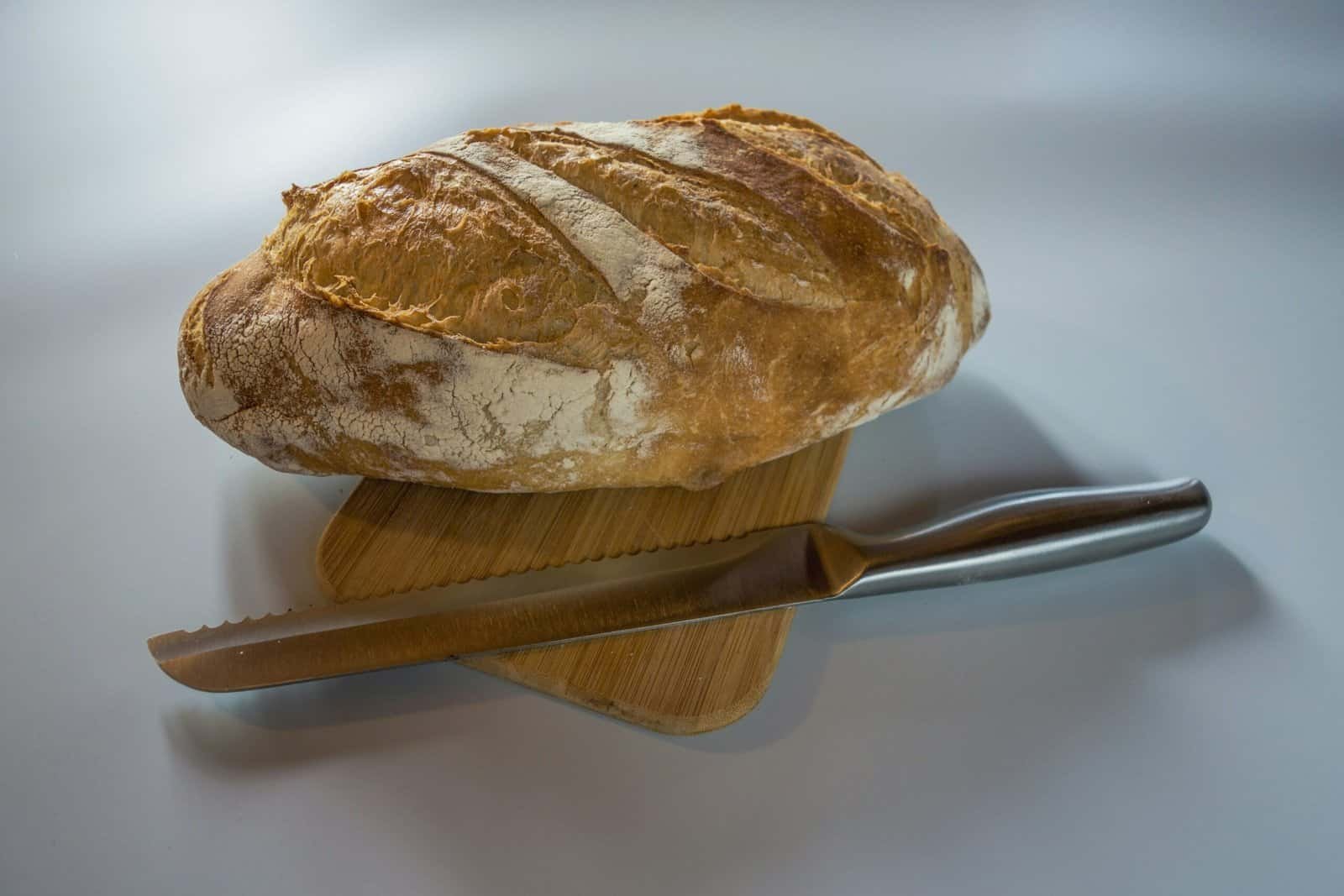
Bread lames and scoring tools cut a controlled slit in the top of a proofed loaf so the dough expands where you decided rather than tearing along its weakest seam. A sharp blade held at a shallow angle is what separates a raised ear from a ragged split, and that comes down to the tool more than the technique. Our roundup of bread proofing baskets covers the step before this one.
Scoring fails for boring reasons. A dull blade drags, a thick handle blocks your sightline, and a blade fixed at the wrong angle cuts straight down when it should be slicing under the surface.
Quick Verdict
Buy a curved lame with replaceable razor blades. The curve is what lifts an ear, replaceable blades keep it sharp for pennies, and a slim handle lets you see the cut line. Straight blades suit scoring patterns and baguettes. Keep a spare pack of blades, because a lame is only as good as the edge on it.
Key Takeaways
- Curved blades lift an ear; straight blades cut clean lines and patterns.
- Replaceable razor blades beat fixed blades on both cost and sharpness.
- Angle matters more than pressure, and shallow beats deep.
- A wet blade drags less through sticky high-hydration dough.
- The blade goes dull long before it looks dull.
How We Picked
This is a research-based roundup rather than a hands-on bake test. Selections rest on published specifications, stated materials, baker consensus and consistent user-reported feedback rather than on our own measurement.
The criteria that mattered were blade retention that holds under a stroke, a handle that keeps knuckles clear of the dough, compatibility with standard replaceable razor blades, and a cover so the thing can live in a drawer safely.
Materials were treated as a filter. A handle that swells or splinters after contact with wet dough was excluded regardless of how it looked.
Scoring is a skill as much as a purchase, so every pick here assumes you will practice with it. No tool compensates for under-proofed dough.
Curved Lame with Replaceable Blades
Why It Stands Out
This is the default answer for anyone baking round or oval loaves. The blade bows into a shallow arc, which means the cutting edge enters the dough at an angle rather than straight down.
That angle is what creates an ear. The blade undercuts a flap of skin, and oven spring pushes that flap up and open instead of splitting the loaf sideways.
Worth Knowing
Blades mount by threading a standard double-edge razor onto posts and bending it into the curve. Getting the bend even takes a couple of attempts, and an uneven bend cuts unevenly.
Replace the blade far sooner than instinct suggests. A blade that drags is the most common cause of a torn score, and a fresh one costs almost nothing.
This suits sourdough and any free-form loaf where an ear is the goal. Skip it if you bake mostly in tins, where a straight cut does everything you need.
Straight Lame for Patterns and Baguettes
Why It Stands Out
A straight blade holds a flat razor without a curve, and it cuts a cleaner line because nothing is fighting the geometry. For decorative scoring, wheat stalks, leaves, cross-hatching, straight is the only sensible choice.
Baguettes want straight too. The classic overlapping cuts run nearly parallel to the loaf, and a curved blade makes that awkward.
Worth Knowing
Straight blades will not produce a dramatic ear on a boule. That is geometry rather than quality, so owning both shapes is common among people who bake regularly.
Depth control gets harder on decorative work, since fine detail wants a very shallow pass. Practice on a scrap of chilled dough before committing on a loaf you care about.
This suits pattern work and long loaves. Skip it as your only lame if round sourdough is most of what you bake.
Wooden Handle Lame for Grip
Why It Stands Out
Wood gives a warmer, less slippery grip than plastic, which matters when your hands are floury. The handles are usually thicker, and some people score more confidently with something substantial to hold.
The better ones are finished rather than raw, so flour and moisture wipe off instead of soaking in.
Worth Knowing
Thickness is the trade. A chunky handle sits between your eye and the cut line, and scoring accurately means seeing exactly where the blade is entering.
Check that the wood is sealed. Unfinished handles absorb moisture from dough and hands, and they roughen over time.
This suits bakers who find slim metal handles fiddly. Skip it if you score fine patterns, where sightline beats grip.
Scoring Knife for Enriched and Soft Doughs
Why It Stands Out
Not every dough wants a razor. Enriched doughs, brioche, milk breads and anything with butter or egg are softer and stickier, and a razor tends to drag rather than slice.
A thin, very sharp knife with a bit of length works better on these. It slices rather than parts, and the extra blade length lets you draw through in one motion.
Worth Knowing
Sharpness is the whole thing here, and a serrated bread knife is the wrong tool because the teeth catch the skin. Our roundup of bread knives covers slicing after the bake, which is a different job entirely.
Chill the dough briefly before scoring if it is very soft, since cold skin cuts more cleanly than warm skin.
This suits enriched loaves and shaped buns. Skip it for lean high-hydration sourdough, where a razor is sharper than any knife you own.
Replacement Blade Multipack
Why It Stands Out
The consumable is the point. Lames take standard double-edge razor blades, and a large pack costs very little while removing every excuse for scoring with a dull edge.
Buying in bulk also changes behavior. When blades are scarce people stretch them; when a pack sits in the drawer they get swapped when they should.
Worth Knowing
Check that the blades are the standard double-edge size with the central slots, because that is what lame posts are built around. Single-edge blades do not mount on most designs.
Store them in the original dispenser rather than loose in a drawer, and fold used blades back into the paper before binning them.
This suits anyone who already owns a lame. Skip it only if your lame uses a proprietary blade, which a few designs do.
Scoring Kit with Case and Spare Blades
Why It Stands Out
Kits bundle a lame, a handful of blades and a case, which solves the storage problem that loose razors create. A bare blade rattling around a utensil drawer is a genuine hazard.
They also tend to include both blade shapes, so you can find out which one suits your baking without buying twice.
Worth Knowing
Kit quality varies more than single tools, because the price has to cover several items. Judge it on the lame itself and treat the extras as a bonus.
A case that closes properly matters more than the number of accessories. Check that the cover clips rather than slides off.
This suits a first purchase or a gift for someone starting sourdough. Skip it if you already have a lame you like, since the blades alone are cheaper.
Bread Lames and Scoring Tools at a Glance
| Type | Best for | Trade |
|---|---|---|
| Curved lame | Ears on round loaves | Poor at fine patterns |
| Straight lame | Baguettes, decorative work | No dramatic ear |
| Wooden handle | Grip with floury hands | Blocks the sightline |
| Scoring knife | Enriched, sticky doughs | Duller than a razor |
| Blade multipack | Keeping an edge | Needs a lame already |
| Kit with case | Starting out safely | Extras vary in quality |
How to Choose Bread Lames and Scoring Tools
Match the blade shape to your loaf
Round and oval loaves where you want an ear call for a curve. Baguettes and pattern work call for straight. If you bake both, owning both costs less than most single kitchen gadgets.
Insist on replaceable blades
A fixed blade cannot be restored to razor sharpness at home, and scoring depends entirely on that edge. Replaceable blades turn sharpness into a consumable rather than a countdown.
Check the handle against your sightline
You need to see where the blade meets the dough. Slim handles win on visibility, thicker ones win on grip, and there is no universally right answer.
Look for a cover
An exposed razor in a drawer is the one genuine safety issue in this category. A cover, sheath or case should be part of the purchase rather than an afterthought.
Lame or Kitchen Knife
When the lame wins
Lean doughs with a taut, slightly tacky skin, which covers most sourdough and rustic loaves. A razor parts that skin without dragging it, and no household knife is as sharp as a fresh razor blade. The angle a lame lets you hold is the other half of it.
When a knife is fine
Tin loaves, enriched doughs and anything you are scoring for looks rather than for oven spring. A very sharp thin knife handles those, and if you bake mostly in tins there is no strong case for a dedicated tool. It is worth knowing which camp you are in before buying, and our comparison of bread machine against oven baking is a good marker, since machine loaves are not scored at all.
What Trips People Up
Scoring too deep
A deep cut releases gas rather than directing it, and the loaf spreads instead of rising. Shallow and confident beats deep and careful, and the blade should be slicing under the skin rather than into the crumb.
Holding the blade upright
A vertical cut gives a split, not an ear. Laying the blade over so it runs almost along the surface is what undercuts a flap, and it feels wrong the first several times you do it.
Scoring under-proofed dough
Dough that has not proofed enough tears no matter how sharp the blade. If your scores keep going ragged, the problem is upstream, and our note on why a loaf turns out dense covers the same root cause.
Hesitating mid-stroke
One committed motion beats a slow careful one. Stopping partway lets the skin grab the blade, which is what produces a stuttered, torn line.
Recommended Reading
See our roundup of loaf pans for tin baking, our roundup of sourdough starter jars, our roundup of bread machines for sourdough if you want the dough cycle without the kneading, our note on using the dough cycle then baking in the oven, and our roundup of baking sheets.
Bread Lames and Scoring Tools FAQ
Do I really need bread lames and scoring tools, or will a knife do?
A very sharp thin knife works on soft and enriched doughs. On lean sourdough with a taut skin, a razor is meaningfully sharper than any knife in a home kitchen, and the shallow angle a lame allows is what produces an ear rather than a split.
What angle should the blade be at?
Close to flat against the surface, so the blade slices under the skin rather than down into it. Somewhere near forty-five degrees or shallower is the usual target, and beginners almost always hold it too upright.
How deep should a score be?
Shallow. You are cutting through the skin and just into the dough beneath, not into the middle of the loaf. Too deep vents the gas you were trying to direct, and the loaf flattens.
How often should I change the blade?
Sooner than you think. A blade that drags or catches is finished even if it looks fine, and since replacements cost almost nothing there is no reason to stretch one.
Why does my blade stick to the dough?
High hydration dough is tacky, and a dry blade grabs it. Dipping the blade in water before each cut, or wiping it between cuts, removes most of the drag.
Can I score dough straight from the fridge?
Yes, and cold dough is generally easier to score cleanly because the skin is firmer. Many people retard their dough overnight partly for that reason.
Does scoring actually change the bake?
It changes where the loaf opens. Unscored dough still expands, it just bursts at whatever point is weakest, which is usually the side or the base. Scoring moves that opening somewhere you chose.
