
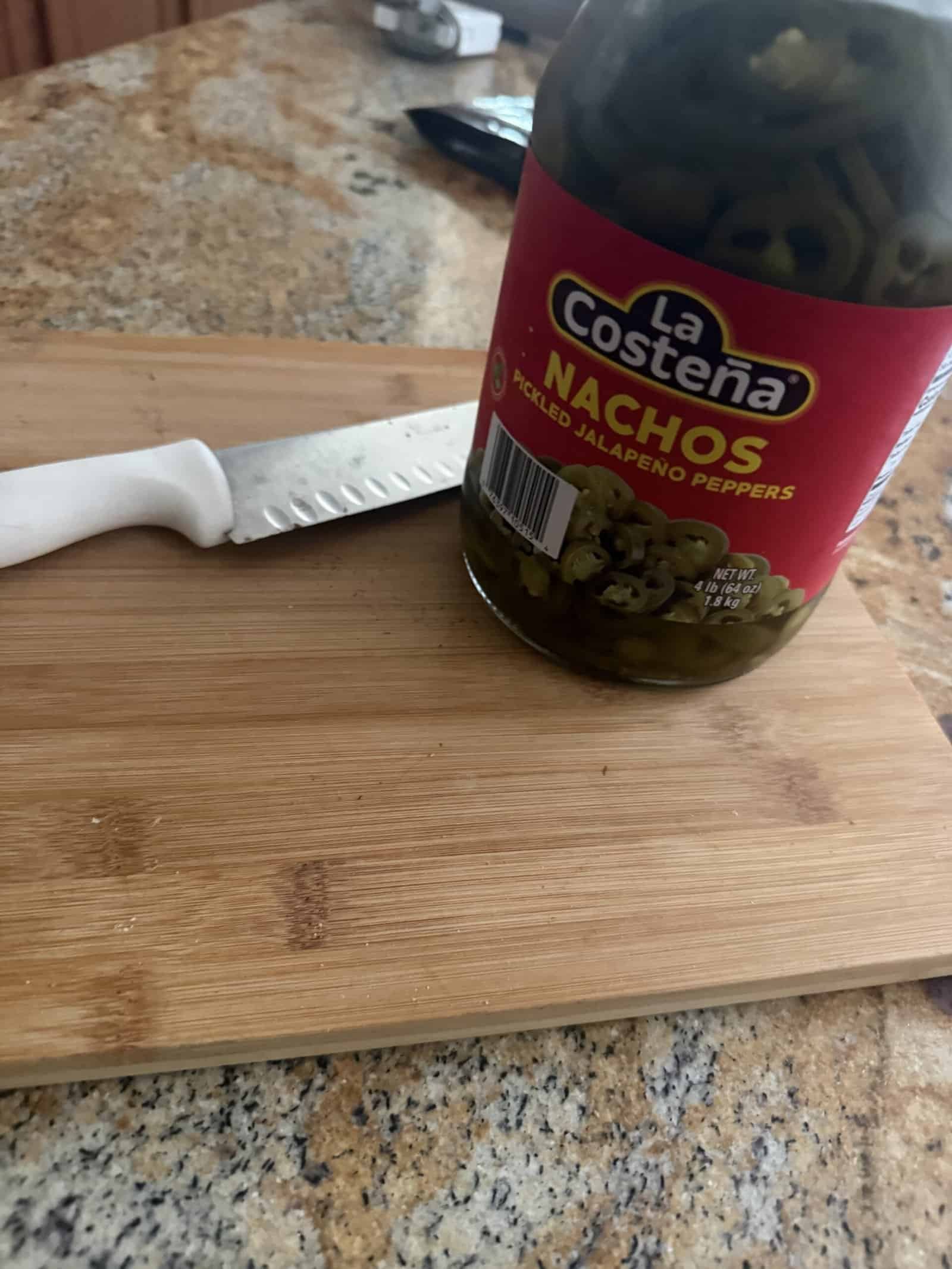
The reliable way to chop jalapeños without burning your hands is to keep the oil off your skin in the first place, using gloves or a tool, because once capsaicin is on you it does not rinse off with water. Learning how to chop jalapeños without burning your hands is mostly about accepting that plain handwashing is the weakest link in the chain, not the fix.
Quick Answer
Wear disposable gloves, or do the chopping in a food processor so your hands barely touch the flesh. If you go bare-handed, wash with dish soap and warm water immediately and repeatedly, avoid your eyes for the rest of the evening, and expect that hotter peppers than jalapeños will get through anyway.
Key Points
- Capsaicin is an oil, so water alone moves it around rather than removing it.
- The membrane and seeds carry far more of it than the flesh.
- Gloves are the only method that works regardless of pepper heat.
- Onset is delayed, so you often notice an hour after cooking.
- Jalapeños are mild enough that most people get away with bare hands.
Why It Burns and Why Rinsing Fails
Capsaicin is the compound that makes chiles hot, and it is oil soluble rather than water soluble. Running your hands under the tap spreads it across more skin instead of lifting it.
It also binds to skin readily and does not evaporate. That is why the sensation builds slowly over an hour or two and then persists for several more.
The distribution inside the pepper is uneven and not where most people assume. The white pith or membrane holds the highest concentration, the seeds carry it by contact with that membrane, and the flesh is the mildest part.
So deseeding with your thumb is the single most exposing thing you can do, and it is exactly the step most home cooks do bare-handed.
The Methods, Ranked
| Method | How well it works | Trade |
|---|---|---|
| Disposable gloves | Complete protection | Need to have them in |
| Food processor | Very good, minimal contact | Cleaning the bowl |
| Fork and knife, no hands | Good for slicing, poor for deseeding | Fiddly |
| Oil on hands first | Partial, oil dissolves oil | Slippery knife work |
| Wash immediately with soap | Partial, better than water alone | Timing dependent |
| Bare hands, rinse with water | Poorest | Spreads it |
Why I Have Never Had the Burn
I do jalapeños in my food processor far more often than I do anything else in it, including cheese. That turns out to be most of the answer.
Doing them in the processor means I barely handle them. The peppers go in, the machine does the work, and my hands are on the lid and the switch rather than on the pith.
The other half is that I wash my hands a lot while cooking anyway, which is a habit rather than a strategy. Between the two, I have never burned my hands on chiles.
That is worth stating as what it is. I have not solved this problem, I have mostly avoided being exposed to it, and those are different claims. Someone dicing a dozen jalapeños by hand for salsa is in a situation my routine says nothing about.
I also cannot speak to hotter peppers. Jalapeños sit at the mild end, and habaneros or ghost peppers are a different proposition entirely, where gloves stop being optional.
Our roundup of food processors under 75 covers the machines, and our explainer on what the pulse button does is the relevant control for chiles, since a continuous run turns them to paste.
Gloves Are the Only Complete Answer
Disposable nitrile or vinyl gloves cost very little and remove the problem rather than managing it. Every professional kitchen handling large volumes of chiles uses them.
The reason home cooks resist is that gloves feel excessive for one pepper. That is fair for one jalapeño and stops being fair at five, or at any pepper hotter than a serrano.
Take them off carefully, since rolling a glove inside out onto your wrist defeats the point. Peel from the cuff and turn it inside out as it comes.
Wash your hands afterward anyway. Gloves can have pinholes, and confidence is how people get caught.
If You Are Going Bare-Handed
Cut on a board and use the knife tip rather than your thumb to scrape the membrane out. Most of the exposure is in that one motion.
Keep one hand clean deliberately. Handle the pepper with your dominant hand and touch nothing else with it until you have washed.
Wash with dish soap and warm water, not hand soap and cold. Dish soap is formulated to cut grease and capsaicin is a grease problem. Do it two or three times.
Rubbing alcohol on a cotton pad afterward helps, because capsaicin dissolves in alcohol. So does a rub with vegetable oil followed by soap, which is the same principle from the other direction.
Then leave your face alone. Eyes and contact lenses are where the genuinely bad outcomes happen, and the delay means you will have forgotten by the time it matters.
Everything the Peppers Touched
The board, the knife, the processor bowl and the cloth you wiped up with all carry capsaicin now.
Wash them with dish soap rather than a quick rinse. A board that has had chiles on it will transfer to the next thing you cut on it.
Wooden boards absorb more than plastic and are harder to clear completely. Our roundup of cutting boards for home cooks covers the materials, and plenty of people keep a separate small board for chiles.
The food processor bowl needs the same treatment. A quick rinse leaves enough behind to season whatever goes in next, which is a surprise in a batch of hummus.
Common Misconceptions
That the seeds are the hot part
The white membrane is. Seeds are hot by association because they sit against it, which is why removing seeds without the pith accomplishes less than people expect.
That cold water helps
It feels better briefly and does nothing to remove the oil. Dish soap and warm water lift more.
That milk on the hands works like it does in the mouth
Dairy helps in the mouth because casein binds capsaicin on the tongue. On skin, soap and alcohol do more.
That you can tell how hot a pepper is by looking
Heat varies substantially between individual peppers from the same plant. A jalapeño that reads mild and one that does not look identical.
Related Reading
- Why onions make you cry
- Jalapeño cheese bread in a bread machine
- Chef knives
- How to clean a cutting board
Chopping Jalapeños FAQ
How do you chop jalapeños without burning your hands?
Wear disposable gloves, or run them through a food processor so your hands barely touch the flesh. Bare-handed works for small quantities of mild peppers if you wash immediately with dish soap and warm water, but it is management rather than prevention.
Why does water not wash capsaicin off?
Capsaicin is oil soluble and not water soluble. Rinsing spreads it over more skin rather than removing it. Dish soap works because it is designed to cut grease, and rubbing alcohol works because capsaicin dissolves in alcohol.
Which part of the jalapeño is hottest?
The white membrane inside, not the seeds and not the flesh. Seeds are hot because they touch the membrane. That is why scraping the pith out with a bare thumb is the most exposing step in the whole process.
How long does the burn last?
Often several hours, and it usually starts an hour or two after contact rather than immediately. That delay is what catches people out, because the connection to the chopping is no longer obvious by the time it starts.
What actually helps once your hands are burning?
Repeated washing with dish soap and warm water, then rubbing alcohol on a cotton pad. Some people find a dairy soak helps. Cold water and ice relieve the sensation temporarily without removing anything.
Do I need gloves for jalapeños specifically?
Not usually for one or two. Jalapeños sit at the mild end of the scale and most people handle them without trouble. Volume changes it, and anything hotter than a serrano is a different conversation.
Does the food processor keep capsaicin off my hands?
Largely, yes, since the machine does the cutting and your hands are on the lid rather than the pepper. The bowl and blade then carry it, so wash them with dish soap rather than rinsing, or the next thing you make picks up the heat.
Can I get capsaicin out of a wooden cutting board?
With dish soap and effort, though wood absorbs more than plastic and holds onto it longer. Many people keep a small dedicated board for chiles, which is cheaper than ruining a batch of something delicate later.
