
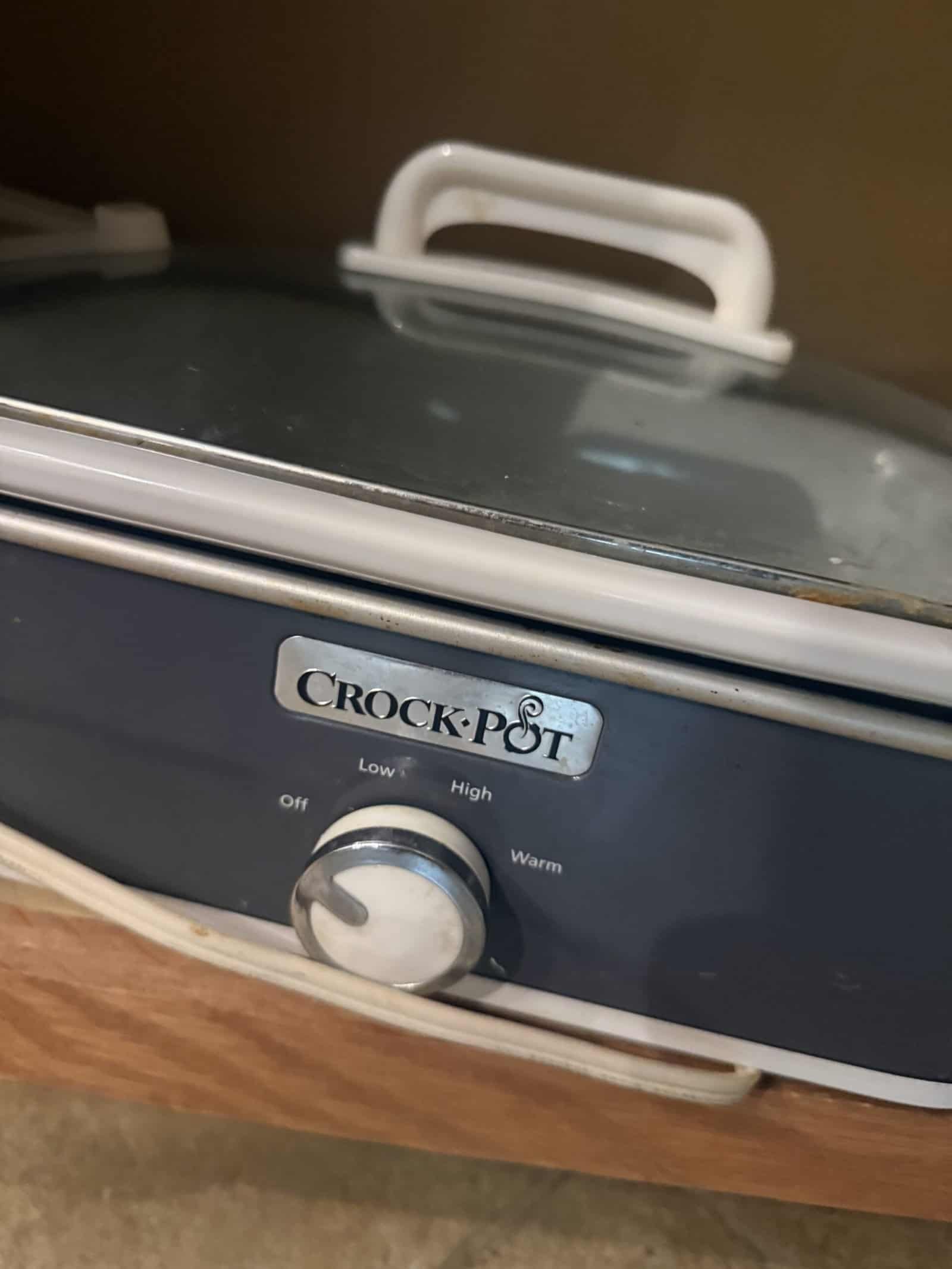
A slow cooker traps almost everything that evaporates. The lid seals, the steam condenses, and it runs straight back into the pot, which means recipes written for a stove or oven leave you with far more liquid than intended.
Chicken makes it worse than most things. Poultry releases a considerable amount of water as it cooks, and in a sealed pot none of it leaves.
Quick Answer
Cut liquid to roughly half of what a conventional recipe calls for. Take the lid off for the last thirty to sixty minutes on high to let steam escape, or thicken at the end with a cornstarch slurry. Chicken and vegetables release more water than beef, so reduce further with those.
Key Points
- Slow cookers lose almost no liquid to evaporation
- Conventional recipes assume liquid will cook off
- Chicken and vegetables release substantial water
- Lifting the lid mid-cook extends cooking time considerably
- Uncovering at the end is the simplest fix
- Frozen ingredients add more water again
Where the Water Comes From
| Source | How much it adds | What to do |
|---|---|---|
| Added liquid | Whatever you pour in | Halve conventional amounts |
| Chicken | Substantial | Reduce liquid further |
| Vegetables | Substantial, especially onions and mushrooms | Account for it upfront |
| Frozen ingredients | All the ice becomes water | Thaw and drain first |
| Condensation | Returns everything that evaporates | Uncover at the end |
| Beef and pork | Less than poultry | Standard reduction is usually enough |
Why Nothing Evaporates
A conventional braise loses liquid steadily through the oven or off the hob, which concentrates the sauce over hours. That reduction is doing a lot of the work in the recipe.
A slow cooker lid sits tight enough that steam condenses on the underside and drips back. Very little leaves the pot.
So a recipe written for a Dutch oven, used in a slow cooker without adjustment, ends with all its original liquid plus whatever the ingredients released. That is the entire problem in one sentence.
What I Get
Mine comes out a little watery sometimes, and it happens most with chicken. That lines up with poultry releasing more water than other meats.
It is not bad enough that I have changed how I use it. A little watery rather than a ruined dish, and I have generally accepted it rather than adjusting recipes.
Which is worth saying because the fixes below work and I do not always bother with them. Someone making sauces or gravies would care more than I do.
My experience covers a fairly large slow cooker used regularly, mostly with full batches for leftovers. It does not cover small units, where the ratios differ, or programmable models with a reduce setting.
Cut the Liquid First
Roughly half of what a conventional recipe calls for is the usual starting point. That accounts for the evaporation the recipe assumed would happen.
Enough liquid to come partway up the ingredients rather than covering them is generally right, since the ingredients themselves will release more once heating starts.
Recipes written specifically for slow cookers already account for this, and those are worth following as written rather than adjusting.
Where a dish genuinely needs to be submerged, such as a soup or stock, the watery problem does not apply and the pot suits it well, covered in what to cook in a slow cooker.
Chicken Is the Difficult One
Poultry holds more water than red meat and releases it steadily throughout cooking. In a sealed pot that ends up in the sauce.
Skinless boneless breasts are the worst case, since there is no fat or skin to hold structure and they can also dry out internally while flooding the pot.
Thighs handle it better, staying tender across a long cook and releasing water more gradually.
The practical response with chicken is starting with less liquid than you think and adding at the end if the dish needs it, which is easier than removing water from a finished dish.
High Against Low
The setting affects liquid more than most people realize, and it works in the opposite direction to intuition.
High produces a stronger simmer, which drives more moisture into steam. Some of that still condenses and returns, and more escapes around the lid seal than at low.
Low runs closer to a bare simmer, which means almost nothing leaves and the dish holds every drop it started with plus whatever the ingredients gave up.
So a dish that comes out watery on low may be less so on high for a shorter time, though that trades away some of the tenderness a long slow cook produces. For tough cuts the low setting is usually still worth the extra liquid.
Fixing It at the End
Uncover for the last stretch
Thirty to sixty minutes on high with the lid off lets steam escape and reduces the sauce. The simplest fix and it needs no ingredients.
Cornstarch slurry
A tablespoon of cornstarch mixed with cold water, stirred in and cooked another twenty minutes on high. Thickens without changing flavor.
Remove and reduce separately
Lift the solids out and boil the liquid down in a pan. More work and it produces the best sauce.
Add a starch that absorbs
Potatoes, rice, or pasta added late soak up excess liquid while cooking, though timing matters or they turn to mush.
Do Not Lift the Lid Mid-Cook
Every lid lift releases the accumulated heat and steam, and a slow cooker takes a long time to recover. Common guidance is that each lift adds roughly twenty to thirty minutes to the cooking time.
That works against the watery problem too, since checking repeatedly extends the cook without letting meaningful moisture escape.
Uncovering deliberately at the end is different, because at that point you want the heat loss and the evaporation.
How long things take generally sits in how long a crock pot takes to heat up.
Other Contributors
Frozen ingredients add all their ice as water, and they also keep the pot below safe temperature for longer, covered in frozen meat in a slow cooker.
High-water vegetables such as onions, mushrooms, zucchini, and tomatoes release a surprising amount. A recipe heavy in those needs less added liquid rather than the standard reduction.
Fill level matters too. An overfilled pot has less headspace for steam and can boil rather than simmer, covered in how full a slow cooker should be.
Browning meat first drives off some surface moisture and adds flavor, covered in whether to brown meat first.
Normal Against Worth Fixing
Normal looks like a slightly thinner sauce than a stovetop version of the same dish. Slow cookers produce that by design and it does not affect flavor.
Worth fixing looks like meat sitting in liquid rather than sauce, a dish that needed to be thick and is not, or the same problem across every recipe. The last one means the liquid ratio needs adjusting rather than the individual dish. Model differences sit in programmable slow cookers.
Related Reading
- dishes that suit the pot
- fill levels
- the browning question
- frozen ingredients
- the alternative method
- afterwards
Frequently Asked Questions
Why is slow cooker food always watery?
Because almost nothing evaporates. Steam condenses on the lid and drips back, so a recipe written for a stove or oven ends up with all its original liquid plus whatever the ingredients released.
How much liquid should I use?
Roughly half what a conventional recipe calls for. Enough to come partway up the ingredients rather than covering them, since they release more once cooking starts.
Why is chicken worse than beef?
Poultry holds more water and releases it steadily throughout the cook. Skinless boneless breasts are the worst case, and thighs handle a long cook considerably better.
Can I thicken it at the end?
Yes. Uncover for the last thirty to sixty minutes on high, or stir in a cornstarch slurry and cook another twenty minutes. Both work and uncovering needs no ingredients.
Does lifting the lid help evaporate liquid?
Not usefully mid-cook, and it extends cooking time by roughly twenty to thirty minutes each time. Uncovering deliberately at the end is the version that works.
Do frozen ingredients make it worse?
Yes, since all the ice becomes water in the pot. They also keep contents below safe temperature longer, which is a separate concern worth reading about.
Should I use a slow cooker recipe instead?
Where possible, yes. Recipes written for slow cookers already account for the lack of evaporation, which removes the guesswork from adjusting a conventional one.
For the wider picture, see our guide to best slow cookers under 50.
