
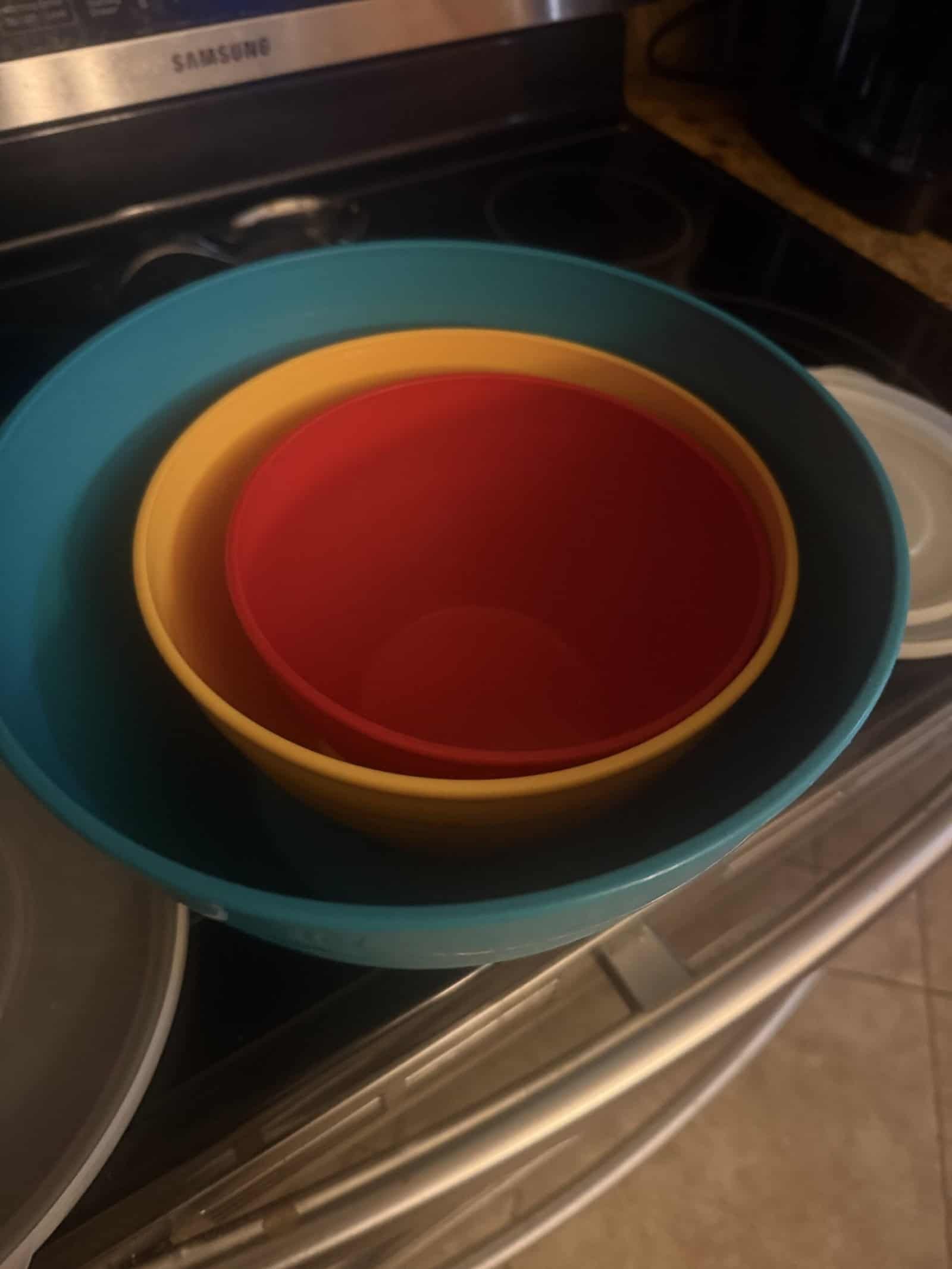
The image a salad bowl brings to mind is a single large wooden bowl on a table. What most households actually use is a set of smaller bowls, because a salad served into individual portions needs several and a large bowl only works when everyone eats at once.
Mine is a set of about four or five plastic bowls, which is unglamorous and considerably more useful than one showpiece. Our roundup of kitchen tongs covers the preparation side.
Materials at a Glance
| Material | Strengths | Drawbacks |
|---|---|---|
| Plastic | Light, unbreakable, cheap | Stains, scratches, looks casual |
| Wood | Looks best, gentle on leaves | Hand wash, needs oiling |
| Ceramic | Heavy, stable, dishwasher safe | Chips, heavy to carry full |
| Glass | Shows the salad, never stains | Breakable, slippery when wet |
| Stainless | Indestructible, chills well | Reflects, feels utilitarian |
| Melamine | Outdoor safe, looks like ceramic | Never microwave safe |
How We Picked
Selections are grouped by material and by whether the bowl is for serving or for eating from, since those want different things. Practicality is weighted over appearance, because the bowl that gets used is the one that goes in the dishwasher.
Descriptions come from documented material properties, alongside using a set of plastic bowls rather than a single large serving bowl.
1. A Set of Plastic Bowls, Best Everyday Option
Why It Stands Out
Light enough to carry full, impossible to break, and cheap enough that losing one does not matter. A set of four or five covers a household without anyone waiting for a bowl.
They also stack, which matters more than it sounds when cabinet space is the constraint.
Worth Knowing
Plastic stains from anything with tomato, turmeric, or oil-based dressing, and it scratches from cutlery over time.
They look casual, which is fine every day and wrong for anything formal. Our roundup of cereal bowls covers the overlapping use.
This suits daily use and households with children. Skip it if the bowl reaches a dinner party table.
2. A Large Wooden Bowl, Best for Serving
Why It Stands Out
The classic for good reason. Wood is gentle on leaves, does not conduct cold, and looks better on a table than anything else here.
The depth of a proper wooden bowl also makes tossing possible without half the salad going over the side.
Worth Knowing
Hand wash only and never in a dishwasher, since heat and prolonged water cracks wood.
Needs periodic oiling to stop it drying out, which is a maintenance task people forget. Our roundup of cutting boards covers the same wood care.
This suits entertaining. Skip it if you want everything dishwasher safe.
3. Ceramic Bowls, Best Weight and Stability
Why It Stands Out
Heavy enough to stay put while you toss, which is the main complaint about light bowls.
Dishwasher safe, does not stain, and it looks appropriate on a table in a way plastic does not.
Worth Knowing
Heavy is the trade. A large ceramic bowl full of salad is genuinely awkward to carry.
Chips at the rim from stacking and from cutlery. Our roundup of dinner plates covers the same material questions.
This suits people who want one bowl for everything. Skip it for a high shelf.
4. Glass Bowls, Best for Presentation
Why It Stands Out
You can see the salad, which matters for anything layered and for a table where the food is meant to look like something.
Non-porous, so nothing stains and nothing absorbs, which makes glass the easiest material here to keep looking new.
Worth Knowing
Breakable, and a glass bowl slick with dressing is easy to lose hold of.
Heavier than plastic and colder to the touch. Our roundup of drinking glasses covers glass generally.
This suits presentation. Skip it in a household with small children.
5. Stainless Steel Bowls, Best Durability
Why It Stands Out
Effectively indestructible, light for their size, and they chill quickly, which keeps leaves crisp if you put the bowl in the fridge beforehand.
Also the easiest to clean, since nothing sticks and nothing stains.
Worth Knowing
Looks like a prep bowl rather than a serving bowl, which is the reason people avoid them at the table.
Light bowls slide when you toss. Our roundup of colanders and strainers covers the related prep gear.
This suits practical households. Skip it if appearance matters.
6. Melamine Bowls, Best for Outdoors
Why It Stands Out
Looks like ceramic and behaves like plastic, which is the right combination for eating outside.
Unbreakable and light enough to carry a full bowl to a table in the garden without worry.
Worth Knowing
Never microwave safe, without exception, since melamine can degrade when heated.
Scratches from cutlery and stains over time like plastic does. Our roundup of dinnerware sets covers outdoor options.
This suits outdoor eating. Skip it if you reheat leftovers in the bowl.
Why a Set Works Better Than One Bowl
A single large bowl assumes everyone eats together at the same moment, and plenty of households do not.
Individual bowls mean salad can be portioned and the rest kept undressed, which matters because dressed leaves wilt fast and undressed ones keep.
They also do other jobs. A set of medium bowls handles cereal, soup, pasta, snacks, and prep, where a large wooden salad bowl does one thing.
Mine is a set of about four or five and that is the whole reason it gets used constantly rather than being brought out occasionally. Our roundup of food storage containers covers keeping the rest.
Serving Bowl or Eating Bowl
These are different jobs and buying one bowl for both is where most disappointment comes from.
A serving bowl needs width so people can reach in with utensils, depth so tossing does not scatter leaves, and enough weight to stay put while someone serves from it.
An eating bowl needs to hold a portion without looking sparse, sit comfortably in a hand or on a lap, and go through a dishwasher daily without complaint.
A large serving bowl used as an eating bowl looks absurd and takes up half a place setting. A small eating bowl used for serving means refilling it constantly.
Households that entertain occasionally are usually better served by a set of eating bowls plus one large bowl brought out when needed, rather than trying to make one size work for both. Our roundup of coffee mugs covers the eating end.
Size and Depth
Deep for tossing
A shallow bowl throws salad over the sides. Depth is what makes tossing possible without a second bowl.
Wide for serving
A wide bowl lets people reach in with serving utensils, where a deep narrow one makes that awkward.
Individual portions
Medium bowls hold a portion without looking empty, and they stack.
Cabinet space decides it
A large serving bowl is an awkward shape to store, and it frequently ends up somewhere inconvenient. Our roundup of cabinet organizers covers finding room.
What Plastic Actually Costs You
Staining is the honest drawback and it happens to every plastic bowl eventually. Oil-based dressing and anything with tomato leaves color that does not wash out.
Scratching from cutlery is the second, and scratched plastic holds stains more readily, so the two compound.
Neither affects how the bowl works. A stained plastic bowl holds salad exactly as well as a new one, which is why plenty of people keep using them.
What they cost is appearance, and that only matters if the bowl reaches a table where people are looking at it. Our roundup of dishwasher-safe cookware covers the same trade elsewhere.
Chilling Bowls Before Serving
Leaves wilt from warmth as much as from dressing, and a room-temperature bowl starts working against a cold salad the moment it goes in.
Putting the bowl in the fridge for a while beforehand keeps the salad crisp noticeably longer, which is a free improvement most people never try.
Material decides how well this works. Stainless chills fastest and holds cold longest, glass and ceramic take longer to chill and hold it reasonably, and plastic and wood barely hold cold at all.
That is one of the few genuine arguments for a metal bowl at a table, and it matters most for a salad sitting out through a meal rather than one eaten immediately.
Wood is the one to avoid chilling, since cold and condensation are hard on it. Our roundup of silverware organizers covers getting leaves dry first.
What to Look For
Number of pieces
Enough that nobody waits for a bowl. Four or five covers most households.
Stackability
Bowls that nest take a fraction of the space, and cabinet space is usually the binding constraint.
Dishwasher safe
Anything used daily needs to go in the dishwasher, which rules out wood for everyday use.
Weight when full
A large bowl full of salad is heavier than it looks. Consider who is carrying it.
Common Mistakes to Avoid
Buying one showpiece bowl
It looks good and gets used a few times a year. A set gets used weekly.
Dressing the whole bowl
Dressed leaves wilt within the hour. Dressing individual portions keeps the rest usable.
Putting wood in the dishwasher
It cracks, and it is the fastest way to ruin a good wooden bowl.
Microwaving melamine
Never safe, regardless of what the bowl looks like. Our roundup of mixing bowls covers what to use instead.
Recommended Reading
See our roundup of salad spinners, our guide to serving spoons, our roundup of vegetable peelers, and a guide to organizing your kitchen.
Salad Bowl FAQ
Should I buy one large bowl or a set?
A set gets used far more. Mine is about four or five bowls and they handle salad, cereal, snacks, and prep, where a single showpiece bowl does one job occasionally.
Is wood worth the maintenance?
For serving at a table, it looks better than anything else and is gentle on leaves. It cannot go in a dishwasher and needs oiling, so it is a poor everyday choice.
Does plastic stain?
Yes, from oil-based dressing and anything with tomato or turmeric. It affects appearance rather than function, and scratched plastic stains more readily.
What size do I need?
Deep enough to toss without spilling, and wide enough for serving utensils to reach in. For individual bowls, medium holds a portion without looking empty.
Can salad bowls go in the dishwasher?
Plastic, ceramic, glass, stainless, and melamine generally can. Wood cannot, and putting it in one is the fastest way to crack it.
Why does my salad wilt so fast?
Dressing. Dressed leaves collapse within the hour, which is the argument for dressing individual portions and keeping the rest undressed.
Are melamine bowls safe?
For serving cold food, yes. They are never microwave safe, since melamine can degrade when heated, and that rule has no exceptions.
What about metal bowls?
Stainless is indestructible and chills quickly, which keeps leaves crisp if you chill the bowl first. It looks like prep equipment, which is why it rarely reaches a table.
