
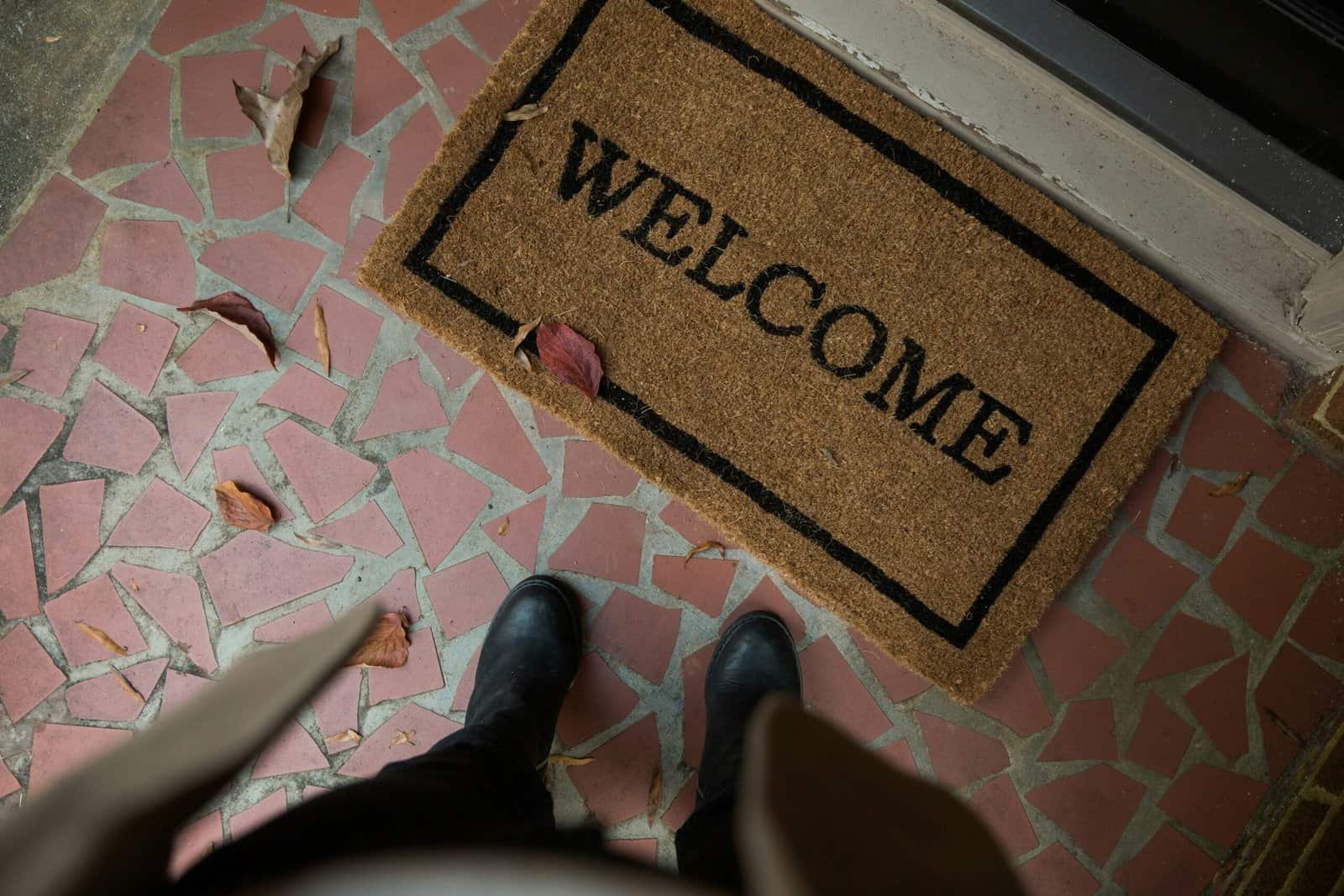
A door mat absorbs or scrapes. A boot tray contains standing water with a raised edge. Those are different jobs, which is why most households need both rather than choosing between them.
Quick Verdict
Buy a mat if you mostly deal with mud and damp soles. Buy a tray if boots come off wet and sit somewhere. In snow or heavy rain, use a scraper mat outside, an absorbent mat inside, and a tray where boots actually get removed.
Key Takeaways
- A tray contains liquid, a mat absorbs or scrapes it
- Raised lip height decides what a tray can hold
- Mats handle traffic, trays handle stationary boots
- Road salt damages floors regardless of which you use
- Trays need emptying, mats need washing
- They solve different halves of the same problem
How We Compared
We looked at what each does mechanically rather than which is better, since a tray and a mat address different stages of water getting indoors.
Position mattered, because a mat belongs where people walk and a tray belongs where boots stop.
Maintenance counted. Both need attention, and the type of attention differs enough to affect which one people actually keep using.
We treated floor protection as the outcome rather than tidiness, since salt and standing water are what cause lasting damage.
Boot Tray and Door Mat at a Glance
| Criterion | Boot tray | Door mat |
|---|---|---|
| Main function | Contains standing water | Absorbs or scrapes |
| Handles snow melt | Yes | Partly, then saturates |
| Walked on | No, boots sit on it | Yes, constantly |
| Maintenance | Empty and rinse | Wash or shake out |
| Position | Where boots come off | At the threshold |
| Cost | Moderate | Low |
| Trip hazard | Raised edge | Flat, minimal |
Boot Trays, Pros and Cons
- Raised lip contains meltwater and salt solution
- Ribbed surfaces lift boots out of standing water
- Protects flooring from prolonged contact
- Wipes clean rather than needing washing
- Needs emptying, which people forget
- Raised edge is a trip hazard in a walkway
- Fixed footprint, and boots must be placed on it
Suits snowy and wet climates where boots come off dripping. Skip in a walkway, where the edge catches feet and the tray gets kicked.
Door Mats, Pros and Cons
- Handles the traffic position where a tray cannot
- Scrapers remove mud and grit before it enters
- Absorbent versions hold considerable water
- Flat, so no trip hazard
- Saturates and stops working once full
- Grows mildew if left wet
- Cannot contain standing water at all
Suits every entryway as the first line, and two mats work better than one. Skip relying on a mat alone where boots come off wet.
Which Protects Flooring Better?
The tray, for the specific case of boots sitting somewhere. A pair of snowy boots releases water over an hour, and a saturated mat passes it straight through to the floor beneath.
Road salt is the real damage, leaving white marks on grout and dulling hardwood finish over a season. A tray holds that solution where a mat spreads it.
A mat protects better against tracked mud and grit, which scratch floors mechanically.
Winner: the tray for standing water and salt, the mat for grit.
Which Handles Traffic?
The mat, and it is not close. A tray with a raised edge in a doorway catches feet and gets kicked out of place.
Mats are designed to be walked on, and scraper types need foot pressure to work at all.
That difference is why they occupy different positions rather than competing for one.
Winner: the mat, decisively.
Which Needs Less Maintenance?
Roughly even, and the work differs. A tray needs emptying when water accumulates, which in wet weather means every few days.
Mats need shaking out or washing, and absorbent ones need it more often since a saturated mat grows mildew within days.
Neither is maintenance-free, and a tray too heavy to lift when full and a mat too big for the machine both end up neglected.
Winner: a tie, with the tray simpler and the mat more frequent.
Which Suits Small Entryways?
The mat. A tray takes a defined footprint that has to stay clear, and in a small hallway that competes with everything else.
Mats sit in the threshold space that exists anyway and add no depth.
For apartments and narrow halls, a good absorbent mat plus a small tray tucked beside the door is usually the workable version.
Winner: the mat, with a compact tray as an addition.
Which Fits Your Situation
| If this is you | Better choice |
|---|---|
| Snow and road salt | Both, tray essential |
| Mud and damp soles | Scraper mat outside, absorbent inside |
| Small apartment hallway | Mat, plus a compact tray |
| Hardwood or tile flooring | Both, tray for salt |
| Boots come off at the door | Tray |
| Shoes stay on indoors | Mats only |
| Dogs coming in wet | Absorbent mat, washed often |
How to Decide Between Them
Ask where the water stops
If boots come off and sit somewhere, a tray contains what drains. If people walk through in shoes, a mat is doing the whole job.
Consider your climate
Snow and salt make a tray close to necessary. Occasional rain is handled by a good absorbent mat alone.
Check your flooring
Hardwood and grout both suffer from standing salt solution. Sealed tile tolerates more, though nobody enjoys mopping it.
Buy the mat first if choosing one
It covers more situations, costs less, and works in a position a tray cannot occupy.
Using Both Together
The sequence that works runs outside to inside, with each item handling what the previous one missed.
A stiff scraper mat outside removes mud and grit. That is the cheapest step and it protects everything downstream.
An absorbent mat immediately inside catches water from soles the scraper left wet, which is where most tracked water actually gets stopped.
A tray sits where boots come off, containing the water that drains once they are stationary. That is more than people expect from a snowy pair.
Adding a rack above the tray drains boot interiors rather than leaving water pooled in the toe for two days. Full options sit in boot trays and mats for entryways.
The Verdict
The mat wins for traffic, cost, and small spaces, which makes it the right single purchase if you only make one. The tray wins for containing standing water and salt, which is the thing that actually damages floors.
In a mild climate a good absorbent mat inside and a scraper outside handles most of it. In snow, a tray stops being optional.
They are complementary rather than competing, and households that own both rarely mop an entryway.
Recommended Reading
- trays and mats compared
- entryway storage
- shoe racks
- floor cleaning
- grit and debris
- coat storage
- umbrella storage
- console tables
- closet systems
Part of our guide to organizing an entryway.
Common Misconceptions
That a thick mat holds as much as a tray
Absorbent mats hold a lot and pass the rest through once saturated. A raised lip is what actually contains liquid.
That a tray works in a doorway
The edge catches feet and the tray shifts when kicked. It belongs where boots come off, which is usually a step further in.
That coir mats absorb water
They scrape rather than absorb, and they mat down when wet and stop doing even that. Indoors, microfiber or chenille absorbs far more.
That sweeping removes salt
Salt residue dissolves in warm water and a dry brush just moves it around, which is why the white marks reappear after sweeping.
Boot Tray vs Door Mat FAQ
Do I need both?
In snow or heavy rain, yes. A mat handles the walking position and a tray contains water from boots that come off and sit somewhere.
Which should I buy first?
A mat. It costs less, works in a position a tray cannot occupy, and covers more situations including mud and damp soles.
Can a mat replace a tray in winter?
Not really. A saturated mat passes water through to the floor beneath, and snowy boots release more than a mat holds.
Where should the tray go?
Where boots actually come off, which is usually a step inside rather than in the doorway. A raised edge in a walkway becomes a trip hazard.
What kind of mat works best indoors?
Microfiber or chenille, which absorb considerably more than coir. Coir suits outside, where scraping matters more than absorbing.
How often do I empty a tray?
Whenever standing water is in it, which in wet weather means every few days. Salt concentrating as water evaporates corrodes metal trays.
Does either stop salt damaging floors?
Both reduce it and neither eliminates it. Damp mopping with warm water during the season, rather than in spring, is what protects the finish.
